
Optimus at About $30,000 a Unit: How to Judge Tesla's Humanoid Robot Delivery Plan
Tesla expects to start delivering its Optimus humanoid robot next year — around the end of 2027 — at an initial build cost of about $30,000 per unit that should later fall toward around $20,000, and Elon Musk says the first machines will probably be leased rather than sold. He laid this out recently at the Baron Investment Conference. The number missing from that plan is the one an operations team actually needs: how many productive, unattended hours one robot gives you per shift.
That gap is the whole story for anyone who buys automation. A cost curve tells you what Tesla hopes to spend on parts. A shift log tells you what you can put on a budget line.
What Tesla announced, and what it left open
| Item | Stated by Tesla | Still unanswered for a buyer |
|---|---|---|
| Initial unit cost | about $30,000 per robot | Is that factory cost, list price, or a lease-equivalent? |
| Later unit cost | around $20,000 | When the reduction actually reaches customers, not plans |
| First deliveries | next year, around the end of 2027 | Volume per quarter; which regions; which use cases |
| Delivery form | possibly a lease rather than a sale | Contract length, downtime credits, who owns the data |
| Where it is trained | inside Tesla's own factories first | Whether your task is in the training set at all |
| Capacity target | Fremont factory trial production; 1 million units a year in the long run | A target is not a shipping schedule |
| Productivity claim | up to 5x an average human worker | Measured against which task, and with what uptime |
Read the table twice. Every item in the middle column is a statement about Tesla's internal cost curve. Every item in the right column is a question about your site.
Why the venue matters as much as the price
Musk delivered this update to an investor audience at the Baron Investment Conference, not to a purchasing one — the same forum in which he revisited the decision to build Tesla's Shanghai plant as a wholly owned factory. Investors hear a cost curve falling from about $30,000 toward around $20,000. Buyers should hear something else: that the machine is not yet a priced, orderable product.
The incentives are also worth naming. Humanoid robots are a long-term strategic priority for Tesla, Musk argues the addressable market is huge, and whether Optimus actually lands is a key condition of his ten-year compensation plan. Reporting from Reuters on that plan lists selling 1 million humanoid robots among the milestones. That does not make the claim dishonest. It makes it a forecast with a deadline attached, and forecasts with deadlines should be discounted, not budgeted.
Why the robots train inside Tesla's own plants first
Before any external delivery, Optimus will be used inside Tesla's own factories to complete a large volume of hands-on work and refine its capabilities. That is not a formality. Manipulation, not walking, is where humanoids stall; outside coverage of Tesla's own scheduling has pointed to the hands and the AI behind them as the reason external deliveries sit at around the end of 2027 rather than earlier.
The manufacturing side is equally unfinished. The Fremont factory has started early trial production, the line's long-term plan is 1 million units a year, and Tesla itself concedes that full mass production is still some way off. Musk's own language on ramps was blunt in January 2026, when Reuters reported him saying Cybercab and Optimus output would start "agonizingly slow" before climbing. We have watched Tesla move a Texas production line from one product to another in about eight months. A capacity plan at Tesla is a hypothesis, not a contract.
The machine in numbers you can test
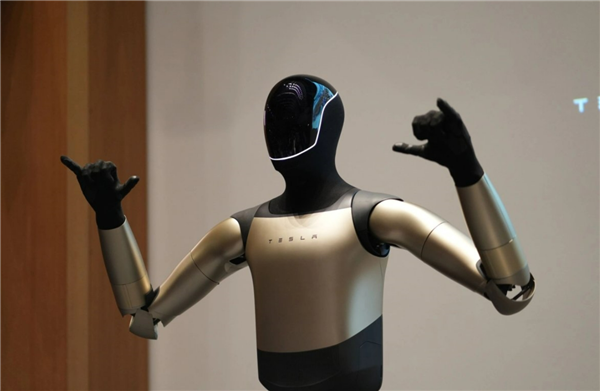
- Height 173 cm, weight about 57 kg, display in the head for interaction, walks on two legs.
- Top speed 1.2 m/s, maximum payload 20 kg.
- Reuses Tesla's FSD pure-vision approach: multiple cameras plus in-house AI chips, closing the perceive–decide–act loop within 0.3 seconds.
- 38 degrees of freedom across the body, 22 in each bionic hand, for grasping and assembly-class tasks.
- 2.3 kWh battery of the 4680 type, rated for about 10 hours of continuous work.
Two of those lines decide whether Optimus belongs in your plan. A 1.2 m/s walking speed and a 20 kg payload cap mean the robot fits into a cell designed for a human, roughly. But about 10 hours on the 2.3 kWh pack is a shift, not a day. On a 24/5 cell you are scheduling charging around a second shift, or buying a second unit, and that arithmetic is mine, not Tesla's.
How the price sits against the rest of the market
| Robot | Published price today | What that tells you |
|---|---|---|
| Tesla Optimus | No list price; Tesla cites a build cost of about $30,000, falling toward around $20,000 | Cost talk is pre-launch positioning |
| Unitree G1 | listed online from $13,500 | Research-grade humanoids are already orderable and cheaper |
| Figure 03 and other industrial pilots | no published price | Absence of pricing usually means pilots, not products |
Price transparency is a maturity signal. A supplier that publishes a store price has accepted warranty, spares and support obligations; one that publishes a cost target has not. Morgan Stanley's widely quoted scenario puts humanoid revenue near $4.7 trillion by 2050, with roughly a billion machines in service — a useful reminder that the trend is real even when a specific product is not ready.
Run the cost math before anyone signs
Here is a floor-level benchmark. The US Bureau of Labor Statistics series carried by FRED puts average hourly earnings in manufacturing at $36.92 in September 2026. At a conventional 2,080 hours, that is about $76,800 in direct wages for one worker-year, before benefits, overtime, shift premiums or turnover. Measured that way, a robot at about $30,000 equals roughly five months of one worker's direct wage, and around $20,000 is under four months. That is why the headline looks simple.
It is not simple, because four cost buckets sit outside the robot's price tag:
- Integration: fixtures, cell layout, network and controller changes, plus the stop-and-restart of the line while you commission.
- Safety sign-off: a 173 cm, 57 kg machine moving at 1.2 m/s next to people is a risk assessment, guarding and re-training exercise, not a plug-in.
- Availability: no published mean time between failures, spare-parts network or service response time. Until those exist, the 5x claim cannot be converted into a shift plan.
- Fleet software and data: who holds the task recordings, who patches the perception stack, and what happens to your process know-how if you exit.
Lease instead of sell: what actually changes
If delivery really runs on a lease model, the budget line moves from capital to operating expense, and with it the argument changes shape.
- You stop arguing about depreciation and start arguing about utilisation: you pay while the machine is contracted, not while it works.
- Upgrades come faster, and so do forced migrations you did not schedule.
- Downtime becomes a contract term. Ask for uptime guarantees and credits in the first draft, not the renewal.
- Exit costs rise. Task data, gripper programs and trained routines sit on the vendor's platform.
- Procurement treats it as a service, which means security, support SLAs and a named vendor contact — the same checklist you use for SaaS.
Three misconceptions to kill early
- "Cost equals price." Tesla's numbers describe what it expects to spend to build a unit, not what a customer pays to run one for three years.
- "5x means five fewer people." It describes sustained repetition of one task, not a whole cell with changeovers, exceptions and quality checks.
- "1 million units a year means availability next year." The Fremont figure is a long-term line plan, and the near-term schedule is a trial-production ramp.
If you want a pilot: a 90-day path
- Pick one task that is repetitive, low-exception and already documented — a bin transfer or a machine-tending cycle, not "general labour".
- Baseline it: cycle time, defects, exceptions per shift, and the fully loaded human cost, wages and burden included.
- Ask the vendor for uptime, MTBF, spares and service radius in writing before any demo visit.
- Run a four-week shadow trial against the baseline, with a named owner who can end the trial.
- Decide on lease versus purchase only after the shadow data exists, and treat the price path as upside, not as your case.
- Write the exit clause before the start date: what leaves with you, what stays with the vendor.
Frequently asked questions
When does Tesla say Optimus will be delivered?
Next year, with the specific point given as around the end of 2027, after the units finish hands-on training inside Tesla's own factories.
How much will Optimus cost per robot?
Tesla describes an initial cost of about $30,000 per unit, similar to an electric vehicle at first, falling toward around $20,000 over time. That is a build cost, not a customer price.
Will I be able to buy one?
Musk says the delivery form may be a lease rather than a sale, which shifts the conversation from asset purchase to service contract, uptime terms and data ownership.
Should a plant start planning for humanoids now?
Start with the boring work: task selection, baseline measurement and safety review. Those are the parts that take longer than the robot.
The next thing to do
Most companies do not lack automation tools; they lack someone willing to decide which manual cell to retire. Take the two highest-volume repetitive tasks on your floor, put a fully loaded hourly cost next to them, and set that against a target of about $30,000 per robot. If the gap is smaller than six months of wages, you already know the answer: this is a 2028 conversation, and the work between now and then is documentation, not demos.
References
- Reuters, "Tesla shareholders approve $878 billion pay plan for Elon Musk" (6 November 2025) — https://www.reuters.com/legal/transactional/tesla-shareholders-approve-878-billion-pay-plan-elon-musk-2025-11-06/
- Reuters, "Tesla's Cybercab, Optimus output to start 'agonizingly slow', ramp up later, Musk says" (21 January 2026) — https://www.reuters.com/business/autos-transportation/teslas-cybercab-optimus-output-start-agonizingly-slow-ramp-up-later-musk-says-2026-01-21/
- FRED / US Bureau of Labor Statistics, Average Hourly Earnings of All Employees, Manufacturing — https://fred.stlouisfed.org/series/ces3000000003
- HumanoidHub, "Unitree G1 vs Figure 03 vs Apollo: 2026 buyer's comparison" — https://www.humanoidhub.ai/blog/unitree-vs-figure-vs-apptronik-pricing-comparison-2026
- Morgan Stanley Insights, humanoid robot market outlook — https://www.morganstanley.com/insights/articles/humanoid-robot-market-5-trillion-by-2050