
Wholly Owned vs Joint Venture: What Musk’s Shanghai Factory Choice Means for Global EV Decisions
Full ownership was Tesla’s better route because it protected fast decision-making, factory design and export control once China opened its new-energy-vehicle ownership rules. A joint venture would have shared the asset, but it also shared approvals. Musk told the 33rd Baron Investment Summit in New York on November 7 that the company fought for full control and won, turning the Shanghai Gigafactory into a first-of-its-kind benchmark.
What did Musk say about the Shanghai negotiation?
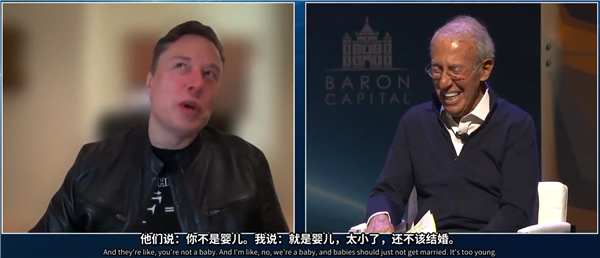
The short answer is that Tesla wanted full control, not a partner. Musk, Tesla chief executive, spoke with Ron Baron, founder of Baron Capital, at the 33rd Baron Investment Summit in New York on November 7. He recalled that foreign carmakers normally had to work through a joint venture in China, with foreign ownership usually limited to 50%.
Musk said the talks lasted several years because China insisted Tesla needed a Chinese partner. His rebuttal was playful but pointed: “We were just a baby company, babies should not get married, and a baby walking down the red carpet would be too ridiculous.” When officials pushed back, he repeated the same principle: Tesla was too young to marry. After several rounds, Tesla was approved to own the Shanghai Gigafactory outright.
Why full ownership mattered more than local connection?
Conclusion: for a hardware company under production pressure, control of the factory clock was more valuable than a ready-made partner. Musk argued that rapid action and rapid decisions are essential; if every step requires someone else’s permission, innovation stalls. He used driving as an analogy: you need your own hands on the steering wheel, then joked that autonomous driving may make the metaphor obsolete.
What did the result mean for Tesla’s China business?
It gave Tesla a base in one of the world’s most competitive car markets without diluting strategy. Musk said, “China is great, I love China, and going there always inspires me.” He also said that outside China, the two companies with the strongest physical hardware on Earth are probably SpaceX and Tesla, and that the Tesla Model Y is the best-selling electric car in China. Winning that position among local automakers, he said, is like trying to win a land war in Asia.
Baron added color from the broader industry: people from Ford had been privately impressed by the quality of Chinese cars. The point was not that Tesla had “arrived”; it was that China had become a proving ground for scale, quality and price competition. Tesla’s Shanghai-linked story has continued to evolve, as our related piece on Tesla’s Cybercab Asia debut at CIIE shows.
What does the energy-scale argument add?
It explains why manufacturing capacity can follow electricity. Baron said China’s power scale was about three times that of the United States and that it adds 300GW of new power-generation capacity each year, close to 60% of the United States’ 550GW installed base. Musk replied that the figure might be slightly low but the direction was clear: “China currently generates about 3 times as much electricity as the United States; the trend is to reach at least 4 times, and industrial capacity roughly scales with electricity generation.”
How the timeline supports the comparison?
Policy opened the door, then Tesla moved quickly. In April 2018, China announced the easing of foreign-ownership limits for new-energy vehicles. In July of that year, Tesla signed with Shanghai. In January 2019, the Shanghai Gigafactory broke ground as the first wholly foreign-owned passenger-car project, and it created the “Tesla speed” of breaking ground and delivering cars in the same year.
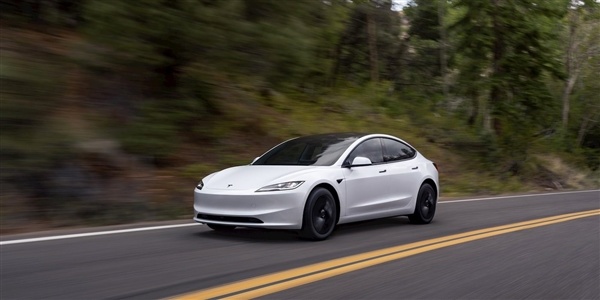
Public reporting adds two checkpoints. Reuters said Tesla received approval to start manufacturing in China in October 2019. Later coverage reported that Tesla delivered its first China-made vehicles in December 2019. Today, the plant has annual capacity of more than 950,000 vehicles and contributes more than half of Tesla’s global deliveries, while serving as a core export base for Europe and Asia-Pacific.
Joint venture vs wholly owned: which model fits which situation?
Neither model is universally better. The choice depends on whether speed, risk-sharing, local access or technology protection is the main constraint.
| Decision factor | Joint venture | Wholly owned | Best fit |
|---|---|---|---|
| Decision speed | Can slow approvals because partner consent is required. | One owner sets priorities, as Musk argued Tesla needed. | Rapid hardware iteration. |
| Capital and risk | Partner can share land, local financing and operational burden. | Single company bears more upfront risk. | Uncertain demand or heavy local obligations. |
| Technology control | Know-how and IP may need sharing. | Core process stays inside the company. | Proprietary manufacturing or export platform. |
| Market access | Local partner may ease sales, service and government relations. | Company must build local capability itself. | Markets where distribution networks dominate. |
| Policy exposure | Required in older restricted sectors. | Possible where ownership caps have been lifted. | China’s NEV opening from 2018. |
Common misconceptions in the “baby marriage” story
- It was not only Musk’s charm. China lifted new-energy-vehicle ownership limits in 2018, creating room for a wholly foreign-owned project.
- “No partner” does not mean “no local support.” The project still depended on Shanghai’s industrial ecosystem and policy window.
- Full ownership did not remove competition. Tesla still faced local price, quality and distribution pressure.
- The energy argument is not about AI alone; electricity is a proxy for industrial scale.
What general readers should ask before choosing a structure
- What decisions must happen weekly, and who can say no?
- Would a partner share technology or only market access?
- Can local financing and supply-chain support replace a partner’s network?
- Does the market policy allow full ownership now, or only in a future phase?
- Is the plant serving domestic demand only, or also export hubs such as Europe and Asia-Pacific?
FAQ: the Tesla Shanghai factory question, answered briefly
Why did Tesla not accept a joint venture?
Because it wanted fast, unilateral decisions over production, exports and design. Musk said that needing permission from a partner would make innovation difficult.
What does “baby company” mean in the story?
It was Musk’s shorthand for a firm still too young to be tied to a long-term partner through what he jokingly described as marriage.
Was Tesla the first wholly foreign-owned car plant in China?
Yes, the Shanghai Gigafactory became the first wholly foreign-owned passenger-car project after China eased new-energy-vehicle ownership rules.
How important was Chinese electricity scale?
Baron and Musk used it as evidence of industrial reach. Baron cited annual additions of 300GW versus a U.S. installed base of 550GW; Musk said China currently generates about 3 times as much electricity as the United States, with a trend toward at least 4 times.
What should a normal reader copy from this case?
Check whether the structure removes friction or adds friction. If speed is the bottleneck, full ownership is valuable; if access is the bottleneck, a partner may be cheaper.