
ItInsightsWorld General | Cybercab at CIIE: What Tesla’s Driverless Show Car Actually Proves
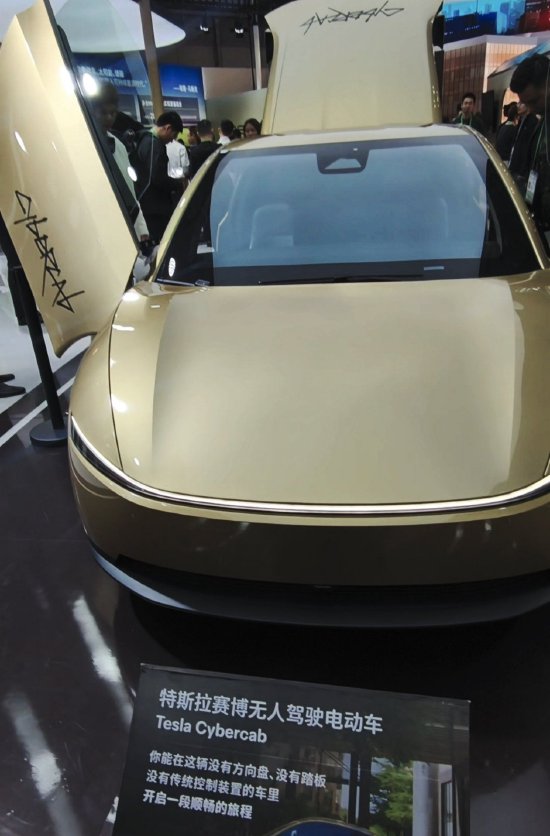
Tesla’s Cybercab Asia debut at the China International Import Expo tells readers one thing: the company now has a production-styled, steering-wheel-free ride-hailing vehicle. In the United States, Robotaxi operations in Austin began this year on September 3 and expanded in 30 days to over 300 vehicles, 10x the original scale, showing speed more than final proof.
Why Does a CIIE Debut Matter Beyond the Photo Op?
A trade-show debut matters when the venue changes who sees the product. The ninth China International Import Expo, held in Shanghai from November 5 to 10, reported participation from 162 countries, regions and international organizations and 4,142 overseas exhibitors, according to China Daily’s CIIE coverage. That scale gives general readers a rare front-row view of a vehicle that is usually discussed through American road tests, regulatory filings or investor letters.
Cybercab’s Asia debut is not simply a cosmetic reveal. It signals Tesla’s attempt to frame its autonomy story as a mobility product rather than a car buyers can drive manually. For readers deciding what to believe, the key value is not excitement but contrast: a robotaxi is being evaluated by how it behaves when no one is steering, not by how good it looks in a booth.
What Do the Robotaxi Numbers Actually Say?
The numbers say that Tesla has moved from a small experiment to a visibly larger operational test, while leaving safety, geography and supervision definitions as the open questions.
- Operations began this year on September 3 in Austin, United States.
- Within 30 days, the service fleet surpassed over 300 vehicles, expanding to 10x the original scale.
- As of October 18, Tesla’s Robotaxi fleet had accumulated about 5 million kilometers with no safety driver inside the vehicle.
- During that period, the company reported vehicle airbag zero deployments and no injury caused by a vehicle-initiated collision.
Those metrics are useful because they are specific: distance, date window, fleet size, and injury outcome. They are incomplete because they do not explain the service area, passenger mix, remote-support model, or how “no safety driver” relates to broader regulatory supervision. Forbes writer Brad Templeton has argued that public robotaxi messaging should distinguish between “no person in the car” and a fully unsupervised commercial standard, a useful caution for readers who see milestone language on social media.
How Should Cybercab Be Compared with Model Y and Normal Ride-Hailing?
Each object answers a different decision question. Cybercab is a preview of a future service. Model Y is a current product readers can still buy and evaluate. Ordinary ride-hailing is the benchmark most people already understand.
| Choice | Who controls movement | What it proves now | Best for reader judgment if you want to assess |
|---|---|---|---|
| Cybercab | Autonomy software; no steering wheel, pedals or traditional driver controls in the public display description. | Tesla’s Asia debut of a purpose-built Robotaxi shape and its Austin service-ramp narrative. | Future driverless mobility, cost structure, regulatory readiness. |
| Model Y | Human driver in the normal consumer version. | Global best-selling EV design; the exploded view shows body, battery system and key components. | Today’s electric-vehicle choice, repair transparency, component reliability. |
| Ordinary ride-hailing | Professional human driver. | Existing insurance, labor and dispatch systems are already in daily use. | Immediate mobility reliability versus long-term automation promise. |
What Misconceptions Should Readers Avoid?
- “No steering wheel means no risk.” Removing driver controls transfers responsibility to the autonomy stack, fleet operations and incident protocols.
- “Zero airbag deployments means nothing happened.” It mainly indicates no reported airbag-triggering event in the cited dataset; near misses, sudden braking, remote intervention or non-deployment incidents may need separate reporting.
- “A CIIE debut means local Robotaxi service is approved.” An Asia debut at an expo is a market and technology signal, not proof of immediate commercial permission in every country.
- “More vehicles automatically mean safer vehicles.” Scaling can improve economics and data collection, but safety needs mileage quality, geography, weather, edge cases and independent oversight.
What Action Steps Should General Readers Take Next?
- Separate showcase from service: check whether Cybercab’s Asia debut includes actual passenger operation, permits or only exhibition.
- Read metrics with denominators: 30 days, 300 vehicles, 10x growth and about 5 million kilometers matter more when paired with service hours, geography and incident-reporting standards.
- Follow emergency-response documentation: Tesla’s Robotaxi first-responder page now references Cybercab interaction plans and emergency-response resources, which can reveal how incidents are handled when there is no driver.
- Compare against mature alternatives: a human-driven Model Y or regular ride-hailing app is still a clearer choice today; a robotaxi becomes useful when access, reliability and regulation are proven.
- Treat Tesla’s production pivot as a signal, not a verdict: the wider Cybercab shift may affect manufacturing priorities, but it does not replace local approval or consumer safety proof.
FAQ: Quick Answers for Everyday Readers
Is Cybercab a car buyers can order?
The public display description emphasizes a Robotaxi purpose: no steering wheel, no pedals and no traditional driver controls. That does not prove it is a normal retail car in every market.
Why does Austin, United States, matter?
Austin is where the reported Robotaxi service expansion began, so it provides the operational baseline behind the CIIE showcase.
Does “5 million kilometers” prove the technology is safe?
It is a meaningful distance metric, but safety judgment also needs incident reporting, supervision definitions, service-area limits and independent review.
What is the Model Y exploded view doing at the same expo?
It lets readers inspect the body, battery system and key components behind a global best-selling electric vehicle, giving a more concrete counterweight to the Cybercab concept.
Reference Sources
- China Daily: CIIE 2026 coverage
- Forbes: Brad Templeton commentary on robotaxi supervision
- Tesla: First Responders Information for Robotaxi