
Cybercab in Austin: A Night-Shift Case Study of Tesla’s Texas Production Ramp
The case’s first lesson is that scaling is a scheduling problem. Tesla is adding a night shift and a day-and-night double shift at Tesla Gigafactory Texas in Austin, Texas, United States, but the reported change is not seven days a week or 24 hours a day: final assembly still runs Monday to Thursday, while other teams can work weekends.
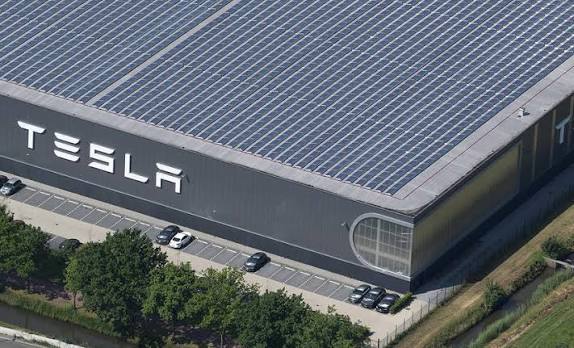
The public signal came from Tegtmeyer, who records the plant from outside, not from a factory tour. The more useful corroboration is hiring. The Tesla official careers page lists Cybercab night manufacturing process engineer and final assembly night engineering technician jobs. Battery manufacturing department roles support anode, cathode and foil-coating work across four shifts. In this case, night is not a slogan; it is an operations sequence.
Why the Cybercab ramp starts with factory hours
Conclusion: a new vehicle program often fails first on repeatable build, not on concept design. Tesla Gigafactory Texas already anchors Model Y and Cybertruck, and Cybercab has entered production there. The practical question is how to add vehicles without building another full plant immediately.
A day-and-night double shift raises the utilization of equipment, buildings and engineering attention already in place. It is therefore a staged move: enough to test throughput and defect patterns, but limited enough to keep quality control from being diluted. The reported pattern is expected to last at least until the end of 2026.
This also fits the capital story. Reuters reported in January 2026 that Tesla planned roughly $20 billion in capital spending, more than double its prior-year pace, as it pushed beyond human-driven cars. The night-shift case shows a less visible version of that strategy: use existing Texas factory time before new capacity is fully proven.
Case timeline: how the Austin Cybercab story developed
- October 2024: Cybercab was presented as a low-cost, robotaxi-focused vehicle, moving the discussion from a model reveal to a manufacturing promise.
- April 22, 2026: Tesla released its first-quarter 2026 update around the time reporting said Cybercab continuous production was getting under way, putting the Austin plant at the center of the ramp.
- October 2026: Tesla said more than 300 Cybercabs were serving Austin, an eightfold increase in 30 days, while Fort Worth and Dallas expansion added demand pressure.
- November 5, 2026: Tegtmeyer reported expanded night operations, with day and night shifts and weekend activity still separated from a fully continuous line schedule.
What the night-shift case proves and what it does not
| Question | Supported by the case | Still unproven |
|---|---|---|
| Is Tesla Gigafactory Texas running 24 hours a day? | The reported plan creates a day-and-night double shift and keeps some weekend work. | It is not necessarily seven days a week or 24 hours a day across every department. |
| Why focus on Cybercab? | Cybercab production has entered the Texas base while Model Y and Cybertruck already use the site. | Tesla has not disclosed the final night-shift model mix. |
| What do hiring roles reveal? | Cybercab process engineering, final assembly engineering and battery manufacturing department four-shift roles point to line debugging and materials continuity. | They do not confirm volume rates or cost per unit. |
| Does fleet growth prove the business model? | More vehicles carrying riders shows the service loop can expand. | It does not yet prove profitable robotaxi economics or full regulatory readiness. |
A reusable checklist for reading production ramp cases
- Check what remains fixed before celebrating what changes. In this case, Monday to Thursday final assembly is the constraint that prevents a simplistic 24/7 interpretation.
- Read job titles as a process map. Cybercab night manufacturing process engineer suggests troubleshooting and transfer to higher rate, not merely extra labor hours.
- Look for materials bottlenecks. Battery manufacturing department four-shift hiring around anode, cathode and foil coating suggests Tesla is trying to keep upstream inputs stable.
- Separate production signals from service signals. 300+ Austin Cybercabs is deployment evidence; it is not the same as verified customer ownership or long-term unit economics.
- Anchor the case to capital spending. Reuters reported about $20 billion for 2026, which helps readers ask whether night shifts are a bridge to new capacity or a way to avoid overbuilding.
Common misconceptions in the Cybercab night-shift debate
- Misconception 1: Adding a night shift equals full autonomous manufacturing. Reality: it changes staffing windows; line balancing, software updates, quality gates and supplier delivery still must work.
- Misconception 2: Weekend activity proves 24/7 production. Reality: weekend work can be partial, limited to construction, logistics or support teams.
- Misconception 3: A growing fleet removes risk. Reality: service expansion increases exposure to local rules, rider behavior, maintenance capacity and incident response.
Action advice for readers assessing the case
For readers who want a practical framework, use three tests: schedule, supply and verification.
- Schedule test: confirm whether the reported change is full 24 hours a day, a day-and-night double shift, or selective weekend work. Austin suggests the last two are more likely than a blanket 24/7 model.
- Supply test: ask whether battery manufacturing department, body, paint equivalent and final assembly can absorb added hours without defect escalation. Four shifts in battery work are an early warning that materials flow matters.
- Verification test: look for third-party evidence, such as job postings, drone observations, fleet counts and official investor materials, before concluding the ramp has succeeded.
FAQ: Cybercab production and night-shift questions
What does the night-shift report actually change?
It changes available factory hours and hiring demand at Tesla Gigafactory Texas. It does not by itself prove that every vehicle line can run continuously.
Why does Cybercab matter so much?
Because it sits at the intersection of manufacturing, autonomous software and mobility services. Austin gives Tesla a single location where production, test driving and service deployment can be observed together.
Does the hiring page confirm Cybercab volume?
No. The Tesla official careers page confirms roles, including Cybercab night manufacturing process engineer positions, but volume depends on line rate, parts supply and quality acceptance.
Should readers treat the 300-fleet figure as a sales metric?
Not directly. It is a service-deployment metric tied to Austin operations. A sales metric would require customer deliveries and ownership evidence, which is a later stage.