
ItInsightsWorld General: Why Tesla's Cybertruck Texas Phase-Out Signals a Cybercab Pivot
At its core, Tesla is moving Cybertruck out of the way to give Cybercab a better chance. Elon Musk said on X on November 6 local time that production at the Texas Super Gigafactory will gradually end around the middle of next year, freeing space and capital for the autonomous taxi. The decision is not proof of Cybercab demand; it is a reallocation of scarce factory resources after Cybertruck sold at roughly one-tenth of Tesla's original ambition. 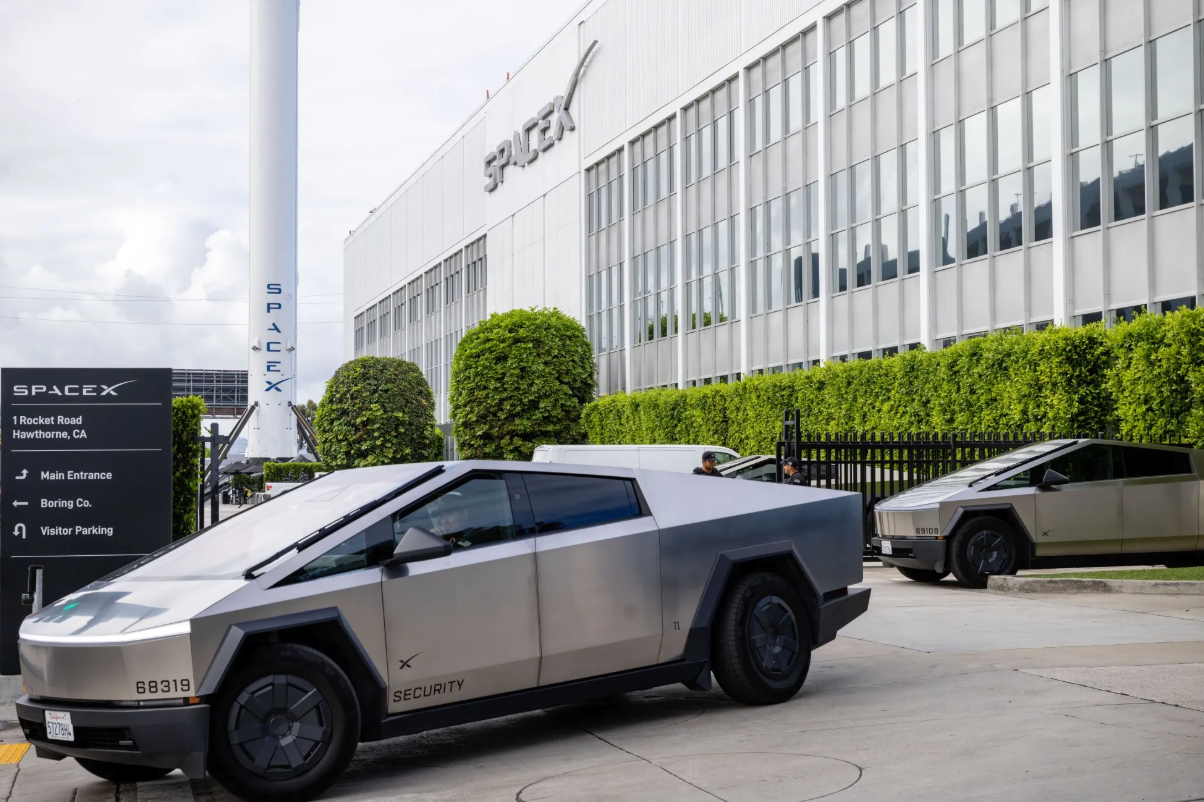
What did Elon Musk actually announce?
First, the answer: Musk announced a phase-down, not a detailed shutdown plan. He said Cybertruck output at the Texas factory would gradually stop around the middle of next year so Tesla could increase Cybercab production. He did not specify an exact end date, how many existing orders remain, or whether the model will be fully discontinued. Since the Texas plant is the model's only production base, that lack of detail leaves a practical gap for buyers, suppliers, and analysts.
Because the announcement came from a single public post, readers should separate confirmed facts from interpretation. The confirmed fact is a production-timing statement. The interpretation is that Cybercab, Tesla's steering-wheel-free taxi project, will become a higher priority.
Why did Cybertruck fall so far below Tesla's forecast?
Cybertruck's decline is a demand problem, not only a factory-space problem. In May 2023, at Tesla's shareholders meeting, Elon Musk projected that annual sales could reach 250,000 to 500,000 units after a full ramp. Recent estimates suggest the opposite. Tesla does not separately report Cybertruck deliveries; they are folded into the 'other models' line with Model S and Model X. Because Model S and Model X stopped in April, media estimates for this year's third quarter put Cybertruck deliveries at about 7,000 to 8,000 vehicles, or an annual run rate of about 30,000 vehicles. That is around 12% of the original planned annual capacity of 250,000 vehicles and roughly one-tenth of the early ambition.
Cox Automotive data sharpens the picture. Its 2025 U.S. estimate showed 20,237 Cybertruck sales, down 48% year over year, while the first quarter this year fell to 3,519 units, the lowest reported level for the model. A public copy of the Cox report is available online and can be used to verify the annual figure: Cox Automotive Q4 2025 EV sales report.
Did internal purchases prove the pickup had a market?
The short answer is no. Data from S&P Global Mobility showed that companies controlled by Elon Musk were among notable buyers in late 2025. In the fourth quarter of 2025, Musk-affiliated firms purchased 1,339 Cybertruck units, about 19% of U.S. registrations in the quarter. SpaceX alone took 1,279 vehicles.
Those figures helped keep early delivery counts visible, but they did not create a broad consumer base. Tesla also tried cheaper variants, including rear-wheel-drive and dual-motor versions, with limited effect. Before the wind-down message, Tesla stopped selling the entry version and raised prices. The Premium all-wheel-drive trim, often listed as Premium AWD, rose by $7,500 to a $92,490 starting price. Independent price tracking around the same announcement suggested other trims also shifted higher, including Cyberbeast at $102,490, according to Electrek. That is an added signal: pricing was not a simple discount-to-demand lever.
Is 'free capacity' the whole story?
Partly, but not entirely. A capacity pivot can be rational when a company must choose where engineers, production lines, cash and floor space go. Cybertruck was built in Texas, and Cybercab needs that same real estate and manufacturing attention. Some reporting questioned the phrase 'free capacity' because much of Cybertruck's production line was already underused, and Cybercab registrations in Texas were still only 463 vehicles as of late October.
What Cybercab does need is confidence that Tesla can scale a vehicle unlike any mainstream car. Tesla's official Cybercab materials describe a golden two-seater without a steering wheel or pedals, with paid service starting in limited areas of Austin, as shown in Tesla's Cybercab FAQ. That design simplifies the passenger experience but removes the manual controls regulators traditionally assume will exist.
Industry reporting also shows why Cybercab matters beyond one factory. Musk previously framed Cybercab as a high-volume robotaxi platform, with reported ambitions of up to 2 million units annually once production reaches full scale, according to Teslarati. That goal, if executed, would make factory space and supplier capacity a strategic constraint rather than a simple inventory problem.
How does Cybertruck technology carry into Cybercab?
Wes Morrill, Cybertruck's chief engineer, responded that the pickup had a role in developing Tesla's newer technology and that its life would continue in Cybercab. That statement is important because it explains the emotional and engineering logic: Tesla may be closing one product chapter while carrying parts of it into another.
Media reporting says Cybertruck's steer-by-wire system and related engineering have already been applied to Cybercab. The question is whether that transfer is enough to justify the factory shift. Cybertruck proved a polarizing consumer product. Cybercab aims to be a service vehicle, where total cost, uptime and regulation may matter more than style.
How could regulation affect Tesla's Cybercab plan?
The biggest unresolved risk is federal safety compliance. After paid Cybercab rides began in Austin in early September, NHTSA launched a review of about 1,000 Cybercab vehicles. The U.S. National Highway Traffic Safety Administration's concern, as reported by media, centered on whether Tesla met federal safety standards through self-certification without having sought a specific exemption for a car with no steering wheel or pedals.
Readers should not treat the review as a final verdict. But it raises three practical questions: how many vehicles are in use, how Tesla documents inapplicable or modified standards, and whether local service can expand beyond Austin without additional federal conditions. If the review produces restrictions, the business case for shifting factory space becomes harder to defend.
How did market and politics frame the announcement?
The Cybertruck message arrived after Tesla's stock had already been punished. On November 5, Tesla closed down 10.77% at $343.69. Reports linked part of the selling pressure to a broader political mood: the Democratic Party won control of both chambers of Congress, House and Senate, in the midterm elections, prompting concerns about regulatory friction for companies tied to Elon Musk. That uncertainty also clouded the potential merger between Tesla and SpaceX, according to market reporting.
How should readers compare Cybertruck and Cybercab?
| Decision factor | Cybertruck | Cybercab |
|---|---|---|
| Product logic | Consumer electric pickup with a radical design. | Two-seat robotaxi concept without a steering wheel or pedals. |
| Current signal | Gradual production end around the middle of next year at the Texas plant. | Production priority at the Texas Super Gigafactory. |
| Demand evidence | 20,237 U.S. sales in 2025, down 48%; 3,519 in the first quarter this year. | 463 Texas registrations by late October; paid Austin rides began in early September. |
| Main risk | Residual value, order clarity, and whether the model is fully discontinued. | NHTSA review of about 1,000 vehicles and federal self-certification questions. |
| Best interpretation | Tesla is cutting a capital-intensive product. | Tesla is betting that mobility-as-a-service can absorb freed capacity. |
What are the most common misconceptions?
- Misconception: the announcement means Cybertruck orders are canceled. It does not confirm final order treatment or a permanent end for every version.
- Misconception: price cuts alone could save the model. Tesla tried cheaper rear-wheel-drive and dual-motor variants, but demand did not reach the level needed to justify the planned capacity.
- Misconception: internal purchases prove broad popularity. S&P Global Mobility data show that Musk-affiliated companies and SpaceX bought a meaningful share in late 2025, but that is not the same as mass retail demand.
- Misconception: Cybertruck lines were running at full tilt. Some reporting said the 'free capacity' argument is weakened by already underused Cybertruck production and a small registered Cybercab fleet.
- Misconception: Cybercab has cleared U.S. safety review. The NHTSA review of about 1,000 vehicles is still an open compliance question.
What should readers watch next?
- Whether Tesla clarifies Cybertruck order deadlines, remaining inventory, and final production dates.
- Whether Cybercab registration growth moves materially beyond 463 vehicles in Texas as of late October.
- Whether the NHTSA review results in additional conditions, exemptions, recalls, or a clearer federal compliance pathway.
- Whether Tesla separates Cybertruck from Model S and Model X in future reporting, making demand trends easier to track.
- Whether political and regulatory pressures change the pace of robotaxi expansion beyond Austin.
FAQ: the Cybertruck phase-out and Cybercab shift
Is Cybertruck definitely ending?
Not in a confirmed way. Elon Musk said production would gradually end around the middle of next year at the Texas factory, but he did not explain whether that means full discontinuation, a model pause, or a change in how orders are handled.
Why is Cybercab more important than Cybertruck?
Cybercab is tied to Tesla's robotaxi strategy, while Cybertruck was a consumer pickup that missed its original 250,000 to 500,000 unit annual expectation. Tesla appears willing to sacrifice a weak product line to concentrate on a platform it views as higher leverage.
Did Cybertruck ever come close to Tesla's target?
No. Annualized estimates placed it at about 30,000 vehicles in this year's third quarter, around 12% of the planned 250,000-vehicle capacity and roughly one-tenth of the original demand forecast.
What is the main Cybercab risk?
Regulation. The National Highway Traffic Safety Administration is reviewing about 1,000 Cybercab vehicles because Tesla used self-certification for a car that lacks conventional controls such as a steering wheel and pedals.
Practical reading framework for this story
For general readers, the useful takeaway is not 'Cybertruck failed.' It is that Tesla is converting a low-demand, high-visibility product line into a higher-risk, higher-ceiling bet on robotaxis. If you follow the news, track three things in order: first, whether Cybertruck's remaining inventory and orders become clearer; second, whether Cybercab's Texas registration count moves beyond the small base of 463 vehicles; third, whether NHTSA's review ends with flexibility for Tesla's steering-free design. That sequence tells you more about Tesla's next year than the price of any one truck.
References
- Tesla Cybercab Frequently Asked Questions — official product and service description.
- Cox Automotive Q4 2025 EV Sales Report — U.S. Cybertruck sales estimates.
- Electrek report on Cybertruck price changes — trim-level pricing context.
- Teslarati coverage of Cybercab production ambitions — 2 million annual target context.
- Benzinga report on Musk's Cybertruck wind-down statement — statement and timing summary.