
ItInsightsWorld General Q&A: TE Connectivity plc's 135,000-square-foot New York State Plant — What AI Buyers Should Actually Ask
Start with the short answer: TE Connectivity plc's new plant is a real capacity bet on the optical links AI data centers need, but it is a 2027-to-2031 build, not a near-term supply fix. For a regional cloud operator, the sharper question is whether your rack plans assume parts still on a ramp curve. That is the bind: compute budgets are approved, yet no one wants to own the fiber architecture decision that quietly caps density later.
A familiar scene across APAC enterprise IT: three AI clusters approved for 2027, a generous GPU budget, and an interconnect plan copied from the previous generation because nobody has time to re-qualify parts. Most teams are not short of optics vendors; they are short of someone willing to freeze a design. Our General desk has made this point before — the connective layer decides what physical AI systems can actually do — and the Henrietta announcement is the supply-side version of the same problem.
What did TE Connectivity plc actually commit to?
Conclusion: this is a research-and-manufacturing campus for a specific optical component, not a generic cable factory. TE Connectivity plc is committing more than $60 million to an advanced research and development and manufacturing facility in New York State — a 135,000 square foot site in Henrietta, New York — focused on next-generation fiber optic solutions for hyperscale AI data center operators and cloud providers.
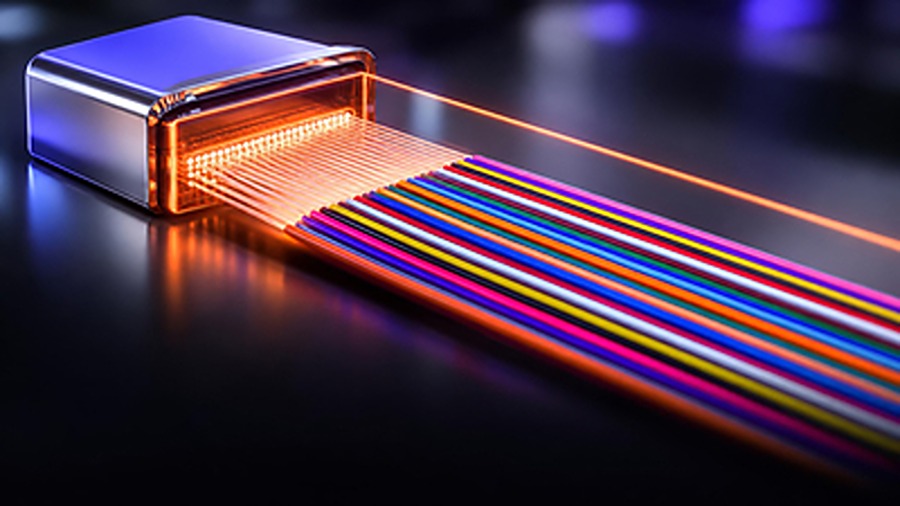
The plant will accelerate development and production of high-density fiber array units that TE recently acquired from RAM Photonics. In plain terms, these are precision blocks that line up many fibers so they can be attached to a photonic chip with low loss. They are designed to let operators shift to higher-density, lower-power architectures — the kind AI and cloud builds increasingly demand. TE says the technology addresses bottlenecks around performance, density and scalability of fiber attachment for co-packaged optics.
The 135,000-square-foot site is expected to open in spring 2027 and ramp up manufacturing through 2031. TE plans to employ more than 800 people in engineering, manufacturing and management in the greater Rochester region, an area long known as a global epicenter for fiber optics. New York State's announcement adds a practical detail the corporate release skips: the project repurposes a vacant building at 1600 Marketplace Drive rather than breaking ground on a new one.
Why should a non-optics buyer care about fiber array units?
Conclusion: because this small, unglamorous part is what decides whether co-packaged optics can be built at usable yield, and yield is what eventually sets your price and lead time. Co-packaged optics (CPO) moves the optical engine from a pluggable module on the front panel to sit beside the switching chip. Shorter electrical path, less power per bit, more bandwidth density — and a much harder alignment job.
That last part is where fiber array units come in. Corning's own component page notes that FAUs support advanced silicon photonics and CPO, helping customers scale bandwidth density while maintaining manufacturability. Note the word "manufacturability": the industry's problem is less about proving the physics and more about making thousands of aligned assemblies consistently. That is a fair reading of why a 135,000-square-foot facility matters more than its headline cheque.
Keep the timeline skepticism. A Third Bridge perspective published in June 2026 reports that experts expect CPO and pluggable optics to coexist for at least the next three to five years. For most enterprise buyers, that means a dual-track roadmap, not a flag day. If someone tells you pluggables are dead by 2028, ask to see the qualification data.
How does this fit the wider fiber rush?
Conclusion: TE's more than $60 million looks modest next to the supply deals hyperscalers have already signed, but it sits in a different layer of the same stack — components rather than bulk cable.
Industry reporting gives the scale of that stack. The China Electronic Components Industry Association describes AI projects consuming roughly 16 times the fiber of earlier builds, and catalogues long-term supply lock-ins: Meta and Corning's up-to-$6 billion multi-year agreement in January 2026, Amazon's multi-billion, multi-year Corning deal in June, and Nvidia's $3.2 billion investment in a Corning partnership in May. Meta's own announcement confirms the agreement is for fiber-optic cable for its data centers.
Here is the comparison in the form most procurement teams actually use:
| Initiative | Scale / scope | Timing | What it signals |
|---|---|---|---|
| TE Connectivity plc, Henrietta, New York | more than $60 million; 135,000-square-foot R&D and manufacturing site; more than 800 jobs | opening in spring 2027, ramp through 2031 | FAU capacity for co-packaged optics |
| Meta–Corning | up to $6 billion, multi-year fiber supply | agreement announced January 2026 | cable supply locked years ahead |
| Nvidia–Corning | $3.2 billion investment, three AI factories, at least 3,000 jobs (per industry association) | announced May 2026 | optics and packaging co-designed with silicon |
| Amazon–Corning | multi-billion, multi-year supply agreement | announced June 2026 | capacity plus workforce training |
Demand is not an abstract story at the adoption end either: in Southeast Asia, the gap between 70% weekly use and 13% frontier firms shows how fast "we use AI" becomes "we need more interconnect."
What gets left out of the press release?
Conclusion: the usual misreads are about timing, headcount and technology substitution. Four cautions worth writing down:
- Timing is not availability. "Open in spring 2027" is a building milestone; "ramp through 2031" is the supply reality. Qualification cycles on optical assemblies run long, so do not plan a 2027 cluster around a part that is still ramping.
- The headcount is spread out. more than 800 roles cover engineering, manufacturing and management in the greater Rochester region — this is not 800 assembly-line hires turning up on opening day.
- CPO is not a switch you flip. Pluggables remain in the roadmap for years; treat any "CPO only" design rule as a risk, not a default.
- Reuse cuts both ways. A vacant, repurposed building can shorten the path to a spring 2027 opening, but retrofitting existing space for precision optics brings its own qualification work.
Who should care — and who can safely wait?
Conclusion: care if you are designing high-density AI clusters on a 2027–2031 horizon; wait if your refresh cycle is still pluggable-based and modest in scale.
- Hyperscale and colocation operators: ask FAU suppliers about qualification slots and second sources now, not at the 2027 request-for-quote stage.
- Regional enterprises and APAC cloud teams: keep pluggables in the design, but write density and power-per-bit into every RFP so you can compare like for like.
- Procurement and finance: treat the ramp through 2031 as a schedule risk, not a price signal. Capacity arriving late is a project problem; capacity arriving early is a negotiation opportunity.
- Anyone copying last generation's interconnect plan: this is the group most exposed. Re-check the fiber attachment assumptions before the design freeze.
What should you do next?
Conclusion: four steps, in order, before the next design review.
- Map which clusters actually need higher-density optics, and which can stay on pluggables.
- Ask your switch and optics vendors for FAU qualification timelines and named second sources.
- Put power-per-bit and bandwidth density into the RFP template, with measurable thresholds.
- Put a review date on the calendar for spring 2027, and revisit the roadmap when the ramp milestones become public.
That is the whole decision: TE Connectivity plc is building real capacity in Henrietta, New York, on a timeline that runs through 2031, for a component that will matter most to dense AI clusters. Your job is not to predict the optics market. It is to avoid signing a 2027 design that assumes supply the ramp cannot yet deliver.
FAQ: the questions we keep getting
Conclusion first: these four come up in almost every reader thread on AI fiber.
Is the plant making fiber cable?
No. The output is high-density fiber array units from RAM Photonics technology — components used inside optical assemblies, not bulk cable.
Does "spring 2027" mean I can order parts then?
No. The site is expected to open in spring 2027 and ramp manufacturing through 2031. Opening is a milestone, not volume availability.
Is RAM Photonics a partner or customer?
Neither in this context: the technology was acquired from RAM Photonics by TE, and the plant scales it.
Will co-packaged optics replace pluggables immediately?
No. Experts cited by Third Bridge expect CPO and pluggable optics to coexist for at least the next three to five years.
Reference sources
- TE Connectivity news release, 12 November 2026
- New York State Governor's Office announcement, 13 November 2026
- Corning fiber array unit product page
- Third Bridge perspective on optical connectivity, June 2026
- Meta announcement of the up-to-$6 billion Corning agreement, January 2026
- China Electronic Components Industry Association review of AI-driven fiber investment, September 2026