
Microsoft’s Live-Broadcast Rewriting Patent: A Plain-Language Guide to Near-Real-Time AI Edits
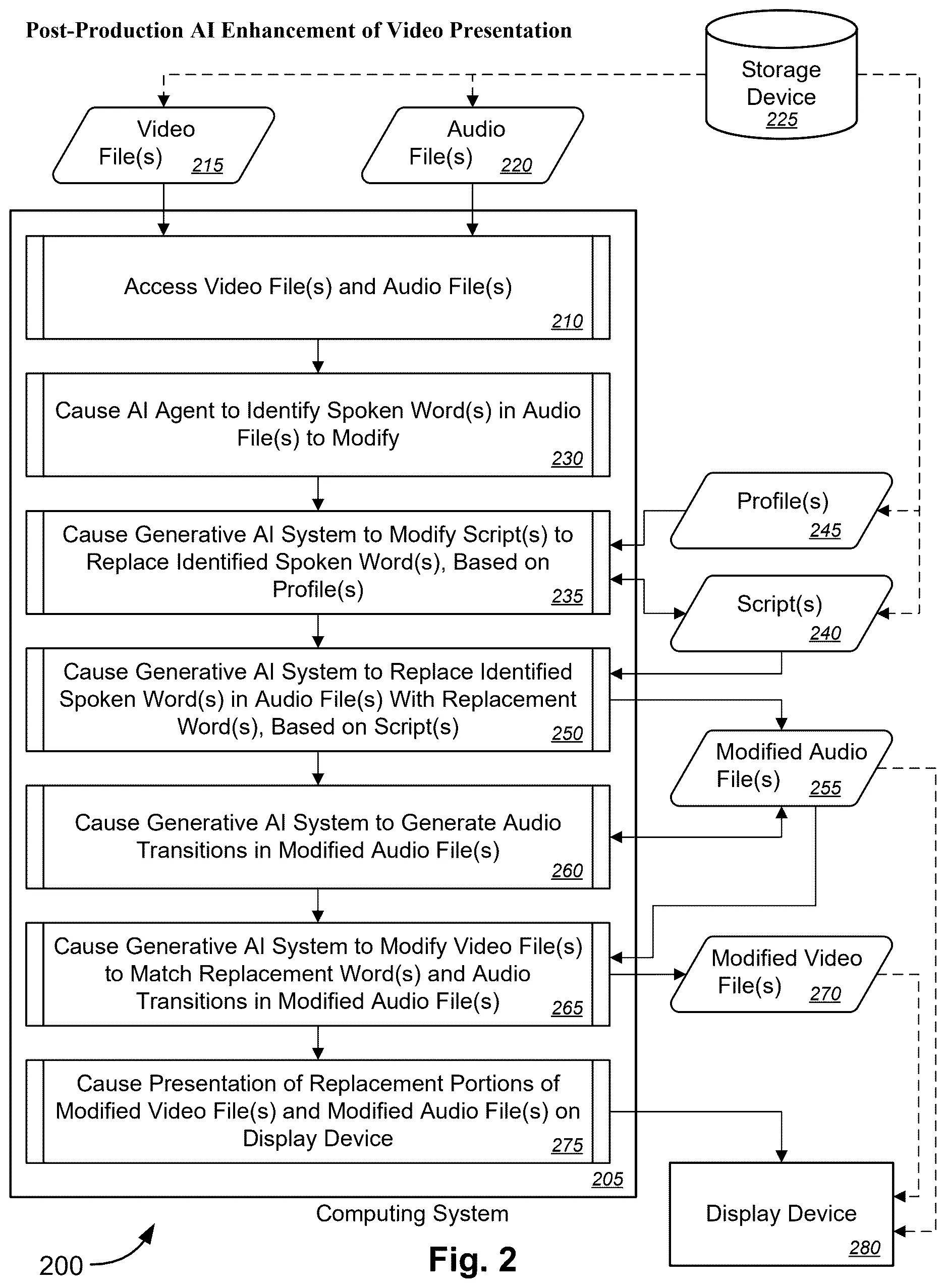
Microsoft’s patent application, submitted in April 2025 and published in October 2026, describes an AI system that can replace, delete or rewrite a speaker’s words during a live transmission within a delay of only seconds, then redraw that person’s mouth and face so the revised sentence looks original. It is only a patent application, not a shipping product. Still, it sketches a near future in which “live” television is an edited feed, which means audiences and content teams need provenance checks rather than their own eyes.
What does the patent actually describe?
Conclusion first: the filing covers a production pipeline, not a cosmetic filter. The document, titled “Real-time artificial intelligence enhanced video or augmented reality live presentation technology”, treats the incoming live audio stream as something an AI agent listens to continuously. Words or phrases that match the parameters set by whoever operates the system are located automatically.
Once a target segment is locked, generative AI substitutes, removes or rewrites it in the audio track and modifies the corresponding video frames at the same time — facial motion, lip shape and the trajectory of mouth movement — so that what reaches the audience looks as if the speaker had produced the corrected version in the first place. Microsoft labels the workflow “near-real-time” processing: only seconds elapse between capture and finished output. The same architecture is described as usable both after recording and during a live broadcast, and both for video and for augmented-reality presentations.
Why is the few-second delay the part that matters?
Because it moves the edit from the cutting room into the broadcast itself. Broadcasters have never claimed that “live” means instantaneous: a short technical buffer, popularly called the profanity delay or seven-second delay, has existed for decades so that an operator can bleep, mute or cut away from something unacceptable before it airs, as the industry practice described on Wikipedia shows. That buffer is subtractive — it removes or hides, it never invents.
The proposal in this application is different in kind. The system does not merely suppress a phrase; it manufactures a replacement and repaints a human face to match it, all inside a window of a few seconds. Nothing about the finished picture tells a viewer that a decision was made. The always-on agent that watches a live stream and acts on parameters is not a novelty in itself — it is the same pattern now spreading through enterprise software, where long-running AI coworkers keep executing tasks across tools for hours without a human at the keyboard. What is new here is that the object of that agent’s attention is another person’s public speech.
| Approach | Who decides | What changes | Working window | What survives afterwards |
|---|---|---|---|---|
| Traditional broadcast delay | A human operator in the control room | Cut, bleep, mute or switch shot; nothing is added | A handful of seconds | Usually only the transmitted output |
| Post-production editing | Editors, after recording | Words, pacing, shots, sound | Hours to days | Project files and version history |
| Live subtitles or dubbing | Translators and caption vendors | Text overlay or a separate audio track; the face stays untouched | Seconds | Script, timecode, translation memory |
| The system in this patent application | An AI agent applying configured parameters | Spoken words plus the speaker’s mouth, lips and facial motion | Seconds (near-real-time) | Raw audio and video kept as a “baseline factual record”; digital identifiers in some configurations |
Read as a row in that table, the filing is less a scandal than an industrial transition: automation crossing from the invisible part of the workflow (removing hesitations) into the visible one (changing meaning).
What would it be used for? Six uses listed in the filing
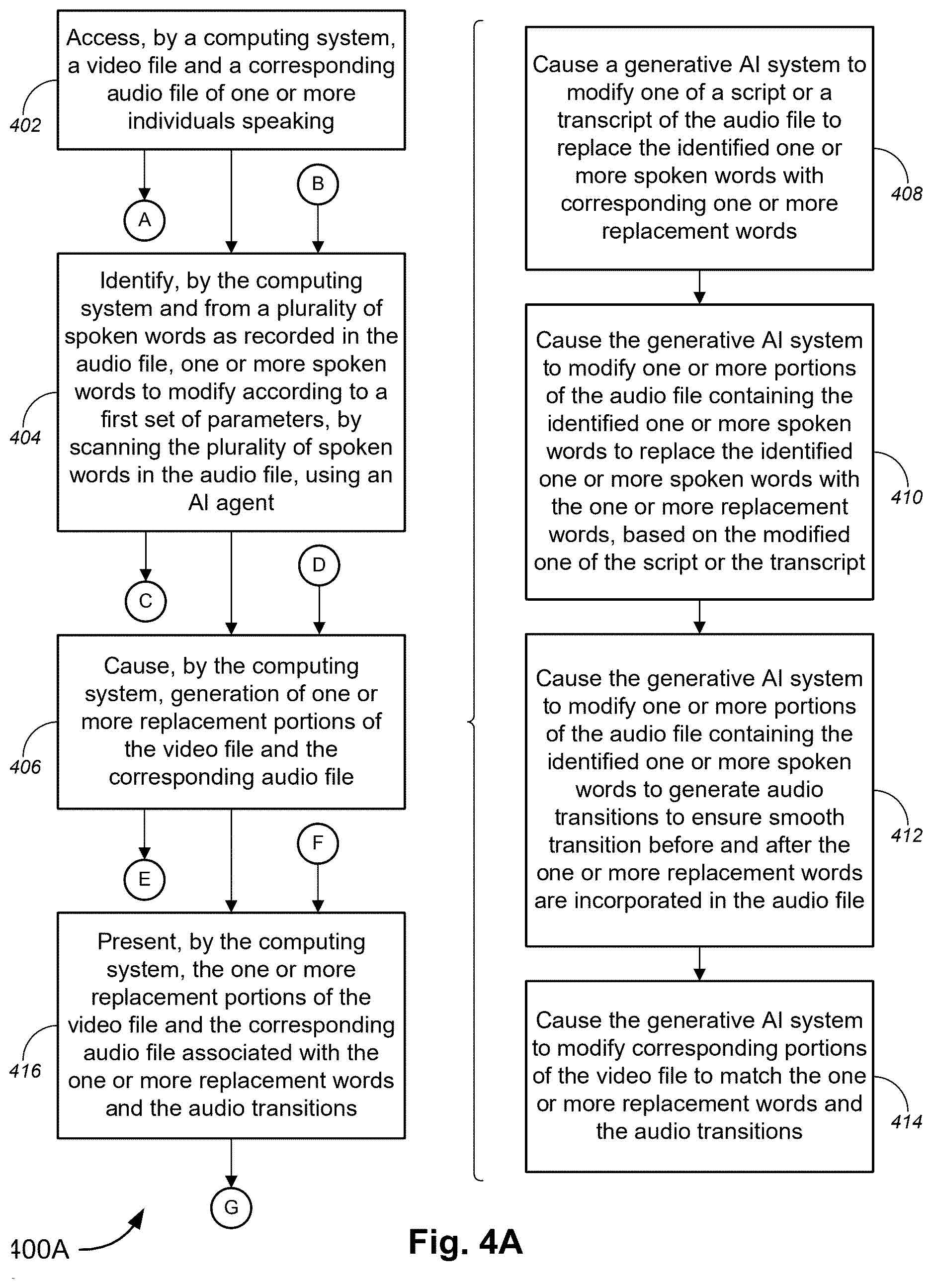
Applications are where most coverage of this patent stops, and it is worth being concrete, because several of them solve problems that cost broadcasters real money today:
- Real-time translation with matched lip movement — the core use case in the filing. Speech is translated into the viewer’s language and the mouth on screen follows the translated audio, avoiding the mismatch that dubbing and subtitles create.
- Filler-word cleanup — automatic removal of “um” and “uh” and similar verbal hesitations.
- Correction of slips — misspeaking, mispronunciation and inaccurate phrasing repaired so delivery reads as fluent.
- Audience-specific filtering — vulgar language, sensitive vocabulary, offensive expressions and certain regional dialect words screened according to viewer preference, so one broadcast can be delivered differently to different groups.
- Search-assisted rewriting — in some configurations, web search is used to generate replacement content, hunting in the moment for a more accurate or more context-appropriate expression.
- Format breadth — lectures, awards ceremonies, sports broadcasting, cooking programmes and live television generally, with the promise of less manual post-editing and faster content operations.
Where does the risk start — and what guardrails does Microsoft propose?
The risk starts exactly where the convenience sits. The same mechanism that deletes an “um” can delete a qualifier, and the same mechanism that repaints lips for translated speech can repaint them for a sentence nobody said. Because the system can alter what a speaker finally presents to an audience during a live event, analysts have warned the technology could be pointed at political statements, corporate disclosures or news reporting, raising the exposure to misinformation.
The backdrop is not hypothetical. Siwei Lyu, professor of computer science and engineering and director of the Media Forensic Lab at the University at Buffalo, argued in a January 2026 essay distributed by The Conversation that the situation was likely to worsen because deepfakes were becoming “synthetic performers” able to react to people in real time — a shift from playing back a fake to performing one. Consumer-scale harm is already measurable: security researchers at Surfshark put cumulative losses from deepfake fraud at at least USD 3.7 billion, and counted election-related deepfake incidents in 38 countries since 2021.
Microsoft anticipates the objection in the document itself. Unmodified original audio and video are retained by the system as a “baseline factual record”, available for verification when a dispute, investigation or legal requirement arises. Some configurations additionally contemplate digital identifiers that leave a trace of the modification. In other words, the filing treats an untouched archive — not viewer suspicion — as the last line of defence.
How does that safeguard compare with rules that already exist?
This is the angle most retellings leave out, and it is the one that decides whether the idea stays a patent: a live-alteration system does not arrive into a regulatory vacuum.
- Disclosure duties are already in force. Article 50 of the EU AI Act (Regulation (EU) 2024/1689) has applied since 2 August 2026, requiring that AI-generated and AI-manipulated audio, video and image content be marked as such; the European Commission published accompanying transparency guidelines on how providers and deployers should comply.
- Provenance standards now reach live video. The C2PA, the content-provenance body convened around Adobe, BBC, Google, Intel, Microsoft, Publicis Groupe and Sony, announced in February 2026 that Content Credentials 2.3 extended its signed-manifest model to live streams — exactly the technical ground on which an altered broadcast would have to declare itself.
Put together, the picture is a mismatch worth understanding. The patent keeps its original recording inside the vendor’s own workflow. The rules being written around it assume an interoperable, inspectable trail that a third party — a court, a regulator, a newsroom, a viewer — can verify without trusting the platform that made the edit. A proprietary “baseline factual record” is a starting point, not the finish line.
Five common misconceptions
- “A patent means a product is coming.” It does not. What is public is a patent application; the technology industry is full of patented ideas that never ship, and this one’s commercial future is genuinely unproven.
- “Live TV has always been edited, so nothing changed.” Editing existed, but human, subtractive and time-consuming. Seconds-scale generation of replacement speech plus a redrawn face is a different class of capability.
- “The original would be lost.” The filing explicitly preserves unmodified audio and video as a baseline factual record, and raises digital identifiers in some configurations.
- “This only concerns big broadcasters.” Translation, dubbing and compliance filtering are already routine in ordinary streaming and conference tools, which is where such capability would most plausibly appear first.
- “A transcript is proof.” Increasingly no. Once pixels and phonemes can be regenerated on the fly, text alone can neither confirm nor rebut what a video claims to show.
What should readers and content teams actually do?
For viewers: a two-minute credibility check
- Ask when it was made, not only when it aired. A feed can be labelled live and still carry a delay; seconds of latency plus automated smoothing look identical to instantaneous transmission.
- Look for a provenance marker. Content Credentials or a platform-level AI-manipulation label, where available, is now the closest thing to a receipt.
- Compare versions before sharing. The unedited feed, the network’s clip, the platform upload and a phone recording of the room frequently disagree — disagreement is the signal.
- Treat “too clean” as a cue. A long, emotionally charged live answer delivered without a single hesitation word is worth a second look.
For teams publishing or producing live content: a four-point brief
- Decide the consent question first. Who is allowed to alter a named speaker’s words or face — the speaker, the platform, or the paying client? Write the answer down before buying any tool.
- Keep a raw master by default. Unmodified capture should be retained on the same principle the patent describes, and for the same reason: disputes are settled by originals.
- Label every synthetic or modified segment. Disclosure is a legal duty in the EU for content in scope, and a reputational floor everywhere else.
- Separate cosmetic edits from meaning edits. Cutting “um” and repairing pronunciation is a polish decision; substituting words or translating speech with matched lips changes the record and deserves a different approval path.
FAQ: the questions this patent is likely to trigger
Has Microsoft released this technology?
No. What exists is a patent application filed in April 2025 and published in October 2026 — a description of an approach, not evidence of a product or a launch plan.
How fast is “near-real-time”?
The filing defines it as a delay of seconds between capturing the content and completing the modification, which is short enough for a live audience not to perceive the intervention.
Could it change what a politician says on air?
Technically the described mechanism is capable of that, which is precisely the concern analysts raise. The document’s own mitigation is retention of the untouched recording as a baseline factual record for later verification.
Does it only affect audio?
No. Audio replacement is paired with modification of video frames — facial actions, lip shapes and mouth movement — so the visual and spoken versions stay consistent.
Is translation with lip-sync the same thing as a deepfake?
They share the same technique and opposite intent. Consent, disclosure and a retained original are the three conditions that separate a localisation service from a fabricated statement.
References
- Microsoft patent filing coverage — Computerworld: “Microsoft files patent for AI that can alter what people say during live broadcasts” (5 November 2026)
- Original reporting on the application — Futurism: “Microsoft Patents an AI That Can Literally Put Words in People’s Mouths”
- EU AI Act, Article 50 transparency obligations, applicable from 2 August 2026: artificialintelligenceact.eu/article/50/; European Commission guidelines: digital-strategy.ec.europa.eu
- C2PA, Content Credentials 2.3 and live-video provenance (February 2026): c2pa.org
- Siwei Lyu, “Deepfakes leveled up in 2025: here’s what’s coming next”, University at Buffalo / The Conversation (January 2026): buffalo.edu
- Surfshark Research, deepfake fraud and incident statistics: surfshark.com/research
- Industry practice of the short technical delay: Broadcast delay — Wikipedia