
Google Gemini Omni 1.2 Flash: A Plain-English Guide to 15-Second, Edit-by-Conversation Video | ItInsightsWorld General
On Thursday, November 6, Google released Gemini Omni 1.2 Flash, a video model that natively produces clips of 3 to 15 seconds, lets you keep revising a finished clip through follow-up conversation, and cuts the 720p generation price by 30% to $0.07 per second. The real change is not smarter magic; it is that a short video becomes a drafting surface you edit like a document, at a unit cost small teams can actually plan around.
What Google shipped, in one breath
The headline facts are short enough to list without interpretation. Length: clips can now be set anywhere from 3 to 15 seconds, versus a previous maximum of 10 seconds. Price: 720p generation drops 30%, to $0.07 per second. Interface: multi-turn Conversational Editing over a clip that already exists, covering the full 15 seconds. Provenance: every output carries an imperceptible SynthID watermark identifying its origin.
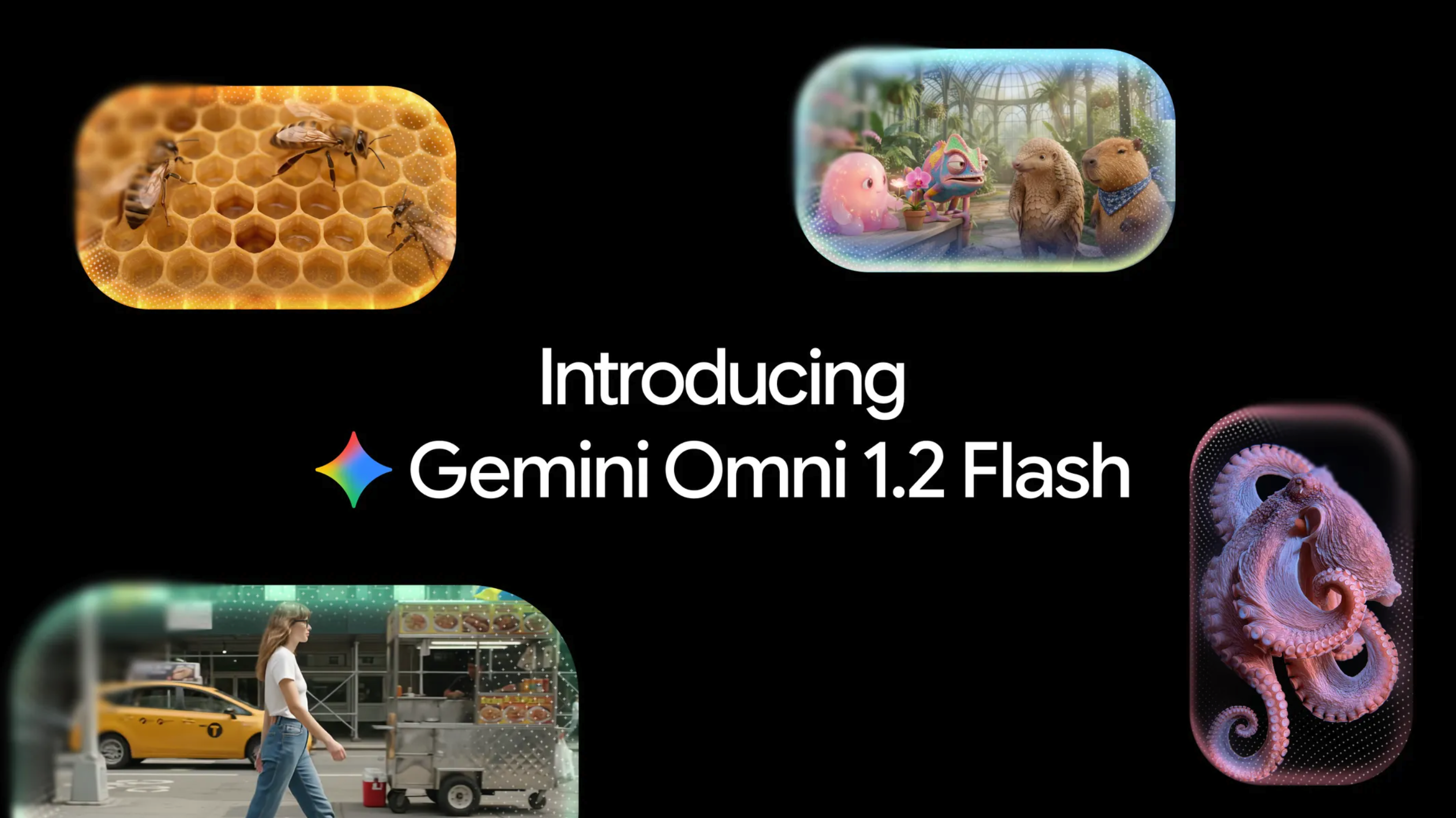
Distribution is deliberately staged rather than switched on everywhere at once. According to Google, the model is arriving through the Gemini API, Google AI Studio, Google Cloud Console, Flow, Google Vids, the Gemini app for Google AI Ultra subscribers, and Google Ads. Read as a signal, that list tells you more than the spec sheet does: Google is placing video generation simultaneously inside developer tooling, creator tooling, enterprise cloud, workplace presentations and paid advertising. The model is being treated as plumbing, not as a demo.
Why the 15-second ceiling is the actual news
Conclusion first: the extra five seconds matter far more than they sound, because 15 seconds is the length most feeds, ad slots and short-form platforms are built around.
- Attention economics. Independent creative research from the measurement firm Mountain found that 15-second advertisements held attention for about 48% of their duration across connected-TV app types, outperforming other lengths (research.mountain.com). A 10-second cap forced creators to compress a premise, a product and a payoff; a 15-second native clip fits the format that retains best.
- Format fit without surgery. Because the model can alter aspect ratio as an instruction rather than a re-render, one native 15-second master can be re-shaped for vertical feeds, square placements and widescreen slots. That matches a wider shift: Google has been extending automated, generative resizing of video ads inside Performance Max, reported by Search Engine Land on August 17, 2026.
- Physics needs runway. Continuous camera moves, dialogue with lip-sync and multi-speaker exchanges all fail if the clip is too short to contain a beginning, a middle and an end. Longer native shots reduce the jump-cut stitching that made earlier short clips feel artificial.
How conversational editing changes the cost math
Conventional AI video billing punishes indecision: every creative note, however small, is paid for as a full regeneration. Google's Conversational Editing attacks that specific waste. You iterate in dialogue — swap the background, change the lighting, modify the aspect ratio — without regenerating the whole video, across the complete 15 seconds.
Paired with a layered pipeline, that turns generation into a staged spend rather than a gamble:
| Stage | Resolution | What you are paying for | Failure cost |
|---|---|---|---|
| Draft | 360p or 720p | Testing the idea, blocking the shot | Low; discard freely |
| Revise | 720p, native $0.07 per second | Fixes made by instruction, not by re-render | Contained to the changed element |
| Finish | Upscale to 1080p or 4K | Only the approved final cut | Paid once, at the end |
To make the arithmetic concrete: at the published 720p rate of $0.07 per second, one 15-second clip costs roughly $1.05 before any editing step. A brief that demands ten full re-renders would historically have cost on the order of ten times that; if most of those iterations happen as instruction-level edits on a draft, the expensive high-resolution pass is executed only for the version you keep. Treat this as our own worked example, not a published Google price list: Google has not disclosed separate per-second rates for 360p drafts or for 1080p and 4K upscaling.
Context on price: third-party API rate trackers in mid-2026 put mainstream text-to-video models in a band of roughly $0.05 to $0.12 per second depending on tier and resolution (cometapi.com). A 30% cut to $0.07 per second at 720p therefore reads as a deliberate move toward the cheaper half of that band — a signal about volume and pipeline lock-in more than about model quality.
Where the model got stronger, and what still slips
Reference adherence is the other axis Google emphasises. Per the official announcement, the model accepts a person image, product photographs, a short video segment of up to 3 seconds and audio prompts, and is designed to hold a face, a garment, the text printed on packaging and a brand's colour palette steady while the camera moves to different angles.
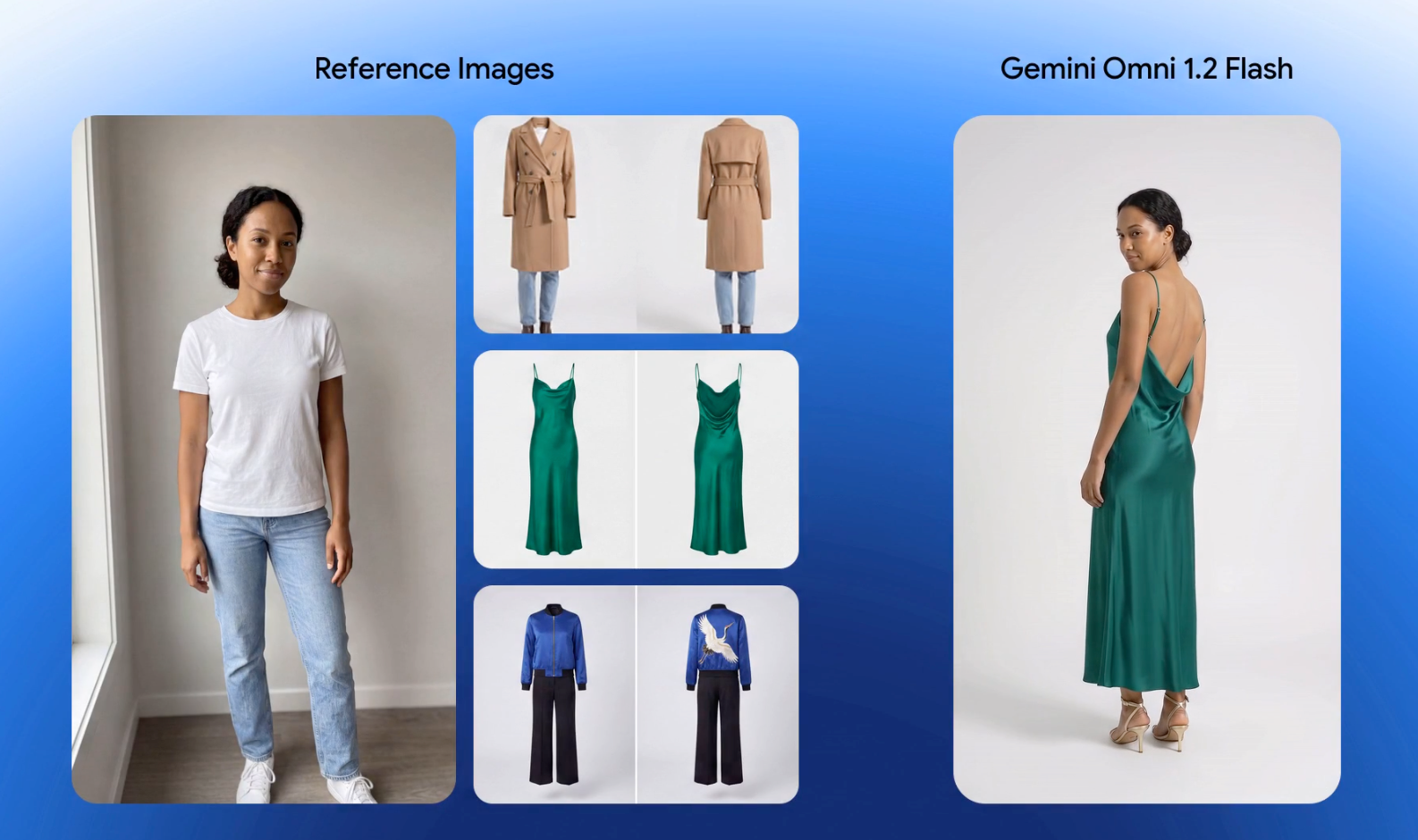
Google illustrates the point with a virtual try-on clip: from one photograph of a model plus product images of three outfits, it produced a continuous 15-second sequence with a 360-degree turn, keeping the model's identity and each garment's cut and drape intact. Google further reports fewer visual drifts and deformations across motion and cuts than the previous generation; smoother, more natural dialogue speech with tighter lip-sync and the ability to separate multiple speakers; and better handling of demanding continuous camera moves such as FPV drone flights or fast pull-back shots, with far fewer unwanted jump cuts.
The equally useful reading is the residual risk. Reference-based identity work is exactly where likeness, consent and trademark exposure concentrate: a system that faithfully reproduces a face, a garment silhouette and packaging lettering also faithfully reproduces them if the source image was not yours to use. Nothing in the November 6 announcement changes the rights questions a publisher or advertiser must settle before shipping; those are governed by the terms of each product channel, not by model capability. And consistency is asserted by Google rather than independently benchmarked here — expect the first third-party evaluations to probe packaging text and brand colours specifically, since small lettering is historically the first thing AI video gets wrong.
Can you tell whether a clip came from this model?
Yes, partially — and the limits matter as much as the feature. All Gemini Omni 1.2 Flash outputs embed SynthID, an invisible watermark written into pixels rather than metadata, which is designed to survive cropping, filters, frame-rate changes and lossy compression. Verification became considerably easier before this release: Google opened its SynthID Detector portal to the public on October 7, 2026, described in the announcement by Pushmeet Kohli, Vice President of Science and Strategic Initiatives at Google DeepMind, and it now also reads partner watermarks from OpenAI, NVIDIA and Kakao, with Apple expected to follow.
Two practical cautions for ordinary readers:
- It is not a universal AI detector. The portal's own FAQ says so plainly: a negative result means "no SynthID watermark found", not "not AI-generated". Absence of a mark is not proof of a human author.
- In-app checks have caps. Google's support documentation for the Gemini app states that verification handles one file at a time, up to 100 MB, with each video no longer than 90 seconds and no more than 5 minutes of video per day (support.google.com). So spot-checking a suspicious clip is easy; auditing a large archive takes planning.
Five misreadings worth skipping
- "A 30% cut means video is basically free." Cheap per second is not cheap per campaign: approvals, re-shoots of the wrong take and the human time spent writing instructions still dominate cost.
- "15 seconds means a finished ad." It is a native continuous shot, not a storyline, subtitle track or call-to-action screen.
- "Conversational editing is a timeline editor." It changes clip content by instruction; replacing an editor's cut, mix and export workflow is a different problem.
- "Watermark means provenance is solved." Only SynthID-partner content is verifiable, and only if the file still carries the mark.
- "It is live for everyone." Availability is rolling out channel by channel, and the Gemini app path is tied to Google AI Ultra subscribers.
Who should care: a fit check
| Reader | What changes now | Main watch-out |
|---|---|---|
| Solo creator | One 15-second master can be re-framed for several feed formats without re-rendering | Instruction time is still time; write prompts like a brief |
| Small brand or in-house marketer | Draft cheaply at 360p or 720p, upscale only the approved cut to 1080p or 4K | Packaging text and logo fidelity need a human check |
| Developer or platform team | Gemini API, Google AI Studio and Google Cloud Console access makes a tiered pipeline easy to script | Model the cost of the finish pass, not just the draft pass |
| Advertiser working in Google Ads | Native-length, editable clips feed directly into the channel where they are served | Disclosure and brand-safety rules still sit with you |
| Journalist, teacher, fact-checker | SynthID plus the public detector portal gives a repeatable verification step | A clean result proves nothing about non-partner models |
What to do in the next two weeks
- Re-baseline your assumptions on length: rewrite any brief that was being truncated to fit a 10-second cap, and test it at 15 seconds instead.
- Price your current workflow using the published 720p rate of $0.07 per second, then re-run the same scenario with three of five iterations done as edits rather than regenerations.
- Adopt the layered habit explicitly in your process notes: draft at 360p or 720p, revise, upscale only the final cut to 1080p or 4K.
- Build a rights checklist before touching reference inputs — person images, product photos, the sub-3-second video clip and audio prompts each need documented permission.
- Add a provenance step for anything you publish: capture the file, run it through the public SynthID Detector, and log the outcome.
- Hold judgement on quality until you have run your own failure cases — hands, text, fast camera motion, multi-speaker dialogue — rather than a highlight reel.
Our trend read: the next twelve months
This is analysis, not announcement. Three trajectories follow naturally from what Google put in place on November 6. First, the unit of competition shifts from "generate a clip" to "revise a clip cheaply", so expect rivals to publish edit-price tables, not just generation prices. Second, resolution tiering becomes normal purchasing behaviour: a draft, a revision and a finished 4K master will be budgeted as separate line items, which quietly rewards the platforms that keep the draft pass near-free. Third, provenance moves from a compliance afterthought to a distribution requirement — an imperceptible watermark plus a public checker plus browser-level verification means the interesting question stops being "is this synthetic?" and becomes "which channel is willing to serve content it cannot trace?"
Frequently asked questions
How long can a clip be now?
Anywhere from 3 to 15 seconds, natively. The previous generation topped out at 10 seconds, and Conversational Editing works across the full 15-second length.
What does the new price actually mean?
720p output is now $0.07 per second, a 30% reduction. Multiply by duration to get the draft cost; Google has not published separate per-second figures for 360p drafts or for 1080p and 4K upscaling.
Where can I use it today?
Rollout is gradual across the Gemini API, Google AI Studio, Google Cloud Console, Flow, Google Vids, the Gemini app for Google AI Ultra subscribers, and Google Ads. Availability differs by channel, so check the one you would actually work in.
Can I verify an AI clip before sharing it?
Use the public SynthID Detector for content from Google and its partner models. It only flags files that carry a SynthID watermark, and in-app verification is capped at 100 MB, 90 seconds per video and 5 minutes per day.
Is this a reason to switch tools?
Not by itself. Switch if your bottleneck is revision cost — too many full re-renders per approved clip — or if your distribution depends on Google Ads and Workspace formats. If your bottleneck is scripting, casting or sound design, a cheaper second changes very little.
Sources and further reading
- Google official announcement of Gemini Omni 1.2 Flash, November 6 (as cited in the master report)
- Google Support — "Verify AI-generated images, video and audio" in the Gemini app: https://support.google.com/gemini/answer/16722517
- Mountain Research — "Ad Length Impact on Attention is Minimal, But Content Tips the Scales": https://research.mountain.com/creative-analysis/ad-length-impact-on-attention-is-minimal-but-content-tips-the-scales/
- Unite.AI — Google opens the SynthID Detector globally with partner checks (October 7, 2026): https://www.unite.ai/zh-cn/google-opens-synthid-detector-globally-with-partner-ai-content-checks/
- Search Engine Land — Google Ads generative AI resizing of Performance Max video ads (August 17, 2026): https://searchengineland.com/google-ads-will-use-generative-ai-to-resize-performance-max-video-ads-485252
- CometAPI — AI video API pricing comparison, 2026: https://www.cometapi.com/ai-video-api-pricing/