
ItInsightsWorld Case Review: Perplexity's Teammates and the Rise of Long-Running AI Coworkers
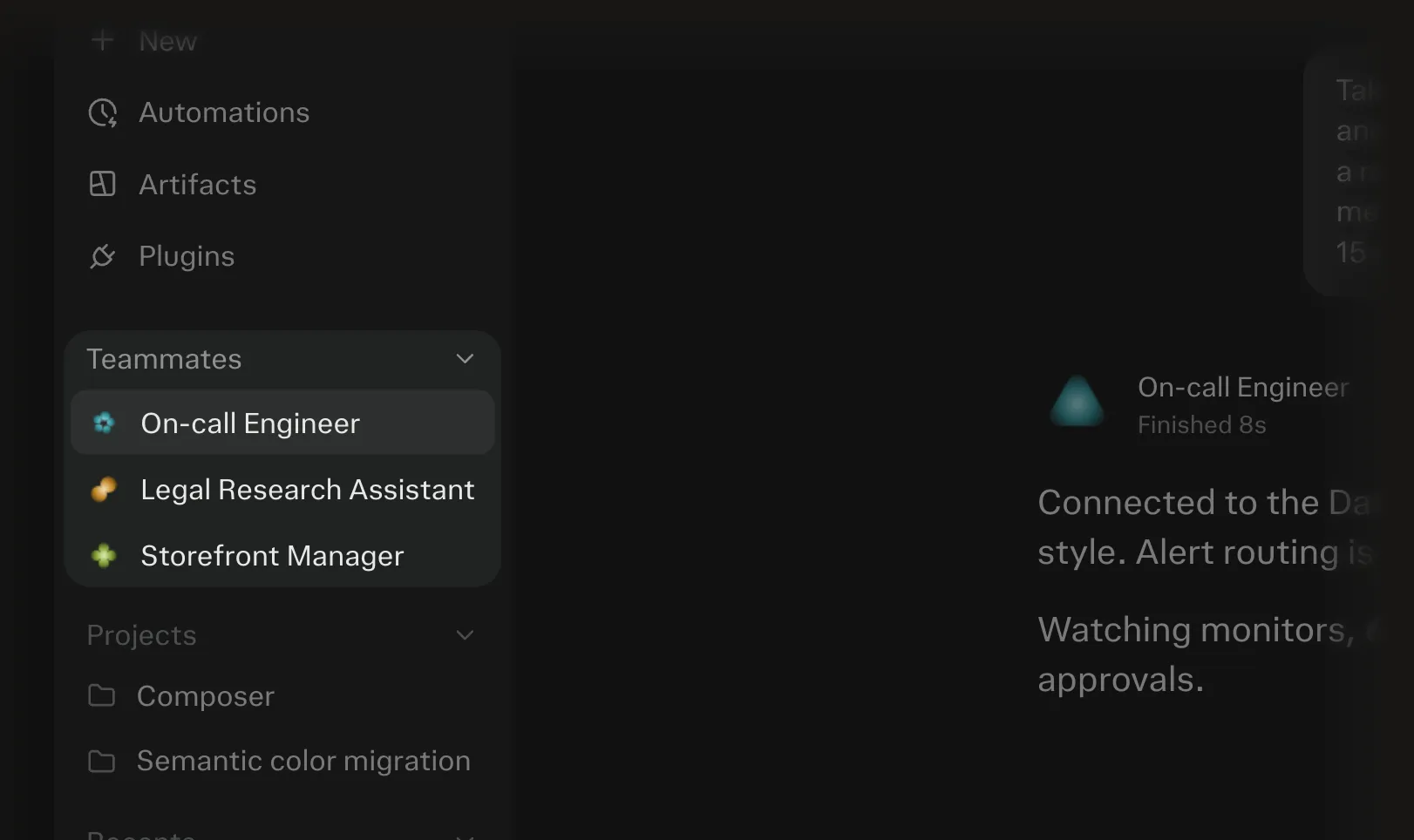
Perplexity's Teammates case shows that the next enterprise AI race is not about better answers, but about unfinished work. A few days ago, Perplexity introduced Teammates, long-running AI assistants built on Computer and opened first to $200 per month Perplexity Max subscribers on the web. The product moves from one-off chat to supervised, persistent project execution across Slack, memory, shared files, and team handoffs.
What changed in the Perplexity Teammates launch case?
The short answer: a search company repositioned its AI stack around work that lasts. Perplexity's official product page says Teammates are available today for Perplexity Max subscribers on the web, with iOS and Android planned. That availability pattern matters. It is not a free plug-in; it is a premium, limited release inside an existing subscription, which tells readers the company is testing agent workflows with users already paying $200 per month.
The process had three layers. First, Computer executes tasks in a user's device environment. Second, Teammates coordinate ongoing work by remembering goals, tracking status, and adjusting priorities. Third, Slack becomes the meeting point where people assign work and receive results. The result is less like a chatbot and more like a managed project workspace.
Perplexity has also recently described a longer path: Comet browser, launched July 9, 2025, gave AI assistant functions a surface inside browsing; Computer then moved assistant behavior into executable tasks; Teammates adds the management layer for projects that continue across sessions.
Why does long-running work matter more than faster chat?
Long-running work changes the value test: whether AI can keep context after the prompt ends. Perplexity says Teammates do not just follow commands; they monitor projects, react to changes, and continue moving. In a sales example, an agent notices a longtime customer stops ordering, reviews order history and support records, investigates why, then suggests a remedy or alerts the team. The value is not the reply; it is the closed loop from detection to action.
Each Teammate also keeps a separate, persistent conversation thread. A human can check progress, interrupt, redirect, or review outputs. Memory stores project goals, execution history, and shared files, so later tasks can build on earlier work without re-explaining context. For general readers, this is the practical difference between an answer machine and a coworking agent.
How does Teammates compare with Dots, Claude Duet, and Computer?
Perplexity is not alone in this race. OpenAI's Dots and Anthropic's Claude Duet also point toward multi-agent work, while Perplexity's own Computer supplies task execution underneath Teammates. The table below separates the roles, using the positioning described in the launch materials and product structure.
| Element | Role in the case | Reader takeaway |
|---|---|---|
| Computer | Executes concrete actions in software and web environments. | Useful for steps that are visible, repeatable, and reviewable. |
| Teammates | Coordinates continuing projects, priorities, handoffs, and follow-ups. | Best judged by whether it reduces rework, not only by speed. |
| OpenAI Dots | A comparable multi-agent direction among large AI providers. | Competition is about orchestration, not only model answers. |
| Anthropic Claude Duet | A comparable multi-agent direction among large AI providers. | Users should compare permission controls and task memory, not just features. |
| Slack | Collaboration surface where humans and agents exchange tasks. | Integration into daily tools is the fastest adoption path. |
What can a related Perplexity Computer case teach teams?
A related case from late February 2026, reported by Tom's Hardware, described a finance professional who said they had used Perplexity Computer to recreate a Bloomberg-style terminal interface, drawing both excitement and skepticism. The episode is useful not as a product claim, but as a caution: agent demos can compress days of setup into minutes, while reliability, data accuracy, security review, and workflow ownership still need human checks.
The reusable lesson is to split the case into two tests: demo capability and operating readiness. A capable demo may show that an agent can browse, generate, connect, and coordinate; an operating test asks who approves each step, what data is exposed, how errors are caught, and whether the agent remembers the right things.
What are the common misconceptions?
- Misconception: long-running means unsupervised. Reality: Perplexity's framing still keeps people checking, guiding, and reviewing work.
- Misconception: memory equals understanding. Reality: memory helps continuity, but poor memory can repeat old mistakes.
- Misconception: Slack integration is only convenience. Reality: it changes task routing, approvals, and accountability.
- Misconception: high price guarantees enterprise value. Reality: Gartner has warned many agentic AI projects may fail on cost, value, and risk controls.
Is a $200 per month AI agent subscription a business signal?
Yes. The pricing boundary is a business signal. Perplexity Max costs $200 per month, making Teammates one of the more expensive enterprise-oriented agent offerings. It suggests Perplexity is selling to heavy users who want automation depth, not casual search.
Gartner's June 25, 2025 prediction adds a counterweight: over 40 percent of agentic AI projects may be canceled by the end of 2027 because of escalating costs, unclear business value, or inadequate risk controls. For general readers, that means premium pricing and novelty are not proof of return.
How should readers judge AI coworker tools?
- Start with one workflow that has a measurable delay, such as follow-up, status tracking, or document retrieval.
- Give the agent a bounded task list, not the whole account, and define what it must escalate to a person.
- Check whether memory carries only approved facts, whether shared files stay inside the workspace, and whether every action has an audit trail.
- Compare outputs against three criteria: time saved, rework avoided, and errors introduced.
- Expand only after one full cycle, including exception handling and a clear rollback method.
FAQ: what general readers ask about Perplexity Teammates
Is Perplexity Teammates only a chatbot?
No. It is positioned as a persistent agent framework. A chatbot mainly answers; Teammates is designed to keep a project moving across tasks, threads, memory, and team tools.
Who can use it now?
The launch case gives early access to Perplexity Max subscribers on the web, with mobile availability promised for later. That makes it a premium test group, not a broad default feature.
Why does Slack matter?
Slack is where many teams already work. By putting agents into that channel, Perplexity lowers the friction of assigning tasks, receiving updates, and handing work between people and agents.
What is the biggest practical risk?
Continuity can become liability if context is too broad. An agent that remembers too much, accesses too many files, or acts without checkpoints may create compliance and error-propagation problems.
Final takeaway: what the Teammates case reveals about future work
Perplexity's chief executive, Aravind Srinivas, has described a future in which each worker may be surrounded by hundreds of dedicated agents, freeing people from repetitive coordination. The case does not prove that future is immediate; it shows how quickly AI platforms are trying to capture the space between a request and a completed job.
For readers, the practical judgment is simple: watch whether AI products can hold memory, respect permission boundaries, connect with existing team tools, and produce auditable results. If they do, the competitive question moves from which model writes faster to which system can finish work with less friction. For professionals, the action is to pilot agents on bounded, high-friction workflows before scaling them into client, financial, or security decisions.
References and sources
- Perplexity official Teammates product page, which lists web availability for Perplexity Max subscribers and upcoming mobile plans.
- Perplexity official Comet blog, which dates the browser launch to July 9, 2025.
- Gartner press release, June 25, 2025, on agentic AI project cancellation risks.
- Tom's Hardware, late February 2026 report on a Perplexity Computer Bloomberg-style terminal demo.