
Koito vs the China Price Benchmark: A Q&A Guide to Teardowns, Standardization and the About 30% Cut
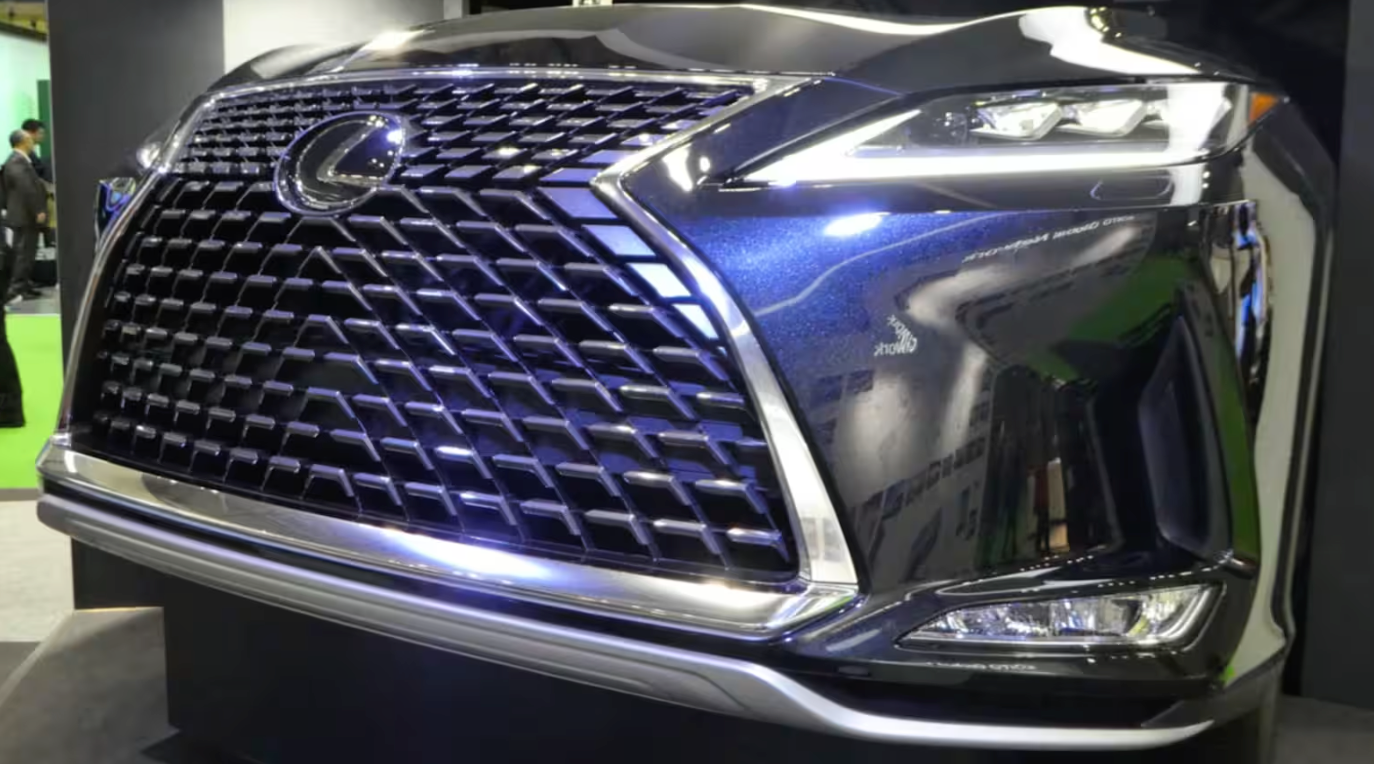
Short answer first: Koito Manufacturing is studying Chinese headlamps because China's price has become the industry benchmark. Every year the company takes apart about 100 products and keeps about 600 lamps for reference, and it now targets roughly 30% less design workload in fiscal 2030 than in fiscal 2025 by standardizing parts, sourcing materials from China and adding artificial intelligence.
Toyota and other Japanese brands sit among Koito's largest customers, which is exactly why a price shift set in China lands so hard on a Japanese supplier.
What is happening inside Koito's teardown room?
Conclusion: the room is not measuring style, it is measuring price.
Koito runs a "competitor analysis room" inside its flagship plant in central Japan's Shizuoka Prefecture, filled with car lamps collected from around the world. Each year the team disassembles about 100 products and records their structure, materials and LED bulb counts; combined with a separate warehouse, the archive holds about 600 headlamps in total.
Chinese entries are on the shelves, including lamps from BYD and from AITO, the brand jointly developed by Huawei and Seres. "I don't understand how they can reach that price," said one Koito engineer who began noticing the change in Chinese products about three years ago. "At this rate, we will lose."
That is the pivot: the teardown room's main job is now to work out how Chinese manufacturers hold their price advantage, as set out in the original Nikkei Asia report.
Why does one headlamp expose a cost gap so quickly?
Conclusion: a headlamp packs optics, electronics, plastics, assembly labor and regulation into a single box, so any gap in design discipline shows up immediately in the bill of materials.
It also exposes the whole company. Automotive lighting accounted for 93.5% of Koito's sales in the fiscal year ended March 2026, according to industry database MarkLines, with China contributing 6.0% of regional lighting revenue in that year, down from 6.8% a year earlier. Toyota remains the largest shareholder at about 21%.
There is a consumer angle here too. Lumileds said in a February 3, 2026 release that LED adoption in headlamps globally is approaching the 80% mark, that modular light engines are expected to represent about half of the solutions on the road and in design by 2027, and that replacing an LED headlamp frequently runs into thousands of dollars. In other words, the standardization Koito is chasing is an industry-wide trend, and it is the same lever that eventually decides how expensive a fender-bender repair becomes.
How is the about 30% reduction supposed to happen?
Conclusion: three levers, in sequence — redesign first, then buy cheaper, then automate and let AI do the repetitive engineering.
- Standardization. Koito starts by redesigning products and normalizing components such as the light source unit. Previously each model carried its own part design; now headlamps with completely different exterior appearances will share identical internal parts, and larger purchase volumes per part should cut procurement cost.
- Sourcing. Once quality and supply-chain reliability are confirmed, the plan is to buy lower-cost plastics and other materials from China. "As long as it meets our quality standards, the cheaper the better," said Masami Uchiyama, Koito's executive vice president. The company says it has already found a method that could halve the cost of the next-generation light source unit.
- Automation and AI. In one factory in Shizuoka Prefecture, AI-equipped cameras and robots are already moving parts, which removes the need to rebuild equipment every time a model changes. In product development, AI is planned to pool historical design data, current regulations and information on similar products, assisting with 3D data creation and performance simulation.
Koito intends to bring AI into product development around 2030, and its stated target is to cut design workload by about 30% in fiscal 2030 compared with fiscal 2025. Uchiyama has put the strategic frame bluntly: "China's price is now the industry benchmark," and he has urged staff to learn from Chinese makers.
What changes part by part: old cost model versus the new benchmark?
| Cost lever | How Koito used to work | What the China benchmark forces |
|---|---|---|
| Part design | Separate component designs for each vehicle model | Shared internal parts across different exterior styles |
| Procurement | Smaller, model-specific orders | Standard parts pooled into larger purchase volumes |
| Materials | Home-market suppliers as default | Lower-cost plastics sourced from China after quality checks |
| Light source unit | Cost treated as fixed | Halving the cost of the next-generation unit |
| Production line | Equipment rebuilt at every model change | AI cameras and robots that adapt without rebuilding |
| Engineering effort | Manual 3D data and simulation work | AI to assist 3D data and performance simulation around 2030 |
Is Koito pulling out of China?
Conclusion: it is narrowing, not leaving.
The company hopes these measures will narrow the price gap with Chinese competitors, but in the here and now it is struggling in China. It has decided to close two factories there and concentrate its business in Guangzhou, a move that mirrors the predicament of Japanese carmakers generally, since most of Koito's China sales come from Japanese brands.
At the same time, Koito's stated goal is to win more business with Chinese automakers such as BYD and with Tata Motors of India. The Chinese market is therefore playing a double role: it sets the cost yardstick, and it is the growth arena the supplier must re-enter on different terms. It is also not standing still at the top — BYD's luxury Yangwang debut shows the same supply base pushing into premium territory, not just price.
What should a general reader actually do with this story?
Conclusion: treat it as a three-to-five-year price signal, not a headline about one lamp maker.
- Watch the part, not the brand. When a supplier starts standardizing internal components across models, prices for that component usually fall within two to three product generations.
- Ask about repair cost when comparing trims. A cheaper car with a proprietary, fully integrated LED headlamp can cost more over five years than a slightly dearer one with modular units.
- Read "quality gate" language carefully. Material switching is conditioned on verified quality and supply-chain reliability; that is a sourcing change, not a cut in standards.
- Track the AI workload metric. A design-workload target of about 30% below fiscal 2025 levels by fiscal 2030 tells you where engineering cost, and eventually development speed, is heading.
- Expect the benchmark to keep moving. Average discounts on BYD vehicles climbed to a record 10% in March 2026, per Bloomberg data cited by Automotive World, so the price Koito is chasing is a moving target.
Which ideas about this story are commonly mistaken?
- "This is about cheap Chinese labor." The teardown findings point to product design, procurement and production methods — the price gap is systemic, not a wage line item.
- "Cheaper materials means lower quality." The stated rule is the opposite: lower-cost inputs are adopted only after quality and supply-chain checks clear.
- "Closing two factories in China means retreat." The same plan concentrates remaining operations in Guangzhou while adding Chinese and Indian customers.
- "Cutting costs means cutting features." Trimming expensive technology to hit a price point is an industry-wide pattern, not a Japanese peculiarity — see how Mercedes traded its L3 Drive Pilot system for L2++ assistance in our earlier analysis.
FAQ: short answers to the questions people search for
How many products does Koito take apart each year?
About 100 products a year in the Shizuoka teardown room, from an archive of roughly 600 headlamps held with a separate warehouse.
Which Chinese brands are being studied?
Lamps from BYD and from AITO, the brand jointly developed by Huawei and Seres.
What is the cost target and when?
Around 2030, AI enters product development, with the goal of roughly 30% less design workload in fiscal 2030 than in fiscal 2025.
Why does standardizing parts save so much money?
Because identical internal components across differently styled lamps let one order volume cover many models, which lowers unit procurement cost and removes repeated design work.
Does any of this change what I pay for a car?
Indirectly and with a lag. Headlamps are a small share of vehicle cost, but the same logic — modular light engines, cheaper qualified materials, automated lines — is what eventually lowers both list prices and repair bills.
Sources and further reading
- Nikkei Asia, "Japan headlight king Koito tears down Chinese rivals' lamps for bright ideas" (November 9, 2026).
- MarkLines company profile, Koito Manufacturing Co., Ltd. — regional sales split and Toyota's equity stake.
- Lumileds, "Modularization of Automotive Light Sources Lowers Costs, Improves Repairability and Sustainability" (February 3, 2026).
- Automotive World, "China's EV price war rages on as BYD sets record discounts" (April 2026), citing Bloomberg China auto market data.
Written by James Hartley for IT Insights. Corrections and reader questions: contact@itinsights.com.