
Mercedes Autonomy Route Shift: Why Drive Pilot Is Out, L2++ Is In, and L4 Still Takes Time
Mercedes-Benz has narrowed its near-term autonomy promise: it removed the L3 Drive Pilot system from the new S-Class and the updated EQS, shifted attention to L2++ MB.DRIVE ASSIST PRO, and kept L4 as a later test-led goal. The change is less a retreat from automation than a correction: the first commercially certified hands-off, eyes-off path proved too narrow, too expensive and too hard to value.
What changed in the Mercedes autonomous-driving route?
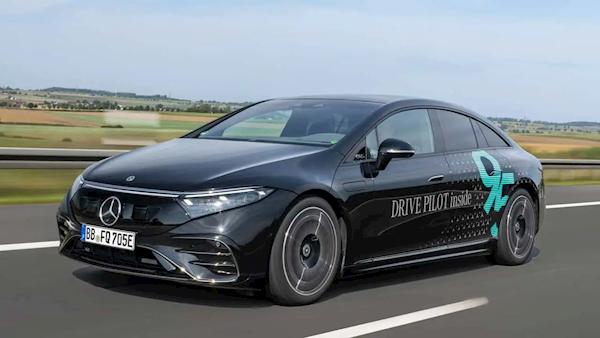
Drive Pilot once stood at the centre of the global debate about production autonomy. In late 2021, the system received approval from the German Federal Transport Authority, making it a landmark mass-produced L3 system that could be legally used on roads. In 2023 it also moved into the United States, covering Nevada and California. When active, the system let the driver take hands off the wheel and eyes off the road while watching video or playing a game; if an accident occurred during that approved mode, Mercedes-Benz would bear responsibility.
The difficulty was the operating envelope. Drive Pilot worked at a maximum speed of only 64km/h, mainly in congested motorway traffic, in clear daytime weather and within high-precision map coverage. That made it valuable in stop-and-go jams, but far less useful in the normal highway situations buyers imagine. The hardware and certification burden also showed in the price: the optional system in Germany cost 5000 to 9000 euros, while in the United States the system required a $2,500 annual subscription. With low use frequency and limited perceived value, January this year’s new S-Class no longer offered Drive Pilot, and the revised EQS dropped the configuration as well.
Why does L2++ look easier to adopt than L3?
Under the widely used SAE J3016 framework, L2 partial automation keeps the driver as the continuous supervisor, while L3 conditional automation transfers the dynamic driving task to the system inside a defined set of conditions, with a fallback user prepared to resume control. L4 is higher still: in its approved operating domain, the system can complete the driving task and fallback without a driver. For a mass-market premium sedan, those differences are not marketing labels; they change sensor redundancy, software assurance, legal exposure and the cost of selling the feature. Mercedes-Benz’s new emphasis on L2++ MB.DRIVE ASSIST PRO accepts the supervisory rule of L2 while delivering many of the everyday convenience actions people actually pay for.
What replaces Drive Pilot on the new S-Class?
MB.DRIVE ASSIST PRO is an L2++ driver-assistance package rather than a hands-off, eyes-off system. It is designed for assistance from the start point to the destination, supporting lane changes, intersection handling, turning, and traffic-light recognition and response on both highway and city roads. The new S-Class uses up to 27 sensors, including 10 cameras, 5 millimetre-wave radars and 12 ultrasonic radars, with a computing platform rated at 254 TOPS.
Even so, the legal boundary remains L2: the driver must keep hands on the steering wheel and eyes on the road, and responsibility stays with the driver. The system first appeared in the Chinese market, followed by rollout plans for the United States and Europe. That sequencing reflects a practical commercial choice: a route-based assistance package can be useful every day, while a narrow L3 mode can be impressive legally but rarely usable.
How do Drive Pilot, MB.DRIVE ASSIST PRO and L4 testing differ?
| Plan | Automation level | What the driver must do | Key limitation | Mercedes-Benz status |
|---|---|---|---|---|
| Drive Pilot | L3 | Can disengage from driving inside the approved conditions | 64km/h, traffic-jam style motorway use, weather and mapped-area limits | Removed from the new S-Class and revised EQS in January this year |
| MB.DRIVE ASSIST PRO | L2++ | Must keep hands on the wheel and eyes on the road | Driver remains responsible, so it is not self-driving | Deployed first in China, then planned for the United States and Europe |
| L4 Robotaxi programme | L4 | No driver is required inside the approved operating domain | Still tied to fleet testing, regulation, geography and liability design | Public-road tests in Abu Dhabi with S-Class prototypes; Burzer expects production after 2030 |
What does the Abu Dhabi L4 case reveal?
Burzer’s prediction is that L4 vehicles will only reach production after 2030, then spread gradually. The present step is not selling a consumer car that can drive itself everywhere; it is collecting operating data in a controlled environment. Mercedes-Benz is working with Momenta on L4 Robotaxi public-road tests in Abu Dhabi using S-Class prototype vehicles. The Abu Dhabi case also points to a fleet model rather than a retail model: Mercedes-Benz, Momenta and local operator Lumo announced a luxury robotaxi fleet there in December 2025, according to Momenta and Mercedes-Benz media materials.
For readers, the important signal is timing. A commercial robotaxi test programme can begin before ordinary customers can legally and affordably buy a true L4 sedan. The fleet model lets Mercedes-Benz place advanced vehicles in a managed geography, while the retail model remains constrained by regulation, liability, production cost and customer value.
What should ordinary buyers decide?
- Do not assume the flagship option is still available. If shopping for a new S-Class or EQS, check whether Drive Pilot is present; it was dropped from the latest versions discussed in this shift.
- Treat L2++ as assistance, not autonomy. MB.DRIVE ASSIST PRO can help with lane changes, turns, intersections and traffic lights, but the driver remains the legal and practical supervisor.
- Compare responsibility, not just sensors. A car can carry 27 sensors and still be L2 if the human must respond. The level of automation is defined by what the system is allowed to do and who is accountable.
- Check ownership risk in key markets. For Chinese buyers, use our practical Mercedes VIN recall guide before purchase, because autonomous-system changes and vehicle recalls are separate issues that can affect value.
- Watch L4 as a service first. Abu Dhabi shows how robotaxis can create a test corridor before consumer L4 vehicles become realistic.
Common misconceptions
- “More sensors mean a self-driving car.” Sensor count is only an input. L2, L3 and L4 differ by supervision, operating design, fallback responsibility and regulatory acceptance.
- “Dropping Drive Pilot means Mercedes-Benz gave up on advanced driving.” The route is different: practical L2++ retail assistance now, while L4 robotaxi testing continues.
- “L3 is automatically safer because the system takes responsibility.” Responsibility may shift inside a narrow approved mode, but takeover requests, sensor limits and legal interpretation still shape real-world safety.
- “254 TOPS is enough to call a car autonomous.” Computing power matters, but the certified function, sensor fusion, redundancy and law determine the level.
Frequently asked questions
Why did Mercedes-Benz remove Drive Pilot from the S-Class and EQS?
Because its value range was too narrow and too costly for buyers. The L3 system was capped at 64km/h and worked mainly in congested motorway traffic, clear daytime weather and mapped areas. Its cost was also high: 5000 to 9000 euros in Germany, or a $2,500 annual subscription in the United States.
Is MB.DRIVE ASSIST PRO better than Drive Pilot?
They solve different problems. Drive Pilot was L3 only inside approved conditions, while MB.DRIVE ASSIST PRO is L2++ and useful across many everyday driving tasks. The newer system is more practical, but it does not remove the driver’s supervisory duty.
When will Mercedes-Benz produce L4 vehicles?
Burzer expects L4 vehicles to reach production after 2030. Until then, Mercedes-Benz is testing L4 in a managed Robotaxi setting with Momenta in Abu Dhabi.
What is the simplest rule for using any driver-assistance feature?
Use the “hands, eyes, exit” rule: keep your hands on the wheel, your eyes on the road, and always be ready to exit the automated assistance mode immediately if the system requests help or behaves unexpectedly.
References
- ANSI Blog, SAE levels of driving automation, https://blog.ansi.org/ansi/sae-levels-driving-automation-j-3016-2021/
- Car and Driver, Mercedes-Benz Drive Pilot review, https://www.caranddriver.com/reviews/a45326503/mercedes-benz-drive-pilot-review/
- Momenta, Mercedes-Benz, Momenta and Lumo launch robotaxi fleet in Abu Dhabi, https://www.momenta.cn/en/article/374.html
- Mercedes-Benz Media, robotaxi ecosystem update, https://mercedes-benz-media.co.uk/releases/1675