
Jensen Huang Under Board Inquiry: A Step-by-Step Checklist for Nvidia Founder-CEO Risk
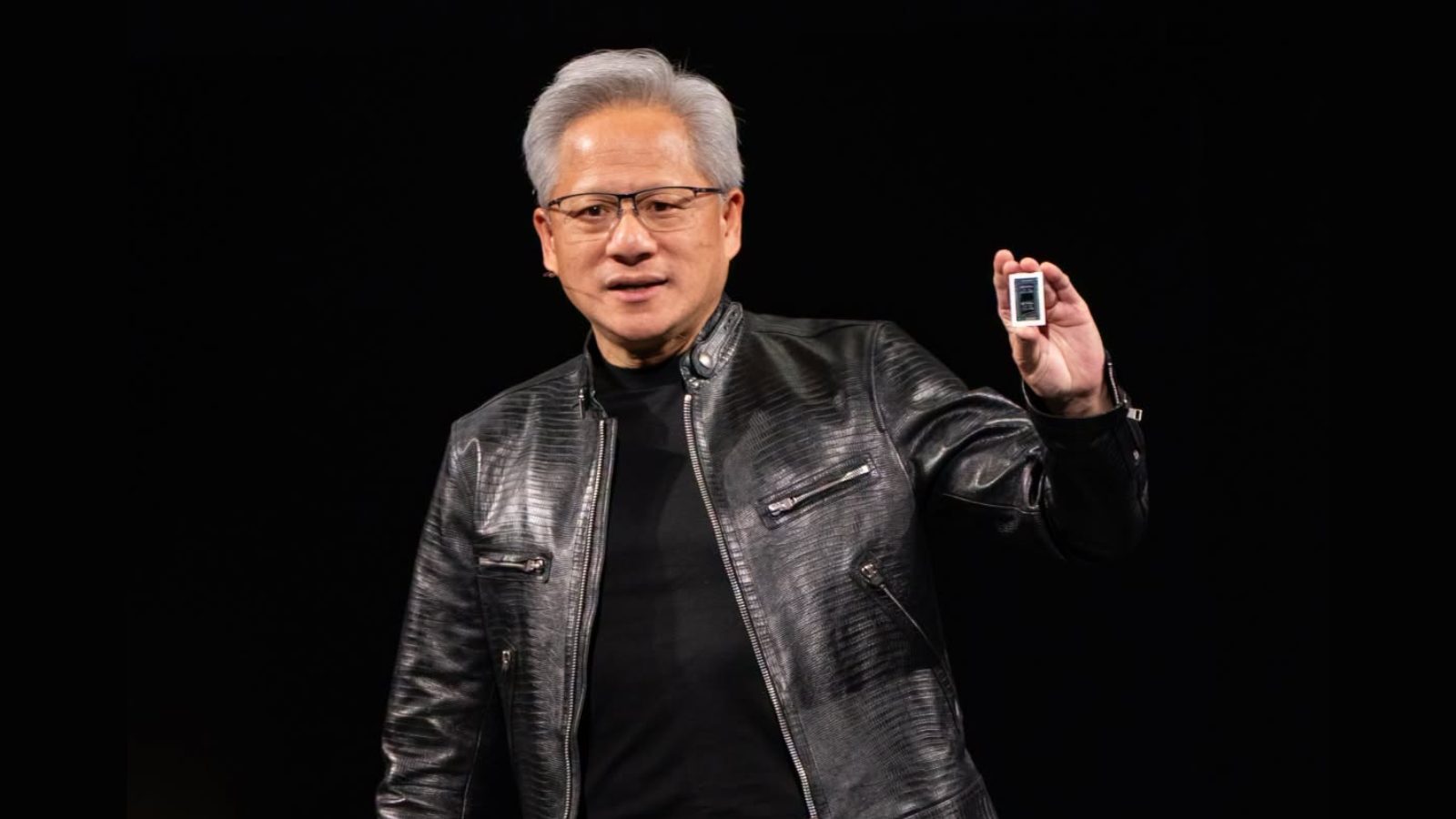
Conclusion first. Nvidia’s board has opened an inquiry into its founder and chief executive Jensen Huang after media reports claimed Alice Huang, former managing director of Singaporean firm Megaspeed, was a Chinese spy. The company says it sees no indication that its secrets or national security were compromised, and the shares are down more than 7% as of today. If your GPU roadmap, contract or portfolio sits behind Nvidia, the working question is what to do this week.
What is being investigated, and who is doing it
Treat this as a governance event, not a court case. The board is testing whether a customer relationship that carried a private tie was identified, declared and reviewed properly — and whether anyone was steered around a control.
The trigger was reporting rather than an internal audit. After media claims that Alice Huang — the former managing director of Megaspeed, a Singaporean firm with existing business ties to Nvidia — had acted as a Chinese spy, the board opened an inquiry covering allegations involving her and involving its own chief executive.
On the company’s own record the remit is broad and the posture is cooperative: “The board's inquiry will examine all available information. Jensen Huang fully supports the review and has committed to cooperating with it. The board has confidence in Jensen Huang and his leadership team and will provide further updates as appropriate.” Note how narrow the accompanying assurance is: Nvidia says it has no reason to think its secrets or national security were compromised, which is a smaller claim than “nothing happened”.
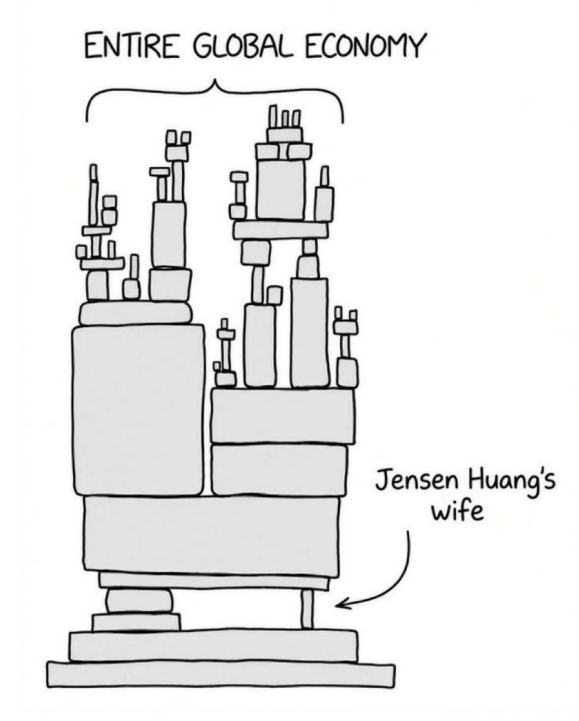
On the personal record, Huang did not try to manage the story away. A memo circulated to staff acknowledged an extramarital affair and apologised to his family and colleagues: “I was unfaithful to my wife. My actions hurt her and our children. There is no excuse for what I did. I am deeply sorry,” he wrote. Inside Nvidia that admission lands in a household already visible on the org chart, since Huang’s children also work on his staff.
Two dates fix the sequence. Reuters, BBC, AP News and CNBC all reported the probe on 8 November 2026, with AP News describing the board’s focus as reports that Huang was the target of a foreign intelligence effort. A day later, the Chinese financial outlet National Business Daily reported that on 9 November 2026 a shareholder had filed a proposed class action against Nvidia and its chief executive, alleging the relationship had been kept from investors. That second item is a reported claim, not a finding.
The same outlet’s reading of company documents is useful for anyone drafting their own policy: Nvidia’s code of business conduct, published in 2020, lists personal relationships among the factors capable of creating an actual or potential conflict of interest, requires the person involved to step out of the decision role, and asks staff to test every call against three questions — is it legal, does it fit the code and policies, and could you explain it if it surfaced on social media. That is the yardstick the reviewers will be holding, whether or not they publish it.
Is the 7% slide information or froth?
Conclusion first: the price move is measurable, the damage is not yet.
Nvidia’s stock fell more than 7% as of today, removing roughly US$250 billion from the market value of the world’s second-most valuable company, BBC reported. Even after the sale the group was valued around US$4.31 trillion, still well ahead of major rivals such as Microsoft. Charles Lankester, EVP of Reputation at Ruder Finn Asia, described the decline as part of the froth and asked the question that decides whether it sticks: “What has fundamentally changed in the business? What long-term damage will result from this?”
Here is the baseline for answering it, taken from the filings rather than the chatter. Nvidia’s Form 10-K for the fiscal year ended 25 January 2026 records revenue of $215.9 billion, up 65% year on year, with Data Center revenue of about $194 billion, up 68%. In the quarter released on 28 October 2026 the company reported Data Center revenue of $75.2 billion, up 92% from a year earlier. No line in that arithmetic was rewritten by the headlines. Our analysis — not the company’s — is that what investors are repricing is a confidence discount on a single decision-maker, and the size of that discount depends on the process, not on the apology.
| Bucket | What is already in the open | Effect on the business |
|---|---|---|
| Verified | Board inquiry opened; market capitalisation 7% off; CEO apology in a staff memo | None measurable so far |
| Reported, unproven | Media claims that Alice Huang was a Chinese spy | Unknown until findings |
| Still missing | Who runs the review, its scope, its reporting line, its timetable | This is the governance variable |
| Already visible | FY2026 revenue of $215.9 billion, up 65% (Form 10-K) | Fundamentals unchanged by the story |
Why the leather jacket stopped doing its job
For years Jensen Huang ran the most human-looking brand in a sector of polished executives: the trademark jacket, late-night street food stops, photographs with fans, and a company sitting at the centre of the global artificial intelligence boom. That persona is now being displaced by temporary internet memes, and memes are a terrible place to park a governance question.
Oliver Ellerton, a director of Ellerton & Co. Public Relations, splits the two layers cleanly: “The street food and familiar jacket make him approachable, but his reputation also rests on seeing what others miss and making good decisions under pressure. The leather jacket makes him recognisable. His judgment makes him credible,” Ellerton added. He also notes the size of the stage: Nvidia’s technology sits at the centre of the global AI race and of politically sensitive arguments over access to advanced computing, which is why “The more strategically important the company, the less its board can rely on personal reassurance from the founder,” Ellerton said.

Three professional readings — and what each one is betting on
Conclusion: the experts disagree because they are weighting different evidence — one looks at oversight gaps, one at crisis half-life, one at the legal threshold.
Emma Smith, the CEO of Sandpiper Communications, is the sceptic, and her case rests on timing: “The fact that the New York Times started looking into Megaspeed last year and US officials have suspected Megaspeed of smuggling Nvidia’s most advanced chips into China for some time, begs the question why he didn’t suspect the same? Thus putting a very large question mark over his judgment.”
Lankester takes the opposite bet. “With very few exceptions, the majority of crises are like emergency flares fired into the sky: very hot, very bright but ultimately they very quickly burn out. I suspect this will be the case for Jensen Huang. He will not be the first CEO, or indeed, anyone, to get caught out in a relationship outside of their marriage.” He adds a detail that changes the risk calculus: “I would imagine in his circle, this relationship has been known for years. My forecast? The company will close ranks, the story will move on very fast and the share price will be back to where it was in days.”
Shawn Balakrishnan, APAC partner at Penta Group, sits between them: nobody should prejudge the review, but the company’s strategic importance cannot substitute for scrutiny.
| Reading | Held by | Path expected | Trigger that breaks it |
|---|---|---|---|
| Judgment under a question mark | Emma Smith, Sandpiper Communications | Slow recovery; oversight gaps stay on the record | Review shows the relationship was declared and handled |
| Flare that burns out | Charles Lankester, Ruder Finn Asia | Company closes ranks, price recovers in days | Findings touch intelligence activity or export controls |
| Institution over individual | Shawn Balakrishnan, Penta Group | Outcome follows whether findings are substantiated | Board discloses scope, timetable and remediation early |
How does a board-led review actually run? Six steps to watch
Most coverage stops at “investigation launched”. Published guidance for boards — Paul Weiss’s Investigations Playbook: Considerations for Boards, the ICLG corporate investigations chapter and the Association of Corporate Counsel’s initiating checklist — describes a fairly standard sequence. Watch Nvidia against it; the steps, not the press release, decide whether the finding is credible. This section is our reading of normal practice, not a description of Nvidia’s process, which has not been published.
- Scope and severity. Outside counsel first defines what is being examined and what is out of bounds. A scope that stops at the romance and excludes the customer file answers the wrong question.
- Reporting line. Counsel is engaged by and reports to independent directors, not to the chief executive under review. This single choice separates a review from a PR exercise.
- Custodians and legal hold. Emails, chat, deal files and calendars are preserved before anyone is interviewed, including records on the Megaspeed relationship.
- Privilege strategy. The board decides early what stays protected and what can be told to shareholders — the hardest call in the whole sequence.
- Conflict and transaction review. Who recommended the arrangement, which exceptions were approved, when the board learned of it, and whether policy applied to the top floor as well as the shop floor.
- Findings, remediation, disclosure. Then the corrective work: training, controls, workflow changes or discipline — and a statement of what changed.
What should buyers, employees and investors each do now?
Ellerton expects the audiences to split: developers will keep judging the silicon, staff will judge whether the founder is held to the same standard as everyone else, and retail holders will price confidence in the business against doubt about the person running it. Using a product or owning a share is not the same transaction as restoring trust in a leader.
For enterprise buyers and public-sector procurement teams:
- Separate delivery risk from reputation risk, and ask for it in writing. A useful marker came from South Korea, where officials said signed GPU deliveries were continuing despite the controversy — see our case review of South Korea’s Nvidia GPU delivery update.
- Re-read your contract’s export-control, compliance and termination clauses before you need them, and map who at the vendor can actually sign an exception.
- Ask your vendor contact one blunt question: has any change in governance affected allocation, support or lead times?
For employees and middle managers:
- Expect document-preservation notices; do not clean up mailboxes or chats, even for housekeeping.
- Keep decisions traceable — the value of a written rationale rises sharply during a review.
- Watch whether the standards applied to the founder match those applied to everyone else; that is the signal Ellerton says staff will read.
For investors and board observers:
- Ask the boring questions: who sits on the reviewing committee, who is the independent lead director, and where is the succession plan. A comparison of the ownership and control routes is set out in our piece on Nvidia’s succession gap across three control scenarios.
- Remember that removal is procedural, not mythical: National Business Daily’s reading of Nvidia’s filings noted Huang holds about 3.58% of the shares with no super-voting rights, so a board majority is enough to replace him.
- Judge the finding, not the headline. Balakrishnan’s warning: if findings are substantiated and involve intelligence activity or export-control circumvention, the issue moves beyond personal reputation into governance and corporate accountability. “The broader lesson is that a company needs credibility beyond its founder. A strong leadership team, independent oversight and clear standards help ensure that confidence in the business can withstand questions about the person at the top.”
What the chief executive owes the reviewers is narrower and clearer. Ellerton’s list: “Independent directors and investigators need the access they require, findings should be communicated as far as legally and responsibly possible, and any weaknesses identified must be addressed. He must also accept consequences if the findings warrant them.”
And he is blunt about the founder-worship trap. Charismatic founders attract talent and explain complicated businesses, but “They attract talent, explain complicated businesses and give people confidence in the future. The risk comes when admiration makes it harder for colleagues or boards to challenge them. Being exceptional at building a company does not make someone exceptional at every decision.” The institutional test follows: “Particularly at a strategically important business, stakeholders need confidence in the institution as well as the individual. If a company can only reassure people by saying its founder is irreplaceable, it has just described its biggest vulnerability.”
Cynthia Chan, the Hong Kong and North Asia lead at Bud Communications, called the apology a correct first step and then moved the goalposts to where they belong: “In business, results are the most credible form of contrition. Investors and employees will forgive a lot from a leader who keeps winning, and they will forgive very little from one who only talks about change.”
Five things people get wrong about founder-CEO crises
- “An apology ends it.” It opens the file. The closing entry is the finding and the remediation.
- “A strong share-price bounce proves nothing happened.” Bounces measure attention, not control quality.
- “Product loyalty covers leadership risk.” Developers may keep buying; that is a separate judgment from governance.
- “The founder is irreplaceable, so relax.” That sentence is itself the disclosure of the risk.
- “Everything will be in the final statement.” Privilege and employment law cap what a board can publish, so read the process for the gaps.
Frequently asked questions
Has Nvidia been found to have leaked anything?
No. The company has said it had no reason to think its secrets or national security had been compromised, and the board review is still examining the allegations.
Does the investigation mean Jensen Huang is about to be replaced?
Not automatically. It means the board has chosen to answer a question in public. Replacement would require a board majority, which is why the composition of the reviewing committee matters more than the tone of the next memo.
Should a customer change its AI procurement plan today?
Not on this news alone. Review contractual protections, escalation paths and second-source assumptions, and re-test them if the findings include export-control or conflict-of-interest conclusions.
Why does a private affair become a company matter?
Because the other party sat in a commercial relationship with the company. Once a personal tie touches a customer, it becomes a conflict-of-interest question, and conflict questions are governance questions.
Next steps: what to do in the next seven days
If you run technology procurement, a team or a portfolio, do not wait for the finding. Write down, in one page, the two decisions at your organisation that only one person can approve; check whether anyone outside that person’s chain of command can see them. Then watch three things in the Nvidia story: who is named as running the review, whether the customer relationship is inside its scope, and whether the board says what changed afterwards. Absent those, the only real news is the share price — and share prices recover from noise far faster than companies recover from unexamined exceptions.
Written by Jack Ross, IT Insights.
Sources consulted
- NVIDIA Corporation, Form 10-K for the fiscal year ended 25 January 2026 (SEC)
- NVIDIA Newsroom, first quarter fiscal 2027 results
- Reuters, Nvidia probes whether CEO Huang was target of foreign intelligence (8 November 2026)
- BBC News, Nvidia launches investigation into CEO’s affair report
- AP News, Nvidia investigates reports about CEO Jensen Huang
- National Business Daily, reading of Nvidia’s governance documents and code of business conduct (10 November 2026)
- Paul Weiss, The Investigations Playbook: Considerations for Boards
- ICLG, Corporate Investigations Laws and Regulations chapter (2025)