
Jensen Huang's 801 Million Jointly Held Shares: A Step-by-Step Guide to Reading Nvidia's Ownership Filing | ItInsightsWorld General

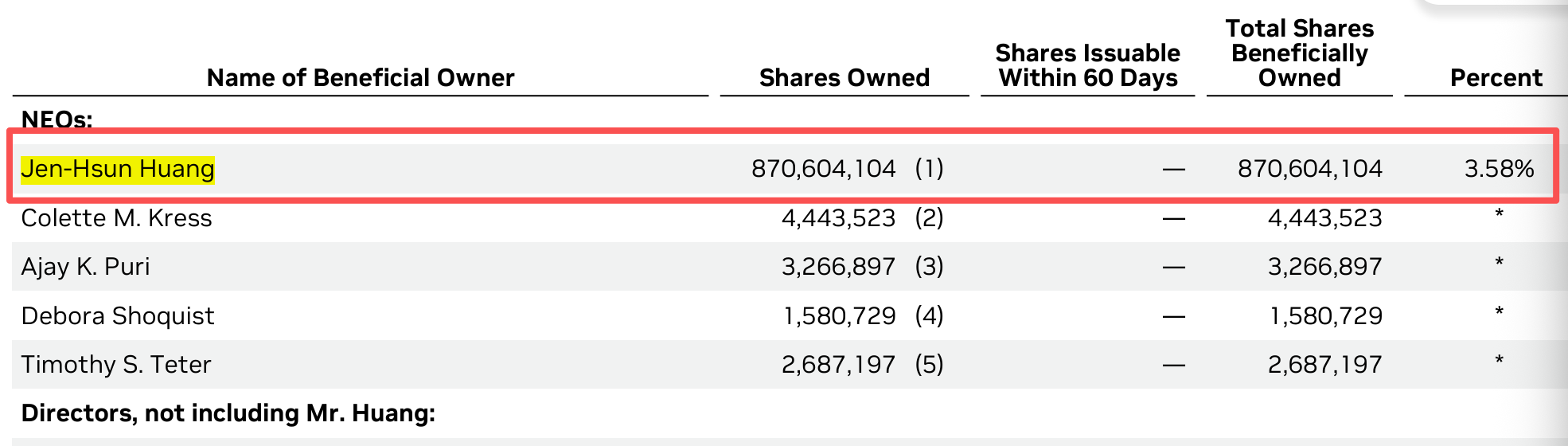
Nvidia's fiscal 2026 annual filing lists about 801 million shares — roughly $149.5 billion — as jointly held by founder and CEO Jensen Huang and his wife Lori through three trusts, four limited liability companies and a family foundation. On November 8, 2026 the board opened an independent review. The short answer for readers: this is a disclosure map, not a court ruling. Below is a four-step way to read it, plus the misreadings to avoid.
This piece is written for non-specialists. No derivatives models, no legalese — just the checklist we use whenever a headline about one person's wealth gets attached to a company you own or follow.
What does "jointly held" actually mean in the Nvidia filing?
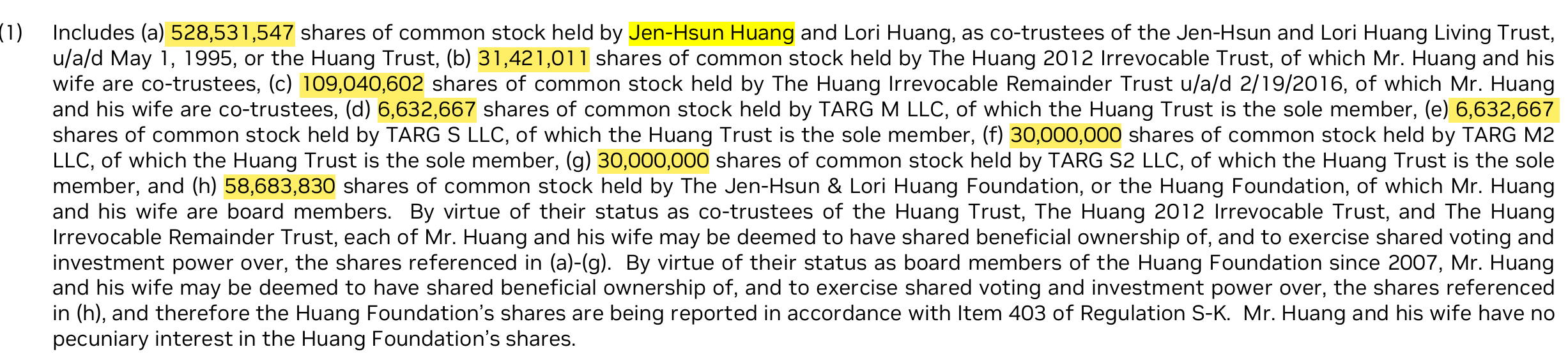
Conclusion first: the filing says both people may be treated as having a shared beneficial interest, which is a reporting concept rather than a verdict on who owns what. Nvidia's fiscal 2026 annual filing states that Jensen Huang and Lori serve as co-trustees of the three trusts, so under the applicable rules each of them may be deemed to hold joint beneficial ownership of the shares listed below, along with joint voting rights and joint disposal rights.
Broken down, the jointly disclosed block looks like this:
- Family living trust — about 529 million common shares. Held by Jensen Huang and his wife Lori as co-trustees of the Jen-Hsun and Lori Huang Living Trust (the Huang living trust), established on May 1, 1995.
- Second trust — about 31.42 million common shares. Held by The Huang 2012 Irrevocable Trust (the Huang 2012 irrevocable trust), with both spouses as co-trustees.
- Third trust — about 109 million common shares. Held by The Huang Irrevocable Remainder Trust (the Huang irrevocable remainder trust), established on February 19, 2016, with both spouses as co-trustees.
- Four limited liability companies — about 73.27 million shares combined. The sole member of each of the four LLCs is the Huang living trust.
- Foundation — about 58.68 million common shares. Held by the Jen-Hsun & Lori Huang Foundation (the Huang family foundation).
The foundation is the special case. Jensen Huang and Lori have served as trustees of the foundation since 2007, so they may likewise be treated as joint beneficial owners with joint voting and disposal rights — but the couple holds no economic interest whatsoever in those shares.
Pooling the trusts, the LLCs and the foundation gives the about 801 million figure. That sits about 69.66 million shares below the 871 million total reported for Huang himself, and the Nvidia filing does not disclose where that gap comes from. That unexplained remainder is the first thing a careful reader should note: public filings routinely leave pieces unspecified.
One more number worth having in mind: market coverage of the same Nvidia report puts Huang's stake at 3.58% of the company, valued at about $162.5 billion — which means the jointly disclosed block accounts for more than 90% of the headline figure. Source: Tonghuashun Finance, citing the Nvidia fiscal 2026 report.
How do the vehicles compare? A quick side-by-side
| Vehicle in the filing | Shares | Huang and Lori's role | Practical read |
|---|---|---|---|
| Jen-Hsun and Lori Huang Living Trust | about 529 million common shares | co-trustees; created May 1, 1995 | The control layer — it is also the sole member of the four LLCs |
| The Huang 2012 Irrevocable Trust | about 31.42 million common shares | co-trustees | Irrevocable structure: assets placed inside generally sit outside direct personal control |
| The Huang Irrevocable Remainder Trust | about 109 million common shares | co-trustees; created February 19, 2016 | Same reporting logic; economics depend on the trust terms, which the filing does not reproduce |
| Four LLCs | about 73.27 million shares combined | Sole member is the Huang living trust | Ownership traces upward to the trust, not to the couple directly |
| Jen-Hsun & Lori Huang Foundation | about 58.68 million common shares | trustees since 2007 | No economic interest for either spouse — charitable, not personal wealth |
| Unexplained remainder | about 69.66 million shares | Not broken out | Not disclosed in the Nvidia filing; treat as an open question |
Why does a decades-old campus story sit inside a stock discussion?
Because the share count and the marriage are legally joined through those co-trustee roles, and the couple's own account of how the partnership began is the clearest public description of that partnership.
In November 2024, Huang recalled his years at Oregon State University, where he studied from 1980 to 1984. He enrolled at 16 and met his future wife at 17, when she was 19. "I was the youngest student in the school and in the class. There were 250 students in the class and only 3 of them were women," Huang said. "I was the only one in the class who looked like a kid, and everyone else was young too."
University records describe Lori Mills as his lab partner in an electrical engineering fundamentals course during his freshman year. Knowing he looked young enough to stand out, Huang assumed her first impression had to be that the kid was unusually smart. So he walked over and asked: "Want to see my homework?" He then promised that if they worked on assignments together every Sunday, Lori would earn an A in every subject — which guaranteed him a "date" every Sunday. He used the study sessions as a reason to keep her writing assignments for a whole day, so the two of them spent the entire Sunday together, and he would finish the work in advance with every answer ready, so that when they compared notes he looked like a genius.

At 20 years old, to make the marriage happen, Huang set a target: become a CEO before age 30. Oregon State University materials note the couple married five years after they met. As the promise went, so the outcome: in 1993 he co-founded Nvidia and took the CEO chair at exactly 30.
What happened on November 8, 2026, in the board's own words?
The board moved before the market finished pricing the story. On November 8, 2026 Nvidia's board of directors issued a statement saying it had launched an investigation, to be handled by a committee of independent directors and reviewed by outside legal counsel examining all available information. John Rizzo, Nvidia's head of public policy communications, confirmed that Huang will continue to serve as CEO without interruption. Huang said he will stay fully committed to the company's work and is trying to win back the trust of colleagues and shareholders.
Worth noting, because it is the part most headlines drop: the credibility of that review depends on who is doing it. Media reviews of Nvidia's governance disclosures count 11 directors, with Huang the only executive director among them and the rest independent. Source: Nvidia Corporation filings, U.S. Securities and Exchange Commission EDGAR.
How do you audit a founder's personal disclosure in about 15 minutes?
Skip the narrative and go to the documents. Here is the sequence we follow.
- Open the annual proxy, not the news story. On EDGAR, search the company and filter for the DEF 14A filing; the beneficial-ownership table is where trust, LLC and foundation lines appear.
- Read the footnotes before the totals. The footnotes name each vehicle, its creation date and who serves as trustee — exactly the way the about 529 million, about 31.42 million and about 109 million lines are separated here.
- Add up the disclosed block and hunt the gap. Subtract the jointly disclosed about 801 million shares from the 871 million total. A remainder of about 69.66 million shares that the Nvidia filing does not explain is not a scandal; it is a prompt to look for other reportable holdings.
- Check the liquidity rules that apply to those shares. Under SEC Rule 144, an affiliate may sell in any three-month period no more than the greater of 1% of the outstanding shares of that class or the average weekly trading volume over the four calendar weeks before filing, and must submit a Form 144 notice when a sale exceeds 5,000 shares or $50,000 in aggregate. Translation: a large jointly attributed block cannot quietly become supply on the market.
- Separate the person's risk from the company's risk. Ask which specific company asset, contract or control is affected, and whether the filing or the board statement says so. If only the board's independent review answers that question, your judgement should wait with the board.
Source: "Rule 144: Selling Restricted and Control Securities," U.S. Securities and Exchange Commission.
What are the five most common misreadings?
- "Jointly held means the shares will simply be split down the middle." Beneficial-ownership reporting and the division of assets in a divorce are different tests. Where a marriage does dissolve, California courts describe the baseline rule as an equal division of community property, which applies to community assets and is determined case by case rather than by reading a proxy table. Source: California Courts Self-Help Guide: Divorce in California.
- "The foundation shares are hidden family wealth." The opposite is stated in the filing: the couple has no economic interest in the about 58.68 million shares held by the foundation.
- "Trust structures are a red flag." The trust dates themselves tell a normality story: May 1, 1995 for the Huang living trust and February 19, 2016 for the Huang irrevocable remainder trust, both long before this news cycle.
- "An investigation means something was wrong at the company." An independent committee plus outside counsel is a fact-gathering step; it is not a finding. Treat the outcome, not the opening, as information.
- "One person's stake of 3.58% decides the stock." Ownership percentages describe incentives, not next-quarter results — and the liquidity limits under the SEC rule above constrain how fast any of it can move.
What should you actually do next?
- Bookmark two pages, not ten. The Nvidia filing index and the board's statement page. Everything else in this cycle is second-hand until it appears there.
- Watch three triggers. A Form 144 or Form 4 filing touching the trust lines; a board statement that names a scope, a timetable or committee members; and any follow-up that explains the about 69.66 million shares the Nvidia filing leaves unspecified.
- Write down your own succession assumption. There is no published plan. If a single 60-second headline could change your holding period, size the position so that headline is survivable — a rule that matters more for founder-led companies than for mature firms, as our earlier review of the buyback debate after a near $1.4 trillion Nvidia slide showed.
- Read family and corporate roles separately. The Huang children work at Nvidia, and family involvement in the business has already been in the news this autumn, including the last-minute change in plans around Nvidia's Seoul AI Day appearance.
- Do not outsource your judgement to a comment section. Personal conduct and company cash flow answer different questions.
FAQ: the questions readers actually ask
How many shares are jointly held?
About 801 million shares, worth roughly $149.5 billion, according to Nvidia's fiscal 2026 annual filing. The block is made up of three trusts, four LLCs and the family foundation.
Is that most of Jensen Huang's Nvidia stake?
Yes. Huang's total reported holding is 871 million shares, and the difference of about 69.66 million shares is left unexplained in the filing.
Can those shares be sold quickly?
Not without notice. Affiliates face the SEC Rule 144 volume limits and must file a Form 144 for sales above 5,000 shares or $50,000 — the practical reason a personal story rarely turns into an immediate supply shock.
Does the November 8, 2026 investigation change day-to-day management?
There is no sign of that. John Rizzo confirmed Huang continues as CEO without interruption, and Huang said he is focused on the company's work.
Disclosure: figures are drawn from the Nvidia fiscal 2026 annual filing as reported in media coverage; links are to SEC, court and California self-help public materials. This is an explainer for general readers, not investment or legal advice.
References
- SEC EDGAR — NVIDIA Corporation filings, including the DEF 14A beneficial-ownership table
- SEC — Rule 144: Selling Restricted and Control Securities
- California Courts Self-Help Guide — Divorce in California
- Tonghuashun Finance — share-count and ownership-percentage coverage of the Nvidia fiscal 2026 report
- The Wall Street Journal (Chinese edition) — board investigation and family background