
Madison Huang's Last-Minute Korea Pull-Out: What Nvidia's Seoul AI Day Tells Readers About Succession and Physical AI | ItInsightsWorld General
Madison Huang, the eldest daughter of Nvidia CEO Jensen Huang and senior director for Nvidia's physical AI platform, cancelled her South Korea trip for "family reasons," ending a planned meeting with Deputy Prime Minister and Science and ICT Minister Bae Kyung-hoon in Yeouido, Seoul. The 2026 Nvidia Seoul AI Day event on the 9th and 10th of this month still goes ahead with other executives.
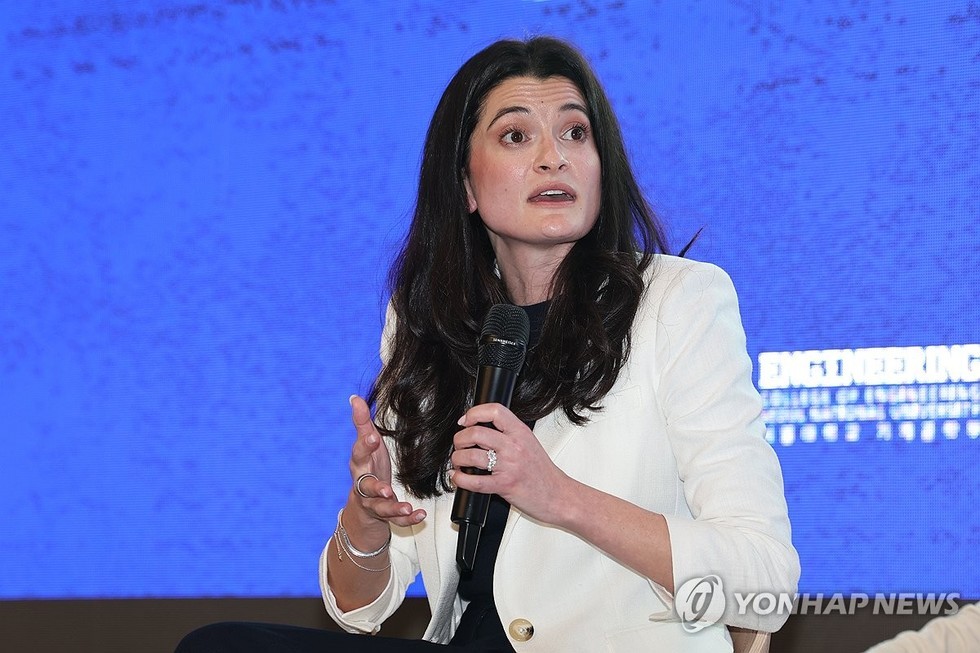
Madison Huang, file photo; image source: Yonhap News Agency
What exactly changed on the 8th?
According to South Korea's Ministry of Science and ICT and IT industry sources on the 8th, Madison Huang abruptly cancelled her visit. Yonhap News Agency reported the reason as "family reasons," while more details were not released. The cancellation affected three linked items in one week.
- A meeting between Deputy Prime Minister and Minister of Science and ICT Bae Kyung-hoon and Huang, scheduled for the afternoon of the 8th in Yeouido, Seoul.
- The 2026 Nvidia Seoul AI Day event, planned for the 9th and 10th of this month.
- A planned Korea AI Startup Partnership Forum co-hosted by Huang and Second Vice Minister Ryu Je-myung of the Science and ICT ministry.
The event itself will proceed. Other Nvidia executives will attend, preserving the technical agenda while reducing the political weight of the week. In practical terms, the cancellation removed a visible bridge between a company that is trying to sell simulation and robotics tools and a government that wants startups to adopt them.
Why this single cancellation matters beyond the headline
Nvidia did not merely show up in Seoul to give a product demo. The company has made the physical AI platform one of its strategic growth lanes: software and systems used to train, test and operate robots, factories, autonomous machines and industrial simulation. That makes executive visibility important, especially in a market where Nvidia is competing for developer mindshare, public-sector trust and manufacturing partnerships.
Additional context strengthens that reading. The Korea Herald reported that the cancelled visit would have been Madison Huang's fourth South Korea trip this year, a frequency that suggests Seoul is not a routine stop but a recurring node in Nvidia's physical AI and regional ecosystem push. The event is listed by Nvidia as taking place at COEX in Seoul, according to the company's official AI Days materials. The venue itself, a major exhibition hub in southern Seoul, fits the company's attempt to pair technical sessions with industry, developer and startup traffic.
Was it a scheduling hiccup or a leadership signal?
For general readers, the safest answer is: both are possible, but the scheduling explanation is confirmed, while the leadership interpretation is speculative. The confirmed layer includes the cancellation, the family reasons statement and the event proceeding. The interpretive layer includes how much weight Nvidia places on Madison Huang's presence, and whether her absence exposes a dependence on a single executive for ecosystem diplomacy.
Nvidia has invested in a bench of executives for AI Day, so the programme can continue. Still, the meeting-level schedule was more fragile because the Korean government's involvement appeared to rely on a direct pairing between senior Nvidia people and senior Science and ICT ministry officials. When that pairing changed, the forum and meeting fell out even while the broader conference survived.
What changed and what did not
| Area | What changed | What did not change |
|---|---|---|
| Public event | The 2026 Nvidia Seoul AI Day lost the planned high-level Nvidia executive appearance. | The event still runs on the 9th and 10th of this month with other Nvidia executives. |
| Government meeting | Bae Kyung-hoon's planned meeting with Huang in Yeouido, Seoul was cancelled. | The policy relationship between the Science and ICT ministry and Nvidia remains in place. |
| Startup agenda | The Korea AI Startup Partnership Forum lost the co-host pairing with Second Vice Minister Ryu Je-myung. | Nvidia's broader Korea ecosystem activities continue through other sessions and partners. |
| Succession narrative | Madison Huang's sudden absence drew attention to her role as a senior executive. | Nvidia's public position in physical AI and simulation software is unchanged by the trip cancellation. |
How to read the Nvidia second-generation question without noise
The family thread is part of why the story travelled quickly. Jensen Huang has one son and one daughter: Spencer Huang and Madison Huang. Madison Huang once worked as a chef for a period, then moved to the French luxury group LVMH Group, and joined Nvidia in 2020 as an intern. Spencer Huang ran a bar for years before joining Nvidia in 2022.
Both later received multiple promotions. Madison Huang in particular has become an executive who can work closely with the CEO's core team and prepare major company events. Spencer Huang and Madison Huang have mainly worked in simulation software and robotics, a track Nvidia has been cultivating in recent years.
In 2025, Jensen Huang was asked whether Nvidia had a nepotism problem. He acknowledged that the company hired many employees' children and said he was not bothered, because parents would not recommend children who would bring them shame. He also joked that many Nvidia second-generation employees performed better than their parents. That quote matters here because it shows how Nvidia has tried to convert a sensitive family-business perception into a meritocracy narrative: the issue is not whether relatives are hired, but whether they can carry real responsibility.
What the episode reveals about physical AI adoption
For a general audience, the practical lesson is that physical AI is not only a technology story; it is an industrial policy story. A cancellation can pause a meeting, but it cannot erase the reasons Nvidia, South Korea's science ministry and local startups are talking. The underlying forces are stronger than one schedule conflict.
- Simulation is becoming a test environment. Factories and developers need digital twins before expensive robots arrive on-site. Nvidia's platform pitch is that it can reduce trial cost and accelerate deployment.
- Governments want local AI capability. The Science and ICT ministry appears willing to host Nvidia-led forum formats, but it also wants startups and domestic partners to absorb skills and build a local chain.
- Executive availability is now part of platform credibility. If a senior product executive cannot attend a partner market, partners may still proceed, but they will ask who else has authority and accountability.
- Family leadership remains a reputational factor. When relatives hold visible roles, every absence or promotion becomes a story about succession, not just productivity.
Market forecasts vary, but they indicate why the lane is contested. Mordor Intelligence estimates the physical AI market at about USD 7.11 billion in 2026 and projects USD 34.89 billion by 2031. The wide growth range is itself a warning: demand expectations are rising, but the actual payoff depends on robot deployment and industrial software adoption.
Common misconceptions
- The AI Day was cancelled. No. The original reports and the event schedule point to the 2026 Nvidia Seoul AI Day continuing on the 9th and 10th of this month with other executives.
- One trip proves Nvidia's Korea strategy is failing. No. It shows a meeting-level disruption. Nvidia's simulation, robotics and partner activities are still active.
- Family reasons must be a euphemism for internal conflict. There is no confirmed evidence of internal conflict in the reports; more details were not disclosed by Yonhap News Agency or South Korea's Ministry of Science and ICT account.
- This is just celebrity gossip about Jensen Huang's daughter. It is partly human interest, but it also touches product-line strategy, government engagement and corporate succession perception.
Action checklist for readers and companies
Use this framework when a high-profile tech executive cancels a scheduled trip:
- Check what still happens. Is the conference, product announcement or signing still on? Here, the event proceeds.
- Identify the dropped node. Was it a keynote, meeting, forum or signing? Here, a ministerial meeting and a startup forum were affected.
- Separate confirmed reasons from speculation. Accept the stated family reasons unless evidence shows otherwise.
- Watch replacement depth. If other executives can deliver, the organization has bench strength; if sessions shrink, dependence is higher.
- Read local policy context. Korea's startup and AI goals are broader than one company event, so the cancellation may shift optics more than outcomes.
FAQ: What readers should ask next
Why did Madison Huang cancel her Korea trip?
Yonhap News Agency reported that Madison Huang cancelled for family reasons. More detailed reasons were not made public. South Korea's Ministry of Science and ICT and IT industry sources provided the schedule context.
Does the cancellation mean the 2026 Nvidia Seoul AI Day failed?
No. The event, planned for the 9th and 10th of this month, still goes ahead with other Nvidia executives. The missing element is Huang's high-level meeting and co-host role, not the programme itself.
Why was the meeting with Bae Kyung-hoon significant?
Because Bae Kyung-hoon is Deputy Prime Minister and Minister of Science and ICT. His planned meeting with Huang in Yeouido, Seoul, was intended to align Nvidia's platform work with South Korea's AI startup and industrial-policy agenda.
Does this say anything about Jensen Huang's children?
It reopens the public conversation about succession and merit. Madison Huang joined Nvidia in 2020, while Spencer Huang joined in 2022; both worked in simulation software and robotics. Jensen Huang addressed the nepotism question in 2025 by defending employee-family hiring and joking about Nvidia second-generation employees.
Bottom line
The most durable takeaway is not the empty chair, but the way Nvidia, South Korea's science ministry and the physical AI market are now visible as one ecosystem. The cancellation showed that executive travel can affect diplomatic optics. It did not cancel the trend. For readers, the practical question is whether Nvidia can keep translating simulation and robotics interest into startup adoption, manufacturing partnerships and institutional trust when a named senior executive is absent.
References
- The Korea Herald: Nvidia's Madison Huang returns to Seoul amid physical AI push
- Nvidia AI Days Seoul 2026 official rules, COEX, November 9, 2026
- The Korea Herald: Nvidia CEO's daughter cancels planned visit to South Korea
- KBS World: NVIDIA CEO's Daughter Abruptly Cancels South Korea Visit
- Mordor Intelligence: Physical AI market size and forecast