
ItInsightsWorld General Guide: Nvidia Buyback Arguments vs Policy Risk After a Nearly $1.4 Trillion Slide
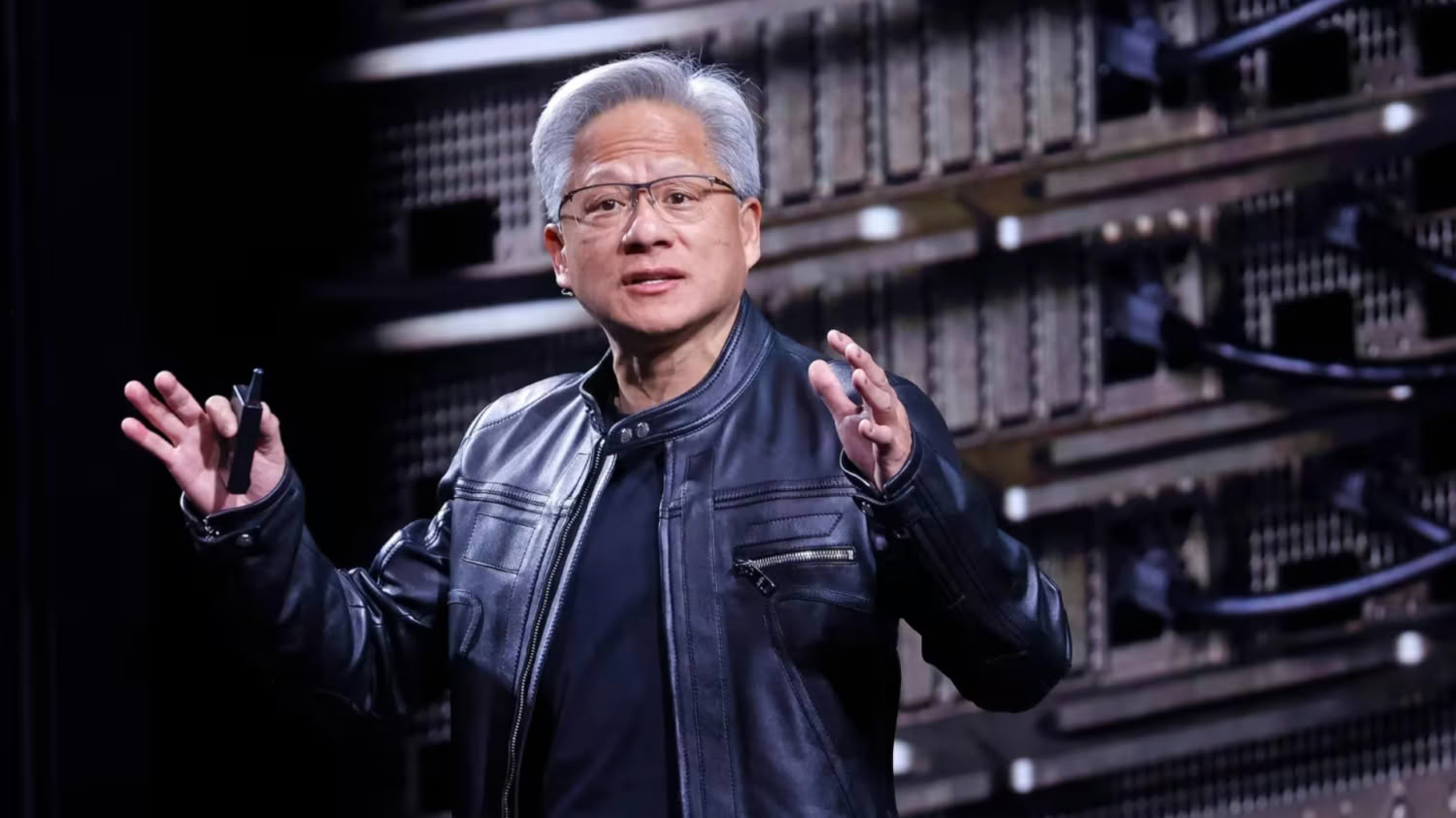
The short answer for ItInsightsWorld General readers: Nvidia's fall is not only a sentiment trade. On one side, Jim Cramer argues buybacks can turn weakness into capital-return strength; on the other side, data-center restriction concerns and political risk after the midterm election suggest investors are repricing how fast AI infrastructure spending becomes cash flow.
For general readers, the useful takeaway is a comparison, not a single verdict: a repurchase can support valuation if the business still converts demand into cash, but a wave of local and national restrictions can change the timeline for data centers, power, permits and customer deployment. That is why the Nvidia debate is now less "AI versus no AI" and more "how quickly will AI infrastructure pay."
What happened to Nvidia's stock and market value?
On Thursday, Nvidia's market value fell by nearly $450 billion, with $446.94 billion removed in a single session. The share price dropped 9.26% to $181.60. Measured from the October 6 record close of $243.37, the stock was down approximately 25%, and the cumulative market-value reduction was $1.39 trillion, or nearly $1.4 trillion. Year to date, the stock was down 2.40%; over the past year, it was down 6.75%.
Jim Cramer framed the drop as a capital-allocation opportunity. Writing on the X platform, the well-known US finance presenter said that if a company's stock becomes one of the market's highest value-for-money assets, the company should buy back its own shares. He added: "Nvidia can buy back shares, keep adding, or let the stock continue to fall."
Why the buyback case has weight
The buyback argument is not purely emotional. A repurchase program can reduce share count, support earnings per share, and signal confidence when management believes cash generation is durable. For Nvidia, the context is larger than Cramer's single comment: according to Nvidia's own newsroom, the company's board approved a $150 billion increase in its share-repurchase authorization on September 28, 2026, bringing the remaining program to $235 billion and giving it a horizon running through fiscal 2028.
That distinction matters for decision-making. A $235 billion authorization is not the same thing as $235 billion of immediate buying. It is a ceiling, and its market effect depends on execution pace, free cash flow, capital expenditure needs, and whether investors believe future revenue will arrive as expected. In that sense, buybacks can act as a shock absorber, but they do not automatically erase the reasons a market sold off.
Why the policy-risk case worries investors
The selling pressure centered on a narrower but more expensive question: can AI infrastructure keep being built, financed and energized at the pace implied by Nvidia's prior growth narrative? Data from Citi Research show that as of October, bans and suspension measures targeting data centers in the United States had already exceeded 500 cases, while at mid-2025 such measures were almost zero.
The local dimension became national quickly. In Texas, Gina Hinojosa promised during the campaign to pause data-center approvals until lawmakers pass protective measures, and she defeated incumbent Greg Abbott. After the midterm election, independent Senator Bernie Sanders again called for a national pause. Arizona Democrat Yasamin Ansari urged Democrats to advance a proposal to ban artificial superintelligence.
MarketWatch's coverage of the selloff captured the investor mindset through Founder ETFs portfolio manager Michael Monaghan, who said investors were "sorting through the economic reality where the AI buildout is the driver of the economy." That is not a bearish verdict on AI; it is a more skeptical view of how demand becomes delivered capacity, revenue, margin, and cash.
Buyback thesis vs policy-risk thesis: a comparison
For readers who need a clean decision frame, the two cases can be read as a trade-off between financial engineering and operating reality.
| Dimension | Buyback thesis | Policy-risk thesis | General-reader takeaway |
|---|---|---|---|
| Core belief | Shares are attractive enough to justify buying them. | AI infrastructure faces approval, power and finance delays. | Buybacks help price support, but do not solve deployment friction. |
| Market variable | Share count, earnings per share, confidence. | Data center bans, permitting, politics, grid constraints. | Track both corporate capital return and real-world buildout. |
| Time horizon | Can matter within a quarter or two. | Can last years if rules tighten. | Short-term noise can coexist with long-term demand. |
| What would change the view | Execution pace of the $235 billion authorization. | Concrete legislation, permits, power timelines and customer capex. | A signal is weaker than an executed cash-flow path. |
How to read the numbers without double counting
Three figures in this story look similar in size but answer different questions. The $446.94 billion figure describes Thursday's market-value loss. The $1.39 trillion figure describes the drawdown from October 6. The $235 billion authorization describes a company's capacity to buy shares over time, not a promise to spend that amount immediately.
Another useful marker is technical classification. As described in MarketWatch's report, a decline of 20% or more from a recent high is often used to describe a bear market in popular market language. Nvidia's move from its October 6 high has crossed that threshold by roughly a margin large enough that the "bear market" label started to appear in financial coverage, alongside Cramer's buyback call.
A practical checklist for general readers
- Do not translate market-cap loss into company cash loss; the two are different accounting concepts.
- Read buyback authorization as potential, not proof of repurchase pace.
- Separate political speech from enacted law: proposals from Sanders, Ansari and state-level officials still require legislative, regulatory or judicial pathways.
- Watch deployment constraints—power, land, permits and financing—because Nvidia's own market thesis depends on customers installing systems, not just ordering chips.
- Keep time horizons separate: a 9.26% one-day fall, an approximately 25% drawdown and a 2.40% year-to-date decline can all be true while long-term AI adoption remains intact.
Which interpretation fits which reader?
Long-term stockholders
The main test is not whether Cramer is right or wrong, but whether future cash flow remains broad enough to support both capital expenditure and repurchases. A buyback can make a cheaper stock more attractive to some investors, but it cannot turn a delayed data-center pipeline into a completed one.
Technology and business watchers
Use the Nvidia move as a case study in platform risk. Nvidia sells compute, but the ecosystem must also solve electricity availability, financing, land use and public consent. When any of those bottlenecks tighten, the market may ask for a lower multiple even without a dramatic change in product demand.
Casual readers
The simplest rule is to follow the difference between "demand" and "deliverability." Nvidia's challenge is not necessarily that people no longer want AI; it is that AI requires physical infrastructure, permits, capital and electricity to become useful at scale.
Common mistakes to avoid
- Treating a near $450 billion single-day market-value loss as if a company wrote a $446.94 billion check.
- Assuming a $235 billion buyback authorization means shares will fall no more; authorizations set a ceiling, not a floor.
- Assuming every local data-center pause becomes a federal law; the policy route is slower and more contested.
- Confusing AI skepticism with Nvidia-specific risk; the question is not only whether AI matters, but whether infrastructure spending converts into revenue at the pace priced into the stock.
FAQ
Why did Nvidia fall so sharply?
The immediate trigger was a combination of high valuation and fears that data-center expansion could face more political and regulatory resistance after the midterm election. The stock fell 9.26% on Thursday to $181.60, while the loss from the October 6 high of $243.37 was approximately 25%.
Does Jim Cramer's buyback call mean Nvidia is cheap?
It is Cramer's argument, not a guarantee. He wrote on the X platform that a company should repurchase shares if its stock is among the market's best value assets. His view gains practical weight because Nvidia already has a $235 billion remaining repurchase authorization, but the effect depends on execution and cash flow.
What is the data-center risk?
Citi Research found that as of October, the number of bans and suspension measures related to data centers in the United States had already exceeded 500, compared with almost zero at mid-2025. That matters because Nvidia's customers need facilities, power and financing to use the hardware it sells.
Is the AI trade over?
Not necessarily. The more precise interpretation is that investors are shifting from a growth-only question to a returns question: can AI infrastructure spending continue, convert into deployment, and eventually generate dependable cash flow? That is the economic reality Michael Monaghan described to MarketWatch.
Action advice: how to make a balanced decision
If you are reading this as a general ItInsightsWorld explainer rather than trading guidance, use a three-step framework. First, identify what is already known: Thursday's near $450 billion market-value loss, the 9.26% stock drop, the approximately 25% drawdown from October 6 and the $235 billion buyback authorization. Second, identify what is still uncertain: whether data-center moratoriums will stay local, become more binding, or accelerate permitting workarounds. Third, identify what would change the balance: evidence that customer deployment is continuing despite political noise, or the opposite.
The most useful lesson is to separate financial confidence from operating feasibility. Buybacks can support market psychology, and Cramer's point that "Nvidia can buy back shares, keep adding, or let the stock continue to fall" is simple because it is accurate: the company can act, or it can wait. But the broader question is whether the AI infrastructure buildout will remain investable, permitable and energizable. That is what makes the current Nvidia debate less about one stock and more about the next stage of platform technology.
References
- Nvidia's newsroom announcement of the $150 billion share repurchase authorization increase: Nvidia Newsroom.
- CNBC coverage of post-midterm Democratic pressure on data-center restrictions and Bernie Sanders' call for a national pause: CNBC.
- MarketWatch report on the Nvidia selloff, technical bear-market framing and Michael Monaghan's comment: MarketWatch.