
ItInsightsWorld General Guide to J.Crew's Present Company: Steps, Pitfalls and What the Numbers Cannot Tell You
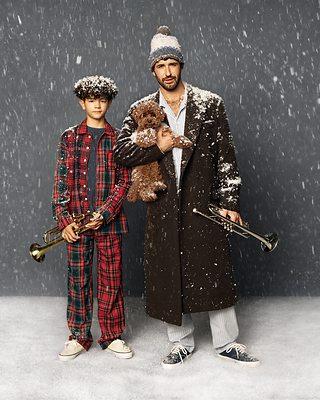
The first thing that breaks in a holiday campaign review is the evidence slide: two actors in matching winter knits, a November 17 launch, and no spend, reach or sales figures attached. Direct answer: you can reuse the creative logic behind J.Crew's Present Company step by step, but you cannot call it effective yet. The pictures prove an idea; the numbers are still missing. Here is the teardown, the traps, and a checklist you can run.
What is Present Company, and what is actually reusable?
Conclusion first: Present Company is a holiday portrait built on an existing screen relationship, not a standard celebrity endorsement. J.Crew launched it on November 17 across digital and social channels, with the collection sold in stores and online. The film tie-in gives the matching clothes a story before anyone reads a caption.
Filmmaker Jordan Firstman and young actor Reggie Absolom form an unexpected father-son pair in A24's Club Kid. A24's description has a hard-partying New York club promoter discovering a 10-year-old son whose existence he never knew about. Firstman wrote and directed the film and plays the promoter; Absolom appears in the cast. It opened in US theaters on November 6, 2026, shortly before the campaign arrived. That gap is part of the method: the cultural reference needs to be current, not archival.
In the November 17 announcement, Firstman joked that their shared wardrobe had reached the matching-sweaters stage. Absolom added: "I think I wore everything better than Jordan." The exchange lets the people in the clothes sound like themselves, rather than delivering a stock holiday greeting.
Why does a 1990s catalog reference still earn attention?
Conclusion: the 1990s look is a container, not the message. It lowers the entry cost for older shoppers and gives the styling a recognisable frame. On its own it reads as a museum copy.
Alasdair McLellan shot the campaign and Miyako Bellizzi dressed the cast. The identified looks include Fair Isle knits, relaxed tailoring, festive pajamas and cold-weather layers. A matching sweater signals a shared occasion at once; a tailored coat or patterned knit keeps the frame working as fashion advertising rather than a family album.
There is a commercial reason to keep the reference current. Deloitte's 2026 Holiday Retail Survey polled 4,000 US consumers online from late August, and its forecast puts November 2026 to January 2027 holiday sales at $1.70–$1.71 trillion, up 4%–4.8% on 2025. The October 15 press release puts average intended spend at $1,654 per shopper, up 4%. Deloitte's vice chair and US retail and consumer products sector leader Natalie Martini said: "For the first time in our annual survey, Gen Z and millennials are expected to account for 50% of holiday spending, presenting a meaningful opportunity for retailers."
That finding cuts both ways for a 1990s reference. It gives old visual codes a reason to reappear, yet much of the buying power sits with cohorts who did not grow up with that catalog. J.Crew keeps the wardrobe codes and changes who occupies them. Heritage sits in the lighting, styling and silhouettes; the reason to look again comes from contemporary screen culture. A similar shift appears in how Holiday 2026 campaigns lean on present-day names instead of archive imagery.
How do you rebuild the format? Five steps
Conclusion: the transferable unit is a sequence, not a cast list. Run these in order and each decision can be audited afterwards.
- Start with a relationship, not a face. Firstman and Absolom bring an onscreen bond that needs no exposition. Write down what two people already mean to an audience before booking either one.
- Pair one historical code with one current hook. J.Crew holds the 1990s catalog grid and adds a film that opened in US theaters on November 6, 2026. When both elements point backwards, the image turns into a costume party.
- Make a garment carry the joke. Matching knits are funny because coordinating holiday outfits is a familiar ritual. The wardrobe is the premise, not a logo added at the end.
- Let collaborators answer each other. "I think I wore everything better than Jordan." does more work than a scripted greeting. Leave room for an unplanned reply.
- Define proof before launch. J.Crew disclosed channels and availability, not spending, audience reach or sales. Set your measurement definitions in advance or you will read creative intent as performance.
Where does this format fail? A pitfall list
Conclusion: most failures come from borrowing the surface. A 2017 meta-analysis in the Journal of the Academy of Marketing Science found that celebrity endorsements can produce both strong positive and strong negative effects, shaped by fit and credibility rather than fame alone. The cast is a variable to test, not a guarantee.
- Nostalgia as the whole message. Reproducing 1990s lighting without a contemporary reason produces a heritage display, not an advertisement.
- Fame standing in for a relationship. A recognisable face does not supply the shared history that made those sweaters legible.
- A joke that swallows the garment. If the sketch is the product, shoppers leave with a punchline and no item in mind.
- Creative interpretation filed as evidence. Commercial impact here is unestablished. Say so in the brief and again in the recap.
- A broken timeline. The November 6, 2026 release and the November 17 launch sit close together. Move one and the wink weakens.
How do three holiday formats compare?
Conclusion: each format buys attention in a different way. Real-world stills, a workplace sketch and a fantasy film are not interchangeable.
| Format | Example | Where the humour sits | What it can support |
|---|---|---|---|
| Relationship stills | Present Company, launched November 17 | The pair's existing screen bond | Clear creative idea; commercial impact not disclosed |
| Workplace sketch | We take suiting seriously, October, with Please Don't Destroy in the Suit Shop | Escalating jokes and a director | A repeatable series structure |
| Fantasy world | Prada's holiday film with performers beside hand-drawn animals | An imagined universe | World-building, with less product context |
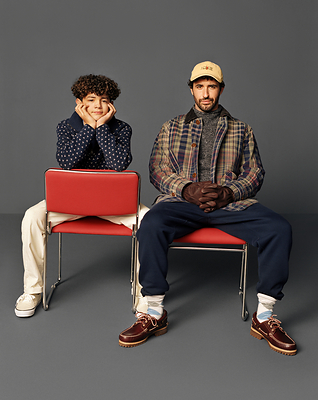
J.Crew's own October work shows the difference inside one brand. We take suiting seriously put Please Don't Destroy inside a chaotic Suit Shop, with comedy delivered as a sequence. Present Company is closer to a set of stills in which the relationship already exists. Neither is a film trailer; both keep the clothes in frame. For another case where personality-led holiday storytelling is built on fan knowledge, our General desk has a separate teardown.
FAQ
Is Present Company a conventional celebrity endorsement?
No. The film connection supplies context, but the finished photographs remain about holiday dressing. A24's Club Kid relationship does the work a voiceover would normally do.
Did the campaign sell more clothes?
There is no verified answer. J.Crew announced channels and stockists, not spend, reach, engagement or sales. Deloitte's category-wide forecast is context, not evidence for this single campaign.
Why use a 1990s catalog look at all?
Because it is a low-cost recognition frame. It fails when it becomes the entire message. Pair it with a current cultural reference and it becomes a setting rather than a memorial.
What should a smaller team copy first?
The relationship-first casting rule and the measurement step. Both are cheap to apply. The photography and styling budget is the part most teams cannot clone.
Reference sources
- Deloitte, 2026 holiday retail sales forecast (September 10, 2026): https://www.deloitte.com/us/en/about/press-room/deloitte-forecasts-holiday-retail-sales.html
- Deloitte, 2026 Holiday Retail Survey press release (October 15, 2026): https://www.deloitte.com/us/en/about/press-room/deloitte-holiday-spending-set-to-increase.html
- Reuters, "US holiday retail sales growth set to accelerate, Deloitte says": https://www.reuters.com/business/retail-consumer/us-holiday-retail-sales-growth-set-accelerate-deloitte-says-2026-09-10/
- Knoll, "The effectiveness of celebrity endorsements: a meta-analysis," Journal of the Academy of Marketing Science (2017): https://link.springer.com/article/10.1007/s11747-016-0503-8
- J.Crew / PR Newswire, Present Company announcement: https://www.prnewswire.com/news-releases/jcrew-celebrates-the-holiday-season-with-jordan-firstman-and-reggie-absolom-in-present-company-302941663.html
Reusable checklist
Run this before approval and again before the recap. If a line cannot be ticked, mark it as unknown rather than filling it in.
- Confirm one named relationship with a documented reason to matter to the audience.
- Confirm one historical visual code paired with one current hook.
- Confirm at least one garment that carries the joke on its own.
- Confirm a collaborator quote that sounds unscripted.
- Confirm channel list and product availability in writing.
- Confirm spend, reach and sales definitions agreed before launch.
- Confirm a note separating creative interpretation from measured evidence.
- Confirm the cultural reference still overlaps the live date.