
Jung Kook Styles Calvin Klein's Holiday 2026 Edit: What Brand Teams Should Copy, and Verify First
Calvin Klein's Holiday 2026 campaign, released on November 9, asks BTS's Jung Kook to select and style pieces that already sit in the catalogue instead of designing new ones, with creative directed and photographed by Alasdair McLellan. For anyone who runs partnerships, that one substitution — curation in place of co-design — moves the budget, the asset library and, above all, how provable the outcome is.
Here is the dilemma a brand team really faces. The ambassador contract renews, the gifting window is four weeks, and the approved territories are already booked. Do you spend most of a season building a signature line that may end up on a clearance rail, or point one famous person at the stock you already own and film them mixing it? Calvin Klein took the second route for 2026. Below is what that route buys, what it hides, and the checklist worth insisting on before anyone calls it a win.
What did Calvin Klein actually release on November 9?
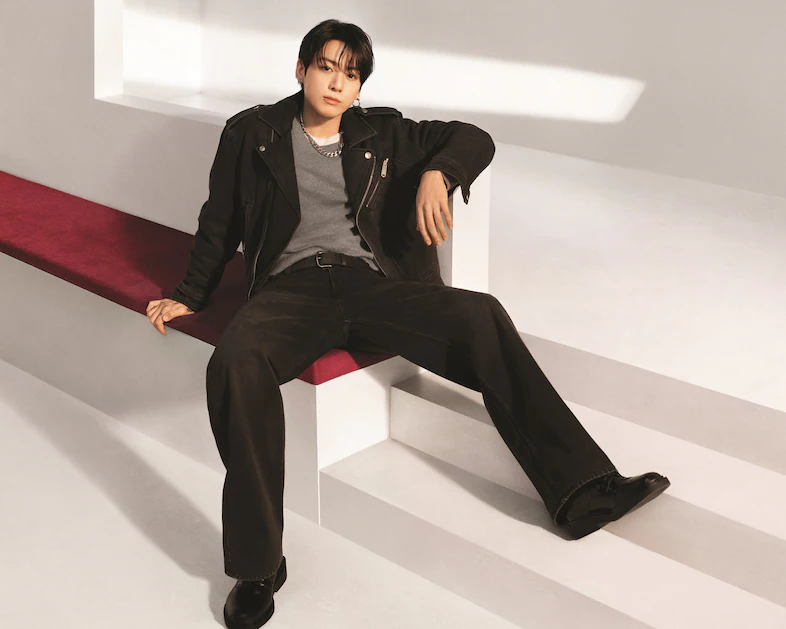
Answer: a styling story, not a product launch. The Holiday 2026 creative rolled out across the brand's own channels on November 9 and presents Jung Kook's picks in denim, underwear, knitwear, outerwear and accessories — Barrel and 90s Straight jeans matched with marled knitwear and crewnecks, baggy denim worn under aviator, leather and motorcycle jackets, according to the campaign gallery published by Dazed.
The sequence moves through unboxing, gifting, getting-ready and styling-challenge beats. That structure is operationally important: every beat is a self-contained clip that demonstrates one pairing, so the social team inherits repeatable formats and never has to explain the house history again.
Why is a curated edit not the same thing as a capsule?
Because the money and the claim sit in different places. In May 2026 the same partnership produced a 20-piece capsule under the name Jung Kook for Calvin Klein, reworking underwear, distressed denim, racer jackets and graphic tees, with reported retail prices between $29 and $699 (FashionNetwork). David Savman, president of Calvin Klein global, described that project as joining the artist's cultural weight to the label's signature codes. It was a merchandising bet built on new goods. Holiday 2026 is a merchandising shortcut built on old ones.
| Dimension | Signature capsule | Curated personal edit |
|---|---|---|
| Who touches the product | Artist plus product team rework archetypes | Nothing new is made; the catalogue is unchanged |
| Time to market | Most of a season, including fittings and size curves | Weeks, because the shoot is the deliverable |
| Inventory exposure | New SKUs that can miss the market | Sits on stock already purchased |
| What the shopper is told | Buy this because the object is rare | Buy this because a person you follow chose it |
| Proof required | Sell-through per drop | Traffic and conversion on lines you never advertised |
Translation for a general reader: a capsule asks for a purchase decision about an object; an edit asks for a judgement about taste. Both are endorsements, but only one needs a factory conversation.
How do you know whether it worked? Six checks before shoot day
Conclusion first: the company has announced the creative and the rollout, but no verified sales, reach or conversion figures have been published for this holiday push, so any claim of commercial success is premature. If you sit on the buying side of a similar agreement, these six lines belong in the contract, not in a post-campaign slide.
- Pre-launch baseline. Branded search volume, collection-page conversion and sell-through for each featured style, captured over the 28 days before release.
- SKU-level tagging. Every item visible in every clip mapped to a product ID. Untagged, the pairing you paid for simply does not exist in reporting.
- One holdout. A market or audience segment that does not see the edit, so demand can be compared rather than narrated.
- A rights calendar. Which assets, which territories, which window. A holiday edit that expires in early January cannot be judged in February.
- Returns and margin, not units. Jeans and underwear carry different return profiles, so revenue alone flatters one and punishes the other.
- A named owner with veto power. Someone who can retire the format if the numbers do not move.
The sixth line is the one that usually fails. Celebrity deals die politely: they get renewed each season because nobody wants to be the person who cancels a global ambassador. The absence of published numbers here is not evidence of failure — it is evidence that the scoreboard has not been built.
Where the real numbers stop helping
Parent-company reporting is the wrong ruler, and it is worth understanding why. Calvin Klein's owner PVH reported Calvin Klein revenue down 3% to $895.2 million in the first quarter of fiscal 2026, in a quarter when the group also trimmed its full-year outlook (Vogue). For the full fiscal 2025 year, PVH revenue rose 3% to $8.95 billion, with Calvin Klein up 3% (FashionNetwork).
Those are quarterly, brand-level, wholesale-plus-retail aggregates. They carry last season's campaign, markdowns, weather and store openings. Reading them as a verdict on one star's styling would be wrong in both directions: top-line figures are finance material, not a product score.
Reach sits on the other side of the same illusion. A jump in views and hashtag volume proves distribution worked — the same caution we applied when ChatGPT's weekly-user crown moved to India. Read it as a distribution signal, never as demand.
Common mistakes when a star becomes the stylist
- Publishing before the tagging exists. The edit goes live, reporting is set up two weeks later, and the team concludes that "attribution is hard" forever.
- Letting "edit" sound like "collection". Shoppers who expect new product feel misled; shoppers who want guidance get it. Label the format honestly in every market.
- One curator, one point of failure. The seasonal story rides on a single contract and a single reputation. This partnership has held since the ambassador appointment in March 2023 across multiple global campaigns, according to PVH's own press releases, which is a strength — and a concentration risk.
- No exit criteria written down. If nobody agreed on the number that ends the deal, the deal runs on sentiment.
- Skipping local reality. Sizing, gifting norms and holiday timing differ by market; pairings filmed in one studio are often pushed to five regions without a second look.
Reader questions, answered plainly
Is Holiday 2026 a new clothing line?
No. The wardrobe is existing Calvin Klein product — the same denim, knitwear, underwear, outerwear and accessory families sold year-round. Jung Kook's contribution is selection and pairing.
Who shot it, and when did it appear?
Alasdair McLellan directed and photographed the creative, per the brand's announcement, and it went live on November 9.
Did the earlier capsule really sell out in minutes?
Fan accounts claim the May 2026 line cleared the US site extremely fast. The brand has not confirmed a figure, so it should not be recycled as a forecast for the holiday edit.
Can a smaller company copy this without a global star?
The transferable part is role design, not fame. Choose someone who genuinely lives in the catalogue, give them three pairings to teach, and film it once. A shop floor regular with real habits outperforms a paid face reading a script.
Your next step
Three moves this week, whether you buy campaigns or just want to read the industry more accurately:
- Steal the format, not the celebrity. Write one 60-second unboxing-and-pairing script around your three heaviest inventory lines. If the pairing only works when a famous person wears it, the pairing is not real.
- Ask one question of the partnership team: what will we be able to say on day 30 that we cannot say today? If the answer is impressions, the measurement plan does not exist yet.
- Put a name on the stop button. The cheapest feature of a curated edit is also its most dangerous one: because nothing new was manufactured, nobody feels ownership of the result — and someone has to.
Sources referenced
- Dazed — Jung Kook for Calvin Klein, 2026 holiday campaign gallery (Alasdair McLellan): https://www.dazeddigital.com/fashion/gallery/37634/2/jung-kook-for-calvin-klein-2026-holiday-campaign
- Complex Style — Jung Kook curates a personalized edit for the Holiday 2026 campaign: https://www.complex.com/style/a/backwoodsaltar/jung-kook-calvin-klein-edit
- PVH Corp. press releases — Jung Kook of BTS fronts Calvin Klein campaigns; ambassador partnership since March 2023: https://www.pvh.com/news/press-releases/jung-kook-of-bts-fronts-new-calvin-klein-campaign-in-latest-denim-styles
- Vogue — PVH updates 2026 outlook after Q1 sales dip: https://www.vogue.com/article/pvh-updates-2026-outlook-after-q1-sales-dip-as-middle-east-conflict-drags-on
- FashionNetwork — Calvin Klein x Jung Kook capsule: 20 pieces, David Savman statement, pricing range