
When Memory Got Too Pricey: Why Meizu, Asus and Black Shark Walked Away From Phones
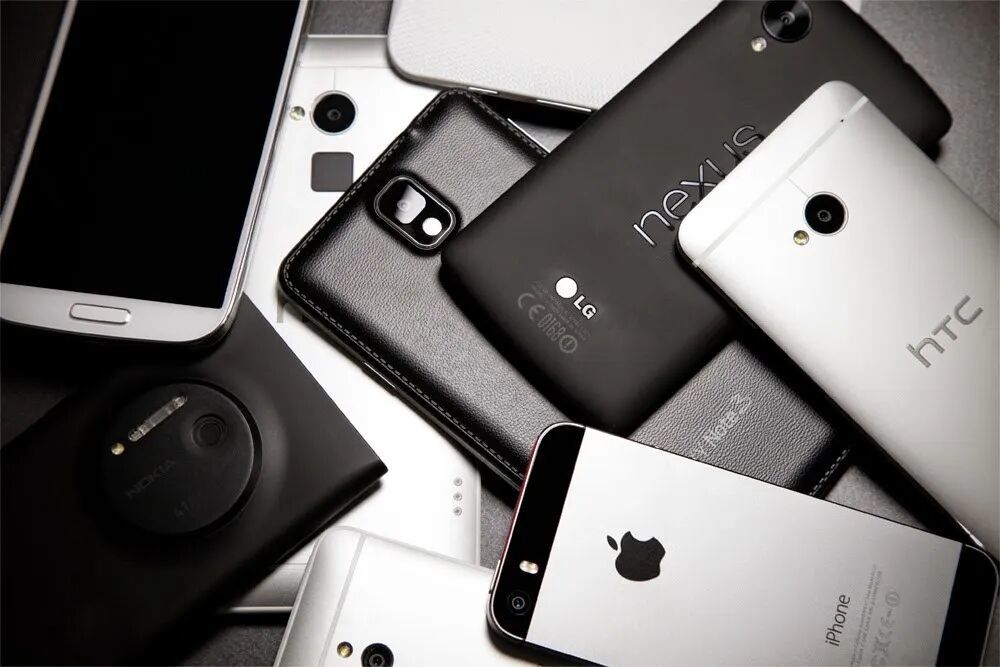
Niche smartphone makers are vanishing for one arithmetic reason: memory, which used to be 10% to 15% of a budget phone's cost, has climbed to 40% to 50%, and small buyers cannot secure volume at any discount. This year Meizu paused domestic phone R&D, Asus cleared its remaining stock, and Black Shark shut down phone after-sales. These are not product failures first — they are cost-structure failures.
The backdrop is simple. Upstream price hikes forced retail prices upward, shoppers redirected budgets to mainstream models, and brands that barely earned money on handsets were pushed to a survival line. Waiting for the end, or exiting on your own terms, has become the realistic outcome for companies that spent years holding a niche.
Who left first, and in what order?
Conclusion first: the brands with the thinnest margins and the smallest order books left first, and they left visibly. The dates matter less than the sequence — each exit removed a lane that mainstream vendors then absorbed.
Meizu set the tone. In February, two days after talk of a business halt spread, the company confirmed it would pause domestic new-product R&D and restructure strategically. The signal had already been sent: the 22 Air launch was dropped, and with Meizu 23 also withheld from the market, the one-time flagship champion is living out a countdown.
Meizu's 23 years in phones were a full arc: a brilliant start, strategic missteps that blurred the brand and cut sales, a founder's return that ended in internal friction, a new device that could not turn the page, and a long stretch kept alive by nostalgia until Geely took it under its wing.
Three years ago, Geely's acquisition created Xingji Meizu Group and was read as a fresh start. Then chairman and CEO Shen Ziyu set the target: back inside the domestic mid-range and high-end top five within three years. Three years on, Meizu's role is more awkward than ever — the ambition unmet, and the handset line itself abandoned.
Asus phones have had a rough two years. In the value segment, the ZenFone series could not shift mainland Chinese brands' machine-gun release cadence and ruthless cost control; on the innovation front, Asus could not match the giants' research spend in imaging or foldables. Refresh cycles slowed, the brand got quieter, and by last year the phone line inside the company had produced little of note. With inventory now cleared, the retreat looks all but settled.

Black Shark closed the list. In June it published a notice that the Black Shark community would go offline temporarily for a server migration; in July a support engineer at Nanchang Black Shark Technology Co., posting as Black Shark Xirui, said that after a deep restructuring of the business, official repair and support services for phones would stop. Its last handset shipped in 2022; the Black Shark 6, slated for 2023, died after teasing alone. Over the past few years it launched nothing, so its ending barely registered. Gaming phones now have a single survivor, RedMagic, and across the wider market the only niche labels still breathing are those with a corporate parent behind them.
Is this just a repeat of the 2019 clean-up?
China's niche brands went through one brutal purge around 2019:
- Gionee imploded after its financial blow-up, leaving debts of nearly 21.1 billion yuan at bankruptcy;
- Meitu posted a farewell letter on Weibo, licensing the Meitu phone brand entirely to Xiaomi Group;
- Smartisan was absorbed by ByteDance, changed its legal representative, saw its core team depart, and watched Luo Yonghao leave the phone business;
- 360's phone unit was reported paused; the official line was "on hold", and no device ever followed.
Competition was white-hot then, the leading group had already formed, and brands with no path to the table folded their cards. This year brought another purge — and, given how concentrated the market has become, quite possibly the last one of its kind.
| Dimension | The 2019 wave | The 2026 wave |
|---|---|---|
| Trigger | Overcrowded market, failed financing, running out of cash | Upstream memory prices, no allocation, running out of parts |
| What the brand controlled | Price, marketing, release pace | Almost none of it — supply was rationed by chipmakers |
| Escape route | Sell the brand, join a bigger backer, pivot to software | Pivot to a platform with a captive parent, such as car software |
| Who survived | Brands with a large shareholder or a loyal community | Brands with tens-of-millions-unit volume and reserved wafers |
| Final market shape | Fragmented top tier, long tail still alive | Long tail effectively removed |
Why does a memory price move decide who lives?
Because memory is sold by allocation, not by willingness to pay, and small orders sit at the back of the queue. Since last year, supply tightened and prices spiked. Big vendors spread the pain across tens-of-millions-unit shipment programmes; small vendors had zero leverage, could not get preferential pricing, and in the worst case could not obtain parts at all. An employee at a leading smart-hardware company put it bluntly: "Word inside the industry is that small makers cannot get memory at all now — even the big players have to pay a premium, and downstream products have to raise prices too."
And niche brands overwhelmingly sit in the mid-to-low price bands, where profit was never generous. Once memory costs jumped, the handset business stopped being merely thin and became openly loss-making.
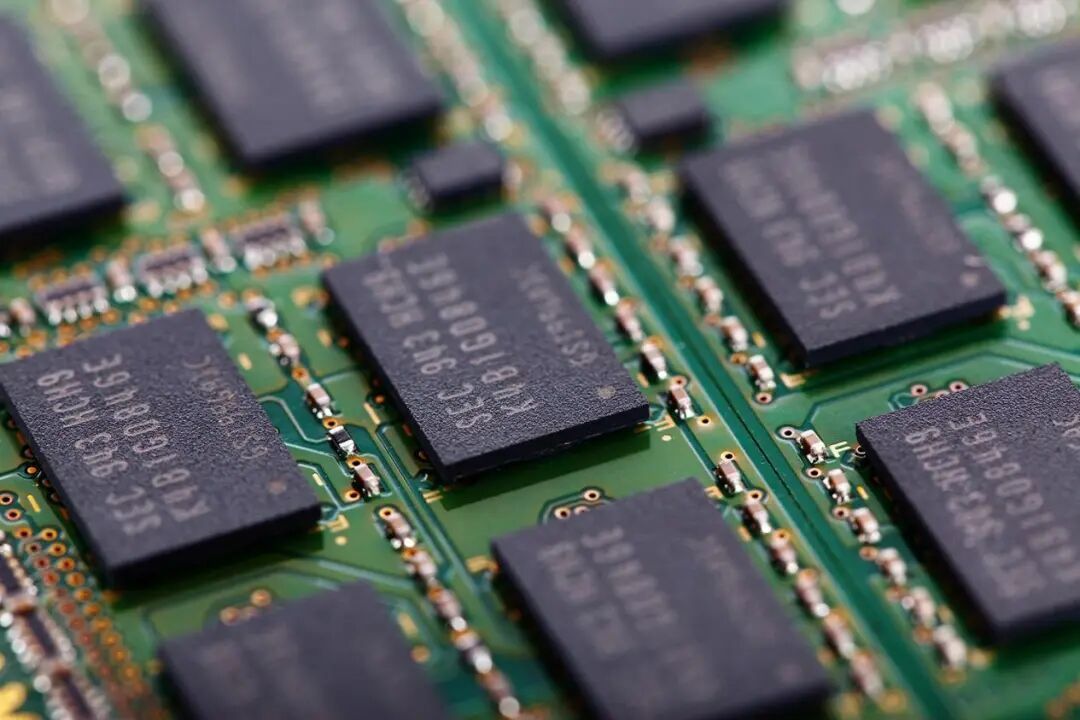
The arithmetic, from the analysts that track it:
- IDC calculates that memory's share of a low-end handset's cost has moved from 10% to 15% historically to 40% to 50% now;
- Omdia's estimate is harsher — for devices priced 99 dollars and under, the share exceeds 64%;
- Cost pressure is not ending with this quarter: TrendForce's September 2026 outlook expected conventional DRAM contract prices to rise another 10-15% quarter-on-quarter in the fourth quarter of 2026, with NAND flash up 15-20% (TrendForce press release);
- The demand crowding phones out is structural: analysts at the Center for Strategic and International Studies note that data centres are projected to absorb roughly 70% of all memory devices produced worldwide in 2026 (CSIS analysis).
The closer you stand to the consumer, the weaker your ability to pass costs on. Meizu, Asus and the rest had neither scale to absorb the blow nor shelf space to demand a higher price.
Where did the remaining customers go?
A shrinking pie has been dividing itself among fewer hands. IDC's 2025 China shipment ranking shows concentration rising:
| Vendor | 2025 shipments in China |
|---|---|
| Huawei | 46.7 million units |
| Apple | 46.2 million units |
| vivo | 46.1 million units |
| Xiaomi, OPPO | the remaining seats |
Those five vendors account for 79.4% of China's total smartphone share in 2025. Other markets behave the same way. In North America, Apple has long been the uncontested leader and its grip has tightened in recent years: in the first quarter of 2022, Apple Intelligence phone shipments were 19.9 million units for a 51% share; by the fourth quarter of 2025, Apple took 69%, a record.
As buyers concentrate, the room left for niche brands shrinks to nothing. A niche label grown in a specific soil has no answer when a major vendor patches its weak points, maxes out performance and attacks the same use case. That is precisely how Asus, Black Shark and Lenovo's Legion line faded: the gaming-phone niche was largely eaten by the majors.
Is only the small end hurting? Transsion's answer is no
Even scale giants have been pushed to the edge. Transsion is the clearest case: to stockpile memory it emptied its own reserves and borrowed, straining its cash cycle. In the first three quarters of this year, net outflow from operating cash flow widened to nearly 9.9 billion yuan from less than 5.9 billion yuan in the first half, while the same period a year earlier showed a net inflow of 3.285 billion yuan.
Stockpiling does not lower cost; it only buys a time difference, trading cash and inventory risk for a slower climb. Unless Transsion completes price increases and product restructuring inside the window its hoard bought, the same pressure could finish it.
Why Asus's board let the phone go
The memory storm never stayed inside phones. In a PC, close to 40% of the cost now goes to memory and drives, lifting prices and suppressing upgrade demand; what began as a cost problem has become a structural contradiction for the computer market.
Asus's position in PCs has always been awkward. The top three spots belong to Lenovo, HP and Dell; Apple stands apart on a closed ecosystem; Asus holds the line with gaming laptops. As a celebrated king of motherboards, it is exposed to a market that the AI wave is shrinking systematically. DIGITIMES latest reporting expects the four consumer PC motherboard vendors — Asus, Gigabyte, MSI and ASRock — to ship 28% fewer boards in 2026 in total, a reduction of about 11.7 million units. Asus shipped 15 million boards in 2025 but managed just over 5 million in the first half of 2026, with the full year barely defending 10 million, down 33%. Its one relief valve is fast-growing AI server business.
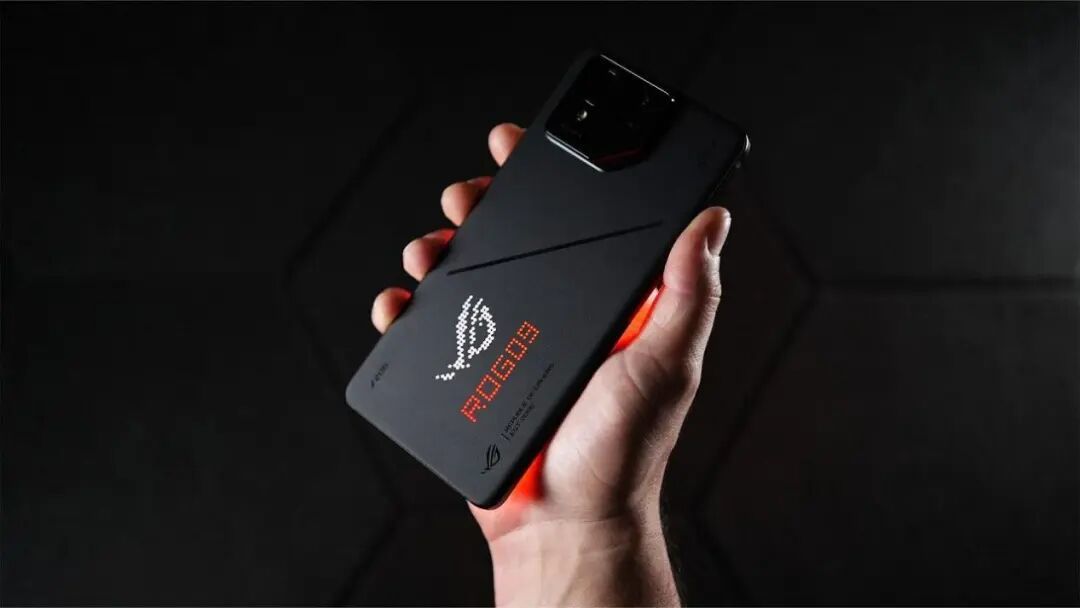
Against that, handsets look like dead weight: phones have long accounted for under 10% of Asus's revenue and never produced stable profit. In 2018 chairman Jonney Shih frankly acknowledged the phone business had failed, and that year's accounts carried a one-off loss of about NT$6.2 billion (roughly 1.36 billion yuan) from restructuring it. Cutting the unprofitable phone line and concentrating on core business is the most realistic option available.
The squeeze has reached even hobbyist hardware, which shows how broad this cycle is: a Raspberry Pi 5 with 16GB has jumped $80 to $385, a price the company blamed on memory supply — see our own report on the Raspberry Pi 5 16GB price increase.
What comes next: three signals worth watching
Read as history, niche phones were an by-product of an unusually violent competitive era; the ones that lasted leaned on hardware giants or internet companies. Now that those parents are in "just get through the quarter" mode, protecting core business outranks holding a place on the mobile shelf — and there is almost no room left for niche handsets.
Lenovo mirrors Asus. Its AI phones grew, yet globally it is still counted in the Others bucket, with a weak voice in mass consumer markets and volume only in parts of overseas markets; its AIoT product lines are broad but have produced no national-level hit. A booming compute business cannot hide the uneven development of its consumer hardware.

Keep or let go? That question has become urgent with memory sweeping the whole industry. Asus and Meizu (under Geely) have chosen; Lenovo appears to be watching. ZTE has started moving: a few days ago, reports said ZTE Corporation is negotiating a phone-business partnership with an internet giant, a proposal that involves packaging the handset unit.
Three signals will decide how much space any future niche brand gets. First, demand-side crowding — as long as AI infrastructure claims most memory output, phone makers will buy leftovers. Second, supply relief is not imminent: our report on the ASML capacity wall notes that equipment output is expected to keep advanced logic and memory supply tight through 2028. Third, the surviving small players will be the ones that stop competing on specifications and design for a narrow, defined use case instead.
Growth, highlight, turning point, decline — nearly every niche phone brand is now in its final act, even though these companies wrote some of the boldest pages in the industry's history. A dignified turn may be the best ending any of them can book.
Four misconceptions these headlines leave behind
- "They died of bad products." Some did, but the decisive blow landed upstream: no allocation, no parts, no price cover.
- "Big brands are safe." Transsion's cash-flow swing shows scale buys time, not immunity.
- "Prices will drop back once this passes." Contract-price forecasts point further up through the end of 2026 and into 2028 on the supply side.
- "Niche phones will return when the market calms." The shelf space they occupied has been taken; a comeback would need a different shape — small, scenario-specific, spec-light.
What this means before your next phone purchase
- Buy capacity you will actually use. Memory is the most expensive part of the bill, so overspecifying costs more than it did a year ago.
- Be suspicious of ultra-cheap offers. With cost shares this skewed, a heavily discounted new device is either old stock or a compromised spec sheet.
- Consider holding an older flagship one more cycle. Where a niche brand once offered the interesting middle option, mainstream models now cover those features.
- Check after-sales before buying. Black Shark's community shutdown and repair stop are a warning: verify a vendor's support commitment, not just its hardware.
- Expect fewer choices under $99. Analysts put memory above 64% of the build cost in that band, so manufacturers are abandoning it.
FAQ: the questions readers keep asking
Why did memory prices explode in the first place?
Capacity that once served phones and PCs was redirected to AI accelerators and servers, where margins are far better. Independent analysts project data centres consuming about 70% of global memory device output in 2026, which is the mechanism behind the shortage.
Why could a large company not simply pay more for chips?
Because sellers allocate, not auction. Large buyers get priority on volume terms, small buyers get leftovers — hence the industry saying that even big players now have to pay premiums while downstream prices follow.
Which brands are most exposed next?
Those concentrated below 3,000 yuan equivalent, where memory takes the largest share of cost, plus any vendor whose handset line is a rounding error in group revenue — a profile that fits Asus, Lenovo's consumer hardware and, by admission in 2018, Asus's phones.
Should I upgrade now or wait?
On the published forecasts, waiting buys you higher prices, not lower ones. Our reading of IDC's 2026 outlook is a record contraction with the average selling price climbing toward 581 dollars, so plan the purchase rather than postpone it.
Sources cited
- IDC, smartphone shipment and pricing outlook for 2026 — IDC resource centre
- IDC, memory shortage impact on smartphone and PC markets in 2026 — IDC blog
- TrendForce, memory contract price outlook for the fourth quarter of 2026 — trendforce.com
- CSIS, "Beyond the Memory Cycle: AI, HBM, and the New Semiconductor Shortage" — csis.org
- Shipment and market-share figures for China and North America: IDC, as reported in the parent analysis; motherboard figures: DIGITIMES.
Written by James Hartley, IT Insights. Corrections and tips: contact@itinsights.com.