
$385 Raspberry Pi 5 vs. Mini PCs and Cheaper Boards: What Makes Sense Now
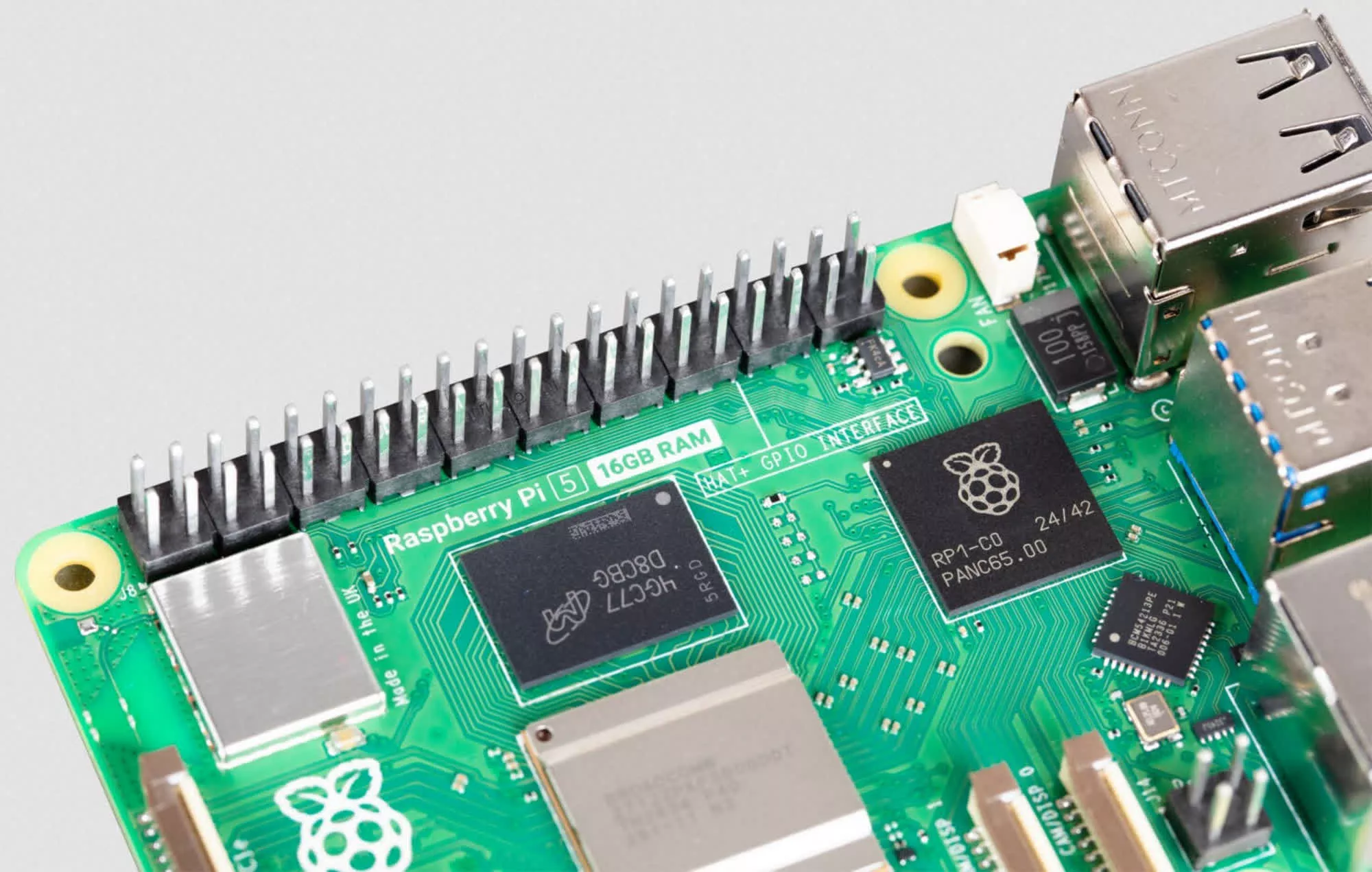
Short answer: the $385 16GB Raspberry Pi 5 now buys headroom, not value. Choose it only when a project genuinely needs that much memory together with GPIO pins and Raspberry Pi software support; for raw computing power, a complete x86 mini PC, a lower-capacity Pi 5 or a Compute Module 5 build usually costs less and does more. The UK maker lifted this single variant by $80, the most visible step in a long repricing of the whole family.
The background is simple enough. Chief Executive Eben Upton announced the change recently, pointing to a memory market where the company cannot obtain enough 16GB DRAM at workable prices. Measured against the $120 tag the 16GB board carried when it appeared in 2025, the increase is more than twice that starting figure, and the resulting price now sits above several complete small-form-factor desktop PCs.
What exactly changed in the latest Raspberry Pi price list?
Conclusion first: this was a targeted correction, not a blanket one.
- Raspberry Pi 5, 16GB: up $80 to $385, published in the company's own newsroom on 2 November 2026.
- Compute Module 5, 16GB variants: up $40 — the embedded twin of the board moves in the same direction, but with half the increase.
- Raspberry Pi 500+: the keyboard-style all-in-one that already ships with 16GB of RAM and a 256GB NVMe SSD kept its existing price in this round.
- Lower-memory Raspberry Pi 5 models: untouched here, although earlier rounds had already raised them; the 2GB version, for example, was listed at $77.50 in autumn 2026 reseller and trade-press reporting.
Read together, those lines tell you where the bottleneck really sits: it is capacity-specific. The company is shielding the entry points of its range and passing on cost only where 16GB memory is soldered onto the board and cannot be sourced elsewhere.
How far is $385 from the original 16GB price?
Not the product of one shock, but of several steps taken inside a single year.
| Point in time | Event | Price then |
|---|---|---|
| 2023 | Raspberry Pi 5 launch, 8GB model | $80 |
| 2025 | 16GB Raspberry Pi 5 arrives | $120 |
| Feb 2026 | Second hike of that cycle, reported by Tom's Hardware | $205 |
| Late 2026, before this round | Board quoted at $305 in trade press | $305 |
| 2 Nov 2026 | Latest revision, +$80 | $385 |
Two observations follow. First, the cumulative move is not "one bad quarter" — the 16GB SKU has travelled from $120 to $385 across successive announcements. Second, the gap between the 8GB and 16GB tiers has widened dramatically: memory is no longer a small surcharge at the top of the range but a separate product category in price terms.
Why does the 16GB tier absorb the memory crunch almost alone?
Because it is the hardest configuration to substitute. Upton's position, repeated in the official announcement, is that Raspberry Pi lacks an alternative supply channel for 16GB DRAM and that other components remain tight as well; in his words, the decision was unavoidable rather than opportunistic.
The wider market explains the scale of it. TrendForce reported that conventional DRAM contract prices jumped an estimated 90–95% quarter on quarter in the first quarter of 2026, then rose a further 58–63% in the second quarter. Gartner, cited by Network World while covering Samsung's warning about industry-wide price pressure, expected DRAM prices to climb roughly 47% across 2026 because of undersupply in both traditional and legacy segments. When wholesale memory doubles, a board with 16GB soldered LPDDR4X and no drop-in replacement cannot hold its price — a low-capacity variant, by contrast, buys cheaper chips and can be repriced more slowly.
Does a $385 board break the $35 computer promise?
The promise was never really about one price; it was about a route into computing. Raspberry Pi built its reputation on openness and low cost, and the "$35 computer" idea carried the platform into classrooms, workshops and makerspaces, making it one of the most successful single-board ecosystems in the world. The $35 entry point still defines what the brand is supposed to feel like, which is why a $385 flagship reads as a breach of expectation even though it is aimed at a different job.
The honest reading: the low-cost identity is being squeezed by supply chains that no software trick can fix, while the platform's real advantages — GPIO headers, first-party software support, a huge library of tutorials and add-on boards — are untouched. You are no longer paying for cheap compute; you are paying for a well-supported, memory-rich member of that family.
Raspberry Pi 5 16GB vs. mini PC vs. cheaper Pi options: the trade-offs
Conclusion first: at this price the 16GB board wins on integration and loses on raw value.
| Candidate | Indicative cost | Memory | What you still must add | Where it wins |
|---|---|---|---|---|
| Raspberry Pi 5 16GB | $385 | 16GB soldered | Power supply, case, storage | GPIO plus large RAM in one compact, low-idle-power board |
| Raspberry Pi 5 8GB | $80 at its 2023 launch; reseller listings far higher now | 8GB soldered | Power supply, case, storage | Most automation, media and emulation builds never need more |
| Compute Module 5 16GB | +$40 in this round | 16GB on module | Carrier board, enclosure | Embedded products, long supply commitments, custom form factors |
| Raspberry Pi 500+ | Unchanged this round | 16GB plus 256GB NVMe SSD | Monitor and mouse | A ready-made desktop with the same memory ceiling, no parts hunting |
| Intel N100-class mini PC | Commonly below $385 with 16GB installed | 16GB, usually upgradable | Nothing — it ships as a computer | Benchmark performance: hobbyist tester Jeff Geerling measured such boards "between 1.5-2x faster than a Pi 5, depending on the benchmark" |
| Pico or ESP32-class boards | Tens of dollars | Kilobytes to megabytes | Sensors, simple carrier | Sensor and actuator jobs that never needed Linux |
Power is the one axis where the Pi still looks strong. In the CNX Software comparison of a Raspberry Pi 5 against an Intel N100 mini PC, the board idled around 3 W while the x86 box drew roughly 7.5–10 W in typical use — a real difference for a device that runs 24 hours a day. The trade-off is that a mini PC arrives as a finished computer with storage and an upgradeable memory socket, whereas the $385 board is only the beginning of a bill of materials.
Who should still choose the 16GB board — and who should walk away
Pick it if you recognise yourself in these cases:
- Robotics, machine-vision or edge-AI projects that need camera, GPIO and 16GB in one compact, low-power unit.
- Product teams already qualified on the Pi software stack, where a redesign costs more than the price difference.
- Classroom or lab fleets that must stay identical to existing teaching material.
Look elsewhere if you are in these situations:
- You want a desktop, media server or container host: a complete mini PC with 16GB typically ends up cheaper and faster.
- Your workload is a sensor gateway or a single utility: Pico or ESP32-class hardware is the right tool, and trade coverage of the current round notes makers already moving in that direction.
- You can live with 8GB: the tier gap has become so wide that stepping down is the fastest saving available.
Five misconceptions worth clearing up
- "Everything Raspberry Pi sells is going up." Only the 16GB variants moved in this round; the Raspberry Pi 500+ held its price.
- "Buying a smaller board is a guaranteed way to dodge the increase." Lower tiers were already repriced in earlier rounds, so the saving is smaller than a year ago.
- "$385 buys a finished computer." It buys a bare board; memory, storage, power supply and enclosure still sit on top.
- "A mini PC is a straight replacement." It may be faster, but it has no GPIO header and no Pi add-on ecosystem.
- "The company is price-gouging." Upton frames the move as unavoidable given missing 16GB DRAM supply, and the official position is that prices may fall again if the market normalises.
Six moves to make before you order
- Measure actual memory use in your current build for a week; if peak use stays under 6GB, the 16GB premium cannot be justified by your workload.
- Price the whole system, not the board — power supply, storage, case and shipping often add the difference between a Pi and a mini PC.
- If you are buying for a fleet, stagger purchases and ask authorised resellers for firm quotes instead of assuming the list price will hold.
- Trim consumption before you spend: lighter desktop environments, fewer always-on services, and swapping bulky caches to storage.
- Reassess the architecture: move small control tasks to Pico or ESP32-class hardware and keep the expensive board only where its software ecosystem is essential.
- Ask for help before redesigning — Raspberry Pi maintains official forums where company engineers answer optimisation and migration questions from users.
Will prices come back down?
The company's own answer is that the shortage is temporary and that some products could be repriced downward if memory chips return to normal cost. Market data supports the direction but not the timing: TrendForce's own figures show the quarterly rate of increase decelerating from 90–95% in the first quarter of 2026 to 58–63% in the second, while IDC has warned that elevated DRAM and NAND costs would reshape smartphone and PC pricing and specifications through 2026. Slower price growth is not the same as falling prices, so plan on today's number holding for the rest of your budget year.
FAQ: the questions readers keep searching for
Is the 16GB Raspberry Pi 5 still worth $385?
Only if the memory and the Pi ecosystem are both essential to the same project. For general computing, a complete mini PC with 16GB is usually the better purchase.
Which Raspberry Pi products did not get more expensive?
In this round, the adjustment covered the Raspberry Pi 5 16GB variant and the 16GB Compute Module 5 variants; the Raspberry Pi 500+ stayed at its existing price, and lower-memory boards were left alone.
Why is only the 16GB version affected?
Because there is no equivalent supply route for that memory density, and the chips are soldered rather than socketed, so substitution is not an option on the board itself.
How much has the price risen since launch?
The 16GB board went from $120 in 2025 to $385 now — an increase of $265, more than twice its original figure. The 8GB model, launched in 2023 at $80, shows how far the range has moved overall.
What can existing users do to control costs?
Reduce memory demand, or migrate workloads to a lower-capacity or cheaper class of hardware. Raspberry Pi's official forums are the place to test those options with company engineers and community users.
Sources referenced
- Raspberry Pi newsroom, "Price rises for some 16GB Raspberry Pi products" (2 November 2026): https://www.raspberrypi.com/news/price-rises-for-some-16gb-raspberry-pi-products/
- TrendForce press centre, 1Q26 DRAM contract price outlook (February 2026): https://www.trendforce.com/presscenter/news/20260202-12911.html
- TrendForce press centre, 2Q26 DRAM price and revenue review (June 2026): https://www.trendforce.com/presscenter/news/20260601-13070.html
- Network World on Samsung's warning and Gartner's 2026 DRAM forecast: https://www.networkworld.com/article/4113772/samsung-warns-of-memory-shortages-driving-industry-wide-price-surge-in-2026.html
- Tom's Hardware on the 16GB Raspberry Pi 5 hike and maker migration to Pico, ESP32 and mini PCs: https://www.tomshardware.com/raspberry-pi/16gb-raspberry-pi-5-hiked-to-usd385-more-than-triple-its-launch-price-makers-are-already-shifting-to-pico-esp32-for-small-projects-mini-pcs-for-more-ambitious-tasks
- Jeff Geerling, "Is an Intel N100 a better value than a Raspberry Pi?": https://www.jeffgeerling.com/blog/2025/intel-n100-better-value-raspberry-pi/
- CNX Software, Raspberry Pi 5 vs. Intel N100 mini PC features, benchmarks and price: https://www.cnx-software.com/2024/04/29/raspberry-pi-5-intel-n100-mini-pc-comparison-features-benchmarks-price/
- IDC resource blog, global memory shortage and its 2026 impact on smartphones and PCs: https://www.idc.com/resource-center/blog/global-memory-shortage-crisis-market-analysis-and-the-potential-impact-on-the-smartphone-and-pc-markets-in-2026/
- PiShop.us Raspberry Pi 5 board listings used as a reseller price reference: https://www.pishop.us/product-category/raspberry-pi/raspberry-pi-5/raspberry-pi-5-boards/
Written by James Hartley for ItInsightsWorld. Editorial enquiries: contact@itinsights.com. Prices cited are manufacturer list prices in US dollars unless a reseller or press source is named.