
ItInsightsWorld General Compared: Starship V4 vs V3 — Is a 70-Meter, 9-Raptor Tanker the Better Lunar Bet?
Direct answer: Starship V4 is the stronger design for a propellant-heavy Moon campaign, mainly because Elon Musk says a V4 Starship tanker can carry more than 200 tons per flight and cut the NASA-estimated refueling load from about 22 launches to 5 to 6. That is a planning gain, not yet a flight-proven operating cadence.
This ItInsightsWorld General comparison starts from a simple problem: a rocket briefing mixes hardware numbers with mission outcomes. The IT Insights view is to keep those layers separate, then ask which decision the numbers actually change.
What is actually new in Starship V4?
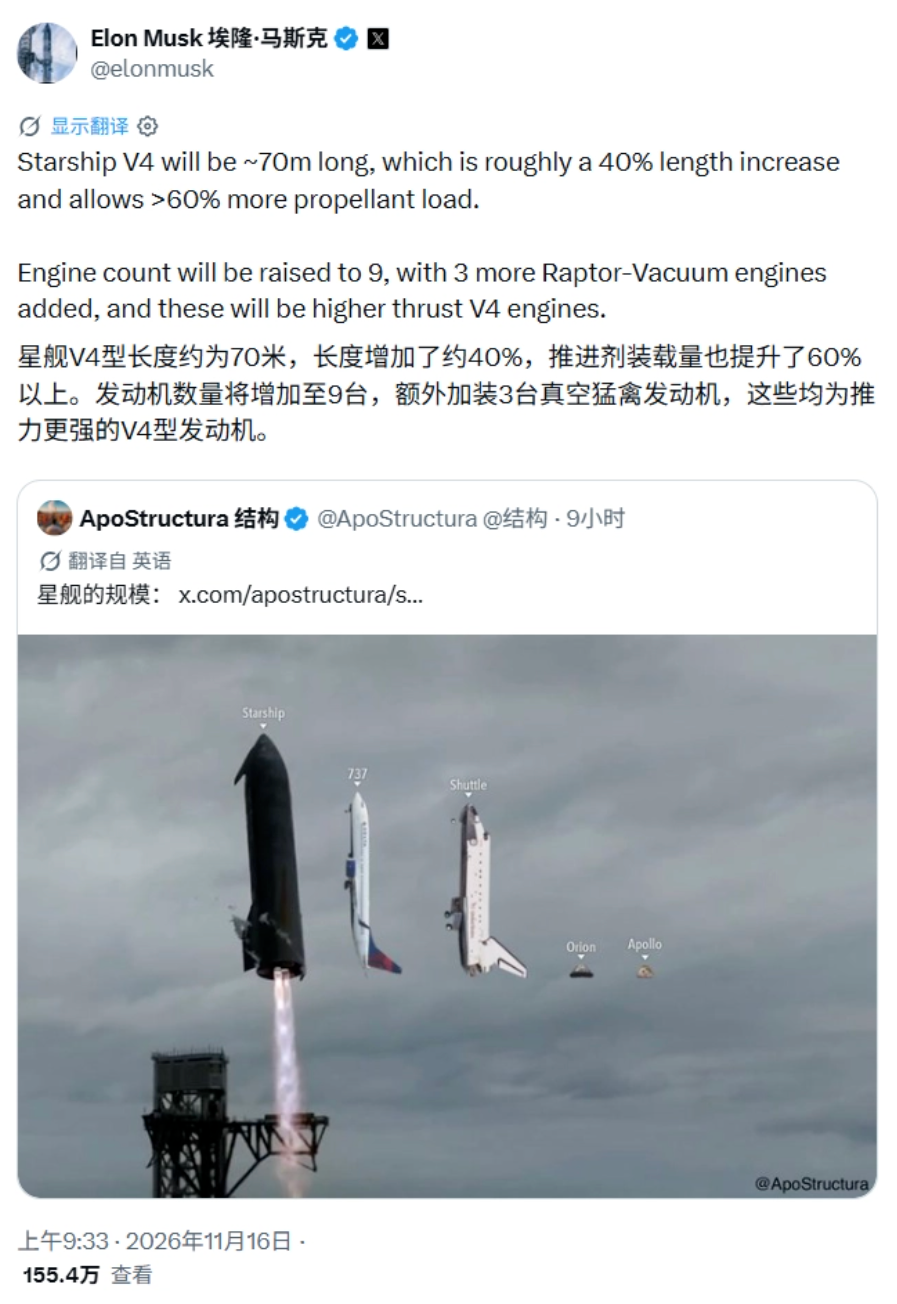
Conclusion first: V4 is a larger upper-stage concept with more propellant and more engines. Elon Musk described about 70 meters in length, roughly 40% more length, more than 60% more propellant capacity, and engine count rising to 9 Raptor engines.
The extra hardware is specific: 3 additional vacuum Raptor engines, all described as higher-thrust V4 Raptor engines. That matters because vacuum Raptor engines are optimized for operation after launch, where nozzle efficiency and throttling behavior can shape how a tanker or lander uses its propellant margin. I would not read that as “more thrust means faster”; with cryogenic vehicles, control, relight, and thermal behavior are part of the same question.
What do quick V4 summaries miss?
Conclusion: most short summaries stop at length, propellant, and engine count. Two gaps matter for a fair evaluation: the V3 Starship baseline and the operational chain that turns tanker capacity into fewer launches.
- Baseline gap: V3 Starship, used in the 15th test flight, was about 52 meters tall with 6 Raptor engines: 3 sea-level Raptor engines and 3 vacuum Raptor engines. Without that reference, a 40% increase has no engineering meaning.
- Architecture gap: a tanker does not deliver propellant to the Moon by itself. NASA has described a depot-first flow in which tankers fill a depot and the lander then receives propellant.
Starship V4 vs V3 Starship: where is the real trade-off?
Conclusion first: V4 buys fewer tanker sorties on paper, while V3 is the clearer reference point for what has actually flown. That makes this a comparison of mission fit, not a contest with one universal winner.
| Dimension | V3 Starship | Starship V4 | Why it matters |
|---|---|---|---|
| Size | About 52 meters in the 15th test flight | About 70 meters, about 40% longer | More volume can hold more propellant, but also raises ground-system and thermal questions. |
| Engines | 6 Raptor engines: 3 sea-level Raptor engines and 3 vacuum Raptor engines | 9 Raptor engines, including 3 additional vacuum Raptor engines | Engine count changes thrust, control margin, and redundancy; none of those automatically becomes payload. |
| Propellant claim | Not specified in the cited brief | Propellant capacity up more than 60% | The percentage is useful only when tied to a mission flow. |
| Tanker role | Reference vehicle for comparison | A V4 Starship tanker can carry more than 200 tons per flight, according to Elon Musk | This is the number behind the refueling-launch reduction. |
| Maturity signal | Associated with the 15th test flight | Announced design evolution | Treat V4 as a target until flight data and transfer demonstrations support the cadence. |
The practical trade-off is not “bigger is always better.” A longer vehicle with 9 Raptor engines can reduce the number of tanker flights if the propellant actually reaches the depot on schedule. It also concentrates risk in fewer, larger vehicles and in ground systems that must support longer stages, faster turnaround, andcryogenic loading. That is analysis, not a separate claim from the briefing.
Why do 5 to 6 refueling launches matter?
Conclusion first: the reduction from about 22 launches to 5 to 6 matters because each launch is a dependency in a chain, not a line item. Fewer sorties can reduce schedule exposure, launch-site pressure, and the number of docking and transfer events.
Elon Musk said a V4 Starship tanker can transport more than 200 tons of propellant per flight. He linked that capacity to a drop from the NASA safety review team estimate of about 22 orbital refueling launches to 5 to 6. The logic is straightforward: if each tanker delivers more usable propellant, the depot needs fewer tanker visits before the lander is ready.
NASA’s own material explains why tanker capacity is only part of the story. A Nov. 22, 2024 NASA article described a flow in which a depot is launched, tankers transfer cryogenic methane and liquid oxygen, and the lander later receives propellant. The same article quoted Human Landing System (HLS) chief engineer Rene Ortega saying the 'storage depot and Starship HLS, will insulate the liquid oxygen and methane propellants.' That comment points to the less glamorous constraint: keeping super-cold propellant usable long enough to complete the chain.
A second NASA source adds a risk-control angle. A July 31, 2025 NASA note said engineers had used computational fluid analysis to study propellant transfer methods and identify potential risks early in development. NASA’s TechPort entry dated July 15, 2026 describes on-orbit cryogenic propellant management as directly applicable to Starship and related architectures. So the 5 to 6 figure is directionally useful, but it compresses boil-off control, docking, transfer timing, and range throughput into one number.
What does Starship Ship 42 tell us about readiness?
Conclusion first: Starship Ship 42 is a positive reuse signal, not proof that V4 refueling cadence is mature.
Elon Musk inspected Starship Ship 42 just after it was caught by the launch tower mechanical arm. He said the heat shield was in overall good condition and the engines looked good; after weeks of inspection and maintenance, it might fly again. The operational lesson is narrower than the V4 headline: catching and refurbishing hardware can reduce turnaround uncertainty, but a lunar propellant campaign also needs depot storage, tanker scheduling, and certification.
Which missions fit V4, and where should readers stay cautious?
Conclusion first: choose V4 logic when the mission is limited by propellant mass and launch cadence; be cautious when the mission depends on near-term demonstrated operations.
- Best fit: lunar logistics that need large propellant aggregation, where a V4 Starship tanker carrying more than 200 tons can reduce sortie count.
- Watch list: test campaigns that value known V3 Starship hardware, including the vehicle associated with the 15th test flight, over a larger announced design.
- Decision rule: if fewer orbital refueling launches are the main benefit, verify depot readiness and cryogenic transfer evidence before treating 5 to 6 as a schedule input.
Common misconceptions
- “9 Raptor engines means double the useful payload.” No. Engine count alone says little about usable propellant, structural margin, or transfer efficiency.
- “5 to 6 means the whole Moon mission needs only 5 to 6 launches.” No. The approved brief's fact concerns orbital refueling launches, not every element of a campaign.
- “A successful catch solves refueling.” No. Starship Ship 42 informs reuse, while depot storage and ship-to-ship transfer remain separate operational problems.
FAQ: what readers usually ask
Is Starship V4 already flying?
The available brief describes an announced design evolution, not a demonstrated V4 operating campaign. Treat about 70 meters, more than 60% propellant capacity, and 9 Raptor engines as disclosed targets until flight and transfer data support them.
How does V3 Starship compare in one line?
V3 Starship in the 15th test flight was about 52 meters tall and used 6 Raptor engines: 3 sea-level Raptor engines and 3 vacuum Raptor engines. V4 is the larger, 9-engine follow-on aimed at higher propellant throughput.
Does 200 tons mean payload delivered to the Moon?
No. It refers to propellant transported by a V4 Starship tanker per flight. The purpose described is orbital refueling, not direct lunar surface delivery.
What is the biggest technical risk in the plan?
Cryogenic transfer operations. NASA sources emphasize depot storage, insulation, boil-off mitigation, and early risk analysis; those details decide whether a lower launch count becomes a real schedule advantage.
Reference sources
- NASA Marshall Thermal Engineering Lab Provides Key Insight to Human Landing System
- NASA Boost Commercial Space Tech Development note
- NASA TechPort: On-Orbit Large-Scale Cryogenic Propellant Management
Reusable decision checklist
- State the mission constraint first: propellant mass, launch cadence, or hardware maturity.
- Keep the V3 Starship baseline visible: 15th test flight, about 52 meters, 6 Raptor engines, 3 sea-level Raptor engines and 3 vacuum Raptor engines.
- Keep the V4 claim separate: about 70 meters, about 40% longer, more than 60% propellant capacity, 9 Raptor engines.
- Ask how a V4 Starship tanker will deliver more than 200 tons of propellant into the depot flow.
- Treat about 22 versus 5 to 6 orbital refueling launches as a model output, not a guarantee.
- Track Starship Ship 42 refurbishment as a reuse signal, not as proof of lunar refueling readiness.