
Starship Flight 15 Weighed: S42's Tower Catch vs. B22's Gulf Splashdown | ItInsightsWorld General
Flight 15 ended with one tower catch and one aborted catch. SpaceX's S42 was grabbed by the chopsticks at Starbase; B22's guidance system refused its own capture and the booster went into the Gulf of Mexico. The photos from that night record the split result. This comparison separates what each half proved from what the celebration suggested.
What actually happened on Starship Flight 15?
Conclusion first: the ship half worked, the booster half did not. Flight 15 lifted off from Pad 2 at Starbase on 13 November 2026 at about 22:47 UTC (06:47 Beijing time on 14 November), third-generation S42 stacked on booster B22 (Wikipedia's Flight 15 entry). Hot separation came a little over two minutes in. About 35 minutes after launch, S42 began releasing 26 Starlink V3 satellites; three carried cameras aimed back at the windward heat shield, and all 26 made contact and began raising orbit. The ship then flew roughly 14 orbits over about 22.5 hours before returning (10jqka's Flight 15 report).
B22 never reached the arms. After its return burn, the booster's guidance, navigation and control (GNC) system judged capture conditions unsafe, diverted toward the Gulf of Mexico, and ended in a controlled splashdown and breakup. Space.com reports that SpaceX is still investigating the guidance issue; other accounts also cite a low-fuel-quality warning. Being precise about uncertainty matters here: the public record offers two overlapping explanations, not one settled root cause.
That split is why the images from Starbase are worth reading carefully. They are a visual record of the half that succeeded, and they also show the hardware that has to be inspected before the next attempt.
Ship catch vs. booster catch: what is the actual difference?
Conclusion: the two "catches" are different engineering problems, which is why one was a first and the other is approaching routine.
| Dimension | S42 ship (caught) | B22 booster (lost) |
|---|---|---|
| Timing | After ~22.5 hours in orbit and reentry | A few minutes after liftoff |
| Entry environment | Plasma reentry above 26,000 km/h, ~2,600°F on the tiles | No comparable heat load on an ascent-stage return |
| Engines | Landing burn after the belly-flop and flip | 33 Raptors at liftoff, throttled for the landing burn |
| Final margin | Cleared a last safety gate over the Gulf, ~10 km out | Low-fuel-quality warning preceded the abort |
| Precedent | First orbital ship catch ever | Booster catches demonstrated since 2024 |
| Decision | GNC cleared the tower approach | GNC refused capture and diverted to sea |
Our reading (analysis, not a SpaceX claim): losing B22 damages turnaround economics, because the booster is the piece you try to recover on every flight. Losing S42 would have removed the milestone itself. Different stakes, different tolerance for risk.
Why did B22 abort while S42 was cleared?
Conclusion: the abort protected an expensive fixed asset — the tower and pad — at the cost of one booster. The arms did not fail; the decision logic did what it was designed to do.
The underlying trade is simple (our analysis): landing propellant is payload you never deliver. Carry too much and the vehicle loses capacity; carry too little and any drift in engine performance or fuel quality erases the margin. B22's warning suggests the margin was gone before the capture window opened. That is a data point about operating envelopes, not a verdict on tower recovery as a method.
For readers used to judging engineering programs by a single pass/fail headline, this is the part worth slowing down for. A system that autonomously refuses an unsafe catch is behaving correctly.
What do the Starbase images actually record?
Two opening frames from the tower team's night:
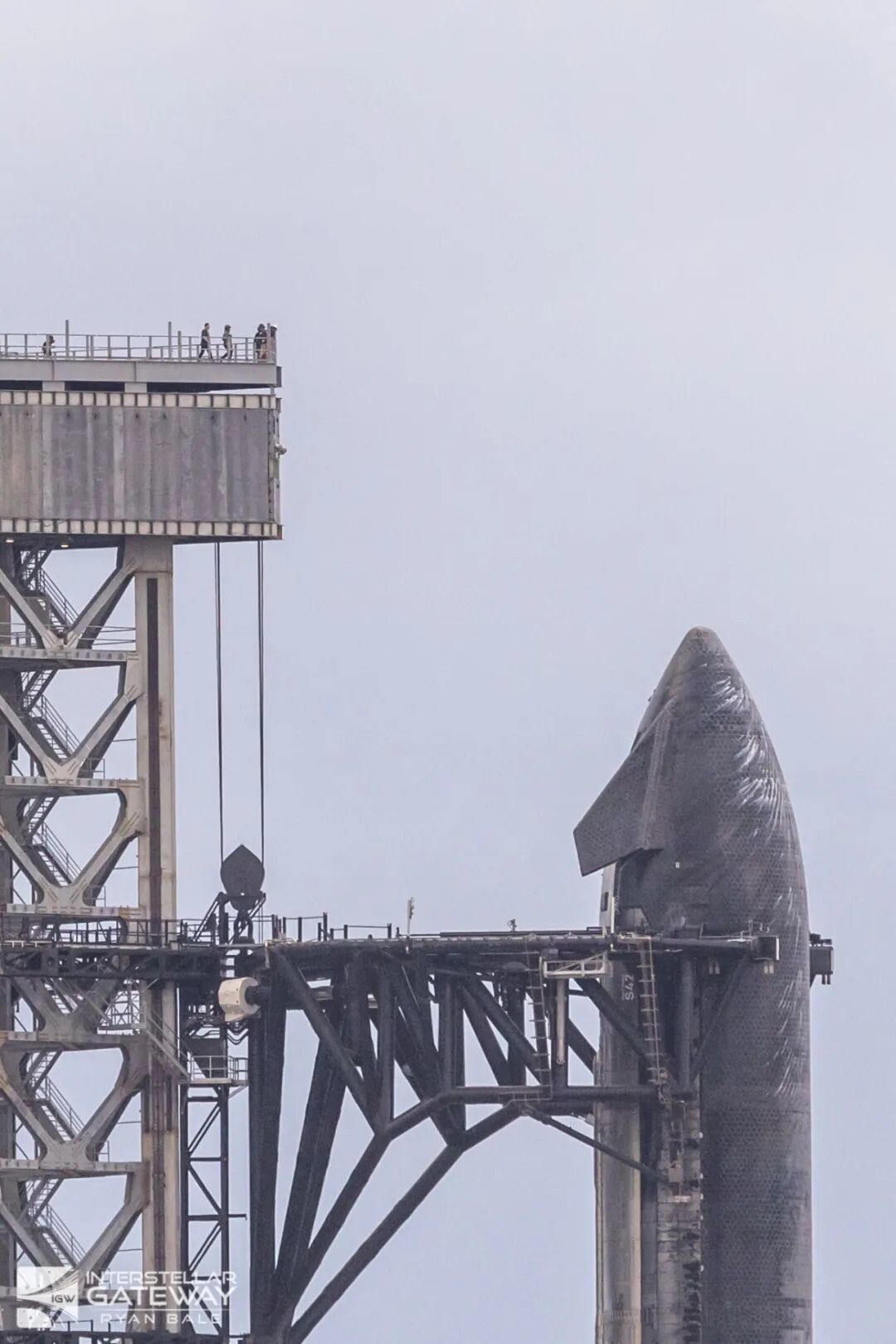
Avid Space caught Lao Ma (Musk) standing beneath the capture arm, head tilted up at S42 (left of frame).
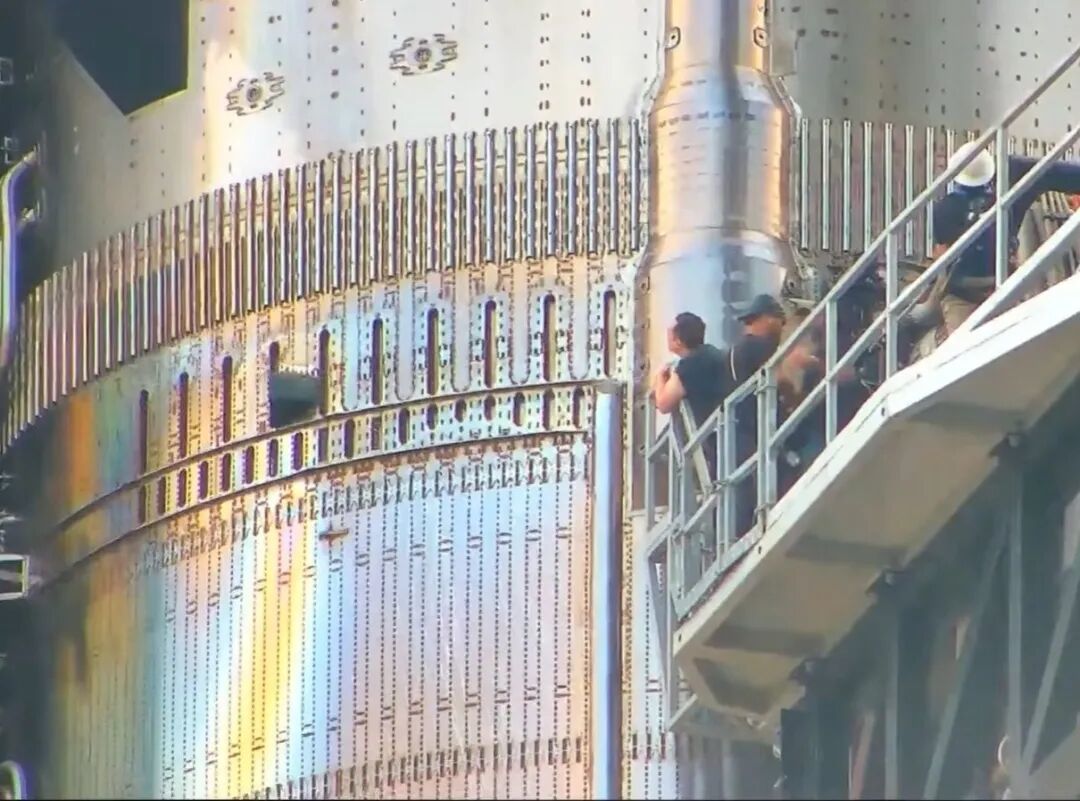
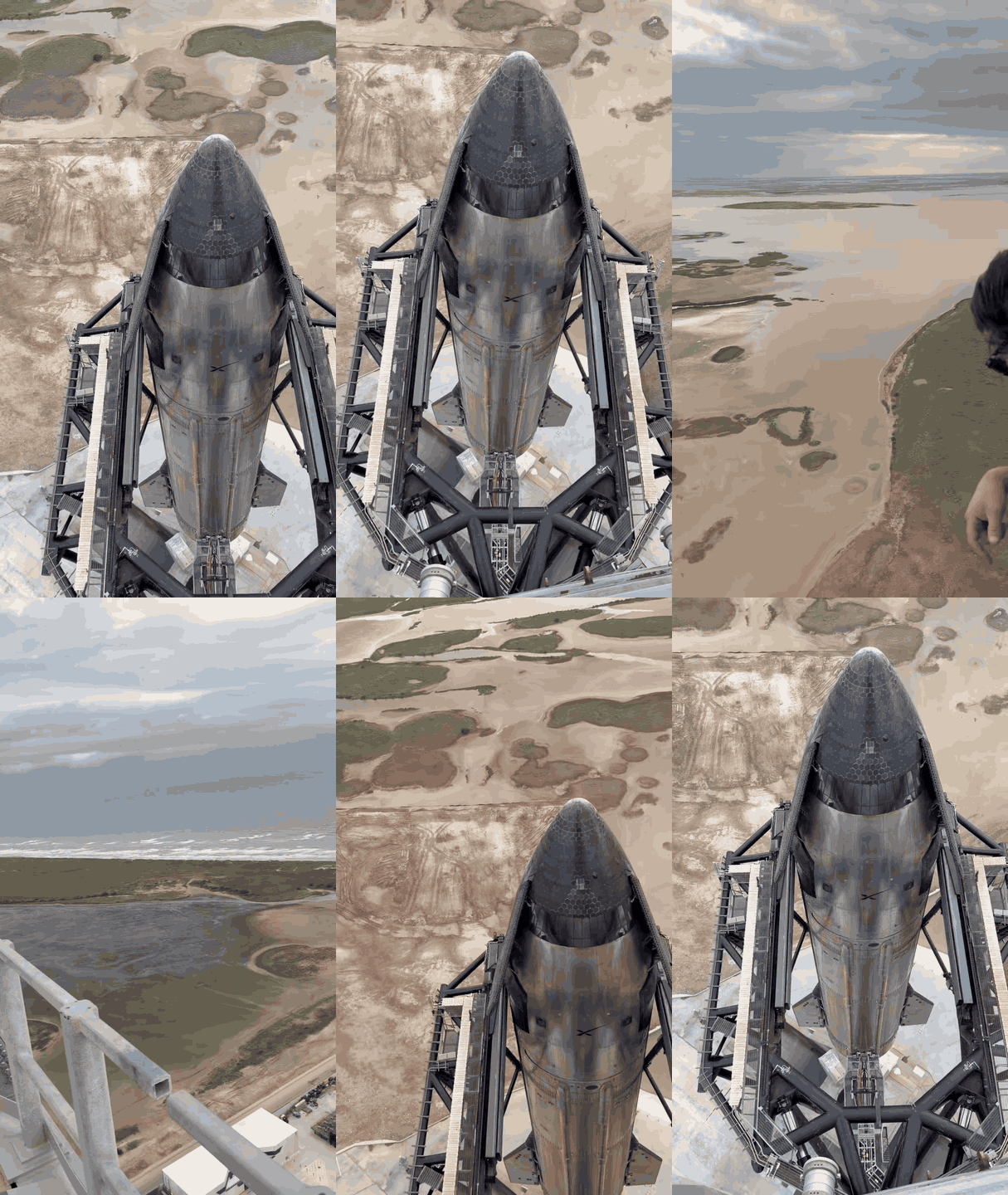
Musk was visibly excited as well, filming S42 from several angles on his phone and sharing the clips.
In that footage, more than a dozen people can be seen up on the tower with him.
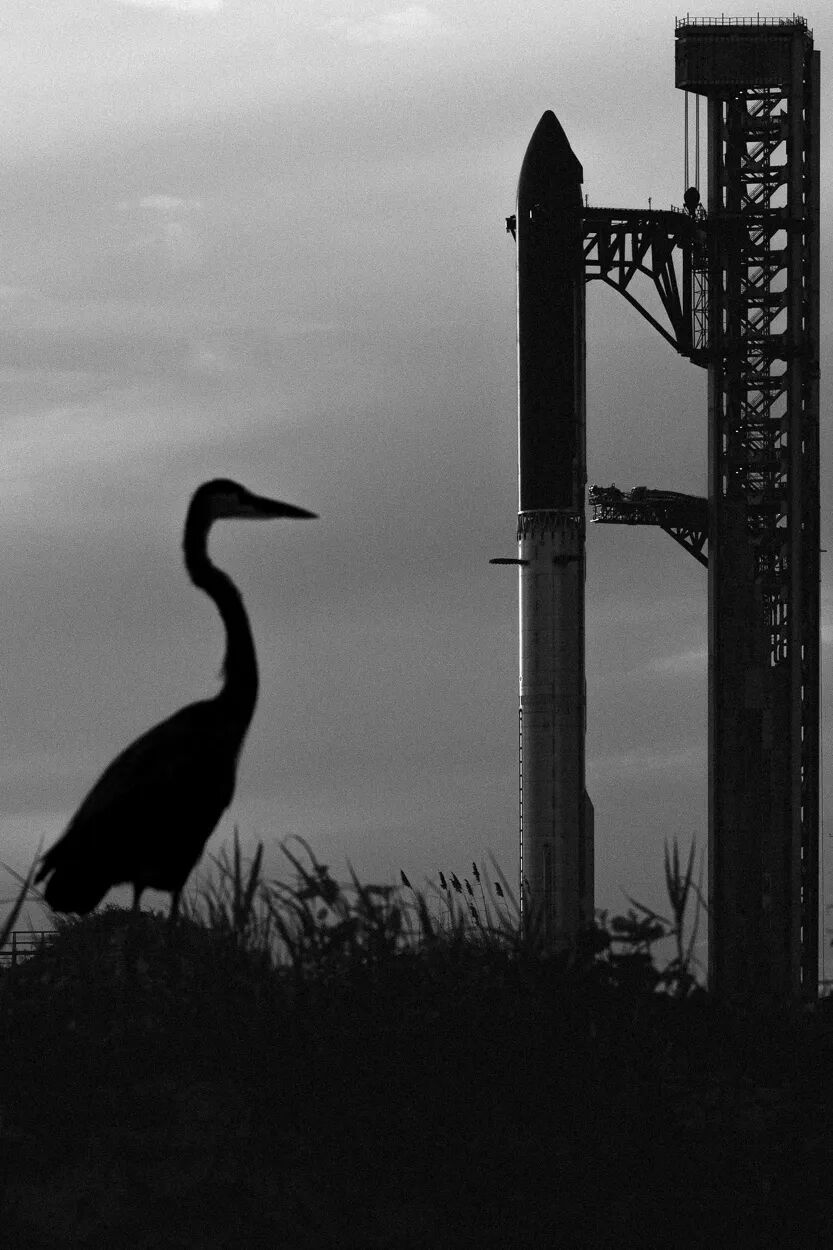
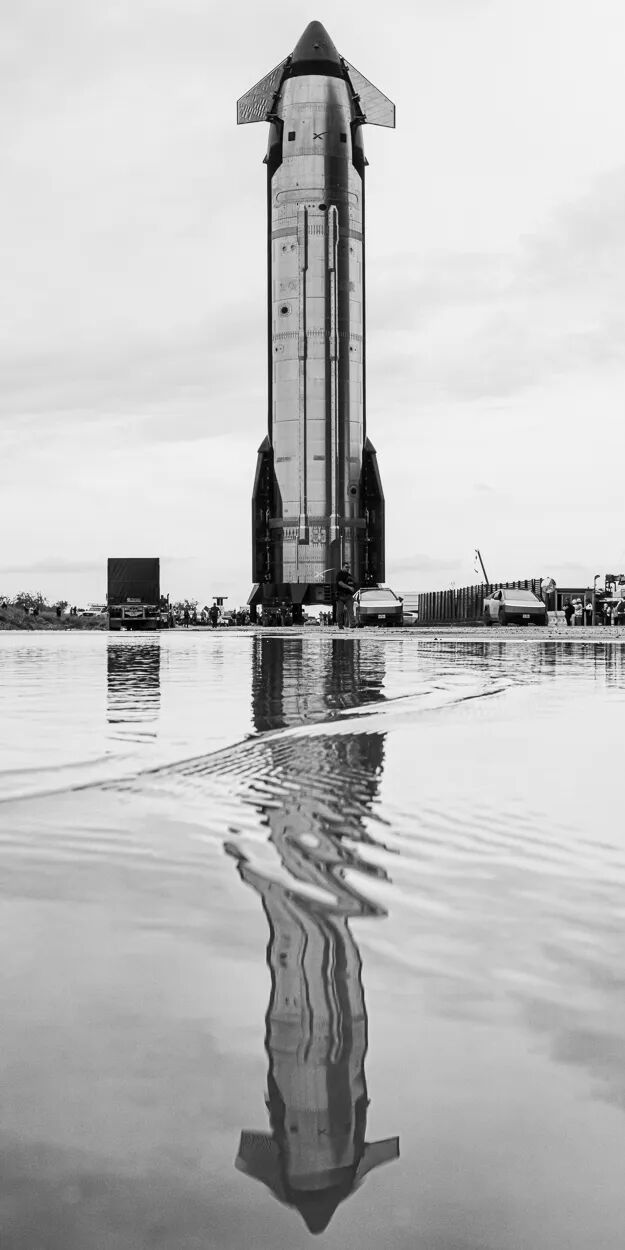
Beyond the tower, several Starship photography accounts published large sets of images. A selection, with the original captions rendered in English:
"Shooting for the Stars" — the Starbase SpaceX team celebrating Flight 15's success.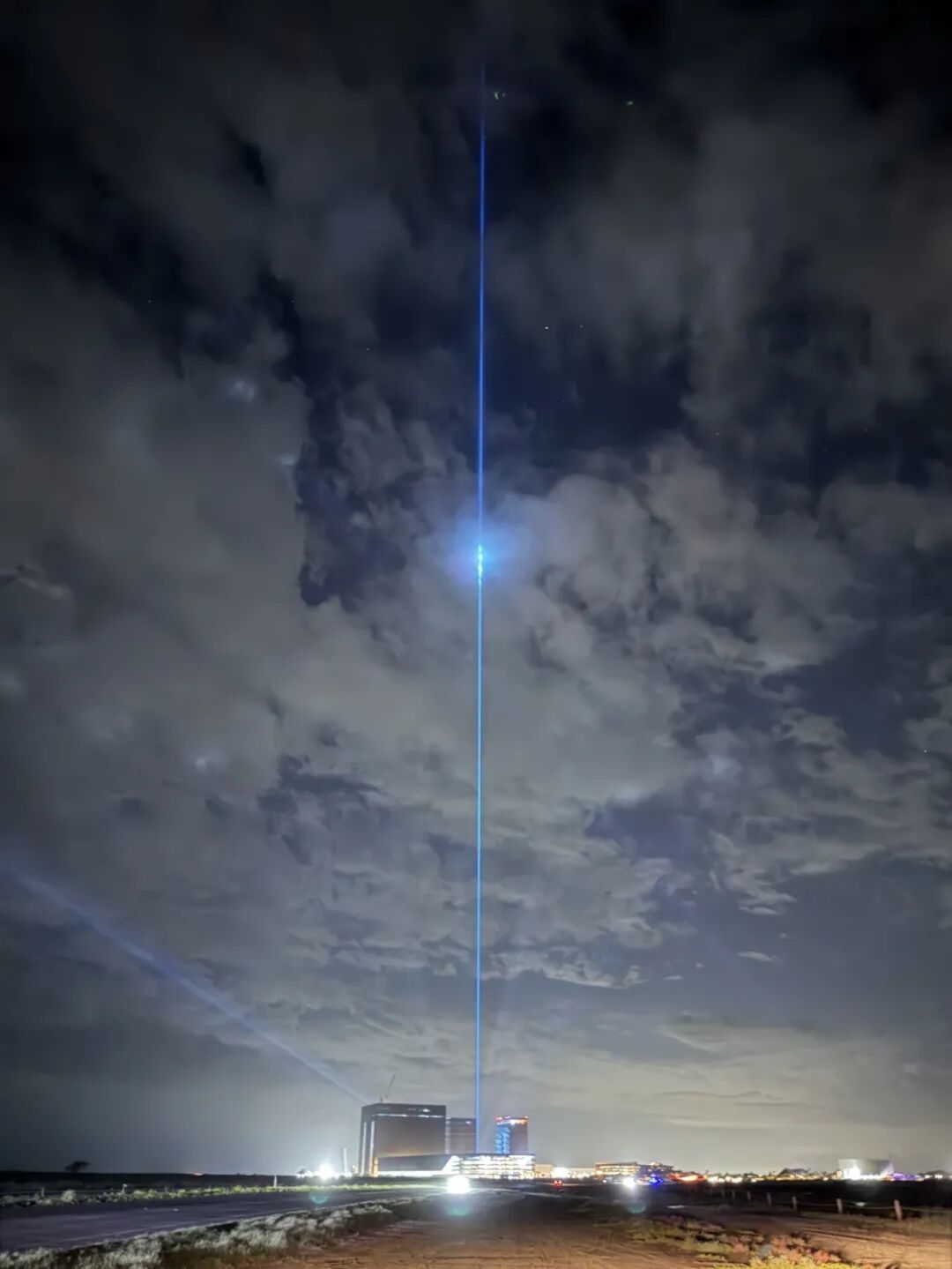
"S42 Comes Home" — a multi-frame composite by John Kraus.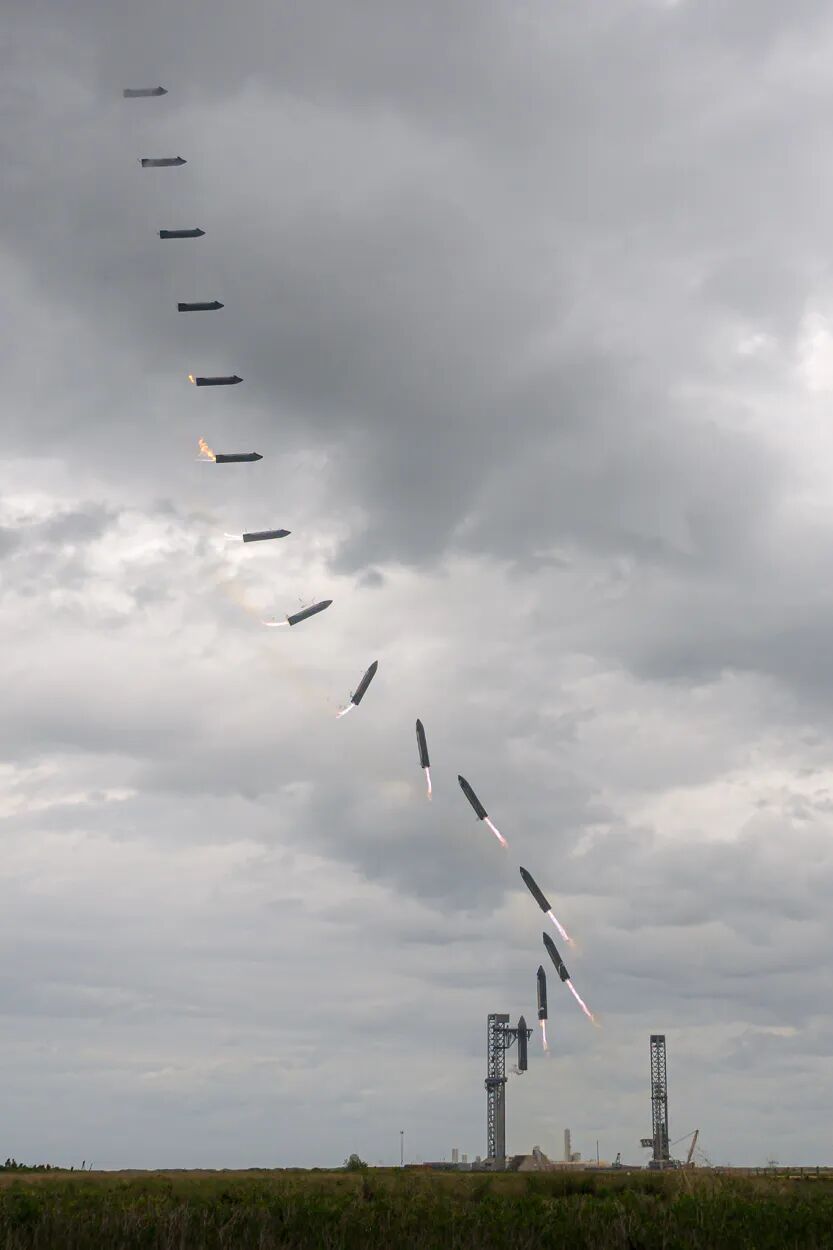
"Next Stop: the Moon" — image: NSF.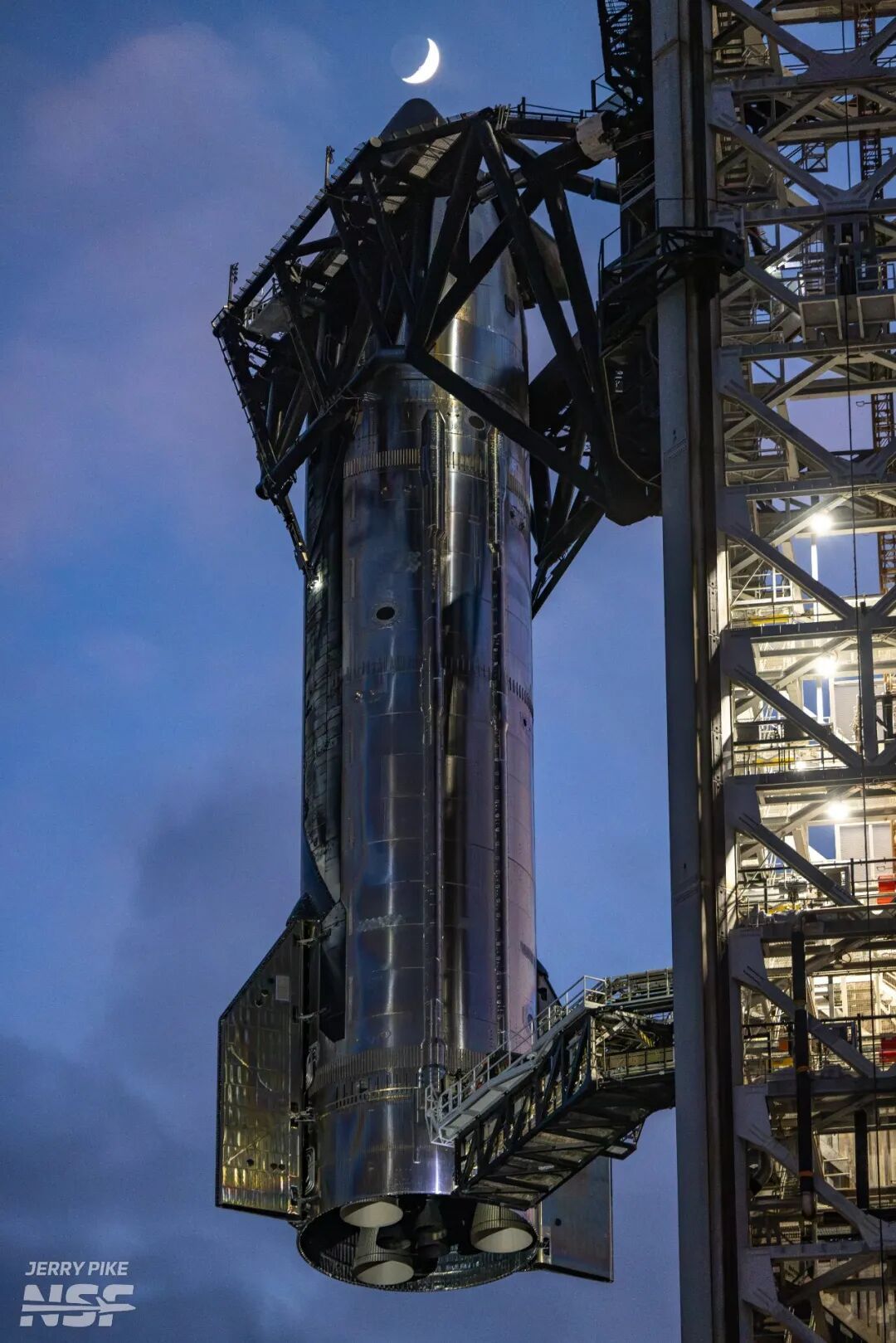
"The answer is 42, as the great prophet Douglas Adams foretold" — Elon Musk. Photo: John Kraus.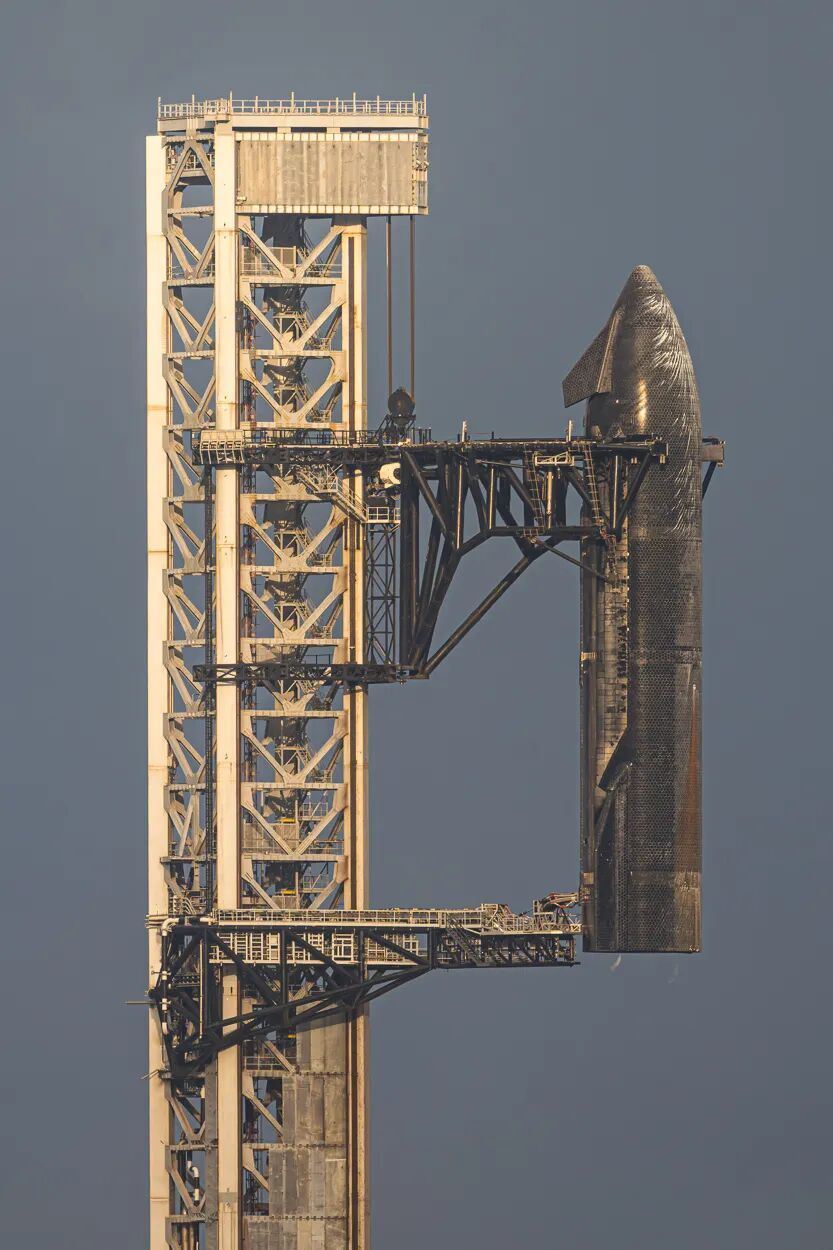
"Home, sweet home" — image: Fabian Ramirez.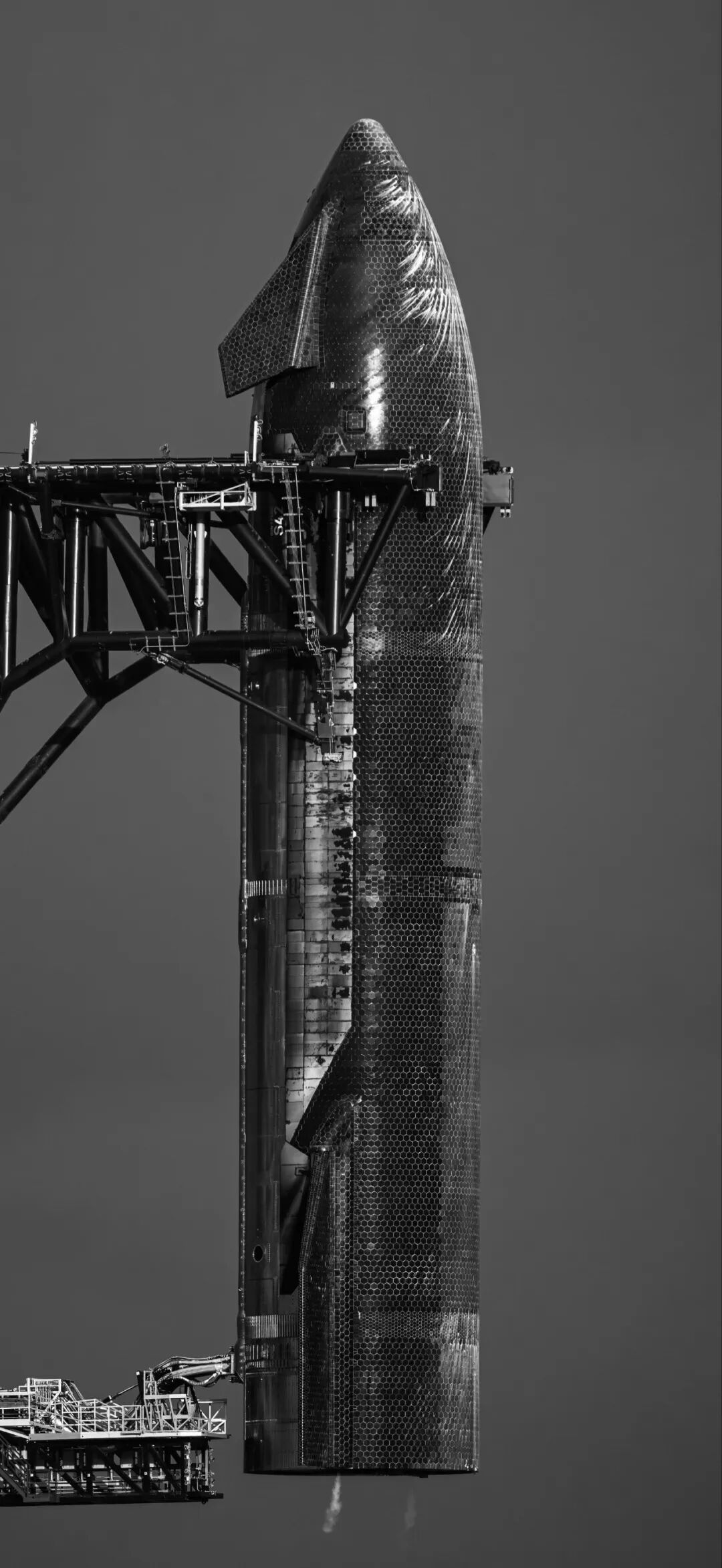
"Don't Panic" — image: LaunchHeavenX.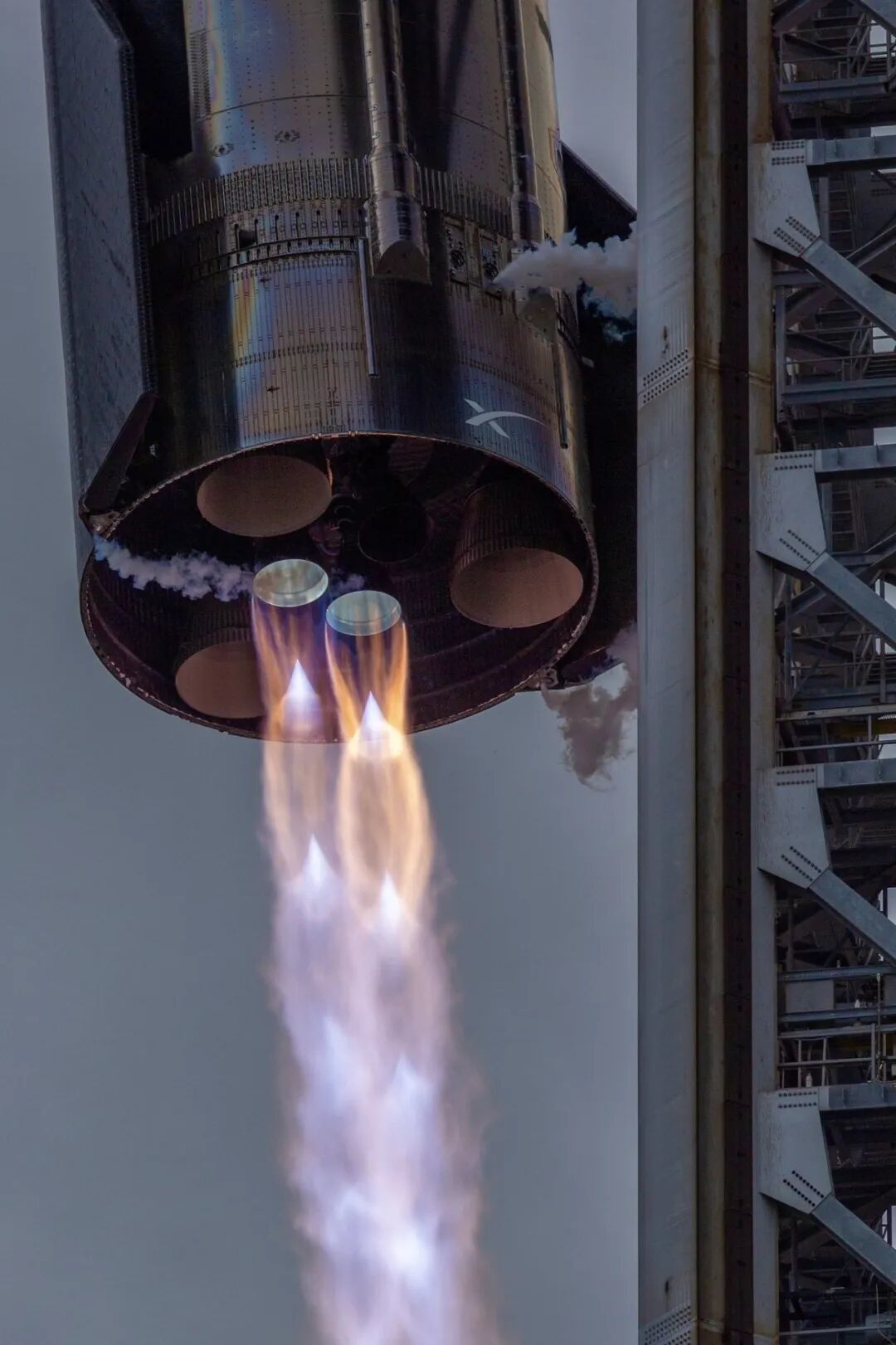
"Waiting" — image: NSF.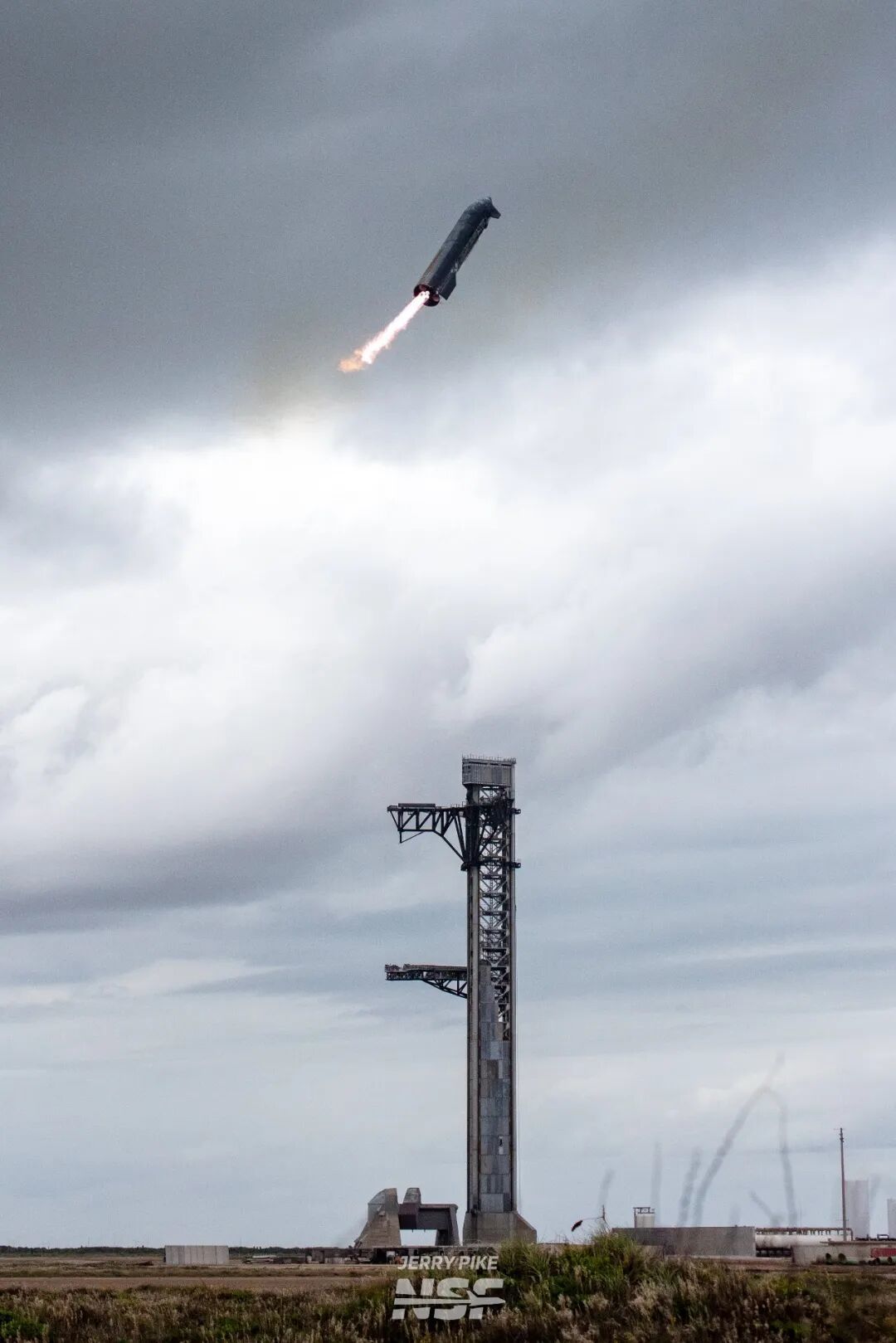
"Braking" — image: John Kraus.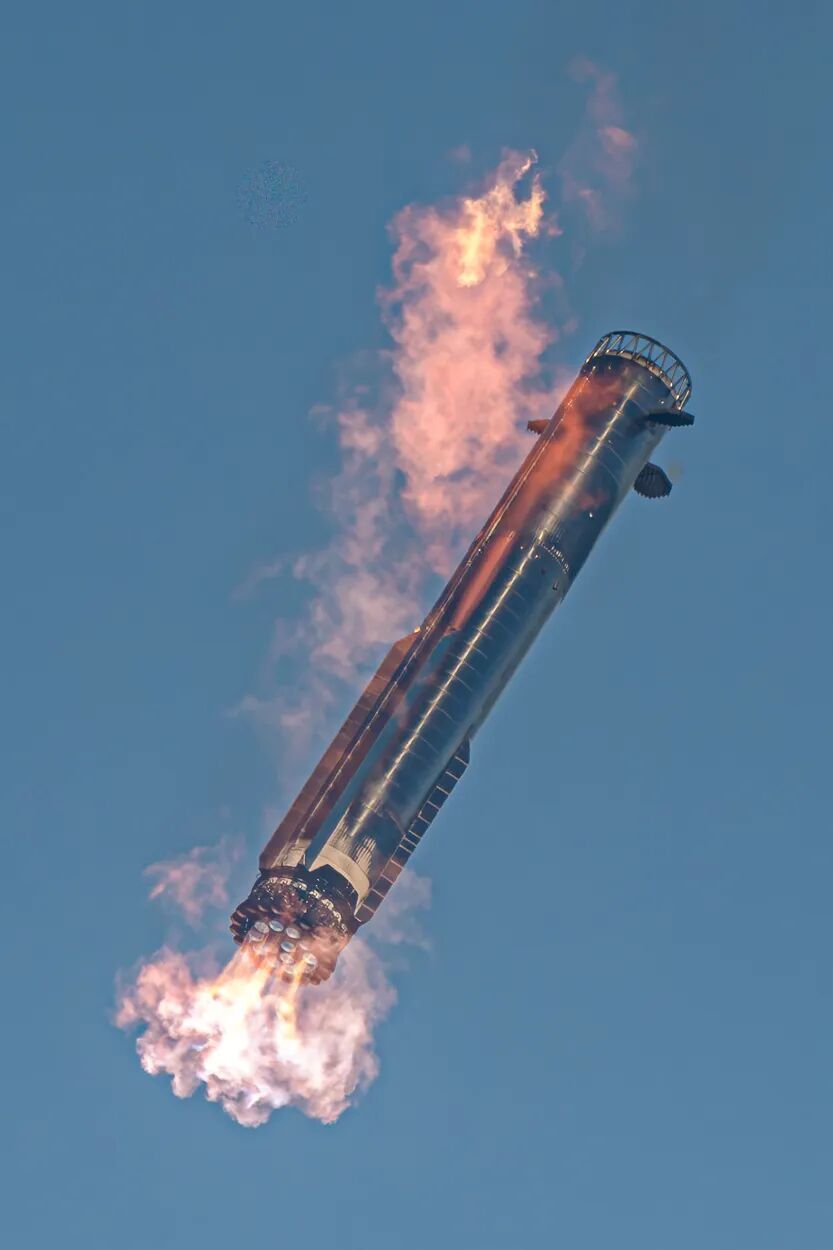
"Fireworks" — image: John Kraus.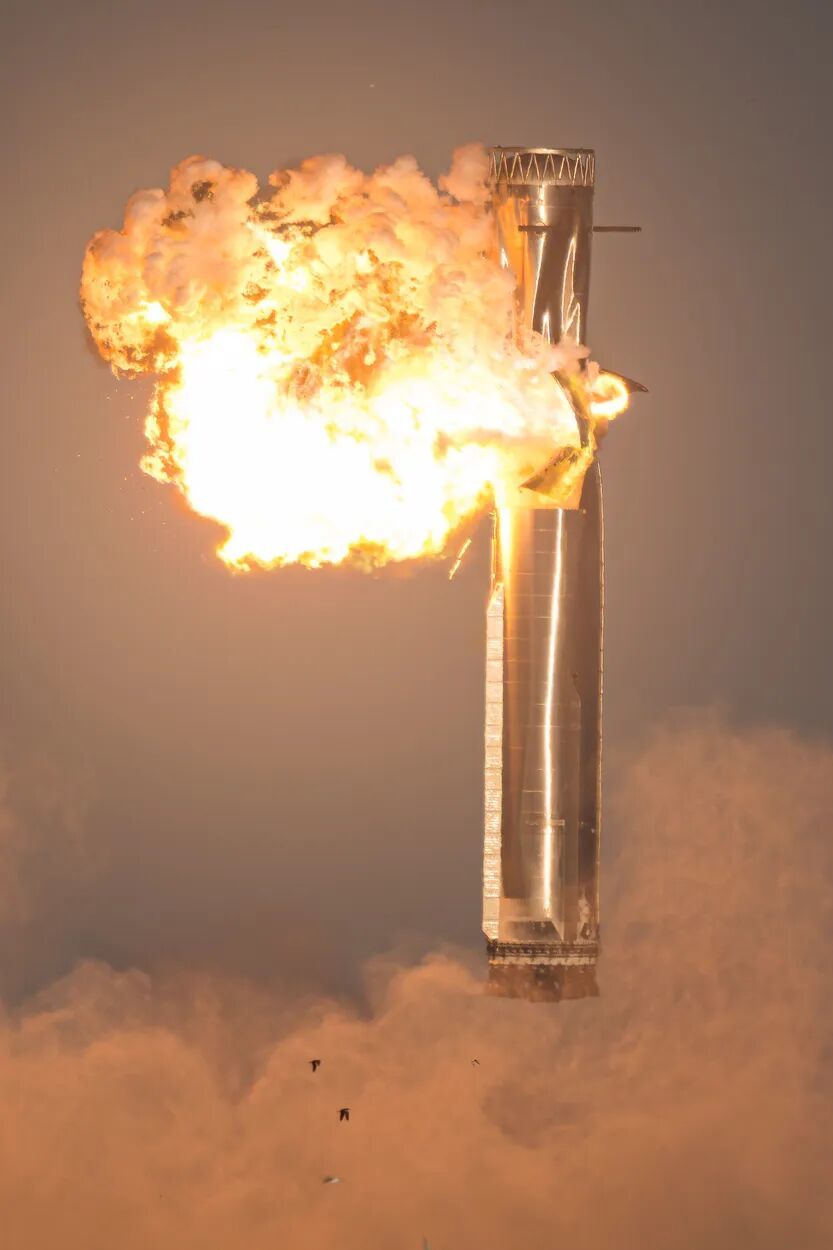
"Civilization and Progress" — a Prometheus statue at Starbase, built and funded by French nationals.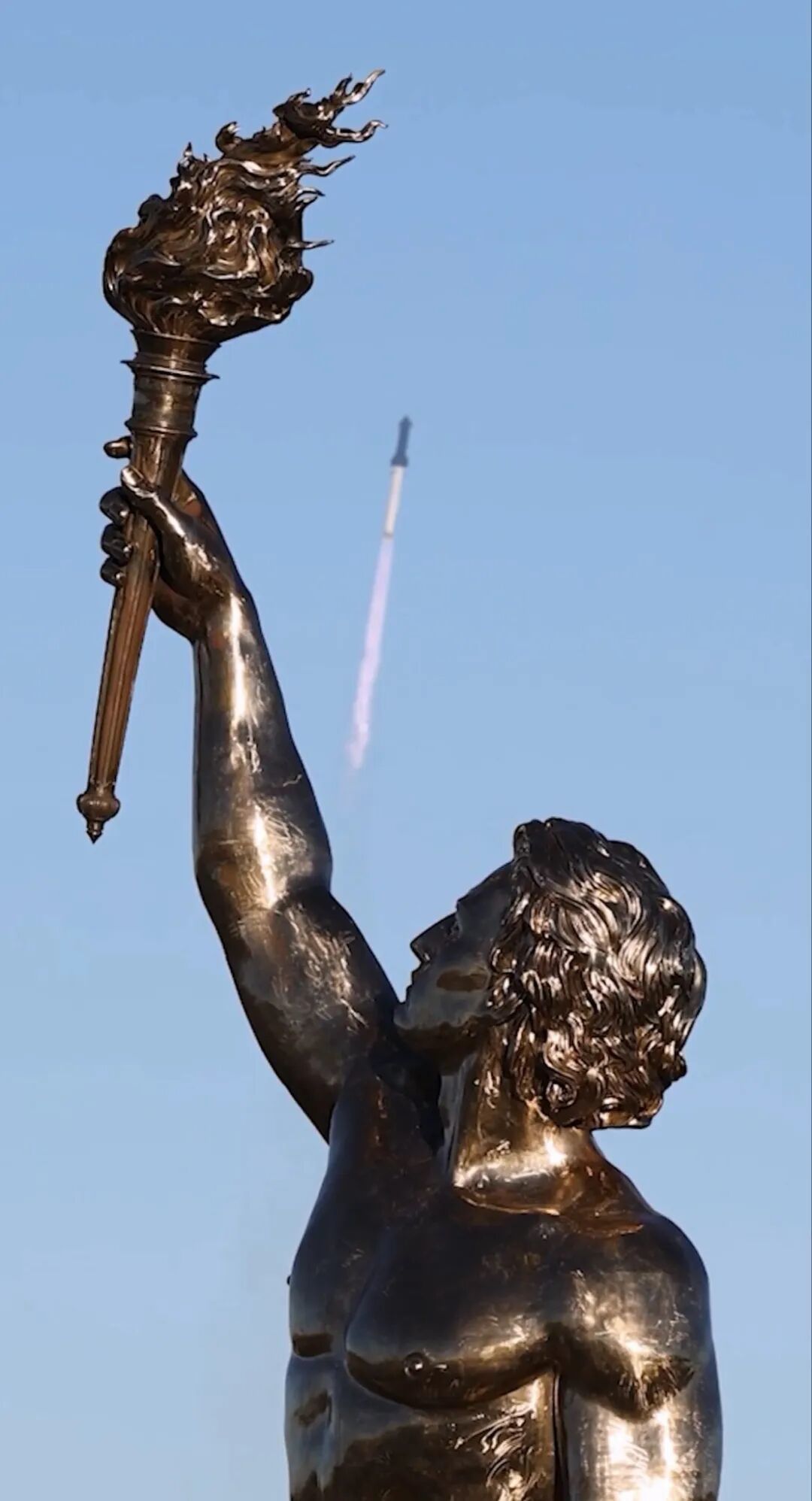
"Ascent" — image: John Kraus.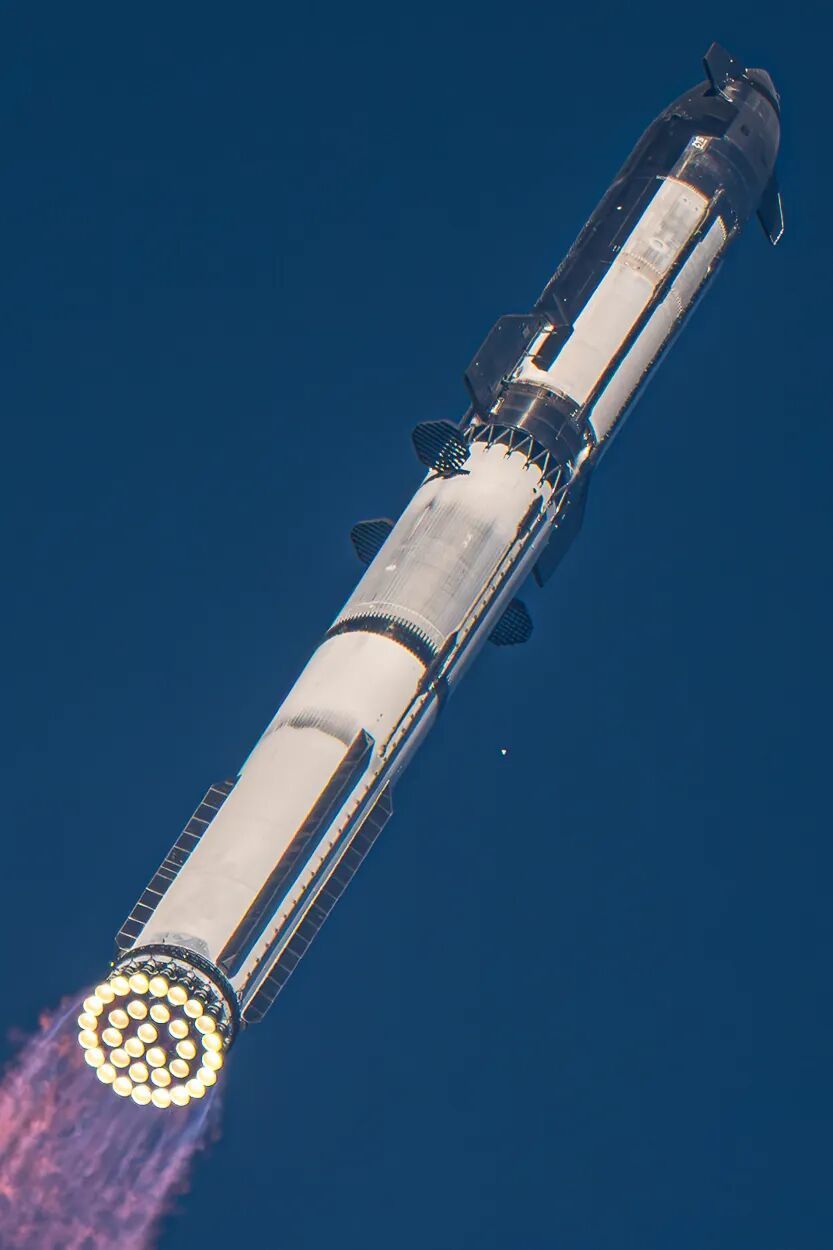
"Made on Earth by Humans" — Elon Musk.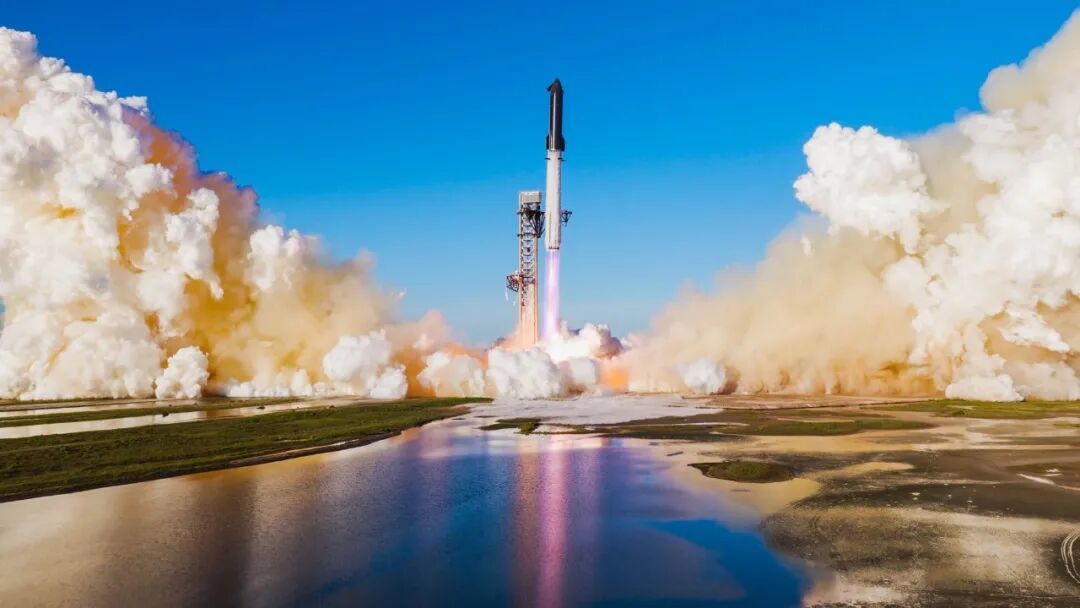
"Looking Afar" and a run of pre-launch work — images: John Kraus.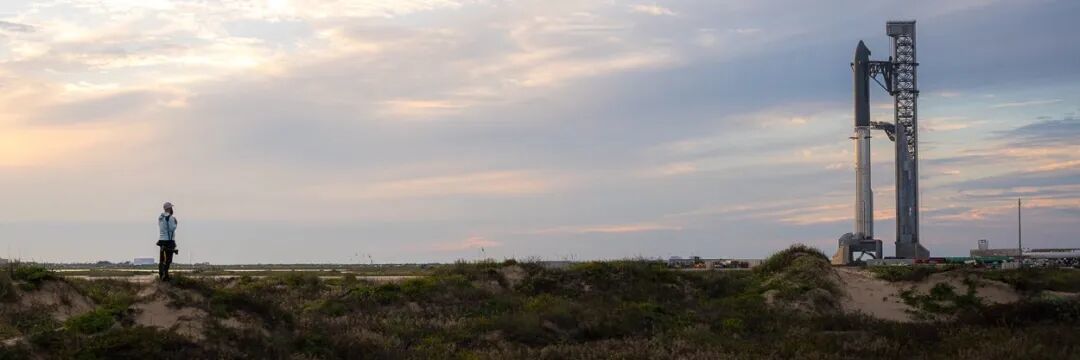

Which readings of Flight 15 are wrong?
- "A lost booster means the mission failed." The first-ever orbital ship catch succeeded; the booster loss is a separate, recoverable problem.
- "SpaceX nailed the double catch." It did not. Only the ship was caught; the booster diverted to the Gulf.
- "The photos are just celebration." Three camera-bearing satellites photographed the heat shield, and those images feed the inspection that clears — or blocks — the next return.
What should you watch in the next flight?
Conclusion: judge the next flight on turnaround, not on fireworks. Four things are worth tracking: heat-shield tile condition after inspection; how quickly a caught ship is re-flown; whether the tower attempts another ship catch; and whether the abort logic is revised in response to B22. The same skepticism we bring to other ambitious delivery timelines — our General review of Tesla's Optimus plan is one example — is the right default here.
A reusable checklist for reading any test-flight headline
- Name the objective that actually succeeded — not the sum of all objectives.
- Separate "the system refused" from "the system broke."
- Find the primary number: launch time, orbit, flight duration, reentry speed.
- Check who supplied the image and what it was instrumented to show.
- Note what is still under investigation before accepting a root cause.
- Ask what has to be re-flown before the claim becomes a capability.
FAQ
Was Flight 15 a success or a failure?
Both, depending on the objective. The ship catch succeeded; the booster catch did not. Treating the flight as one binary result loses the useful information.
Why didn't the chopsticks catch B22?
Its GNC judged the capture conditions unsafe and diverted it to the Gulf. SpaceX says the guidance issue is still under investigation; a low-fuel-quality warning was also reported.
What does "42" in the photo caption mean?
It is Musk quoting Douglas Adams: the answer to life, the universe and everything is 42. A joke attached to a vehicle named S42, photographed by John Kraus.
Why are the photos part of the engineering story?
Three of the 26 Starlink V3 satellites carried cameras to look at the windward heat shield. Those images, combined with ground tracking, informed the decision to bring S42 back.
— Maya Brooks, ItInsightsWorld General