
Wi-Fi Fall Detection vs. Cameras and Wearables: How Sony’s New System Fits Privacy-Sensitive Elder Care
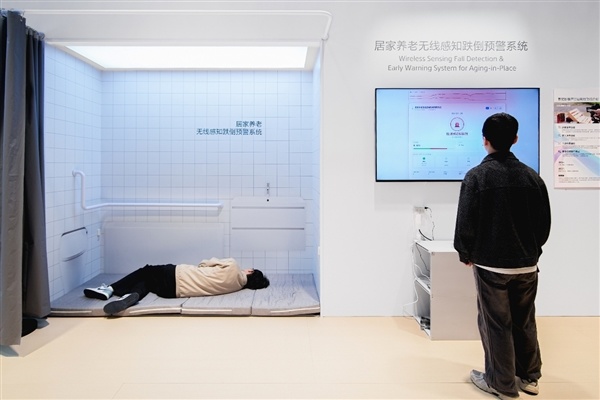
Sony (China) Co., Ltd. used the ninth China International Import Expo (CIIE), held in Shanghai from November 5 to 10, 2026, to debut a privacy-friendly Wi-Fi fall-detection system for home and institutional elder care. The system detects falls through Wi-Fi signals and channel state information instead of cameras or wearable devices, making it most useful in bedrooms, bathrooms and care rooms where image collection is unwelcome.
What the CIIE debut actually announced
At the expo, Sony China introduced a wireless-sensing system for elderly care that does not require a user to wear a tag, pendant, wristband or camera-equipped room sensor. Its core promise is simple: keep the care signal visible, while keeping the person’s image invisible. In the words used in the CIIE presentation, the alarm works under the premise of “without viewing images”.
That positioning matters because fall risk is no longer niche. China’s population aged 60 and above reached 310.31 million by the end of 2024, accounting for 22% of the total, according to the National Bureau of Statistics. The World Health Organization also estimates that about 71% of fall deaths in 2023 occurred among adults aged 60 and older. For families and care providers, the design question is therefore not only whether an alert can be sent, but whether monitoring can happen in spaces where residents still want dignity.
How Wi-Fi sensing detects a fall
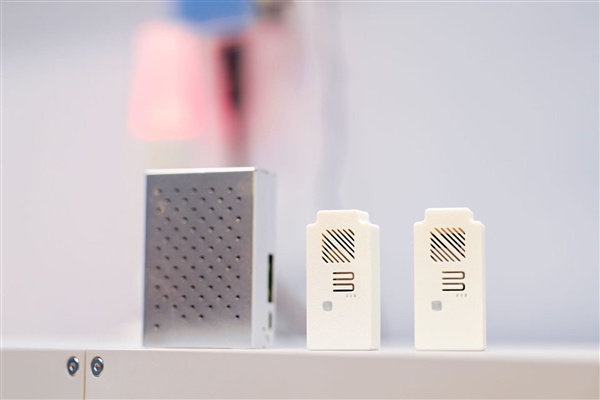
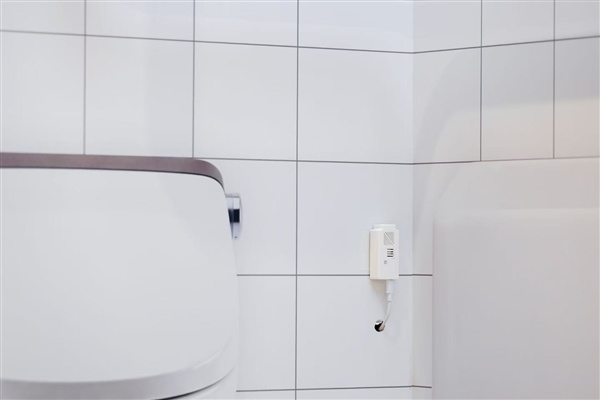
The system’s hardware path is deliberately small: a Wi-Fi signal transmitter, a receiver and a data processor. The detector does not try to take a picture. It watches how a body changes radio propagation in a room. When a person moves, breathes, sits down or collapses, the radio channel changes; the system samples channel state information, or CSI, then combines those wireless measurements with human movement characteristics and deep-learning models to identify fall events in real time.
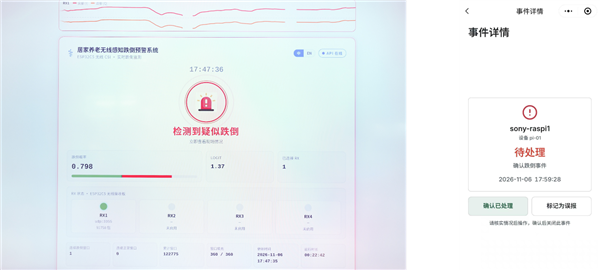
Once a fall is recognized, the system can trigger an on-site sound and light alert, or push a warning through an app and mini-program. It supports common single-person cases such as slow falls and slipping falls. Setup is also intentionally low-friction: after the device is powered on, the system enters monitoring mode automatically and does not need complex debugging, which makes it easier to activate in homes or care facilities.
Camera, wearable, or Wi-Fi sensing: the practical trade-off
| Option | What it depends on | Where it works well | Where it gets harder | Decision note |
|---|---|---|---|---|
| Room camera | Visual frames and video analytics | Shared halls, corridors or spaces where staff need posture verification | Bedrooms, bathrooms and privacy-sensitive rooms; footage storage and consent | Choose only when visual review is necessary and governance is strong |
| Wearable pendant or wristband | Body-worn sensors and user compliance | Moving beyond one room; familiar alert paths | Users may forget, refuse, remove or fail to charge it | Use as a fallback for outdoor movement or residents uncomfortable with ambient systems |
| Sony Wi-Fi system | Wi-Fi transmitter, receiver, data processor and CSI-based learning | Home bedrooms, bathrooms, care institutions and community elder-care spaces | Needs on-site accuracy and false-alarm verification | Best fit where image collection is objectionable but rapid fall alerts are still required |
Why privacy-sensitive rooms need a different sensor
The practical value is not just technology but daily acceptance. Older adults do not need to wear devices, so routines are not interrupted; families and care institutions do not need to defend camera footage in bedrooms and bathrooms; caregivers can receive fall alerts without adding live visual monitoring. The system targets bedrooms, bathrooms, home environments, care institutions and community elder-care services, where privacy objections are strongest and where a fall is often the event that requires fastest response.
What the CIIE demo showed
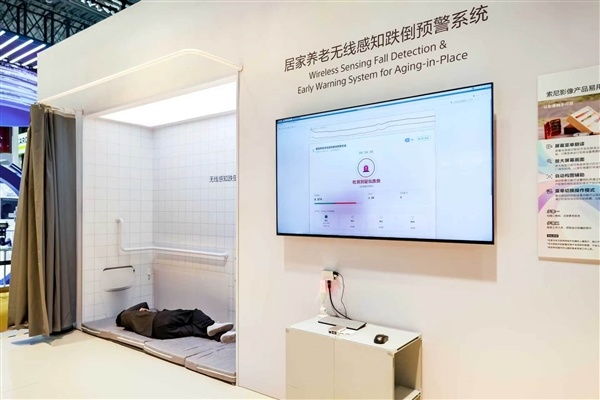
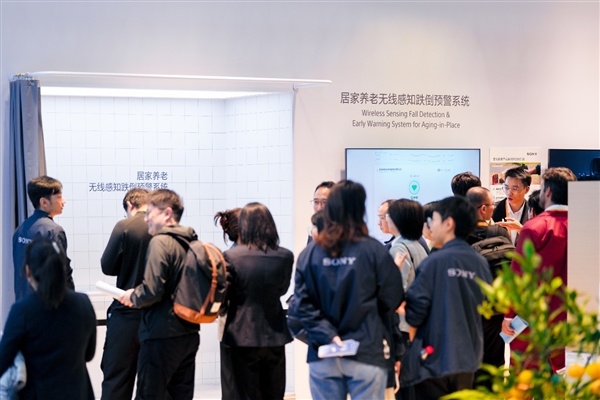
Sony’s booth built a simulated bathroom. During the demonstration, staff fell as a test; the system triggered the alert and synchronized it to a wall-mounted screen. Visitors could also enter and experience the simulated fall process, seeing how an alarm can be issued without a visible image feed. The point is experiential: a fall warning can be useful even when nobody watches a live video frame.
From pilot to real care: where the system still needs proof
The next phase is evidence in operation. The system has already been deployed in a pilot in Shanghai and is using real-world runs to verify system stability and detection accuracy. It was developed locally by the Sony China Research Institute; during development, Sony also cooperated with the University of Science and Technology Beijing.
In application range, the system can support elderly fall detection in home care, public health service centers, nursing homes, rehabilitation institutions and medical institutions. The larger design intent is to connect settings from home to community, and from institution to medical care, while providing round-the-clock support for older people’s safety.
Common misconceptions and risks
- “No camera” does not mean “no data”. The system infers movement from wireless signal changes. Residents and staff should still know what data is collected, who receives alerts, how long logs are kept and who can access the data processor. As ambient AI moves into ordinary rooms, the security question nobody has answered is no longer only a factory-floor problem.
- Fall detection is environment-dependent. Research on Wi-Fi/CSI fall-detection systems has noted that false-alarm testing is often limited, so buyers should not treat lab claims as final proof. The vendor’s own Shanghai pilot language makes the same point: stability and accuracy need real operation.
- Single-person detection is a practical first step. Shared rooms, visitors and caregivers may create overlapping motion signatures. In such spaces, a short pilot should measure whether alerts are clear enough for staff.
- Alerting is not rescue. A device starts the response chain; care staff still need response protocols, escalation rules and a backup path if the network, processor or alert channel fails.
A practical adoption checklist
- Map the rooms: prioritize bathrooms, bedrooms, care rooms and common fall spots.
- Check signal fit: confirm transmitter, receiver and data processor placement before purchase.
- Define alert routes: decide who receives app, mini-program, sound/light or screen alerts first.
- Run a false-alarm diary: log non-fall actions such as sitting quickly, kneeling, dropping objects or pet movement.
- Compare with a wearable fallback: keep a pendant or wristband for residents who refuse ambient systems or move outdoors.
- Review privacy and governance: set retention, access, consent and incident rules before installation.
FAQ: what buyers usually ask first
Does Sony’s fall-detection system require a wearable device?
No. The CIIE debut describes a system that senses activity through Wi-Fi signals and does not require an additional wearable device for the older person.
Why avoid cameras in home or care-room fall detection?
Because bedrooms and bathrooms are private. Cameras can verify posture but create image-retention and dignity issues. The Sony system trades image visibility for wireless motion sensing.
What types of falls does it support?
The announced system supports common single-person cases including slow falls and slipping falls.
Is it already proven beyond a demo?
Partially. It is in a Shanghai pilot and is still verifying stability and detection accuracy through actual operation.
Should institutions choose Wi-Fi sensing instead of cameras?
For privacy-sensitive rooms, Wi-Fi sensing is often a better first choice; for spaces where staff need visual confirmation, cameras or hybrid workflows may still make sense.