
Boston Dynamics Atlas Battery Supply Case: How Samsung SDI and LG Energy Solution Shape Early Robot Power
Samsung SDI is expected to lead early battery deliveries for the Boston Dynamics humanoid robot Atlas, while LG Energy Solution has also been selected as a supplier, according to The Elec. The initial share is concentrated because early demand is limited. The relevant pack uses 70 2170 cylindrical cells and about 1.3 kWh.
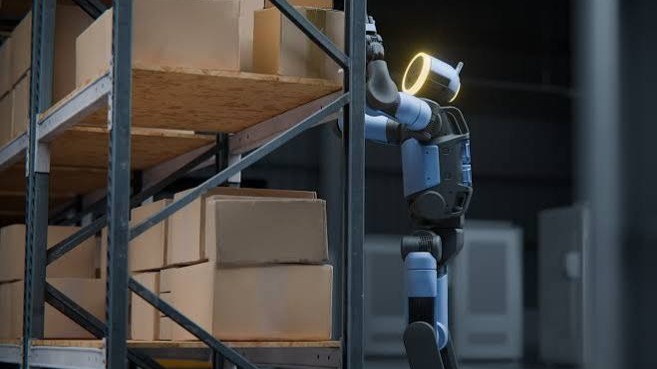
What this Atlas battery case is really about
This is a supply-chain story before a robot product goes mainstream. The Elec, a Korean electronic industry outlet, reported recently that Samsung SDI is moving into the battery supply chain for Boston Dynamics Atlas and is likely to cover most initial shipments. LG Energy Solution is also selected, but because Atlas demand is limited in the first phase, Samsung SDI may remain the dominant source for a period.
The case matters for general readers because it shows how humanoid robots borrow familiar battery formats, supplier selection logic and deployment planning from electronics and automotive manufacturing. It is less a race between cell names than a test of whether a factory robot can be powered, serviced and scaled.
How Atlas is powered: cells, runtime and swap
The reported hardware specification is easy to translate into a practical lesson. Atlas is described as using 70 cylindrical cells of the 2170 format. Each cell is 21 mm in diameter and 70 mm tall, with a capacity of 5000 mAh. After assembly, the battery pack reaches about 1.3 kWh. That is roughly 1.6% of the 84 kWh pack associated with the long-range Hyundai IONIQ 5.
That comparison should be read carefully. A humanoid robot is not an electric car in disguise. It carries a smaller energy budget because its work cycles, weight limits and service model are different. Boston Dynamics product materials describe Atlas as an enterprise humanoid robot designed for industrial work and material handling. The company also lists an instant weight capacity of 50 kg and a sustained weight capacity of 30 kg on its Atlas product page. These figures help explain the 1.3 kWh pack: the robot needs enough energy for repetitive, controlled factory tasks, not the long road ranges of a vehicle.
Runtime is where the design becomes operationally clear. Boston Dynamics published parameters show Atlas can operate up to 4 hours under general conditions. When performing heavy carrying tasks, runtime is about 2 hours. If the battery drops, the robot can move to a workstation on its own and swap the pack; the swap takes about 3 minutes. Recharging the battery takes about 1.5 hours.
A 3 minute swap is the point. It converts replenishment from a charging wait into a logistics step. If a robot can change its own battery and return to work, the factory floor gains uptime without needing a technician to watch each unit. For general readers, that is the real difference between a demo and a product.
Supplier map: Samsung SDI, LG Energy Solution and factory locations
Supply locations add another layer. Korea Electronic News earlier reported that Samsung SDI plans to provide Atlas batteries from a Malaysia factory, while LG Energy Solution may supply from a United States facility in Georgia. Hyundai Mobis is linked to key parts such as actuators. The geography matters because early deployment can be optimized either for Asian component flexibility or for United States manufacturing proximity.
| Dimension | Samsung SDI | LG Energy Solution |
|---|---|---|
| Current role in the report | Expected to provide most early shipments | Also selected as a supplier |
| Early share | Likely dominant while demand is limited | Limited initial role, more useful as a scaling buffer |
| Possible supply base | Malaysia plant, according to Korea Electronic News | United States Georgia plant, according to Korea Electronic News |
| Reader takeaway | Early certainty and quality readiness | Regional redundancy and future capacity option |
Why the 2028 timeline changes the story
Boston Dynamics has started production of an Atlas product version, and Hyundai Motor Group plans to introduce the robot step by step into automotive manufacturing processes such as parts sorting from 2028. That timeline turns a supplier report into a readiness question: which company can provide stable cells before volumes rise, and which can add capacity or regional options later.
For this reason, the Samsung SDI lead should not be read as a permanent verdict. It looks more like a first-phase alignment. Limited early demand reduces the need for two full-scale battery lines, but a second supplier gives Hyundai Motor Group and Boston Dynamics optionality when production expands. The same platform-level timing can be seen across physical AI coverage, such as our report on Nvidia Seoul AI Day.
What general readers can learn from the supply chain
- Check whether the source is a media report or a confirmed contract. Here, The Elec and Korea Electronic News describe supplier selection and likely factory sourcing.
- Check the product specification before judging capability. The 70 2170 cells, 5000 mAh rating and 1.3 kWh pack show a standardized energy approach.
- Read runtime as a duty-cycle question. Atlas is listed at 4 hours in general use and about 2 hours for heavy carrying.
- Treat swap time as the uptime variable. A 3 minute swap, followed by 1.5 hours of charging, lets multiple batteries circulate through a shift.
- Map suppliers to factories. Malaysia and Georgia suggest different logistics paths, not just different company names.
- Look beyond the battery. Actuators from Hyundai Mobis, robot software, task planning and station design also decide whether Atlas is deployable.
Common misconceptions about the Atlas battery report
- One supplier name does not mean a single exclusive battery source. LG Energy Solution is also selected.
- A 1.3 kWh pack is not automatically weak. It is sized around industrial task patterns, battery swapping and weight constraints.
- A 4 hour runtime is not a heavy-lifting runtime. The published heavy-carrying figure is about 2 hours.
- A fast swap only works if charged packs are available at the workstation. The real system is battery flow, not just pack size.
- Supplier selection does not prove final pricing. Pack integration, volume, warranty and logistics remain part of the cost picture.
Frequently asked questions
Which company supplies Atlas batteries?
The Elec reports that Samsung SDI is expected to handle most early shipments for Boston Dynamics Atlas, while LG Energy Solution has also been selected as a supplier.
How much energy does one Atlas battery pack store?
The reported pack uses 70 2170 cylindrical cells, each with 5000 mAh capacity, and totals about 1.3 kWh after assembly.
How long can Atlas operate before it needs power replenishment?
Published parameters indicate up to 4 hours in general work and about 2 hours during heavy carrying tasks. The robot can then swap its battery in about 3 minutes, while charging takes about 1.5 hours.
Why is the supplier split worth noticing?
Because early volumes are limited, Samsung SDI may dominate initial deliveries. The later role of LG Energy Solution becomes more important if Atlas moves from early production toward broader factory use.
Is Atlas already a commercial product?
Boston Dynamics has reportedly begun product-version production, and Hyundai Motor Group plans staged use in automotive manufacturing from 2028. That points to commercial deployment, but not yet mature mass scale.
Action recommendation for readers evaluating robot news
When a humanoid robot headline names a battery supplier, do not stop at the brand. Read the report as a three-part test: can the robot run continuously enough for the task; can the supplier base scale without becoming fragile; can the factory use the robot in a repeatable process. Atlas answers these with a practical design: standard 2170 cells, short swaps, a 2028 deployment plan and a supplier structure that gives room for expansion.
References
- The Elec, Hyundai Atlas Robot to Use 70 Samsung SDI Battery Cells: thelec.net
- Boston Dynamics Atlas product page: bostondynamics.com/products/atlas
- Korea Electronic News sourcing details, as cited in connected industry reporting