
ItInsightsWorld Guide: OpenAutark, the Local Multi-Agent AI Platform Built by a 14-Year-Old Developer
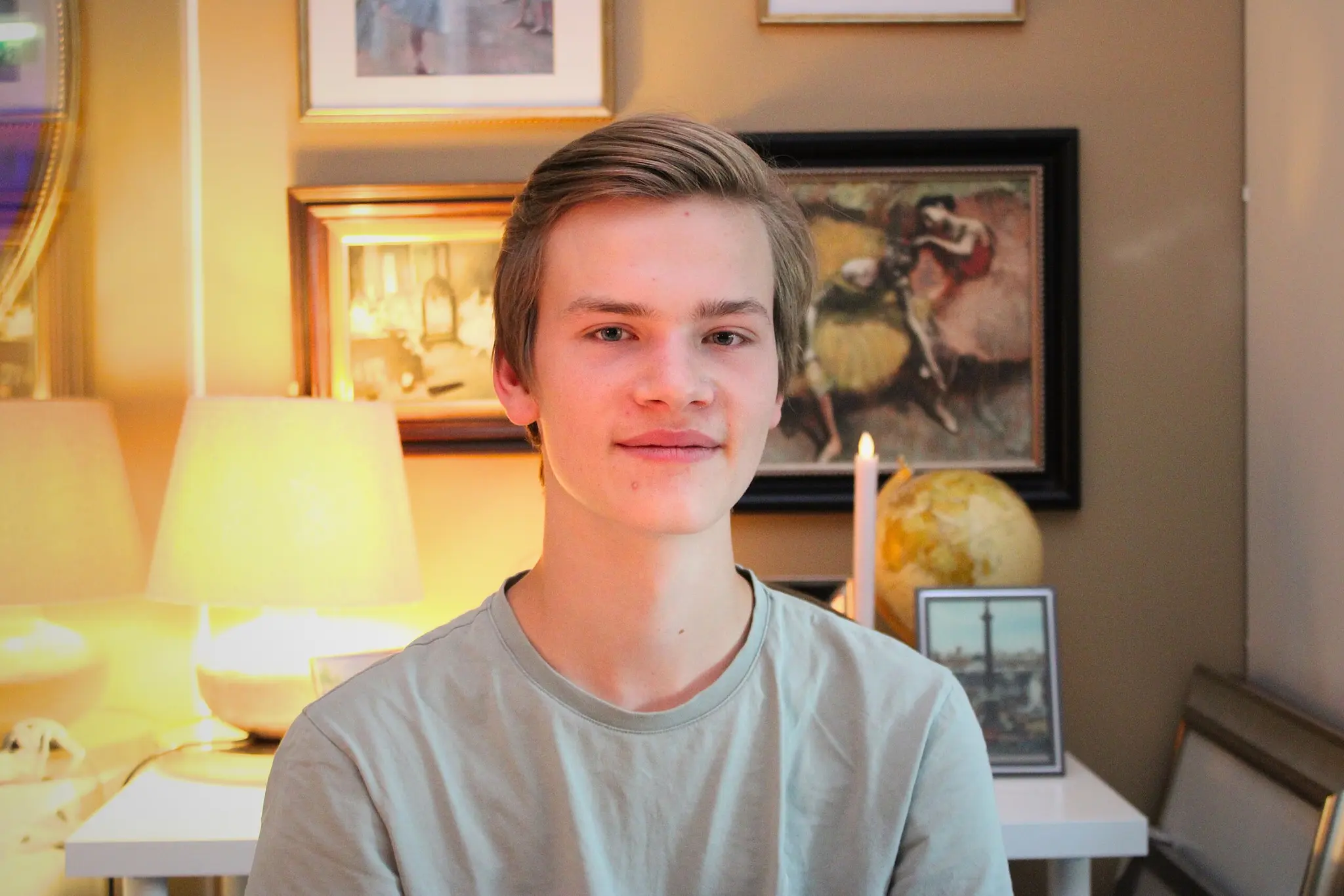
OpenAutark is an open-source, locally run multi-agent desktop platform created by Stanislaus Hees, a 14-year-old developer from Salzburg, Austria, who works under Teydra Lab. It responds to the growing appeal of cloud AI assistants such as Perplexity and its Teammates feature by trying to keep agents, tools, and model calls under user control.
The project starts from an ordinary developer complaint. Hees said that, while using Claude Code and OpenAI Codex, a single platform often limited what could be done and made cross-ecosystem cooperation harder. Rather than accept a closed path, he built an environment where multiple AI agents can coordinate locally while still calling external models when useful.
Why did a 14-year-old developer create OpenAutark?
According to a Nov. 8, 2026 report, Hees said he did not want to be tied to a single AI vendor. That motivation explains the unusual name. OpenAutark draws on Autark, the German root for self-sufficiency. In plain terms, the project aims to be open, self-sufficient and highly resilient: agents can do work on a user's computer, connect to outside models when needed, and avoid making one cloud provider the gatekeeper of every action.
What risks is OpenAutark trying to reduce?
The first risk is operational dependency. AI agents are no longer just answering questions. They can read files, draft code, manage notes, query tools, and coordinate tasks. If all of that depends on one API, a rate limit, an outage, or a policy change can disrupt the workflow. OpenAutark tries to separate the coordination layer from the model layer, so agents can still operate when one service becomes constrained.
The second risk is data exposure. Sensitive material such as client records, internal communications, proprietary code, or medical documentation is awkward to place inside a public cloud prompt. For organisations, digital sovereignty is not a slogan; it is a practical requirement. European Union data rules provide context: the European Commission describes GDPR principles as including lawfulness, fairness, transparency, purpose limitation, and data minimisation. Local execution does not automatically guarantee compliance, but it gives teams a cleaner path for limiting where sensitive data goes.
The third risk is cost drift. Routine tasks such as summarising meeting notes, scanning logs, preparing drafts, or checking tickets can generate many repeated API calls. OpenAutark's framing is to use local compute for high-frequency work and reserve external frontier models for difficult reasoning. If the setup works, the project argues, the long-term total cost of ownership can improve by several times to tens of times.
How does OpenAutark work?
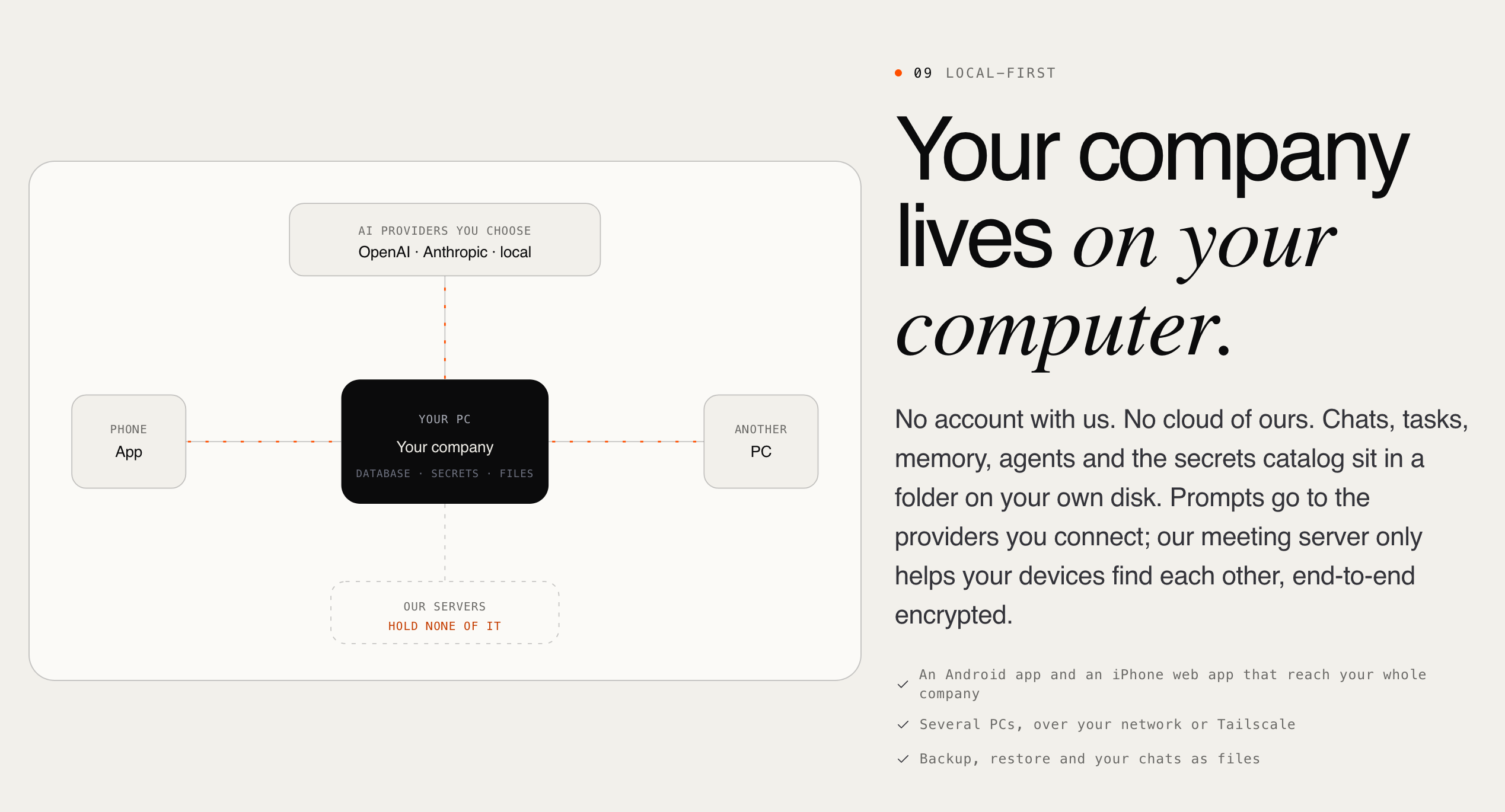
The platform can be understood as a small operating system for AI workers. It is not only a chat window, but a coordination layer where several agents share roles, memories, and task queues.
- Team-style orchestration: a Manager Agent distributes tasks. Sub-agents keep their own roles, memory, and task lists, and can hand off work to each other.
- Cross-vendor model switching: agents can move among Anthropic, OpenAI, and local open-weight models instead of being forced to stay with one provider.
- Local execution: the core computation runs on the user's computer. Cloud services are described mainly as connectors for different devices, not as the place where all agent reasoning must happen.
- Extension-ready architecture: the project is linked to the broader Teydra ecosystem, including Teydra-Extensions, for tools such as APIs, file access, databases, and Proactive Agent desktop automation.
- Control paths: transparent decision routes, audit trails, and human takeover are built into the workflow to reduce the chance that a hallucinating agent performs an irreversible action.
- Early practical use: Hees's agent team reportedly assisted with the software's own development and even surfaced previously missed media requests.
The source repository is on GitHub.
Can people use OpenAutark right now?
The access model is welcoming: the project is free and open-source under Apache 2.0. The Apache License, Version 2.0, was approved by the Apache Software Foundation in 2004 and is widely treated as a permissive open-source licence, meaning users can use, modify, and distribute the code under relatively flexible terms. That lowers one adoption barrier, although companies still need security checks, privacy governance, and support planning before production use.
Platform support is broad: Windows, macOS, Linux, and Android. The limitation is not the licence; it is the machine. OpenAutark is still early-stage, and concurrent agents depend on device memory, or RAM. A modest laptop may only support a small number of focused agents, while a stronger workstation can coordinate more tasks.
Why do llama.cpp, Ollama, and vLLM matter?
OpenAutark does not need to invent the entire local-model stack by itself. Its usefulness depends on open inference tools that already run models locally or privately. llama.cpp, Ollama, and vLLM are part of that infrastructure. Ollama's official site describes the tool as a simple way to run and build with open AI models locally or in the cloud on macOS, Windows, and Linux. That gives OpenAutark a practical way to schedule models without forcing users to configure every inference engine manually.
The strategic value is routing. A lightweight local model may handle repeated summarisation or file triage. A frontier model may be better for ambiguous reasoning. OpenAutark's bet is that users should choose the right engine for each step, while the agent workflow remains under their control.
OpenAutark vs cloud AI assistants: what changes?
| Question | OpenAutark | Cloud-first AI assistant |
|---|---|---|
| Where does the work run? | On a personal computer, private server, or controlled environment. | Mostly inside provider-hosted APIs and managed surfaces. |
| What happens during outages? | Local agents can keep some tasks moving if models and tools are available. | Workflow may pause when the provider is unavailable. |
| How are models chosen? | Agents can switch among Anthropic, OpenAI, and local models. | Usually optimised around one provider stack. |
| Where is sensitive data? | Can remain inside the organisation's environment. | May be transferred to the provider under its terms. |
| Best fit | Automation experiments, privacy-sensitive workflows, offline needs. | Quick access to advanced reasoning and managed integrations. |
Why the passive chatbox model is not enough?
Most AI tools still operate through a simple loop: the user asks, the model answers. That is useful, but it does not match the way real work flows. The Teydra ecosystem, including Proactive Agent Workforce, pushes toward a Proactive Workforce pattern: agents can observe events, break down tasks, call tools, and ask for approval at sensitive steps. This shifts AI from a passive chatbox to proactive autonomous workflows.
In practical terms, that means the assistant may not wait for a prompt. It could monitor an inbox, identify a dependency, prepare a response draft, route it to a human, and continue when permission is granted. The difference is not merely automation; it is the beginning of a durable working relationship between humans and machine teammates.
Is OpenAutark production-grade infrastructure?
The ambition is to be more than another agent demo. Many open-source agent projects are brittle: one network change, one API update, or one missing dependency can collapse the workflow. OpenAutark wants to offer a standard base with anti-fragility, or Anti-fragile, behaviour: modular, lightweight, self-sufficient, and able to keep working when part of the system changes.
That is the right direction, but the label should be used carefully. Production-grade infrastructure needs tested updates, reliable sandboxes, observability, incident recovery, and clear operational ownership. If those pieces arrive, OpenAutark can help move local AI tools from geek toys to production-grade infrastructure. If not, it will remain an interesting proof of concept.
Common misconceptions about OpenAutark
- Misconception: local means less capable. Local models can be strong, but capability depends on the chosen model, hardware, and task.
- Misconception: Apache 2.0 alone makes a system safe. Licensing is separate from security testing, data handling, and operational governance.
- Misconception: more agents always means better output. More agents also means more memory demand, coordination overhead, and failure paths.
- Misconception: it rejects cloud AI completely. The platform can use external models when they are useful, while keeping the agent workflow under user control.
Action checklist: how to evaluate OpenAutark responsibly
- Choose one repeatable task. Start with meeting notes, code summaries, or research digests, not a full business process.
- Label the data first. Public data, confidential data, personal data, and regulated data should not enter the same test environment.
- Test model fallback. Confirm what happens when an external API is slow, expensive, or unavailable.
- Measure RAM and quality. Track memory use, output usefulness, latency, and error rate for a real workflow.
- Keep a human in the loop. Require approval for actions that modify files, send messages, access accounts, or move money.
FAQ: key questions about OpenAutark
What is OpenAutark in one sentence?
It is an open-source, locally run multi-agent desktop platform built by Stanislaus Hees of Teydra Lab to reduce dependence on any single AI vendor.
How is it different from Perplexity's Teammates?
Teammates represents a managed, cloud-oriented assistant direction. OpenAutark represents a local, open-source direction where the user's device is the primary execution environment.
Does OpenAutark support local models?
Yes. Its architecture is designed to work with local open-weight models through tools such as llama.cpp, Ollama, and vLLM, while still allowing Anthropic and OpenAI APIs when desired.
What is the main limitation today?
The project is early-stage, and the number of agents running at the same time is constrained by the device's RAM.
Should ordinary users install it now?
Only if they enjoy testing early tools and can accept rough edges. For cautious users, the better move is to follow the project, test a low-risk task, and keep sensitive data away until permissions and safeguards are mature.
Bottom line
OpenAutark matters because it turns a technical debate into a governance question: when AI agents start doing work, should the execution environment belong to the provider or to the user? Stanislaus Hees, from Salzburg, Austria, has placed his bet on the second answer. The project's future will depend on whether local, multi-agent coordination can remain flexible enough, reliable enough, and auditable enough to move from a compelling concept to everyday digital infrastructure.
References
- Nov. 8, 2026 NetEase report on OpenAutark and Stanislaus Hees: m.163.com
- Apache Software Foundation, Apache License, Version 2.0: apache.org
- European Commission, principles of personal data processing under the GDPR: commission.europa.eu
- Ollama official site: ollama.com