
Ryzen 7 9800X3D vs 9850X3D at a $20 Gap: Which AM5 Gaming CPU Wins? | ItInsightsWorld
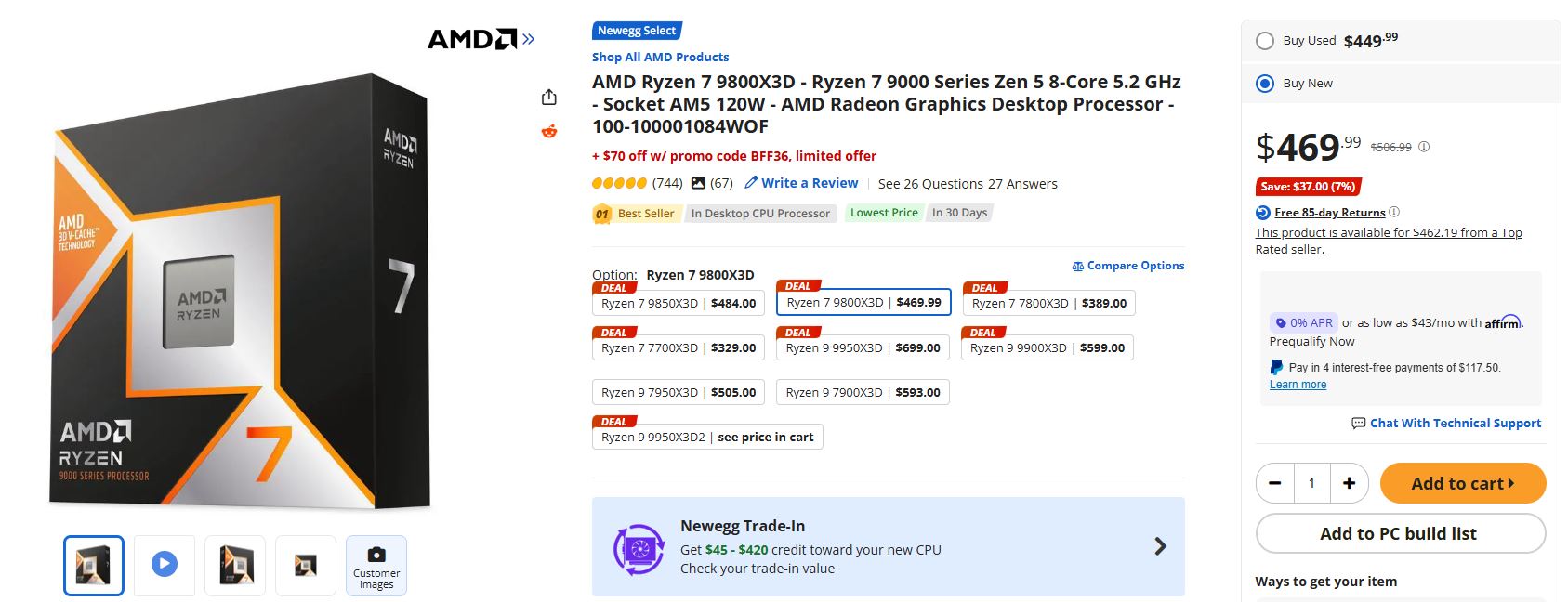
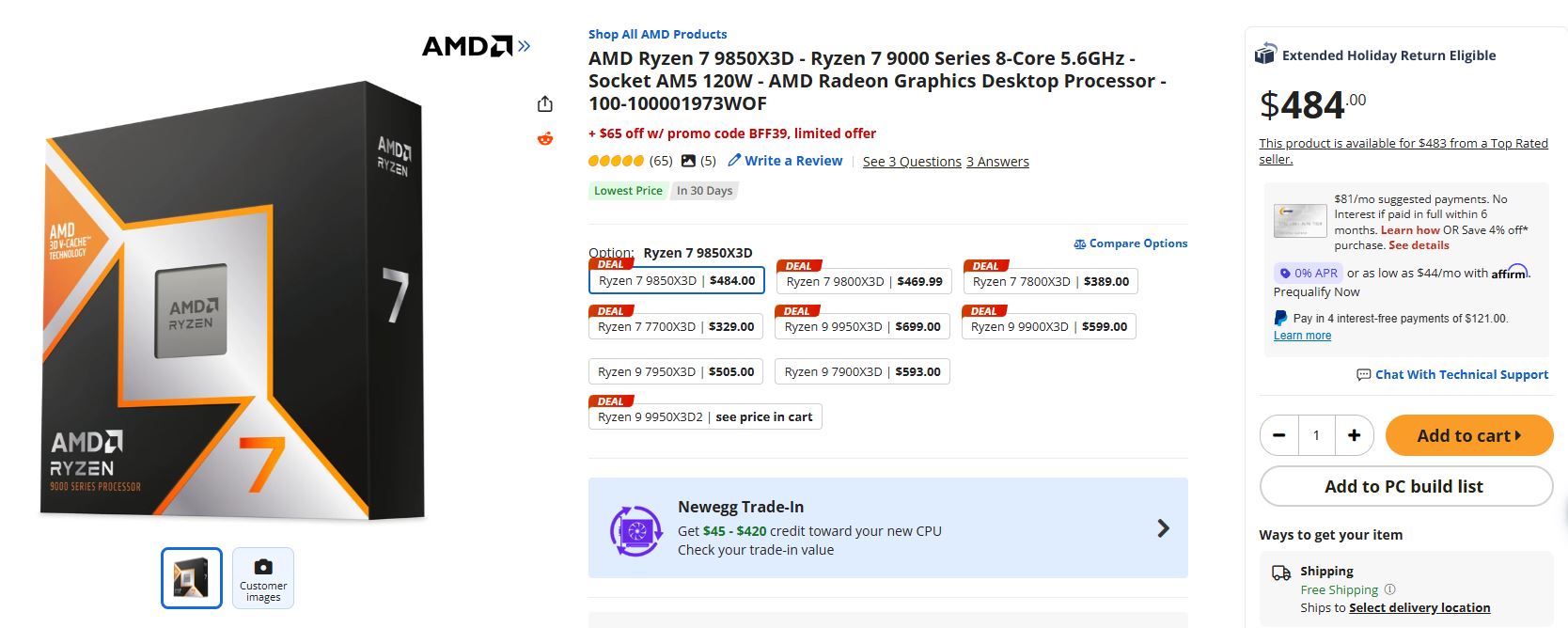
If both Newegg coupon prices are live at the same time, the $399 Ryzen 7 9800X3D is still the smarter buy for most players: the extra $20 charged for the Ryzen 7 9850X3D buys a higher clock ceiling, but Wccftech puts the real gaming gain at only 1% to 2%. Pay up only if you want the fastest X3D part on the shelf and already own cooling that can absorb it.
The wider story is that AMD's AM5 gaming line now spans four price points on a single socket. A retail coupon code, not an official repricing, is what has compressed the top of that ladder; older Zen 4 silicon has slid at the same time, dragging the entry price for X3D cache technology down with it. For anyone planning a build in the next few weeks, the useful question is no longer "is X3D worth it" but "which rung of the X3D ladder do I actually need".
What separates the two Zen 5 X3D chips on paper?
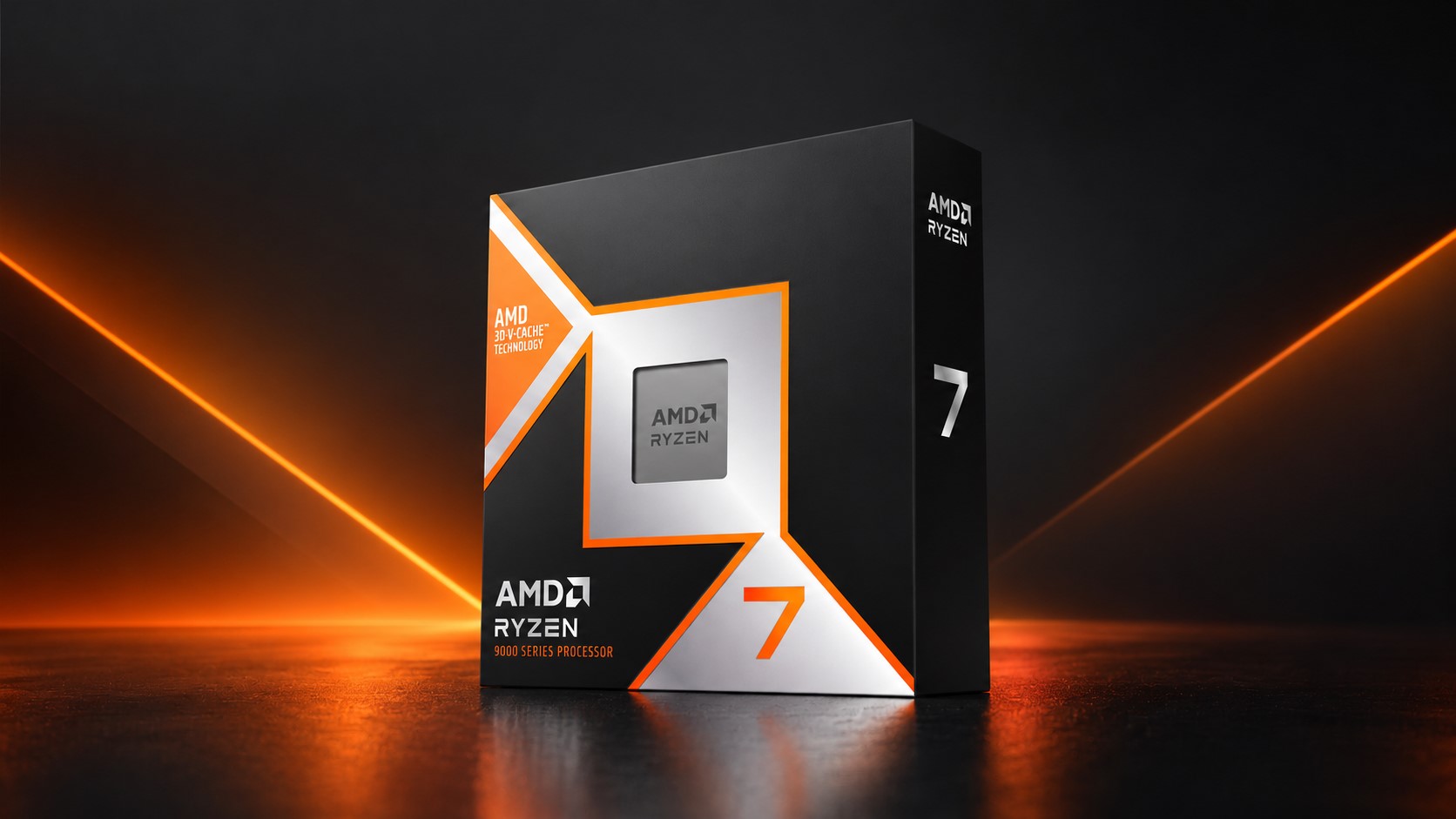
They are near-identical parts apart from frequency. The Ryzen 7 9800X3D is built on Zen 5 with 8 cores and 16 threads and is the chip that popularised the second generation 3D V-Cache stack; it arrived at an official $479 launch price and built its reputation on frame-rate leadership rather than multi-thread throughput.
AMD's official product page lists the 9850X3D at up to 5.6 GHz boost on a 4.7 GHz base clock, with 96 MB of L3 cache and a 120 W default TDP — the same core count, cache capacity and power class as the 9800X3D, which tops out at 5.2 GHz. In other words, the two SKUs differ by roughly a 7% clock step, not by a new architecture, a bigger cache or an extra pair of cores.
That is exactly why the benchmark consensus matters here. Wccftech's reading of the delta is 1% to 2% in games, which is smaller than run-to-run variance in many titles and far smaller than the price gap that normally sits between the two parts.
How the Newegg promotion reshuffled the price ladder
The promotion is coupon-driven and temporary. Newegg's code GFF36 takes $70 off the 9800X3D, moving it from a regular $469 shelf price to $399 — and this is a retailer discount, not a permanent AMD repricing. The 9850X3D, listed regularly at $484, drops $65 to $419 with its own code, which is what squeezes the distance between the two down to $20.
Set against launch pricing, the discount is deeper than it looks: TechPowerUp's CPU database records the 9850X3D launching in January 2026 at a $499 MSRP, so a $419 delivered price is about 16% below the number AMD printed on the box.
| Model | Regular price | Promo price | Saving | Generation |
|---|---|---|---|---|
| Ryzen 7 9850X3D | $484 | $419 | $65 | Zen 5 |
| Ryzen 7 9800X3D | $469 | $399 | $70 | Zen 5 |
| Ryzen 7 7800X3D | — | $339 | $50 | Zen 4 |
| Ryzen 7 7700X3D | — | $299 | — | Zen 4 |
The back half of the ladder moved too. The Ryzen 7 7800X3D falls to $339 after a $50 discount, and the Ryzen 7 7700X3D now sits at $299. Both are Zen 4 parts on the same AM5 socket, which means the cheapest way into big-cache gaming hardware is roughly $120 below the Zen 5 flagship of two generations ago.
9800X3D, 9850X3D, 7800X3D or 7700X3D: which one matches which build?
Match the chip to the bottleneck you actually have, not to the model number you can justify.
| Your situation | Best pick | Why |
|---|---|---|
| New gaming build, 1080p-1440p, high-refresh competitive titles | 9800X3D at $399 | Cache, not clock, drives frame rates here; the 1% to 2% gap does not show up on a 144 Hz panel |
| Upgrading an existing AM5 board, keeping cooler and memory | 9850X3D at $419 — only if the code stacks | You already own the supporting hardware, so a $20 premium is a small absolute premium on the whole platform |
| Tight budget, single mid-range GPU, AAA at 4K | 7800X3D at $339 | At GPU-limited settings the CPU argument collapses; the $60 saved belongs in faster storage or a bigger panel |
| First AM5 build, mostly esports and casual play | 7700X3D at $299 | Lowest entry to X3D caching, and the socket still has an upgrade path beneath it |
| Rendering, compiling or streaming as the main workload | Look past X3D | These four parts are all 8-core gaming-first designs; analysis rather than discounting suggests a higher-core model serves mixed workloads better |
Why is the CPU getting cheaper while the rest of the PC gets dearer?
Because the CPU is the component with the least pricing pressure left on it. Memory, SSDs and graphics cards are all expensive right now, so a whole system budget is squeezed from three directions at once, and a $70 cut on the processor is one of the few places a buyer can recover headroom — money that can be redirected into a better GPU or more storage.
The memory squeeze is structural, not a blip. AI data-centre construction has absorbed a large share of DRAM manufacturing capacity, consumer desktop kits are competing for what remains, and the practical guidance coming out of retail is to buy the capacity you need at build time rather than assuming an upgrade six months later will cost the same. The same cost wave has already reshaped whole product categories, which we traced in our explainer on why memory price spikes pushed niche phone brands out of the market.
It also explains the scepticism around whether big-cache gaming chips remain a priority for AMD. The company's latest segment numbers, and the case for and against reading them as a retreat from gamers, are broken down in our plain-English Q&A on whether AMD is abandoning gamers.
Does buying the cheaper X3D chip close your upgrade path?
No — and this is the single strongest argument against paying the premium. AMD used Computex 2026 to extend socket support, describing the move as "reinforcing a long-term commitment to upgradeability and investment protection", pushing AM5 out through 2029 rather than the earlier "2027+" language, as Tom's Hardware reported. A 9800X3D or even a 7800X3D build can therefore take a drop-in CPU swap later instead of a full platform rebuild.
The counter-argument is thermal, and it is easy to under-price. Coverage of the 9850X3D's retail price cuts flags higher full-load temperatures and a stricter cooler requirement than the 9800X3D, and an independent review published in March 2026 measured the older chip running roughly 8°C cooler under load than the newer one (More Than Moore). A 240 mm liquid cooler that is comfortable on one part may be marginal on the other, so the $20 comparison is not always a complete cost comparison.
Watch the bundle maths too. In early October 2026, TweakTown tracked a Newegg listing that sold the 9800X3D at $429 while throwing in a 240 mm liquid cooler and a game download at no charge. A higher sticker price with a free cooler can beat a lower sticker price plus a cooler you have to buy separately — always compare the delivered basket, not the CPU line alone.
Five misconceptions this price war keeps generating
- A coupon code is a price cut. It is not. GFF36 and its sibling codes are Newegg promotions; AMD's official pricing on the 9800X3D remains where it was, and the shelf price returns the moment the code expires.
- $20 apart means the chips are equivalent. The gap is $20, but the performance gap Wccftech measures is 1% to 2%, and the 9800X3D runs cooler — the two are not symmetrical trade-offs.
- US pricing means global pricing. These are United States retail quotes. Buyers in Hungary or elsewhere in Europe still face local retailer pricing, VAT and shipping, so no European discount should be assumed from this promotion.
- The cheapest CPU line is the cheapest build. A bundle that includes a cooler, or a motherboard whose BIOS already supports the chip, can flip the ranking.
- More cache helps every game at every resolution. The benefit concentrates in CPU-bound, lower-resolution scenarios; at 4K with a demanding graphics card, the difference between these four parts largely disappears.
FAQ
Is the 9850X3D worth the extra $20 right now?
For a fresh build, usually not: 1% to 2% of gaming performance and a heavier cooling demand do not offset a 5% price premium for most buyers. For someone already owning a strong cooler and an AM5 board who wants the top bin, the premium becomes tolerable during the promo window.
How much do I actually save by dropping to the 7800X3D?
$60 against the promoted 9800X3D price, and enough to fund 16 GB more memory or a capacity upgrade on an SSD bought in the same week.
Will any of these chips fit my existing AM5 motherboard?
Yes, all four run on AM5, which is what makes the ladder so practical for upgraders. Expect a BIOS update before installing a newer chip on an older board, and confirm the board vendor has published that BIOS.
Do I need to hurry, or can I wait for prices to fall again?
The coupon is the risky part, not the market: promo codes stop when stock runs out. Waiting has a real cost too, since memory and storage prices are still trending upward on AI-driven demand rather than easing.
Is the top chip worth it if I mostly play at 4K?
Least worthwhile here. At that resolution the graphics card sets the frame rate, so the gap between a $299 7700X3D and a $419 9850X3D narrows to noise, and the saved money compounds elsewhere.
Action checklist before you click buy
- Confirm the coupon code is still active on the exact SKU and that stock is listed as in-stock rather than marketplace-backordered.
- Check the code's region and payment restrictions before assuming the discount applies to your address.
- Price the full basket — CPU, cooler, thermal paste — so free-bundle listings get compared fairly against CPU-only listings.
- Verify your motherboard has a BIOS that supports the chip you chose, and that you can update it without a working CPU installed.
- Fix your resolution target first: 1080p and 1440p high-refresh justify X3D spend, 4K rarely does.
- Set a decision rule before you shop: if the newer part costs more than 5% over the older one for a 1% to 2% gain, take the older one.
Read as a market signal rather than a headline deal, this promotion shows AMD deliberately stacking four X3D options across one long-lived socket: 7700X3D at the bottom, 7800X3D as the value pick, 9800X3D as the default high-end choice, and 9850X3D as the halo product that is now barely separated from it. For most readers the practical conclusion is unglamorous — pick the rung that matches your resolution, buy the memory you need in one pass, and let the 2029 platform horizon, not the newest model number, decide how much you spend today.
Sources and further reading
- AMD product page — Ryzen 7 9850X3D specifications (5.6 GHz boost, 96 MB L3, 120 W TDP)
- AMD Computex 2026 blog — AM5 socket support extended through 2029
- Tom's Hardware — AMD confirms AM5 support through 2029
- TweakTown — Newegg 9800X3D listing at $429 with free cooler and game bundle (October 2026)
- TechPowerUp CPU database — 9850X3D launch date and $499 MSRP
- Newegg Insider — How Much RAM Do You Actually Need in 2026?
- Wccftech — 9850X3D versus 9800X3D gaming delta of 1% to 2%
By James Hartley, IT Insights — ItInsightsWorld General.