
180,279 Mercedes-Benz Vehicles Recalled in China: A Step-by-Step Guide to Checking Your VIN and Getting the Free Fix
By James Hartley — IT Insights, general guide for vehicle owners
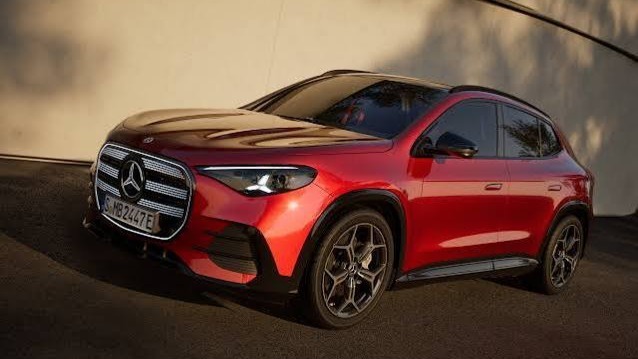
If you own a Mercedes-Benz CLA, A-Class, B-Class, C-Class, CLE, GLA, GLB or GLC in China, the short answer is this: the repair costs you nothing, but it only applies if your car's build date falls inside a defined window. On November 6, the State Administration for Market Regulation (SAMR) published three recall filings lodged by Beijing Benz Automotive Co., Ltd. and Mercedes-Benz (China) Automotive Sales Co., Ltd., covering 180,279 vehicles in China — the headline figure commonly rounded to 180,300. Two types of safety hazard are involved: one in the high-voltage system, one in the driver-side door lock.
What do the three filings actually cover?
Conclusion first: one filing is a surgical two-car action on a pure-electric CLA, while the other two — one domestic, one import — together cover 180,277 vehicles for the same door-lock defect.
| Filing (producer) | Vehicles | Production window | Fault | Remedy and start |
|---|---|---|---|---|
| Beijing Benz — domestic CLA pure-electric | 2 | November 25 to December 3, 2025 | Damaged electrical components on the power-electronics circuit board of the rear electric drive module; the high-voltage system may short out and cut power transmission | Free replacement of the rear electric drive module, with immediate effect |
| Beijing Benz — domestic A-Class, GLA, GLB | 129,819 | February 8, 2018 to June 1, 2020 | Potting material on the driver-side door-lock micro-switch has insufficient moisture resistance | Free replacement of the driver-side door lock, from February 19, 2027 |
| Mercedes-Benz (China) Automotive Sales — imported A-Class, B-Class, C-Class, CLA, CLE, GLA, GLB, GLC | 50,458 | April 21, 2018 to February 25, 2026 | Same micro-switch moisture-corrosion fault | Free replacement of the driver-side door lock, from February 19, 2027 |
The notices are indexed with the regulator under the filing codes S2026M0128V, S2026M0129V and S2026M0130V, which is the fastest way to confirm you are reading the correct campaign rather than an older, same-named one. Adding the two groups gives the full 180,279 vehicles.
How do you know whether your car is in scope?
The model name alone does not decide it. These notices are written around build dates, so the vehicle identification number (VIN) is the only field that settles the question. Work through the steps in order:
- Find your VIN. It is a 17-character code printed on the driver-side B-pillar or windscreen plate, and repeated on your registration and insurance documents. Use capital letters and digits exactly as printed.
- Match the model and the build date, not the model year. A car registered as a 2019 model may have been built in 2018 or 2019; only the build date decides eligibility.
- Run the VIN through the official recall-scope lookup on the SAMR recall centre portal (samrdprc.org.cn, defect-vehicle recall query section) or its WeChat account SAMRDPRC. The public database indexes recalls for vehicles from 2014 onward, so cars built in the 2018-2026 windows here are covered.
- Call an authorised dealer with the VIN in hand to confirm parts availability, especially for the door-lock batch that only opens on February 19, 2027.
- Verify your contact details with the importer or producer. Owners of the door-lock vehicles are notified by registered mail and similar channels; a stale address is the single most common reason a recall is missed.
- Ask for a written work order that names the recall task once the repair is done. Producers are required to keep vehicle and first-owner records traceable, and a documented recall repair protects resale and warranty claims later.
Why is a door that still locks treated as a safety problem?
Because the defect sits in the sensing layer, not in the holding hardware. According to SAMR's announcement, moisture corrosion in the micro-switch can stop it from reporting that the driver-side door is open. The door itself still locks normally. The risk is downstream: functions that are triggered by the driver door opening — the parking brake and the auto-hold function — may fail to engage automatically, so an unattended vehicle can move on its own and raise the odds of a collision.
The high-voltage fault on the two CLA electric cars is a different mechanism. A damaged component on the drive-module circuit board can short the high-voltage system, interrupt power transmission, and leave the car without drive torque — an increased collision risk if it happens mid-journey rather than in a driveway.
Does anything cost money, and is it safe to wait until February 19, 2027?
Nothing at the workshop. Both remedies — replacement of the rear electric drive module and replacement of the driver-side door lock — are performed free of charge through authorised dealers. Under China's regulation on the recall of defective motor vehicles (State Council Decree No. 626, in force since January 1, 2013), a recall also does not release the producer from other legal liability it may carry for separate quality problems.
The timing question is the practical one. The door-lock campaign opens more than a year after the announcement, so most owners of 2018-2020 domestic A-Class, GLA and GLB cars, and of imported models built up to February 25, 2026, will keep driving the car in the meantime. Based on the described failure mode, our reading is that the sensible interim habits are: engage the electric parking brake manually rather than relying on the automatic function; confirm the brake indicator is lit before leaving the vehicle; avoid leaving the car unattended on a gradient; and if the driver door is not recognised as open on the instrument panel, treat that as a warning sign and book an inspection early.
How does the China action compare with the recall in the United States?
The same component family is behind both campaigns, which makes the comparison useful for judging scope logic and remedy design.
| Dimension | China filing (November 6) | United States filing (July 30) |
|---|---|---|
| Vehicles tied to the door-lock fault | 180,277 | 310,667, per the National Highway Traffic Safety Administration |
| How scope is drawn | By production date windows (February 8, 2018 to June 1, 2020; April 21, 2018 to February 25, 2026) | By model-year range, roughly 2019 through 2026 vehicles |
| Remedy | Free replacement of the driver-side door lock from February 19, 2027 | Free replacement of the same part, scheduled by US dealers |
| Owner verification route | SAMR recall-centre VIN query plus registered-mail notice | NHTSA VIN lookup tool at nhtsa.gov/recalls and the US safety hotline |
| Extra item on the agenda | Separate two-vehicle high-voltage drive-module action | No equivalent electric drive-module batch in the US notice |
What are the most common misconceptions?
- "The doors still lock, so this is cosmetic." The hazard is a rollaway caused by the parking brake or auto-hold failing to activate, not a door that will not shut.
- "My model year matches, so I am covered." Scope is defined by build date; cars built outside the windows in the notices are not eligible, and a matching model name proves nothing.
- "A recall means a refund or a replacement car." The remedy here is component replacement — the rear electric drive module for two CLA electric cars, the driver-side door lock for the other 180,277 vehicles.
- "It will be fixed over the air." Corroded micro-switches need physical parts. That is worth stating precisely because software-based recall remedies now account for a large slice of campaigns: 13 over-the-air recalls in China in 2025 covered 1.756 million vehicles, or 25.7% of the annual recall volume.
- "I bought it used, so the notice was never meant for me." The remedy follows the vehicle. Run the VIN yourself instead of waiting for mail addressed to a previous owner.
How unusual is a recall on this scale in China?
Rarely unusual as an event, but notable in composition. In 2025 China carried out 190 vehicle recalls covering 6.846 million vehicles, down 18.5% in count and 39.1% in volume year on year; new-energy vehicles accounted for 105 recalls and 2.652 million vehicles, or 38.7% of the total. By the end of 2025 the cumulative record stood at 3,265 recalls covering 121 million vehicles. The pattern to watch is that tiny, date-boxed batches — such as the two CLA electric cars built between November 25 and December 3, 2025 — sit alongside very large legacy parts campaigns, which is exactly how modern traceability systems are designed to work.
Regulators have pushed owners to self-check rather than wait for mail. In March 2026, SAMR issued the 2026 edition of its vehicle-recall user guide, urging owners to query the recall-centre website or WeChat account, to confirm whether their car is in scope by model and build date plus VIN, and to complete recall repairs promptly.
Action checklist for the next seven days
- Photograph the VIN plate and store the code in your phone notes.
- Check the VIN on the SAMR recall-centre query page and note the campaign code (S2026M0128V, S2026M0129V or S2026M0130V).
- If you are in the door-lock group, hand the dealer your current mailing address and phone number, then diarise February 19, 2027.
- If you are in the CLA electric group, treat the drive-module replacement as time-critical and book it immediately.
- Until repaired, apply the parking brake manually every time you leave the car.
- Keep the completed recall work order with your service file.
FAQ
Is the recall repair really free, including labour?
Yes. The notices state that authorised dealers will replace the rear electric drive module or the driver-side door lock free of charge, and the cost of eliminating a defect is the producer's obligation, not the owner's.
Can I still drive the car before February 19, 2027?
You can, and there is no legal bar on doing so. Just change your habits: the automatic engagement of the parking brake and auto-hold is the function in doubt, so verify the brake manually before leaving the vehicle unattended.
What if I never receive the registered letter?
Do not treat the absence of a letter as evidence that your car is exempt. Query the VIN on the official recall portal, or send the VIN to any authorised dealer and ask them to confirm in writing whether the vehicle is in scope.
Why does the CLA electric recall cover only two cars?
Because the trigger is a manufacturing issue tied to one narrow eight-day build window, November 25 to December 3, 2025. Small date-boxed batches are the signature of production-traceability recalls: the fault is real, but it is confined to cars built while the problem existed.
Does the two types of hazard mean two different recalls?
Two types of hazard, three filings. The door-lock hazard is split across one domestic filing (129,819 vehicles) and one import filing (50,458 vehicles), which together make 180,277; the high-voltage hazard is the separate two-vehicle filing.
References and useful links
- Defective-vehicle recall scope lookup by VIN — SAMR recall centre: https://www.samrdprc.org.cn/fzlm/qxqczhfwcx/index.html
- 2026 edition vehicle-recall user guide, reported by People's Daily Online: http://finance.people.com.cn/n1/2026/0320/c1004-40685566.html
- SAMR notice on national automobile and consumer-product recall activity in 2025 (full text mirror): https://qiche365.org.cn/index.php/index/article/detail/id/41454.html
- Regulation on the recall of defective motor vehicles, State Council Decree No. 626: https://www.cqn.com.cn/zgzljsjd/content/2013-01/09/content_1724654.htm
- US recall of 310,667 Mercedes-Benz vehicles for the same door-lock micro-switch fault: https://m.jiemian.com/article/14850240.html
- NHTSA recall lookup tool: https://www.nhtsa.gov/recalls