
Maserati Design and a Possible Zunjie Sub-Brand: A Side-by-Side Read of Huawei, JAC and Stellantis
November 9 reporting by First Financial points to two related but separate premium-car moves. The first, Maserati Design, is a three-party route involving Huawei, JAC and Stellantis, split into domestic and overseas paths with more mass-production developments planned for next year’s fourth quarter. The second, reported today by Cailian Press, is a possible Zunjie sub-brand priced at 400,000 to 500,000 yuan.
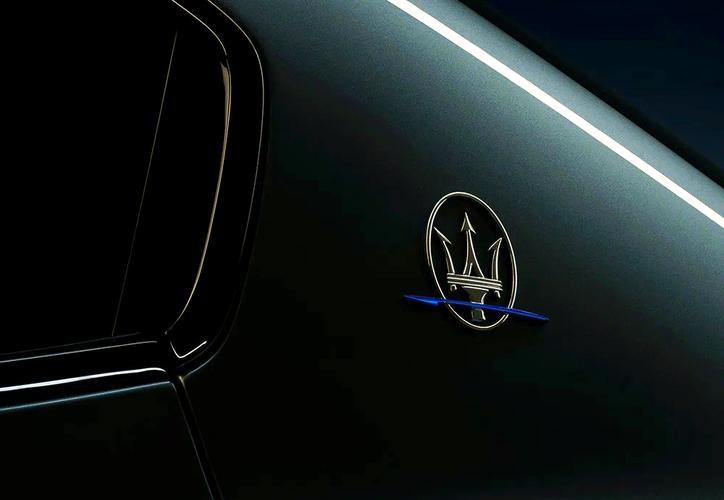
What does Maserati Design actually do?
It looks less like a badge tweak and more like a way to combine Italian luxury identity with Chinese intelligence and manufacturing. According to the November 9 report, the new car’s appearance has been confirmed, while further mass-production developments are planned for next year’s fourth quarter. The core operating logic is stated clearly: “Due to Maserati’s domestic production qualification issue, the project will be manufactured by JAC, with Huawei providing the technology enablement.”
That single sentence explains why the structure is unusual. It separates the brand, the factory and the software stack. In practical terms:
- Maserati keeps the luxury design and badge equity, especially outside the domestic market.
- JAC supplies production capacity where a local manufacturing qualification issue makes direct Maserati production difficult.
- Huawei provides vehicle technology enablement, likely in intelligent cockpit, driving assistance and platform software.
- Stellantis sits at the corporate level, because Maserati belongs to it and the route has been described as a three-party cooperation.
The story is also not brand-new. A Reuters report dated September 4 described the same three companies as participants in industrial-cooperation talks, which makes the November 9 update more about naming, routing and a mass-production timetable than about a finished official launch. For readers, that distinction is useful: the plan has direction, but the final product, price and sales network are still not fully public.
How does Maserati Design compare with the possible Zunjie sub-brand?
These are two independent projects, not the same business dressed in two names. The Zunjie sub-brand report from Cailian Press today says the price band may sit at 400,000 to 500,000 yuan and focus on SUV models, but its details are not final. The table below compares what is known and what remains unresolved.
| Dimension | Maserati Design | Possible Zunjie sub-brand |
|---|---|---|
| Source of the report | First Financial | Cailian Press |
| What is named | Maserati Design | No final brand name has been confirmed |
| Product status | New car appearance is confirmed; more mass-production developments are planned for next year’s fourth quarter | Possible SUV line; specifics remain undecided |
| Sales route | Two paths: domestic sales under Zunjie, overseas sales under Maserati | A separate sub-brand concept under discussion |
| Manufacturing logic | JAC production with Huawei enablement, tied to Maserati’s domestic qualification issue | Not described as the same production route |
| Price signal | Not stated in the November 9 report | 400,000 to 500,000 yuan, if the plan proceeds |
| Relationship to the other project | Independent | Independent |
The practical read is simple: Maserati Design is a branding-and-manufacturing bridge, while the sub-brand story is more about segment positioning inside the broader Zunjie world. Buyers should not treat the 400,000 to 500,000 yuan range as the price of a Maserati product unless an official statement later connects the two.
Why does the domestic and overseas split matter?
Because the badge affects trust, service expectations and resale perception. In the domestic market, the plan is for Zunjie to be the sales entity. Overseas, the vehicle may still carry the Maserati badge. That is not just marketing; it reflects how different markets read luxury credibility, local production and smart-vehicle software.
For Chinese buyers, the relevant question is whether a Zunjie-badged vehicle can still command a premium price when its supply chain is increasingly local. For overseas buyers, the question is whether a Maserati-badged car produced with JAC and Huawei technology feels like an extension of the brand or a new category. The two paths reduce regulatory and qualification friction, but they also create brand-strategy tension.
The Maserati context makes the tension sharper. Road & Track summarized Stellantis results as showing Maserati shipments around 7,900 units in the 2025 fiscal year, down from around 11,300 a year earlier. That decline does not prove the project will succeed, but it helps explain why a faster technology route and a new manufacturing path are now being explored.
What does Huawei add, and why JAC?
Huawei’s role, in this description, is not simply to supply one feature. The report uses the phrase “Huawei providing the technology enablement,” which implies platform-level support rather than a single cockpit app. This kind of arrangement has become more familiar in China’s premium smart-car race, and it fits the Huawei-linked pattern of testing separate brand lines. A separate side-by-side read of Huawei’s new sub-brand lineup shows how related naming can still hide different product scopes, which is why buyers should read project labels carefully.
JAC’s role is manufacturing capacity and local production execution. Public reporting from Just Auto on June 18, 2025 said JAC and Huawei had moved to strengthen integration of Huawei intelligent automotive solutions into JAC vehicle platforms. That earlier technology relationship helps explain why JAC may be seen as a credible production partner for a complex three-party structure.
For ordinary readers, the decision frame is simple: do not judge this only by the logo. The more important variables are the factory, the software owner, the sales entity and the service network. Those determine whether the vehicle behaves like a traditional luxury car, a Chinese premium smart EV or something in between.
Common misconceptions
- Misconception: Maserati Design is already a launched, fully confirmed consumer product. Reality: The November 9 report confirms a project name, an appearance confirmation and a future mass-production dynamic, not a complete market launch.
- Misconception: The Zunjie sub-brand and Maserati Design are the same deal. Reality: The source material describes two independent projects, with different scope and different status.
- Misconception: The 400,000 to 500,000 yuan price band applies to Maserati Design. Reality: It is tied only to a possible sub-brand plan, and the details are not final.
- Misconception: Huawei is now the owner of Maserati. Reality: The described structure is cooperation, with Huawei providing enablement rather than replacing the corporate brand owners.
What readers and buyers should watch next
Use this checklist before drawing conclusions:
- Official product name: Does the final name remain Maserati Design, or does it shift to another model or brand designation?
- Production timing: Does the next year’s fourth quarter bring a real production milestone, or only another planning statement?
- Sales badge by market: Will domestic buyers see Zunjie, and overseas buyers see Maserati, as described in the report?
- Price and specification: Is the 400,000 to 500,000 yuan figure only for a possible sub-brand, or does any official Maserati Design product enter a similar band?
- After-sales responsibility: Who handles warranty, software updates and recalls in each market? This is the most overlooked decision factor for new premium EV routes.
FAQ: The questions most likely to shape the discussion
Is Maserati Design a confirmed official launch?
Not in the full sense. The November 9 report presents it as a confirmed project name with a confirmed car appearance and a planned mass-production development step in next year’s fourth quarter. The missing pieces are final model names, pricing, launch dates and channel details.
Why is JAC involved rather than Maserati making the car itself?
The report gives a direct reason: “Due to Maserati’s domestic production qualification issue, the project will be manufactured by JAC, with Huawei providing the technology enablement.” In plain terms, the domestic manufacturing route is being solved through a partner with local qualification and capacity.
Is the Zunjie sub-brand the same as Maserati Design?
No. The reporting says the two are independent projects. The sub-brand discussion concerns a possible 400,000 to 500,000 yuan SUV positioning, while Maserati Design concerns a three-party project involving Huawei, JAC and Stellantis.
What is the simplest way to judge whether this is valuable?
Compare three things: brand credibility, production qualification, and technology ownership. If the domestic route gives buyers a credible premium smart SUV without a confusing badge gap, and if the overseas route preserves Maserati identity without diluting it, the two-path plan can work. If not, the arrangement becomes a brand-management problem.
Bottom line
Maserati Design is best read as a pragmatic compromise: keep luxury identity, solve production qualification locally, use Huawei for intelligent-vehicle capability, and separate domestic and overseas selling paths. The possible Zunjie sub-brand is a different question: whether a new premium SUV line can occupy the 400,000 to 500,000 yuan band without blurring the brand ladder. For now, the most useful rule is to wait for official product names, production timing and price disclosures before treating either plan as a finished market decision.
References
- Reuters on September 4 reporting about talks involving Stellantis, Huawei and JAC.
- Just Auto on the June 18, 2025 JAC and Huawei technology-partnership strengthening.
- Road & Track on Maserati shipment figures summarized from Stellantis results.