
Osta O1 vs Osta O1 Pro: A Side-by-Side Read of Huawei's New Sub-Brand Lineup
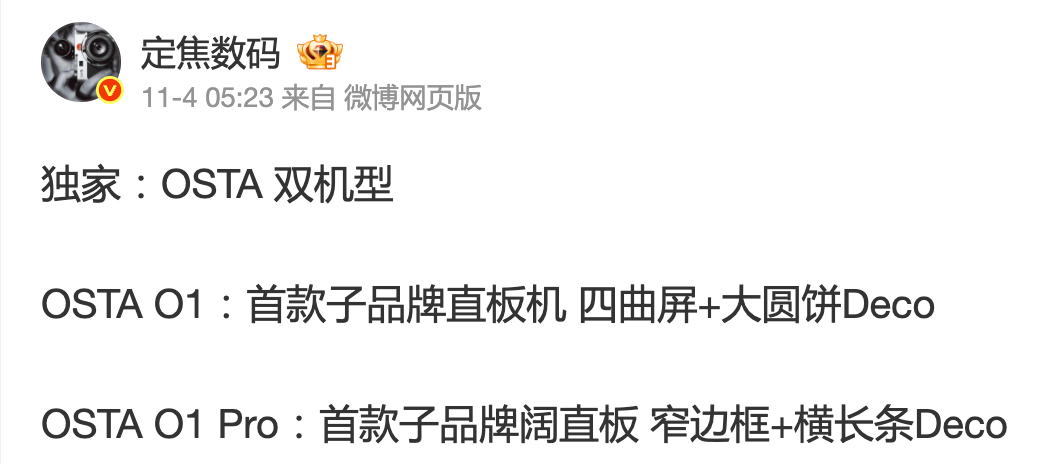
Short answer: Huawei's newly reported sub-brand Osta is expected to arrive with two phones. The Osta O1 pairs a screen curved on all four sides with a single large circular camera module; the Osta O1 Pro takes the wide-screen route, built around a 6.39-inch 1.5K LTPS flat panel at roughly 16:9.5 and four memory options. Nothing is official yet, so the real choice comes down to which shape fits your hand and your habits.
What is Osta, and where does it sit under Huawei?
Conclusion first: Osta reads like an experimental brand layer, not a discount escape hatch.
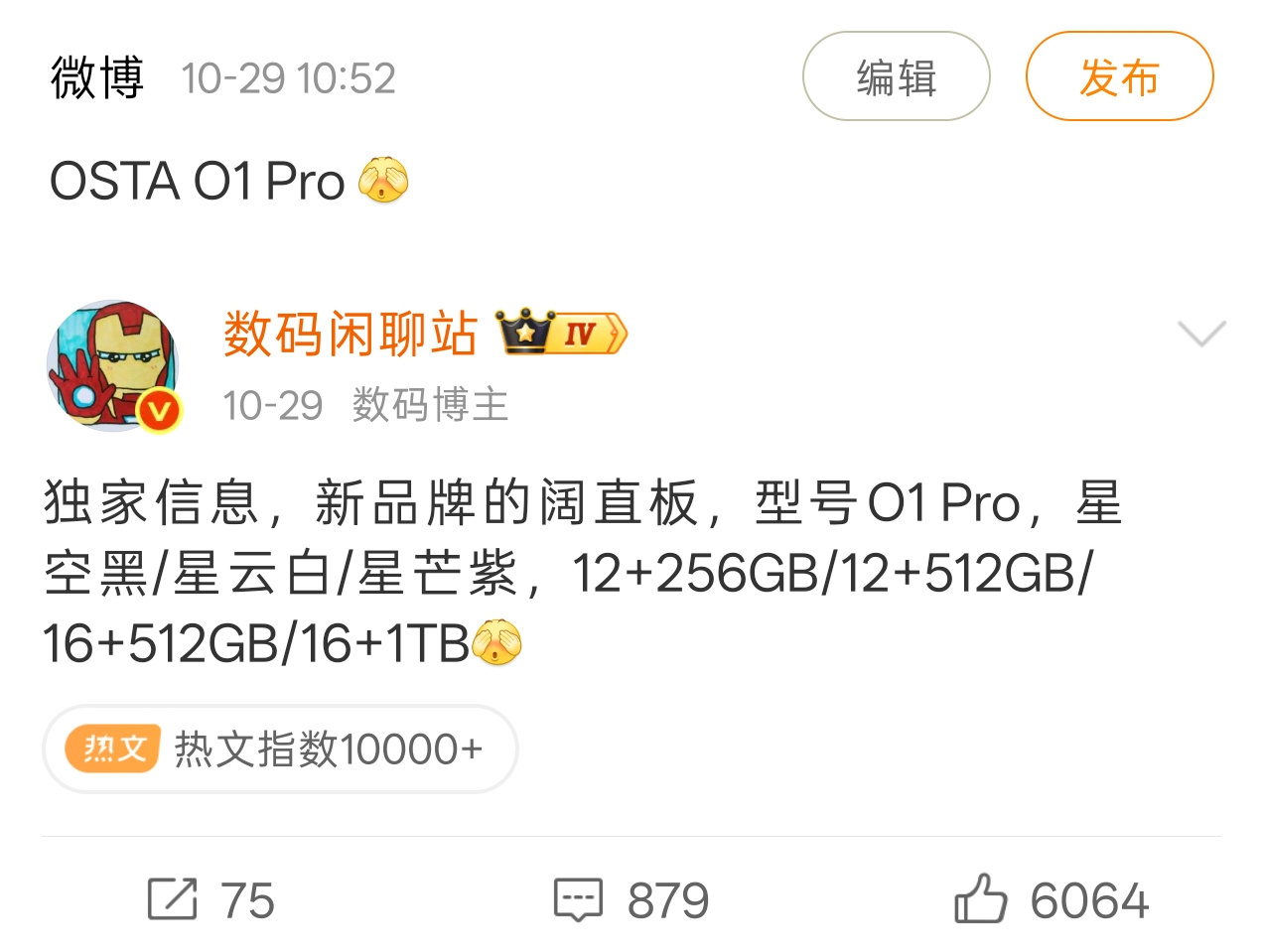
Leaks that circulated in early November 2026 describe a Huawei sub-brand running in China under the name Xingmang, with Osta as its reported English name; trademark filings linked to that name were covered by GSMArena and TechNode in the same news window. The opening line-up is described as flagship-level, a clear shift from earlier guesses that the label would chase mid-range volume.
For a general reader, the logic is simple. A second brand lets a manufacturer test a screen format, a price bracket or a design language without moving the main brand's positioning. If the wide-screen experiment works, it lives on outside the flagship family; if it does not, the core brand's image stays intact.
How do the Osta O1 and the Osta O1 Pro differ?
Conclusion first: the two handsets share a brand and a premium ambition, but they are aimed at opposite habits - one reaches for a conventional, curvy slab, the other for a wider, flatter canvas.
| Comparison point | Osta O1 | Osta O1 Pro |
|---|---|---|
| Front design | Display curved on all four sides | A single flat wide panel, very narrow even bezels |
| Panel specs | Not detailed in the leak | 6.39-inch LTPS, 1.5K resolution, about 16:9.5 |
| Rear camera layout | One large circular module | Horizontal, wide-set module row |
| Closest reference point | Standard premium slab styling | Looks close to Huawei's earlier Pura X View |
| Reported memory tiers | Not disclosed | Four options from 12GB + 256GB up to 16GB + 1TB |
| Best fit (our read) | Readers who like a soft-edge, phone-shaped phone | Readers who watch, read and split-screen a lot |
Neither phone has an announced processor, camera sensor list or price sheet, so treat every row above as a rumour that still needs Huawei's own confirmation.
Which screen shape actually suits you?
Conclusion first: buy for how you hold the device, not for the spec line. The curved Osta O1 is the safer, familiar shape; the wide Osta Pro is the more opinionated one.
- Choose the four-sided curve if you type one-handed, scroll vertical feeds and dislike visible reflections at the edges of a flat panel.
- Choose the wide 16:9.5 panel if you watch a lot of video (less letterboxing), split two apps side by side, read documents or edit short-video timelines that stretch horizontally.
- Think twice about the wide format if you have smaller hands: a broader body lengthens thumb reach to the far corner, which is exactly the complaint levelled at Huawei's existing wide-screen slab, the Pura X View, in Chinese hands-on coverage after its August 2026 launch.
- Ignore the module shape unless camera use is central - a round island and a horizontal row are, at this stage, styling and heat/stack decisions more than proven image-quality differences.
What do the four storage tiers say about pricing?
Conclusion first: the option ladder itself is the price signal. A brand that starts at 12GB + 256GB and tops out at 16GB + 1TB is not aiming at the value segment.
- 12GB memory with 256GB storage
- 12GB memory with 512GB storage
- 16GB memory with 512GB storage
- 16GB memory with 1TB storage
People briefed on the matter say the Osta O1 Pro's hardware and pricing will sit near Huawei's current flagship level, and rising memory chip costs are expected to push the upper tiers further. That is not idle speculation. TrendForce's press release of 30 September 2026 forecast conventional DRAM contract prices climbing 10-15% quarter on quarter in the fourth quarter of 2026 and NAND flash 15-20%, on top of earlier quarters of much sharper increases. Counterpoint Research told CNBC in December 2025 that memory prices could rise another 40% through the second quarter of 2026, lifting a phone's bill of materials by 8% to more than 15%. Omdia's own tracking puts the global smartphone average selling price at $565 in 2026, up 21% from $467 in 2025.
One useful benchmark already on sale: Huawei's Pura X View - the device the leaked Osta O1 Pro is said to resemble - reached China in late August 2026 with a 6.39-inch 16:9.5 panel, a 7,000 mAh battery and launch prices of 5,999 yuan for 12GB + 256GB, 6,999 yuan for 12GB + 512GB and 8,499 yuan for 12GB + 1TB, as reported by HuaweiCentral. The rumoured Osta ladder adds 16GB memory options on top of that pattern, which is where the extra cost will hide.
Why did the story move from Kirin 8 series talk to flagship level?
Conclusion first: either the plan changed, or the early chatter was wrong. Both readings have consequences.
Earlier reporting on the Xingmang series pointed at the middle of the market, with a Kirin 8 series processor and a friendlier price. The current leak describes flagship hardware instead. If the plan genuinely shifted, Huawei is using the new brand to explore a higher price bracket rather than to defend volume - a move that fits its position at home, where Counterpoint Research put Huawei top of the Chinese smartphone market in the second quarter of 2026 with roughly 23% of shipments.
There is also a defensive angle. In the same memory-shortage debate, IDC research lead Nabila Popal told TechCrunch that average retail prices should climb about 14%, while Counterpoint argued premium handsets would absorb the shock better than entry-level ones. A flagship-first sub-brand therefore looks less like ambition and more like risk management: the buyers least sensitive to a 300-yuan memory surcharge are the ones a premium label can serve.
Will Osta take over Huawei's wide-screen phones?
Conclusion first: no, at least not according to the leak itself.
The wide-screen language of the Osta Pro model - a 16:9.5 canvas instead of the tall slabs most phones still ship - immediately raised the question of whether Huawei would hand that whole product family to the new brand. One person briefed on the matter said wide-screen products will remain part of Huawei's main-brand line-up, which points to an overlapping portfolio rather than a clean split. For shoppers, that means two similar-looking wide phones could sit at adjacent prices under two names, and the difference will be made in software polish, after-sales coverage and store reach.
Four common misconceptions about this leak
- "Osta is confirmed by Huawei." It is not. Huawei has not officially announced the brand, the names Osta O1 or Osta O1 Pro, or any specification.
- "A wide screen means a bigger, clumsier phone." Wider does not mean larger overall; Huawei's existing wide slab shows a shorter, broader footprint, but thumb reach across the corners is the real issue.
- "The Pro is the camera phone and the O1 is the cheap one." Nothing in the leak supports a price gap, and both are described within the same flagship ambition.
- "More storage is always the better deal." With DRAM and NAND contract prices still rising, the step-up cost between tiers is historically high; only pay for capacity you will actually fill.
Before you wait for Osta: a decision checklist
- Wait for the official spec sheet before comparing the Osta O1 and Osta O1 Pro to phones you can buy today - screen size and bezel numbers change once they are measured properly.
- Check which chipset Huawei names. The Kirin 8 series rumour versus flagship positioning is the single biggest swing factor in daily speed and long-term support.
- Read the launch price ladder, not the base price. The gap between 12GB + 512GB and 16GB + 1TB will tell you where this brand really sits.
- Confirm the operating system version and update promise, since a sub-brand often ships one release behind the main flagships.
- Verify repair and warranty coverage in your region - a new label can mean a new parts and service channel.
- Decide your hand-shape first. If you can not hold a wide slab comfortably, the Osta O1's curved form is the one to test in a shop.
FAQ: what readers keep asking about the Osta O1 and Osta O1 Pro
Is Osta the English name of the Xingmang brand?
That is what leakers and several outlets reporting on trademark filings say, but Huawei has not published a brand statement, so treat it as a strong rumour rather than an announcement.
How many phones launch under the brand?
Two: the Osta O1 and the Osta O1 Pro. Both were described in the same leak, one with a four-sided curved screen, the other with a 6.39-inch 1.5K wide panel at about 16:9.5.
What memory options are claimed for the Pro?
Four: 12GB + 256GB, 12GB + 512GB, 16GB + 512GB and 16GB + 1TB. Pricing is said to line up with Huawei's existing flagships, which are themselves under upward pressure from memory costs.
Does this mean Huawei is abandoning wide screens?
No. One person close to the matter said wide-screen models stay in Huawei's own line-up, so Osta Pro simply adds a second route into the same form factor.
Should I hold off buying a phone right now?
Only if you specifically want a wide-screen slab and can wait. Otherwise, memory-driven price rises across 2026 make "wait for a cheaper phone" a losing strategy, and today's flagships remain a reasonable buy.
Bottom line
As a comparison, the split is clean: the Osta O1 is the conventional premium slab wearing a curved glass edge and one round camera island, while the Osta O1 Pro is the experiment - wide, flat, four memory tiers, flagship-adjacent money. The honest verdict today is that neither can be recommended, because Huawei has confirmed nothing. What can be said now is narrower and more useful: if your phone use is landscape - video, reading, split-screen, timeline editing - the wide form is finally getting competition inside one company, and that is worth watching.
References
- GSMArena - Huawei's upcoming sub-brand gets an English name, first two phones detailed: https://www.gsmarena.com/huaweis_upcoming_subbrand_gets_an_english_name_first_two_phones_detailed-news-75343.php
- TechNode - Huawei trademark filing fuels reports of a new OSTA smartphone brand: https://technode.com/2026-11-05/huawei-trademark-filing-fuels-reports-of-new-osta-smartphone-brand/
- TrendForce - memory contract price outlook, 30 September 2026: https://www.trendforce.com/presscenter/news/20260930-13258.html
- CNBC - AI-fuelled chip shortage could raise smartphone prices (Counterpoint): https://www.cnbc.com/2025-12-16/smartphone-prices-to-rise-in-2026-due-to-ai-fueled-chip-shortage.html
- Omdia - global smartphone average selling price to reach $565 in 2026: https://omdia.tech.informa.com/pr/2026/june/global-smartphone-average-selling-price-to-reach-565-dollars-in-2026-as-vendors-prioritize-value-over-volume
- Counterpoint Research - China smartphone shipments slip 2% YoY in Q2 2026: https://counterpointresearch.com/en/insights/china-smartphone-shipments-slip-2-percent-yoy-in-q2-2026
- TechCrunch - memory shortage and smartphone pricing (IDC): https://techcrunch.com/2026-02-27/memory-shortage-could-cause-the-biggest-smartphone-shipments-dip-in-over-a-decade/
- HuaweiCentral - Pura X View launch specifications and China prices: https://www.huaweicentral.com/huawei-pura-x-view-launched-officially/
- GSMArena - Huawei Pura X View full specifications: https://www.gsmarena.com/huawei_pura_x_view-14887.php
Written by James Hartley for IT Insights. Editorial questions or corrections: contact@itinsights.com.