
OLED iPad Air vs. OLED iPad Pro: Reading Apple's First-Half 2027 Panel Split | ItInsightsWorld
Two iPads on the same desk, one LCD and one OLED, settle most of the argument before any spec sheet does. On the rumoured OLED iPad Air expected in the first half of 2027: both sizes leave LCD behind, but the panel is described as a single-layer stack on an LTPS backplane running at 60Hz — the same display family as the 8.5-inch OLED iPad mini that reached retail this November, not the dual-layer, LTPO, 10Hz to 120Hz part inside the iPad Pro. Treat it as a contrast upgrade, not a smoothness upgrade.
Timing talk has been running for more than a year. In October 2025 the reporting said only that Apple was developing an OLED iPad Air and that a launch would not arrive earlier than 2027; the latest round narrows that window to the first half of 2027 and adds shipment forecasts plus a panel-supply split. Nothing about the hardware now on shelves has changed: the M4 iPad Air still ships with an LCD.
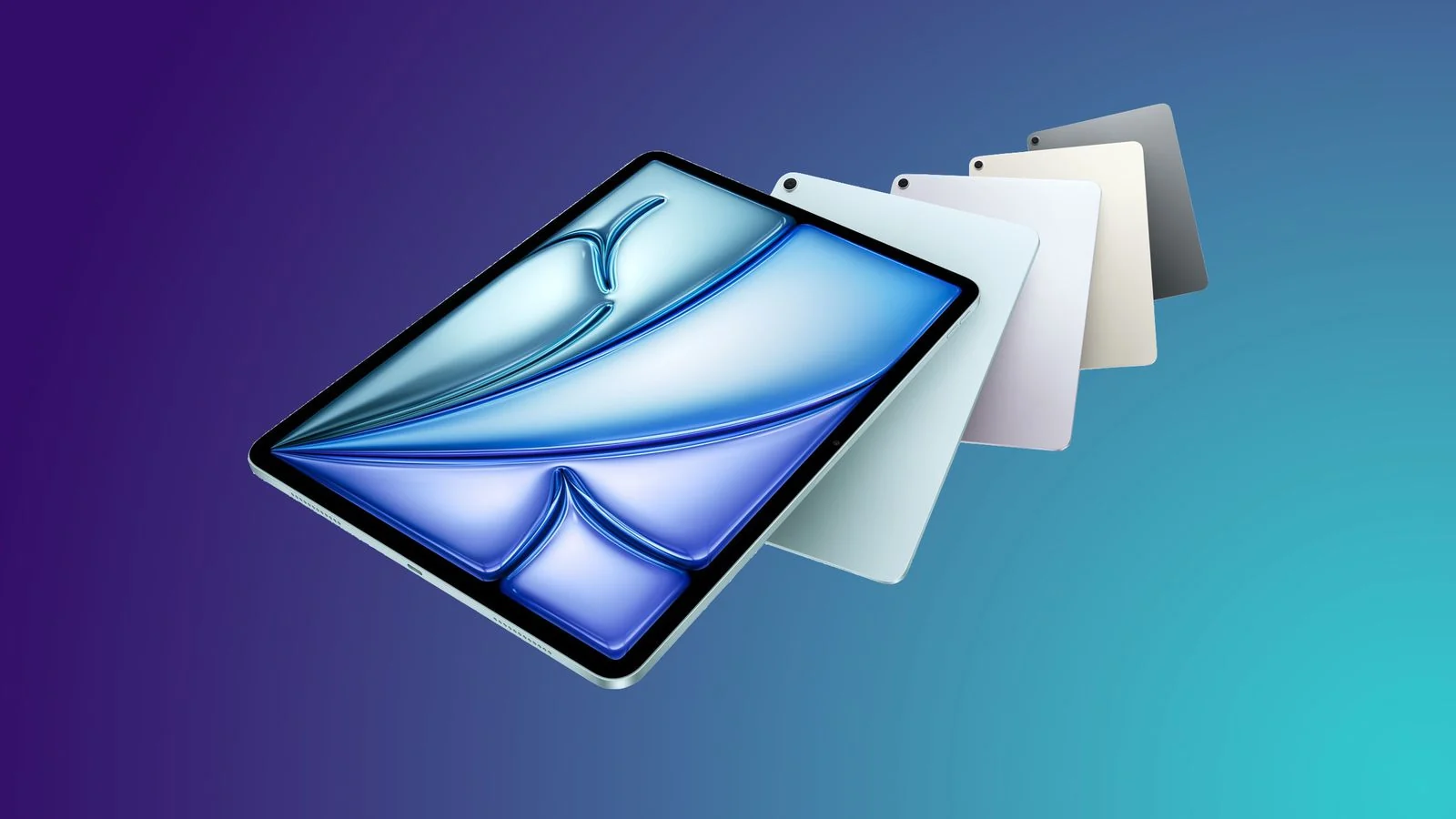
What actually changes in 2027
The change is one product line deep, not a platform reset. Four lines cover it:
- iPad Air: both sizes move from LCD to OLED, which would make it the third iPad line on OLED — after the iPad Pro, which took the technology in 2024, and the new iPad mini with an 8.5-inch OLED panel, on sale since this November.
- iPad Pro: no structural change implied — dual-layer emission, LTPO backplane, ProMotion from 10Hz to 120Hz.
- Supply: Samsung Display looks set to carry most Air panels; BOE is chasing one size order and still needs to pass Apple supplier qualification; LG Display is expected to keep the lead on iPad Pro OLED.
- Forecast: 4 million to 5 million units each for the OLED iPad Air and the OLED iPad mini in 2027, and about 3 million to 4 million units for the OLED iPad Pro. Air and Pro figures are counted across both screen-size models.
OLED iPad Air vs. OLED iPad Pro: what the panel split buys you
Conclusion first: the two panels differ on three axes — emission stack, backplane, refresh rate — and each axis maps to a different visible behaviour. We have not instrumented an unreleased panel; the comparison below uses the specifications Apple publishes for the iPad Pro and the descriptions carried in the reporting cited at the end of this piece.
| Item | OLED iPad Air (rumoured) | OLED iPad Pro (shipping) |
|---|---|---|
| Emission structure | Single-layer, similar to the OLED iPad mini | Dual-layer (tandem) |
| Backplane | LTPS (low-temperature polycrystalline silicon) | LTPO (low-temperature polycrystalline oxide) |
| Refresh rate | Expected to stay at 60Hz | ProMotion, variable 10Hz to 120Hz |
| Brightness and contrast | Lower than Pro by design; Apple has published no figures | Apple lists 1,000 nits SDR and full-screen XDR, 1,600 nits HDR peak, 2,000,000:1 contrast |
| What it changes in use | Pure blacks, per-pixel dimming, better HDR and reading contrast | Same plus smoother scrolling, lower perceived stylus lag, battery saved on static content |
The mechanism behind the difference is narrow and well understood. LTPO's oxide transistors hold charge in each pixel longer between refreshes, so a still image can be redrawn fewer times per second and cost less power; that is what lets iPad Pro's ProMotion system vary between 10Hz and 120Hz. LTPS does not hold charge that way, which is why a fixed 60Hz panel is the cheaper, simpler build. If the OLED iPad Air does keep 60Hz, ProMotion stays an iPad Pro exclusive and Apple's tablet hierarchy stays legible at a glance.
Is a 60Hz OLED enough for you? Four cases
Contrast and refresh answer different complaints, so the honest answer depends on which one annoys you today.
- Reading, documents, video, dark-room use: yes, the Air upgrade is the meaningful one. OLED's per-pixel black level changes perceived sharpness and eye comfort on text pages far more than an extra 60 frames of scrolling would.
- Note-taking and sketching with a stylus: partly. The stroke trail that follows the pen is a refresh-rate behaviour, so the Air's 60Hz panel remains the limiting factor here — this is the group that will notice the gap most, and it is also the group with the clearest argument for the Pro.
- Split view, fast scrolling, map and spreadsheet work: no. Static contrast improves; motion does not.
- Anyone coming from a 120Hz phone: expect a downgrade sensation on the first day, even with better blacks. This is our read rather than a measurement, and it is the single reason we would not call the Air panel an unambiguous improvement.
Where the panels come from, and what that does to price
The supplier picture is less settled than the launch window. Samsung Display is expected to handle the bulk of OLED iPad Air screens, and if Samsung takes the iPad Air and iPad mini orders together it becomes the largest supplier of Apple's OLED iPad panels. LG Display, meanwhile, is projected to remain the dominant iPad Pro OLED source.
BOE is the variable. Analyst coverage from July 14, 2026 had Omdia expecting BOE to ship OLED panels for a 2027 iPad Air and to reach the MacBook Pro OLED chain in 2028, while noting that BOE has not supplied a single OLED panel for Apple's iPad or MacBook lines yet and remains Apple's largest LCD supplier for both. AppleInsider's August 12, 2026 report put the capability decision at the end of 2026, and Korean industry outlet The LEC described the production-qualification verdict as a November or December event. For the 2026 device lineup Apple is reported to rely only on OLED from Samsung Display and LG Display. Second-sourcing is what historically compresses component prices, so the practical question for buyers is not whether the Air gets OLED but whether a second qualified panel maker gets in before launch. Either way, mid-size OLED capacity in China keeps expanding — see our breakdown of TCL CSOT's Guangzhou Generation 8.6 printing OLED line, targeted at volume production in the fourth quarter of 2027.
Do the shipment forecasts hold up?
They are modest on purpose. At 4 million to 5 million units for the OLED iPad Air and the OLED iPad mini respectively, and about 3 million to 4 million units for the OLED iPad Pro — both size models included in the Air and Pro counts — the OLED Pro volume remains far below the roughly 10 million units per year target set before that model's launch, and industry voices point to the higher price as one important reason demand has not matched the plan.
The wider market explains the caution. IDC recorded 33.6 million tablets shipped worldwide in the second quarter of 2026, down 12.3% year on year, and Omdia put Apple's own iPad shipments in that quarter at 13.5 million units, down 8% from a year earlier. Against that backdrop, a display upgrade is easier to read as a margin and mix move than as a volume play. Two published price points frame the risk of waiting: the M4 iPad Air launched in the US at $599 for the 11-inch and $799 for the 13-inch, and the OLED iPad mini went on sale from $699. An OLED Air priced at $599 would be the surprise, not the base case — that last part is analysis, not a leak.
Four things that can still change
- The date. It moved from "not earlier than 2027" in October 2025 to "first half of 2027" now, and Apple has confirmed neither. Panel mass production is reported to start before the end of 2026, which is the earliest signal worth watching.
- BOE's qualification. If BOE fails, one size order reverts to Samsung Display and pricing leverage narrows.
- Refresh rate and backplane. LTPS at 60Hz is the prevailing description, borrowed from the OLED iPad mini. Any move to LTPO would break the ProMotion exclusivity story.
- Long-term panel behaviour. Apple publishes no OLED lifetime figures for iPads, and tablets hold static toolbars and keyboard docks for years. Our coverage of RTINGS' 18,000-hour OLED longevity test found edge decay on 14 of 16 sets using LG Display panels, while QD-OLED units showed no bad pixels — a different product class, but a reminder that "OLED" is not one outcome.
Frequently asked questions
Will the OLED iPad Air support 120Hz?
Not according to the current reporting. The Air is expected to keep a fixed 60Hz panel on an LTPS backplane, which leaves ProMotion's 10Hz to 120Hz range exclusive to the iPad Pro.
Do both iPad Air sizes get OLED?
Yes — the plan covers both sizes, ending LCD on the line. BOE is separately chasing the order for one size product only, pending Apple supplier qualification.
Is the OLED iPad Air worth waiting for?
If you mainly read, watch and annotate, yes. If you draw, scroll fast or come from a 120Hz phone, the honest answer is no: buy the iPad Pro or keep your current M4 iPad Air.
Why is iPad Pro selling below its own target?
Forecasts put it at about 3 million to 4 million units in 2027, against a pre-launch expectation near 10 million units per year. Price is the explanation industry figures give, on top of a tablet market that shrank 12.3% year on year in the second quarter of 2026.
A checklist before you decide
- Name the complaint: is it black levels and glare, or motion smoothness? OLED fixes the first, not the second.
- Check whether your apps use a fixed refresh rate anyway — many video and reading apps cap at 60Hz regardless of panel.
- Watch two dates: the BOE qualification verdict expected by the end of 2026, and panel mass production starting before then.
- Set a price ceiling before launch, using the $599 and $799 US M4 Air prices as the reference line, not as a promise.
- If you stylus for a living, cost the Pro's ProMotion and brightness against one year of work, not against the Air's sticker.
- Discount every spec you cannot verify in an Apple press release; this whole line is still supply-chain reporting.
Sources
- Apple, iPad Pro technical specifications: https://www.apple.com.cn/ipad-pro/specs/
- Apple, iPad Air 13-inch (M4) technical specifications: https://support.apple.com/en-us/126472
- IDC, "Worldwide Tablet Shipments Fall 12.3% in Q2 2026": https://www.idc.com/resource-center/blog/the-tablet-market-hits-a-wall/
- Omdia press release, Q2 2026 tablet shipments: https://omdia.tech.informa.com/pr/2026/aug/supply-pressures-weigh-on-global-tablet-market-as-shipments-decline-10-percent-in-q2-2026
- Omdia China Display conference analysis on BOE and Apple OLED sourcing: https://omdiaevents.com/china-display-conference/comparison-and-analysis-of-oled-processes/
- AppleInsider, "BOE really wants to make OLED panels for the iPad Air" (August 12, 2026): https://appleinsider.com/articles/26-08-12/boe-really-wants-to-make-oled-panels-for-the-ipad-air
- The LEC, BOE push to supply OLED panels for iPad Air: https://www.thelec.net/news/articleView.html?idxno=12961
- OLED-Info, 2026 lineup sourced only from Samsung Display and LG Display: https://www.oled-info.com/boe-hopes-be-apples-second-supplier-2027-oled-ipad-air-and-future-macbook
- Quartz, first OLED iPad mini from $699: https://qz.com/apple-ipad-mini-oled-screen-699-unveiled-102626