
ItInsightsWorld Comparison: WOLED Edge Rot vs QD-OLED Burn-In — What 18000 Hours Really Cost You
Short answer: in the accelerated longevity programme run by RTINGS, 14 units out of 16 WOLED televisions built on LG Display panels developed "edge rot" — scattered dead pixels and dark zones creeping inward from the frame — once cumulative runtime reached 18000 hours, roughly ten years of average use in a United States household. The 3 Samsung Display QD-OLED units in the same rack produced no dead pixels at all, and the only defect recorded on them was CNN-style burn-in. For buyers, that reframes the question: the risk is no longer just ghost images, but which failure mode a given panel generation carries and who pays when it shows up.
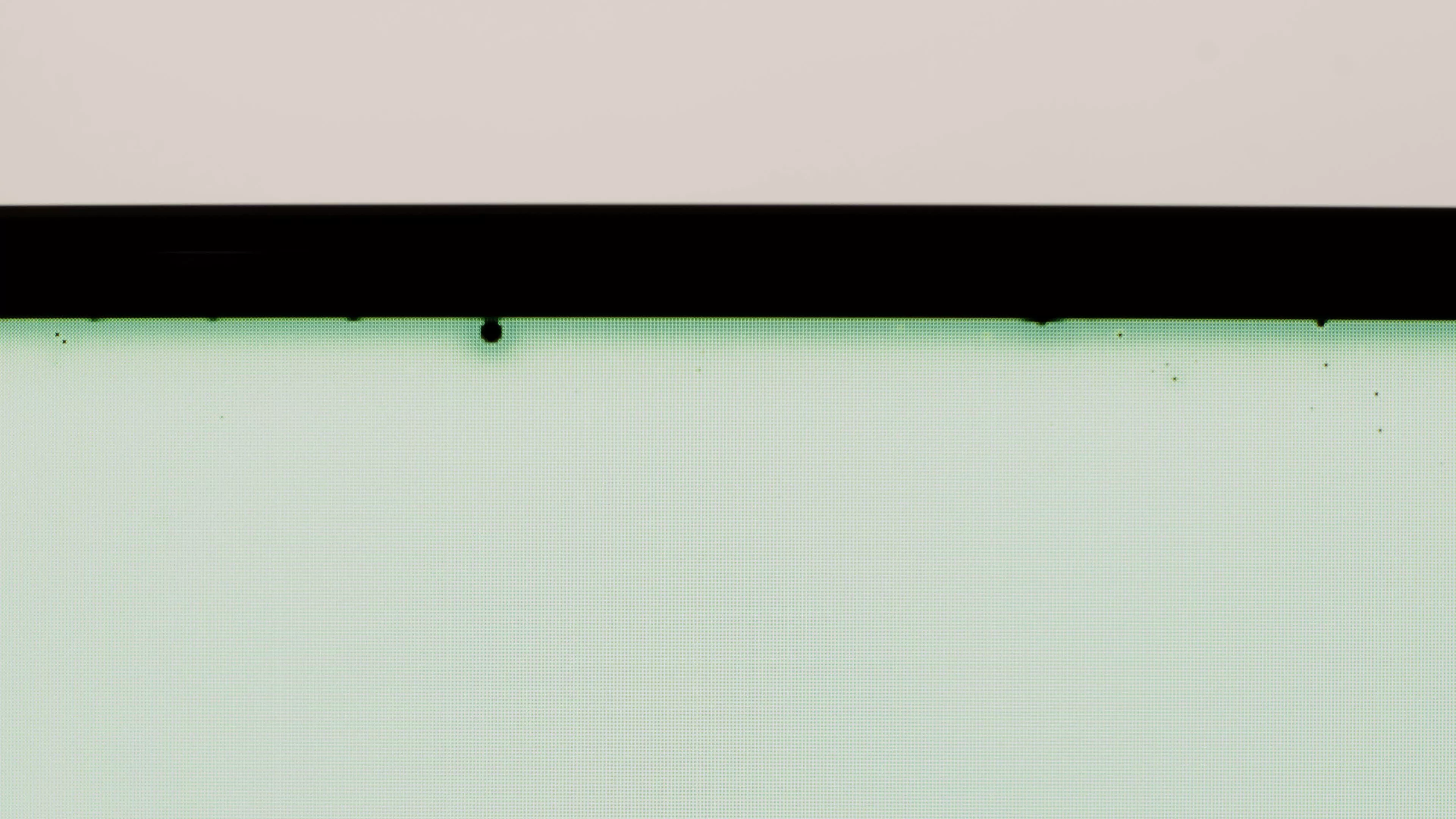
What is edge rot, and how does it differ from burn-in?
Edge rot is the death of pixels, not the memory of an image. Burn-in follows fixed content — news tickers, channel logos, scoreboards, console HUDs. Edge rot ignores your viewing habits: rotating programmes, varied sources and nightly pixel-refresh cycles do not stop it, because the trigger sits in the panel's construction rather than in what is displayed.
After consulting specialists in the field, RTINGS put forward a plausible cause: the thin sealing structure around the outer perimeter of the OLED panel. Where that seal has microscopic defects, moisture can migrate inward over years and kill border pixels first, which is why damage starts at the frame and spreads toward the centre, with the lab's own write-up describing the pattern as dead pixels, pixel failures and delamination along the edges of WOLED panels.
| Failure mode | Trigger | What you actually see | Content-dependent? | Reversible? |
|---|---|---|---|---|
| Edge rot (LG Display WOLED) | Years of runtime plus seal and moisture degradation at the border | Sporadic dead pixels and dark patches at the screen edge, creeping inward | No | No — the pixel is gone |
| Burn-in / image retention | Long-term display of fixed elements such as the CNN news ticker | A faint ghost of static graphics over the picture area | Yes | Partly — refresh cycles only mask it |
| Backlight failure (edge-lit LCD) | Concentrated heat behind an ultra-thin chassis | Warped reflector sheets, cracked light guide plates, burnt-out LEDs, half-lit screens | No | No — hardware replacement |
That third row matters more than it looks. In the same lab's ongoing study of more than 100 televisions, the February 2025 update reported that over 64% of edge-lit LCD sets showed significant uniformity problems versus 20% of full-array and direct-lit models. OLED has competitors on durability; the honest comparison is failure-type, not "OLED bad, LCD good".
Panel by panel: WBC, WBE, QD-OLED and Tandem WOLED compared
Read the table below as a risk map rather than a scorecard. The tested population was 16 units of WOLED launched between 2020 and 2023, of which 14 units were damaged, plus the Samsung Display QD-OLED controls.
| Panel family | Units in test | Outcome after 18000 hours | What changed | Buyer takeaway |
|---|---|---|---|---|
| LG Display WBC (early WOLED) | 10 units | Nine affected; only the LG A2, released in 2022, came through clean | First-generation emitter stack of the set | Highest exposure — and this is where most secondhand stock sits |
| LG Display WBE (newer WOLED) | 6 units | 5 units damaged to varying degrees; only the LG G3 from 2023 finished intact | Deuterium used to strengthen the OLED emitting material, lifting durability | Better, not solved — the border problem survives the material upgrade |
| Samsung Display QD-OLED | 3 units | No dead-pixel problems of any kind; CNN-driven burn-in was the only observed defect | Blue OLED emission combined with a quantum-dot conversion layer | Manage retention, don't fear the edges — but the sample is tiny |
| LG Display Tandem WOLED | Not in the 18000-hour dataset | Under observation in the new Longevity 3.0 programme, which already includes LG G5 and LG G6 | Stacked emitter layers that spread the load across more pixels | The answer the market is waiting for; no durability verdict yet |
Two limits belong in any honest read of this. First, the test never covered products released in 2024 and later, so the newest retail shelves are outside the evidence. Second, "Tandem WOLED" is currently a brightness and architecture story, not a proven lifetime story: industry coverage of CES 2026 notes that LG Display's Primary RGB Tandem 2.0 push for TV panels is quoted at up to 4500 nits peak, and higher brightness is itself an ageing accelerator if the emitter stack is not engineered for it.
Why the numbers are still contested
LG told RTINGS that only a very small number of OLED televisions can exhibit this behaviour and that it typically needs prolonged exposure to demanding conditions such as high temperature and high humidity. Panel-maker explanations run the other way, too: LG Display has publicly argued that QD-OLED ages faster because its blue OLED pixels wear earlier, while its own WOLED design shares the load across stacked blue, yellow and green emission.
Neither side's claim is airtight, and independent analysts say so. Liu Tun, deputy general manager of the IoT industry research centre at CCID Consulting, told China Electronics News that judging ageing by running every set at its own maximum brightness is scientifically debatable: if one QD-OLED model peaks 100 nits above a WOLED rival, the brighter unit will age faster regardless of panel design, and there is no confirmation that current, brightness and device structure were normalised across samples. Treat this as a risk signal, not a lab-certified ranking.
What it costs you: the warranty is the real differentiator
Because edge rot takes years to surface, the terms on paper decide who absorbs the repair bill. In the United States market, LG's five-year limited panel warranty is offered only on the G Series, Z Series and M Series, and beyond the first year the customer still pays the labour — the LG USA OLED pages spell out the same split, with only the panel covered in years two through five. High-volume lines such as the C Series stay on the standard warranty. That is a concrete price for the peace of mind the durability data cannot yet provide.
RTINGS has already priced the risk into its scoring: because the pattern appeared across multiple samples, every WOLED television takes a small deduction in the newly published "Expected Reliability" score until long-term data proves the hazard has been resolved.
Decision guide: which buyer should care, and about what
- Movie and series watcher, mixed sources. Lowest exposure. Edge rot is random rather than content-driven, and burn-in pressure is light. A recent-generation WOLED or QD-OLED is fine.
- News, sport and console player with fixed HUDs. Retention is your enemy, not the border. The 3 QD-OLED units showed exactly this: CNN-style burn-in and nothing else.
- Secondhand shopper eyeing an LG CX or LG C1. Highest-risk segment — these sit on the early WBC generation, where only the 2022 LG A2 avoided damage. Use the checklist below before paying.
- Buyer wanting the longest expected life per dollar. Look at G Series, Z Series and M Series in the United States for the five-year panel cover, or wait for the Longevity 3.0 results on Tandem WOLED in the LG G5 and LG G6.
- Anyone comparing a thin edge-lit LCD instead. Do not assume LCD equals safe. The same long-term programme found far more uniformity failures in edge-lit sets than in full-array designs.
Checklist: inspect a used OLED in ten minutes
- Display a full-screen pure white image, then a pure grey one, and look only at the outer 2-3 cm of the panel for dark spots or shaded patches.
- Trace inward from the frame: edge rot advances from border toward centre, so a faint band at the rim is an early warning, not a cosmetic quirk.
- Run a pixel refresh before the test, not after the deal. A mark that survives a refresh is permanent — refresh cycles maintain uniformity and cannot revive a dead pixel.
- Ask for cumulative viewing hours from the service or support menu and compare them against the claimed age of the set.
- Identify the panel generation: WBC-era sets (including LG CX and LG C1) carry the heaviest observed damage rate; WBE-era sets improved but still failed in 5 of 6 units.
- Check whether the model line is one the United States warranty schedule covers for five years, and whether any remaining cover transfers to a second owner.
Common misconceptions
- "If I vary what I watch, I am safe." Not for edge rot — the mechanism is content-independent.
- "QD-OLED has no problems." It had no dead pixels in the test, but it did show CNN-related burn-in.
- "Newer panels prove the issue is fixed." The study covered nothing from 2024 and later, and the WBE group still showed damage in 5 of 6 units.
- "Warranty means a free replacement whenever the screen degrades." Panel-only cover plus labour charges after the first year is the actual deal on the premium lines.
- "One lab result settles the debate." Brightness normalisation and test conditions are openly questioned, so this is a warning light, not a verdict.
Frequently asked questions
Is edge rot the same as burn-in?
No. Burn-in is uneven ageing of pixels still driven by fixed images and can be partially masked by refresh routines. Edge rot is outright pixel death starting at the sealed panel border, and no refresh can bring those pixels back.
Which TVs were affected, and which were not?
Of 16 WOLED sets launched between 2020 and 2023, 14 units showed edge rot. Within the 10 units on early WBC panels, only the 2022 LG A2 stayed clean; of the 6 units on WBE panels, only the 2023 LG G3 finished undamaged. All 3 Samsung Display QD-OLED units were free of dead pixels.
Should I stop shopping for an OLED TV?
Not automatically. Reduce exposure instead: buy new or near-new rather than early-generation secondhand stock, prefer a line with extended panel cover in your country, and treat the "Expected Reliability" deduction as one input among brightness, size and price.
Will the next generation settle this?
That is the purpose of Longevity 3.0, which already includes Tandem WOLED panels in the LG G5 and LG G6. Until that data lands, the claim that stacked emitters remove the border risk remains untested rather than disproved.
Sources
- RTINGS — "Edge Rot Plagues WOLED TVs: Burn-In Isn't OLED's Only Problem": https://www.rtings.com/tv/learn/research/edge-rot-plagues-woled-tvs
- RTINGS — Longevity Burn-In Test, updates and results from 100 TVs: https://www.rtings.com/tv/tests/longevity-burn-in-test-updates-and-results
- China Electronics News via Sina — industry criticism of maximum-brightness ageing comparisons: https://news.sina.cn/j_uc.d.html?docid=mymraez9858547
- LG USA — OLED television lineup and five-year limited panel warranty terms: https://www.lg.com/us/oled-tvs
- Display Daily — LG Display Primary RGB Tandem 2.0 / Tandem WOLED at CES 2026: https://displaydaily.com/lg-display-brings-tandem-woled-2-0-to-ces-2026-pushing-tv-panels-to-4500-nits/