
ItInsightsWorld General: Face ID vs Action Button on iPhone Duo 2 — What Buyers Should Weigh
Picture a bench test: a foldable handset unlocks only when the outer display is held at eye level. That is the practical problem behind the iPhone Duo 2 rumor. Short answer: Apple is prioritizing Face ID over the Action button, but Face ID on the outer display is still a schedule risk, with iPhone Duo 3 in 2028 as the fallback window.
According to 9to5mac, Apple will launch the second-generation iPhone Duo next autumn. The baseline story is a normal refresh — chip upgrades and camera tuning — but the more useful question is not “what is new?” It is “which change is actually hard to ship?” On that measure, Face ID and the Action button sit at opposite ends of the engineering spectrum.
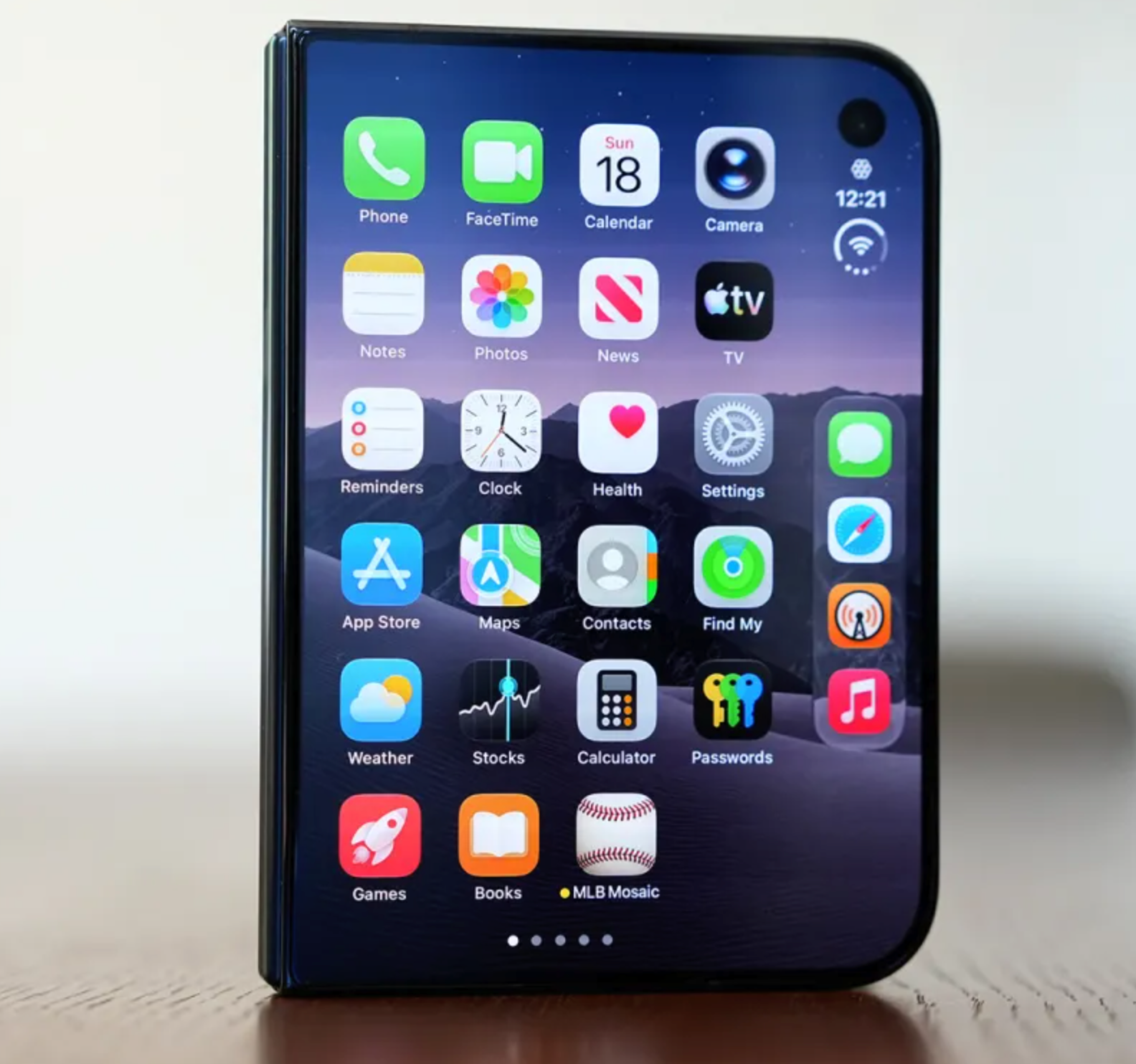
iPhone Duo
Why is Face ID the tougher iPhone Duo 2 priority?
Conclusion: Face ID is harder because it is a hardware-and-security chain, not a single camera feature. Apple Support says its TrueDepth camera projects and analyzes thousands of invisible dots to build a depth map, captures an infrared image, and matches the resulting model with enrolled face data. That stack has to fit into a folded device that also needs a hinge, batteries and reinforced displays. AppleInsider's analysis of foldable iPhone rumors points to the same physical squeeze: hinges, batteries and tougher screens already crowd the chassis, and adding Face ID increases thickness and internal design pressure.
For General readers, the practical translation is simple: a prototype proves a lab path exists; it does not prove the sensor array can survive mass production, calibration, warranty expectations and the thinner-and-lighter goal in the same generation.
Face ID or Action button: which change matters more?
Conclusion: Face ID changes what the phone can securely do; the Action button changes how quickly a user can trigger an action. That asymmetry explains why Gurman's report treats them differently.
| Dimension | Face ID | Action button |
|---|---|---|
| Reported role | Top priority; engineers are trying to integrate it into the outer display | Second priority; may become a Camera Control software change |
| Main constraint | Sensor space, optical alignment, security calibration, thermal and power budget | Interaction mapping and user settings |
| User impact | Unlock, payment and app authentication become more consistent with the broader iPhone line | Long-press can move from Siri in Camera to a user-selected app |
| Launch risk | High; Gurman says timing is tight | Lower; remapping behavior is closer to a settings option |
Apple's own Action button guide supports the low-risk reading: on supported iPhones, users choose the function in Settings > Action Button. If the iPhone Duo 2 route mostly remaps long-press behavior in Camera Control, it is closer to a software option than a new sensor program.
What did Mark Gurman actually report?
Conclusion: Bloomberg's Mark Gurman said Apple has two priorities for iPhone Duo, but only one of them has a prototype and a calendar problem. According to 9to5mac's report:
"Other goals for future generations also include adding a telephoto camera, and further reducing body thickness and whole-device weight. But Face ID is the primary task. As far as I understand, Apple has already developed an iPhone Duo 2 prototype with Face ID, and engineers are still actively working to integrate the facial-recognition system into the outer display of the second-generation model," Gurman said.
That sentence carries three separate claims: future targets exist; Face ID leads the list; and a prototype is in engineering, not in a shipping spec sheet. It also preserves the uncertainty that matters for buyers: Gurman did not say the feature is guaranteed for next autumn.
Why can a prototype still miss the launch?
Conclusion: because “working” and “ready” are different gates. A Face ID module has to align optically, authenticate reliably at different angles, tolerate device motion and temperature, and still leave room for the battery and display stack. None of that is solved by software alone.
- Optical fit: TrueDepth-style sensing needs emitter and receiver geometry; folding changes the angle between a user's face and the outer display.
- Thermals and power: extra infrared illumination and neural processing add peaks to a power budget already shared by two screens.
- Yield: a component that works in a hand-built unit may miss rate targets across millions of devices.
- Timing: Gurman said development time is very tight and the technology is not fully ready.
What are the realistic scenarios for buyers?
Conclusion: treat next autumn as a watch window, not a purchase trigger. The report gives three plausible outcomes, each with a different action.
| Scenario | What it means | Reader move |
|---|---|---|
| Face ID ships | Apple solved outer-display integration at production quality | Verify performance in launch-week reviews, not in rumor threads |
| Face ID slips | iPhone Duo 2 remains a refresh with a smaller interaction change | Do not buy solely on the promise of Face ID |
| Timeline moves to 2028 | iPhone Duo 3 becomes the likely receiving model | Keep the current phone if authentication is your main upgrade reason |
Which common readings are wrong?
Conclusion: the rumor is about priority and feasibility, not certainty.
- Myth: “Prototype means launch.” Reality: Gurman explicitly leaves room for a miss and names 2028 and iPhone Duo 3 as the possible receiving model.
- Myth: “Action button means a brand-new physical button.” Reality: the cited report says the final outcome may be a Camera Control software change that lets users remap long-press from Siri to a chosen app.
- Myth: “Face ID is just the selfie camera.” Reality: Apple documents a TrueDepth sensor chain with depth mapping and infrared imaging.
FAQ: what are readers really asking?
Is Face ID confirmed for iPhone Duo 2?
No. It is the stated top priority and prototypes exist, but Gurman said time is tight and the feature may not be ready.
When could it appear if it slips?
The reported fallback is 2028, with iPhone Duo 3 as the likely model.
Should I wait for next autumn?
If Face ID matters for payments, app authentication and daily unlock, waiting for launch-week specifications is more rational than buying on a rumor. That is analysis, not a claim from Apple.
How should you use this information?
Conclusion: reduce uncertainty by checking three signals before you change a purchase plan. That is the same caution we apply in our iPhone Air 2 mockups vs iPhone 18 design comparison: mockups and prototypes narrow the design space, but final specifications still need confirmation.
- Separate the source chain: Bloomberg, Mark Gurman and 9to5mac are being cited; Apple has not published a product specification here.
- Decide which priority solves your problem: Face ID for authentication continuity, or the Action button for faster device control.
- Watch for production evidence: shipping settings, regulatory filings, review units and retail specifications matter more than prototype chatter.
Reference sources
- 9to5mac report on Apple engineers actively working on Face ID for the iPhone Duo 2 outer display
- Apple Support, About Face ID advanced technology
- Apple Support, Use and customize the Action button on iPhone
- AppleInsider, foldable iPhone Face ID and chassis constraints analysis
Reusable checklist before you act on this rumor
- Source: can you name Bloomberg, Mark Gurman and 9to5mac in the chain?
- Feature: are you tracking Face ID, not a generic face-unlock shortcut?
- Form factor: has the outer-display sensor been verified in shipping specifications?
- Timing: is the target next autumn, or has the discussion moved to 2028 and iPhone Duo 3?
- Trade-off: if Face ID slips, does the Action button remap still solve your daily problem?
Use this checklist as a filter. It will not make the rumor true; it will keep a plausible engineering story from becoming an unnecessary purchase.