
ItInsightsWorld General: GTX 1080 Oven Reflow vs BGA Repair — What FoxX11's 130°C, 35-Minute Fix Tells You
In a recently shared PCGH forum experiment, FoxX11's failing GTX 1080 was placed in a home oven, held at 130°C for 35 minutes, and passed a Furmark donut stress test. PCGH official survey data says about 80%—roughly 8 in 10—attempters see early success, but about two-thirds relapse within one year. So heat reflow is a short-term bridge, not a dependable GPU repair.
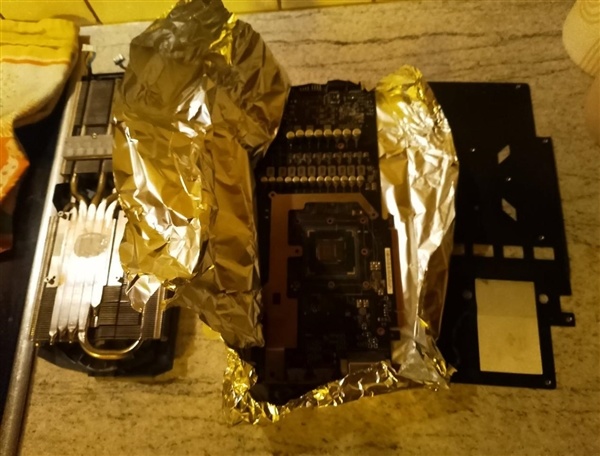
What FoxX11's GTX 1080 rescue actually involved
The user's diagnostic logic is more useful than the kitchen appliance. The card did not crash at cold boot; it died 10 to 15 minutes into use. That delay points toward a marginal connection that changes as the board warms, especially a cold solder joint under the GPU core or memory chips.
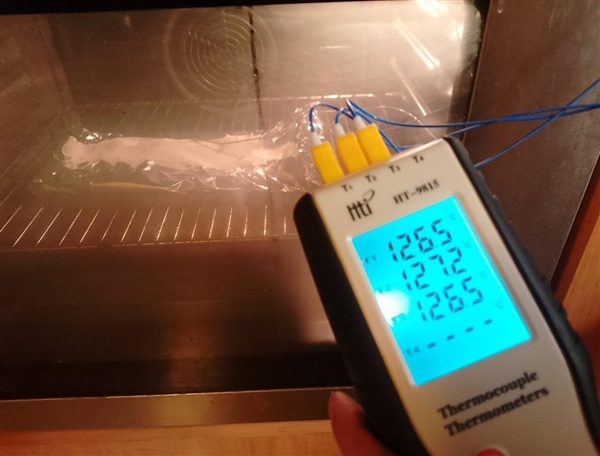
The procedure also separated repairable parts from fragile ones: the main heatsink was removed, memory passive cooling remained in place, and the circuit board was wrapped tightly in aluminum foil before being heated. The oven was set to convection mode, and the working range was kept between 120°C to 130°C for 35 minutes.
Because home oven temperature control can drift, multiple independent temperature sensors were placed inside the oven to reduce the chance that the built-in thermostat misread the actual environment. That detail matters: this was not a casual "cook the GPU" test, but a controlled attempt to keep heat within a narrow window.
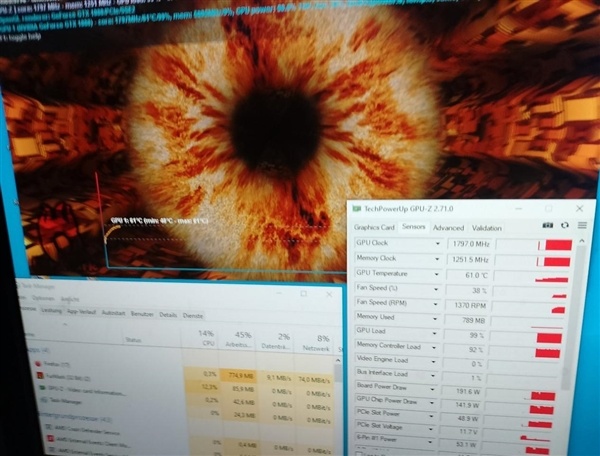
After the process, the GTX 1080 passed the Furmark stress test and no longer showed the previous shutdown pattern. The evidence shows that heat can temporarily restore contact at a failing joint.
Why do oven fixes often fail again within one year
Because the underlying defect is not eliminated. Ball-grid array solder joints experience repeated expansion and contraction during normal gaming and benchmarking. A reflow may close a crack long enough to pass a test, but it does not necessarily rebuild the original metallurgical bond. It can also stress nearby components, alter flux, or disturb pads that were already weak.
This is why the PCGH official number matters more than the first successful boot. About 80% early success sounds high, yet the durability problem is severe: about two-thirds of cards relapse within one year. For most owners, the oven is a temporary diagnostic tool and a way to buy time for backup, data access, or budget planning—not a certified repair.
Oven reflow vs BGA repair vs replacement: quick comparison
| Option | What it addresses | Durability expectation | Cost and complexity | Best scenario |
|---|---|---|---|---|
| Home oven reflow | Marginal solder contact suspected from delayed failure | May work immediately; PCGH official survey reports about 80% early success and about two-thirds relapse within one year | Low direct cost but high risk; requires foil, convection, temperature monitoring, and tolerance for damage | Non-critical older card with no spare, after data backup and when replacement is blocked by price or availability |
| Professional BGA reballing or rework | Failed or suspect solder joints below chips | More credible long-term if the GPU die and memory remain electrically sound | Higher cost and skill-intensive; depends on local repair quality | Card with value, sentimental use, or repair cost far below replacement |
| Replace with new or used GPU | Ends the repair cycle | Most predictable if buyer selects a known-good card and tests it | Price-sensitive; late-2026 hardware markets show volatility | Mission-critical systems, repeated heat failures, or when power and thermal design need reset |
| Stop using and retire the card | Avoids further damage or safety risk | No repair claim | Lowest action cost | Board has smoke damage, burnt smell, visible bulging or cracking, or the data on the system matters more than the card |
Why the replace-versus-repair math changed in late 2026
A few years ago, a failed GTX 1080 often had a clean upgrade path. That is less certain now. A Sina-hosted technology report described RTX 5070 Ti price swings in North America, with the lowest retail price moving from $1,179.99 on October 29 to $1,339.99 on November 6, a $160 eight-day move, while Chinese board partners reportedly raised RTX 5070 Ti prices about ¥1,000, roughly $150. The source is a Sina-hosted technology report.
Memory and supply pressure are not limited to high-end cards. Raspberry Pi's official price update raised the 16GB Raspberry Pi 5 by $80 to $385, effective November 2, 2026, citing memory supply conditions. For readers weighing a replacement GPU, the lesson is not that home repair is better, but that replacement timing, price volatility, and availability can make an older card last longer than intended. If you are comparing the GTX 1080 with newer low- and mid-tier cards, our Radeon RX 7500 and Intel Razor Lake upgrade guide explains where emerging options may fit.
Checklist before treating a GTX 1080 as fixable
- Confirm the failure pattern: Is it immediate no-boot, or shutdown after 10 to 15 minutes? Delayed failure makes solder-contact suspicion more plausible.
- Check power first: Verify the PSU, PCIe power cable, socket, and driver logs before assuming a board fault.
- Rule out simple thermal failures: Replace paste or pads only if temperature behavior and artifacting match, not as a blanket first step.
- Back up everything: If the card may fail again after a short test pass, treat any pass as warning, not warranty.
- Separate food from hardware: A kitchen oven carries hygiene, fume, residue, and fire-risk questions that should not be ignored.
- Use independent sensors: Do not trust the oven's own temperature display if you are trying to hold 120°C to 130°C.
Common misconceptions about baked GPUs
- "About 80% success means the fix is reliable." No. PCGH official data also reports that about two-thirds relapse within one year.
- "If it passes Furmark, the card is new again." No. A single benchmark pass proves only a short-term result under selected load.
- "More heat means a better fix." No. The FoxX11 process used a limited range and extra sensors; excess heat can damage components.
- "Reflow always solves the root cause." No. It may temporarily re-establish a connection while leaving fatigue or metallurgical damage in place.
Action advice: decide in this order
- Step 1 — diagnose, don't bake first. Use Furmark and system logs to identify whether the issue is thermal, power, driver, or physical board failure.
- Step 2 — back up and stabilize. If data access is possible, move files to another machine or cloud backup before experimenting.
- Step 3 — set a repair budget ceiling. If professional rework costs more than half of a realistic replacement, replacement usually deserves priority.
- Step 4 — reserve oven reflow for last resorts. Only consider it when the card is non-critical, warranty is gone, and you accept permanent damage risk.
- Step 5 — define an end date. If a reflowed card fails again within months, stop repeated heating and replace the GPU.
FAQ: the questions most readers ask
Is a home oven worse than a reflow oven?
Usually yes. A reflow oven is built to follow a temperature profile and keep the environment stable. A home oven is designed for food, not precise electronics work, so it needs extra sensors and careful masking of nearby parts.
Does the FoxX11 result prove FoxX11 fixed a common GTX 1080 fault?
It proves one user had an apparent cold-solder failure at 130°C for 35 minutes and regained a Furmark-passing result. It does not prove the same result will repeat on another card.
Should I try it if the GTX 1080 is my only working display adapter?
No. If the card is essential, back up first and prefer professional diagnosis or replacement.
What is the best reading of the PCGH data?
Use it as a timeline warning: early success can happen, but the high probability of relapse within one year means the repair should be treated as temporary.
Reference sources and verification
- PCGH forum experiment and PCGH official survey summary: MyDrivers report on the GTX 1080 oven case.
- BGA thermal fatigue and rework background: Affordable Laptop Services BGA glossary.
- GPU price movement data: Sina-hosted technology report on RTX 5070 Ti pricing.
- Component price-pressure example: Raspberry Pi official price update.