
ItInsightsWorld Case Review: Fujifilm's Biggest Tape Investment in Nearly 20 Years and the AI Cold-Data Lesson
Short answer: generative AI did not create a new storage product, it created a new bill. Training runs leave behind corpora, cleaning results, logs and checkpoints that must be kept but are almost never opened, so the cheapest medium that can still be read in 2036 wins. Fujifilm's expansion of its LTO tape plant — its largest investment in dedicated tape facilities in nearly 20 years — plus CERN's 1EB tape archive and its own earlier exit from optical archival media show where the cost, risk and longevity questions really land. This case review turns those three signals into a decision framework you can reuse.
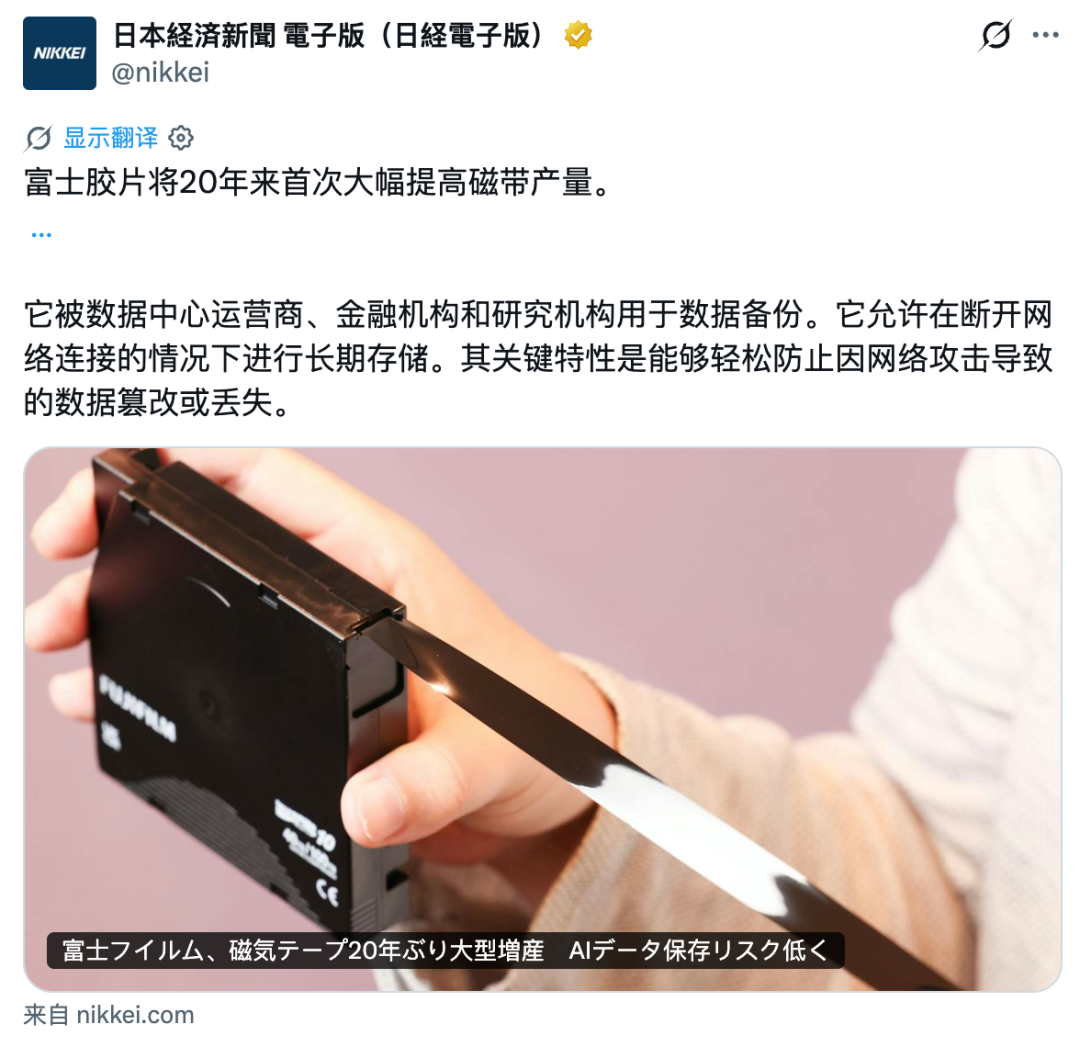
According to Fujifilm's own release, the company plans roughly ¥10 billion (around $63 million) at its Kanagawa Factory, Odawara Site, spending across fiscal 2026 through fiscal 2028 to lift tape shipment capacity to about five times the fiscal 2025 level — and, as the master case records, the trigger was the archive demand generated by large-scale AI workloads.
What are the three lessons hidden inside this tape story?
Conclusion: the value of the Fujifilm case is not the format, it is the pattern — old media wins when a new workload makes volume dominate over speed.
- Volume beats elegance. Once a dataset is measured in exabytes, the cheapest workable medium outranks the fastest one.
- Boring wins twice. Fujifilm's fivefold expansion and the sold-out capacity at Western Digital and Seagate are the same signal seen from supply and demand.
- Ecosystem failure is fatal. Sony shut its 100-year-rated Optical Disc Archive on 31 March 2025 because cold-storage growth fell short of expectations — longevity claims cannot compensate for a shrinking ecosystem.
Why does AI still need magnetic tape when GPUs are the headline?
Because at extreme scale, physics and logistics stop caring about how fast your chips are.
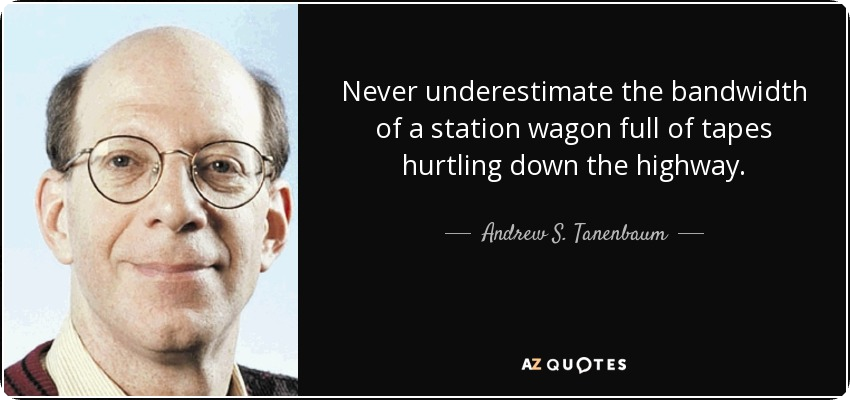
Computer scientist Andrew Tanenbaum once joked that you should never underestimate the bandwidth of a station wagon full of tape cartridges hurtling down the highway. It sounds absurd until the payload reaches petabyte or exabyte scale — then a truck of storage can genuinely beat a network link.
In 2016 Amazon's AWS launched Snowmobile, a heavy truck that could move up to 100PB of data in one go. The service was retired in 2024, and it never shipped tapes, but it made the underlying point unforgettable: at extreme scale, storing and moving data is itself an engineering problem.
Generative AI made that problem routine. Training consumes GPUs, HBM and fast SSDs; afterwards the organisation inherits the raw corpus, cleaned datasets, training logs, model checkpoints and every historical iteration. Those leftovers define the tiering problem.
| Data state | Where it belongs | Buying rule |
|---|---|---|
| Actively computing | High-speed storage devices | Pay for latency |
| Large datasets accessed frequently | Hard disk drives | Pay for throughput |
| Untouched for months or years but undeletable | Long-term archive systems (cold data) | Pay for $/TB and power |
An AI company that has finished training a new model may have no use for the old corpus today, yet may still need it for reproduction, retraining or compliance review years later. The question that follows is purely financial: should drives stay powered to guard files that may not be read for a decade?
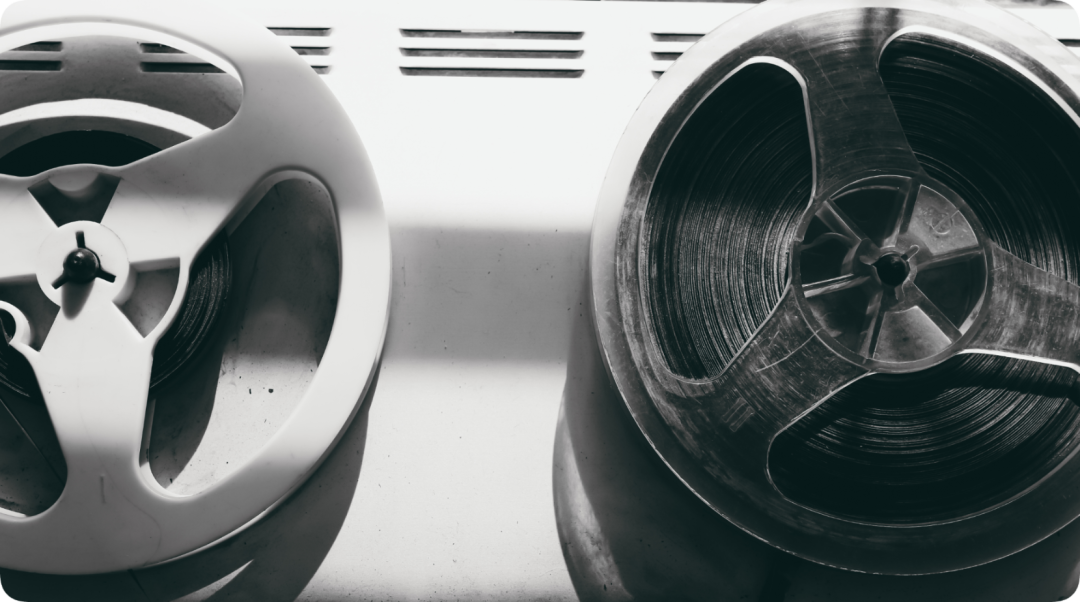
What makes tape good at long-term archiving — and where does it hurt?
Conclusion: tape is excellent for exactly one job — holding large amounts of data cheaply and offline — and it fails at anything that needs random access.
- Cheap and idle-quiet. Cartridges can sit offline for years, with no power, no cooling and no array to maintain.
- Air-gapped by default. A cartridge removed from the library cannot be encrypted by ransomware that has already captured the servers.
- Faster than its reputation. LTO-10 reaches 1200MB/s in raw sequential transfer, and automated libraries use robotic arms for loading and reading.
- Sequential by nature. Locating one file can take a long time, so tape cannot serve frequent access or real-time compute. SSDs are on call; tape is the warehouse.
Fujifilm has estimated that for holding 100PB over a ten-year horizon under defined conditions, an automated tape system cuts total cost of ownership by about 86% and emissions by about 95% compared with an all-hard-disk approach. Treat that as a vendor model, but note how rarely a vendor would highlight a 95% carbon reduction if the underlying physics were marginal.
Science proved the pattern long before AI asked the question. In December 2025 CERN, the European Organization for Nuclear Research, reported that data accumulated by the Large Hadron Collider had reached 1EB — 1 million TB — with most of it stored on about 60,000 tape cartridges.
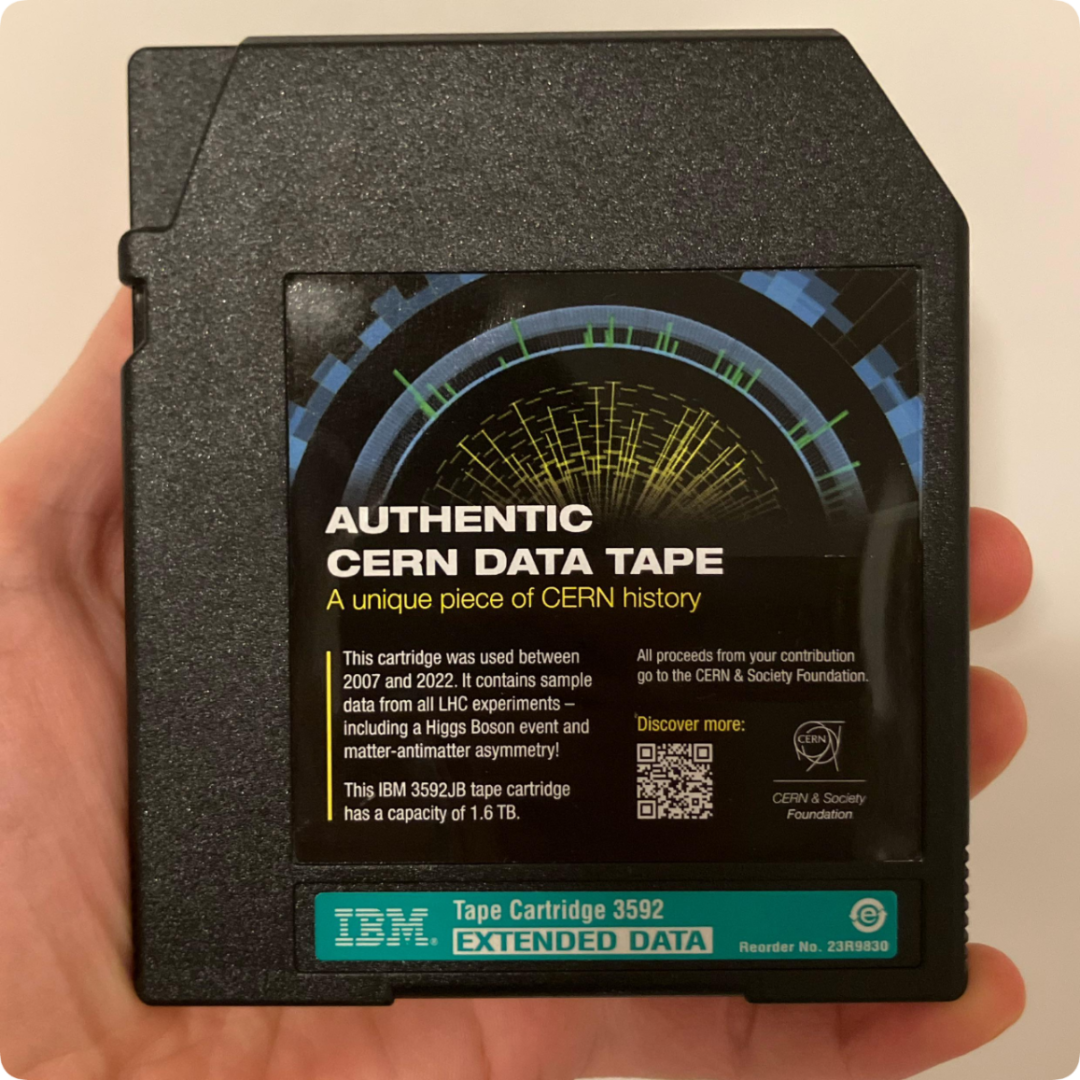
Experiments recorded decades ago can regain value when a new theory arrives, and CERN expects the volume it must keep and process over the next ten years to reach about ten times its entire stored total so far. The same logic applies to AI corpora, training records and model backups.
Market data backs it up. The LTO Program's September 2026 figures show record shipments of 176.5EB in 2024, up 15.4% year on year; 2025 softened to 160.3EB; then in the first quarter of 2026 shipped capacity jumped 57% year on year as LTO-10 arrived. That measures capacity delivered, not cartridges sold. "Tape continues to be a pivotal, strategic storage solution," said Tom Coughlin, president of Coughlin Associates and a storage analyst, in the same release, noting that power constraints on data-centre build-outs favour media that consume less electricity than any other storage class.
How much can one cartridge hold, and where does the roadmap go?
Conclusion: capacity, not format, is what changed. The shell has stayed the same size for 26 years while the bytes inside grew about 400 times.
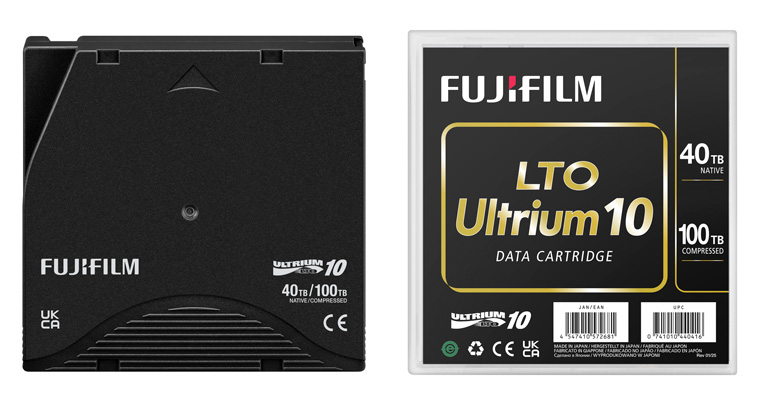
Fujifilm released the LTO-10 30TB data cartridge in June 2025, followed by a 40TB version in that same December, shipping from 2026. At an ideal 2.5:1 compression ratio, a single cartridge is theoretically rated at 100TB. Compare that with the first-generation LTO tape launched in 2000, which held just 100GB.
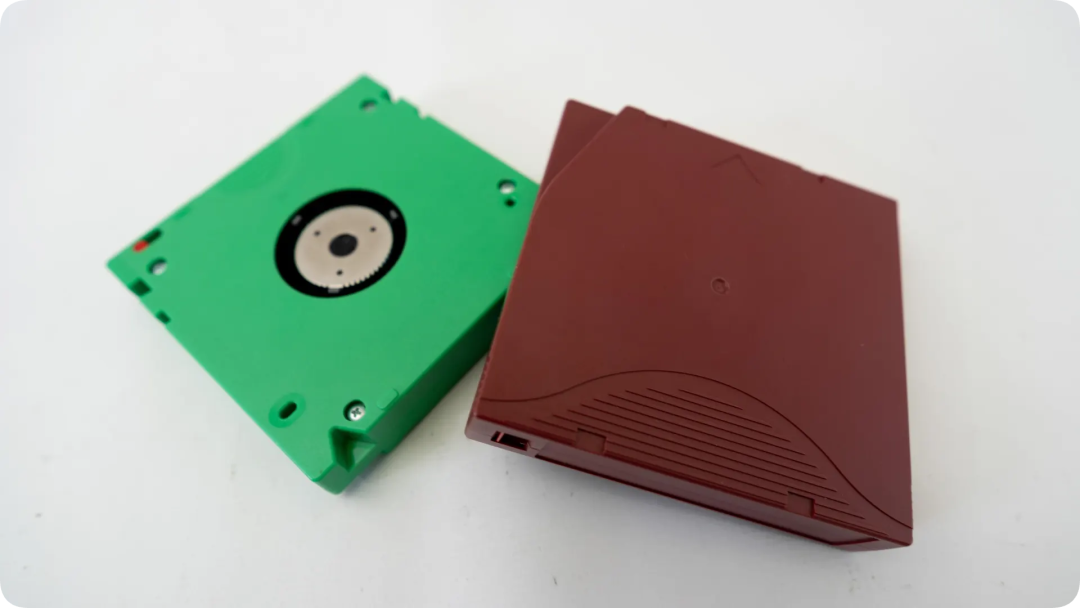
Image: LTO-10 30TB cartridge.
The 100TB number is compressed capacity; already-compressed video, images and model weights will not reach it. Meanwhile the physical cartridge is only about 10cm square and 2.15cm thick yet contains 1337 metres of tape — more than three laps of a standard athletics track.
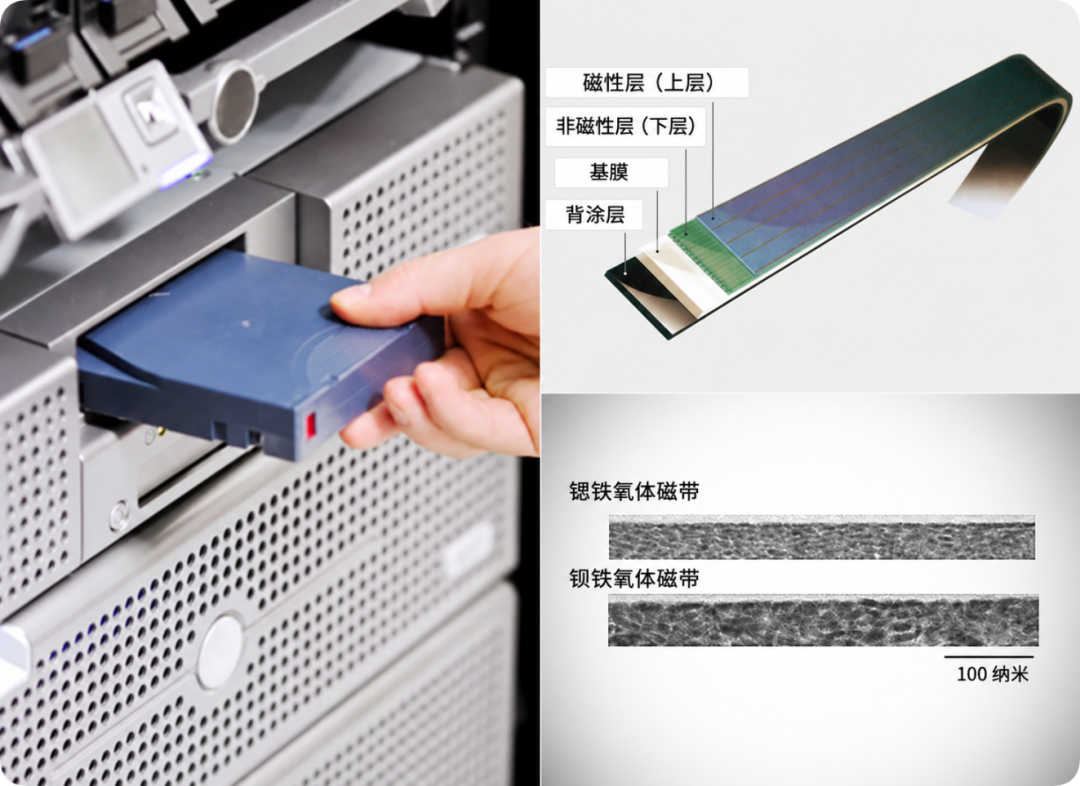
To fit all of it, Fujifilm used aramid film and thinner-layer manufacturing to bring tape thickness down to 4 micrometres, combined barium ferrite with strontium ferrite magnetic particles, and relies on linear snaking recording: picture a motorway with tens of thousands of lanes, where LTO-10 carries 15104 data tracks and the drive reads and writes 32 tracks at once. That is why Fujifilm's know-how from the past few decades — precision coating, film materials and magnetic particles — suddenly has AI-era commercial value.
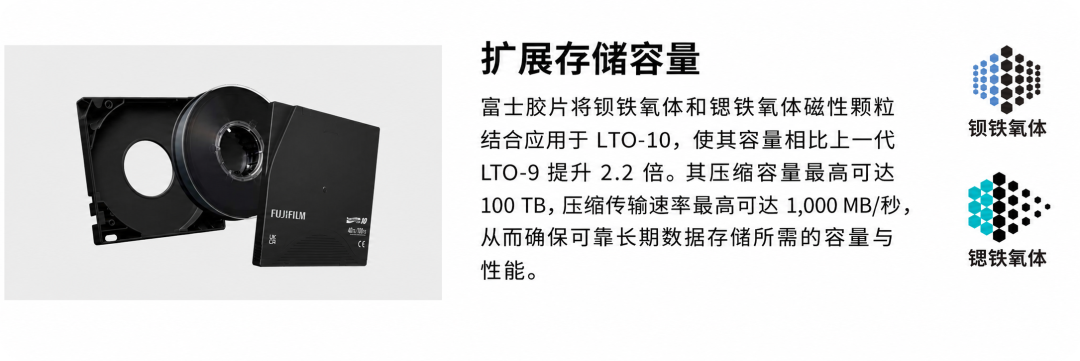
The ceiling is not in sight. In 2020 IBM and Fujifilm demonstrated 317Gb per square inch of magnetic recording density in the lab, implying 580TB per cartridge — 14.5 times today's 40TB product. That remains a laboratory result far from commercialisation. Worth noting: as of October 2026 the public LTO roadmap now targets 365TB native per cartridge at LTO-14, a revision down from earlier plans of about 576TB in the same unchanged cartridge shell — a reminder that roadmaps are incentives, not promises.
What do people get wrong about tape?
Conclusion: the misconceptions are mostly about timing and lifecycle, not about speed.
- "Rated for 30 years, so I can forget about it." Industry guidance puts LTO media archival life at roughly 30 years under controlled conditions, but operators still migrate every two or three generations. CERN data collected decades ago is the exception that proves the rule: the value case depends on being able to read it.
- "Compatibility is free." LTO-10 drives read and write only LTO-10 media, so an archive of tens of thousands of cartridges still needs old drives, verification and scheduled migration.
- "Compression doubles everything." The 2.5:1 ratio is an ideal case; dense, already-compressed AI artefacts rarely cooperate.
- "Tape is dead tech." Dead formats do not get fivefold capacity investment; they get obituaries — as Sony's optical archive learned.
- "Cloud archive tiers end the argument." Retrieval latency and egress charges turn the cheap tier into an expensive decision whenever the data is actually needed — and the data you must retain is precisely the data audits ask for, as the Panasonic AI upload incident showed.
Is tape the only "old technology" AI revived?
Conclusion: no. Hard disk drives tell the identical story, which is why the tape signal should not be read as a one-off bet.
This January Western Digital disclosed that its 2026 calendar year hard-drive capacity was effectively sold out, with long-term agreements from some large customers stretching into 2028.
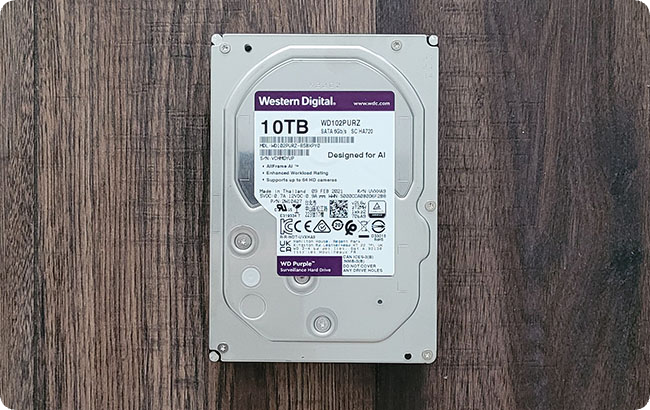
Seagate went further: on a late October earnings call the company said most nearline capacity was already allocated to 2028 under long-term agreements, and some cloud customers are contracted through 2030. Prices are rising alongside volumes.
The reason is simple. SSDs crush mechanical drives on random access, but for cloud operators keeping huge volumes online, hard disks still win on cost per TB. A growing AI industry needs tens of PB and hundreds of PB of affordable capacity — plus faster drives — because training sets, model files and generated content never stop accumulating.
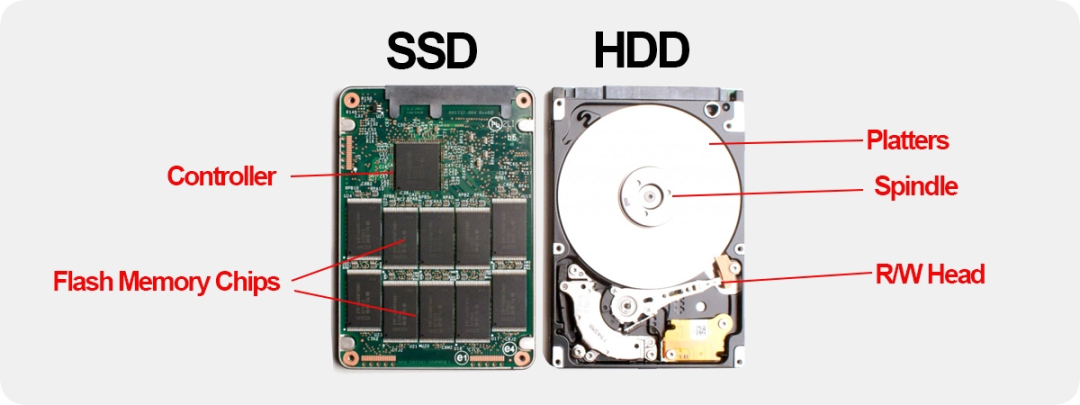
Hard drives have their own costs: rebuilding data on a failed multi-terabyte disk takes longer as capacities grow. But as long as price, density and access patterns fit the workload, mechanical storage stays. From Fujifilm's fivefold expansion to sold-out drive lines, legacy technology is finding new demand in AI data centres — an echo of the data-center-first shift in chip vendors' own revenue mix.
Could glass or optical media replace tape?
Conclusion: glass offers a genuinely different durability claim, but offers nothing on cost per TB or throughput today, so it is a rival for the far future, not for next year's budget.
In February 2026, Microsoft Research published Project Silica results in Nature: femtosecond laser pulses wrote data into 301 layers of borosilicate glass roughly 12cm square and 2mm thick, holding 4.8TB. Accelerated ageing tests suggest the data could survive for more than 10,000 years.
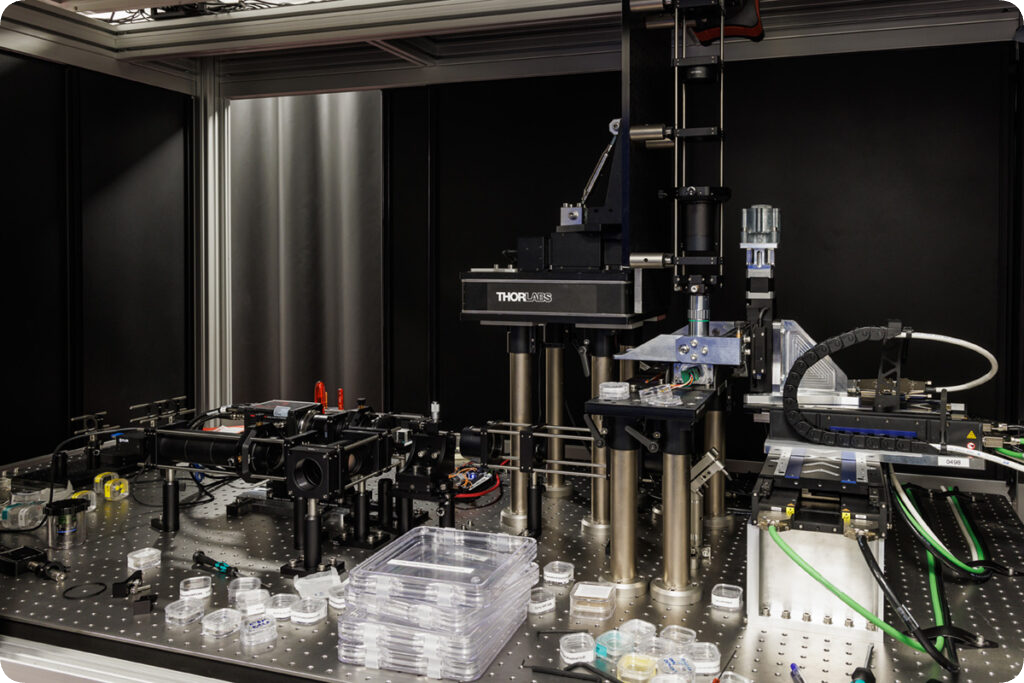
Microsoft's framing is that glass is water-, heat- and dust-resistant — but there is no commercial timeline, and no drive you can buy. The optical lane already collapsed: Sony's Optical Disc Archive, with 5.5TB cartridges rated for a century, was discontinued as of 31 March 2025.
So the AI-era storage picture is oddly poetic. One team is refining magnetic-particle coating that dates back decades to fit tens of TB into a palm-sized shell; another is etching data into glass the way Stone Age humans carved rock. While everyone chases faster GPUs and smarter models, the media that hold the results are having a boom. The windfall is not reserved for new technology — it goes to old craft that finds a place in a new cycle.
What should you actually do with your own cold data?
Conclusion: decide your retention promise first, then pick the medium. Five steps, in order:
- Classify. Label everything by access frequency: computing, frequently read, or archive-only. Master's tiering table above is a workable starting grid.
- Write a retention promise. State how long a dataset must remain readable, and who may ask for it (audit, retraining, legal).
- Convert access patterns into a medium. Random reads per hour means disk or SSD; one verification per year means tape or archive tier.
- Price the retrieval, not only the storage. Ask what a recall costs in time, egress fees and staff effort; an archive you cannot open is a liability, not an asset.
- Set a migration clock. Plan to move media every two or three generations, and test-restore a sample each year so the drive fleet and software stack stay exercisable.
Frequently asked questions
Is tape actually coming back, or is this one vendor's bet?
Both supply and demand point the same way: record 176.5EB shipped in 2024, 160.3EB in 2025, and a 57% year-on-year rise in the first quarter of 2026, alongside Fujifilm's investment at Odawara. A single supplier would not spend at this level into a declining category.
Why not just use the cheapest cloud archive tier?
Because tier prices hide two things — retrieval time and retrieval cost. For data you may need to reproduce, retrain from or produce in an audit, unpredictability is itself a risk, and offline media remove the electricity bill that online tiers charge you for.
Is tape safe against ransomware?
It is the most straightforward air gap available: a cartridge physically removed from the library cannot be reached by malware on the network. Sophos's State of Ransomware 2026 reported backup-based recovery in 66% of encrypted-data cases, up 12 percentage points year on year — the practice is being tested in anger.
How much does a cartridge really hold?
Today's top-grade LTO-10 media is 40TB native, theoretically 100TB at a 2.5:1 compression ratio, and laboratory demonstrations have reached the equivalent of 580TB per cartridge. The realistic answer depends on how compressible your payload is.
Sources
- Fujifilm — news release on expanding data-storage magnetic tape production capacity
- LTO Program / Business Wire — Q1 2026 tape capacity shipments up 57% year on year
- Tom's Hardware — LTO roadmap extends to 365TB per cartridge
- LTO Program — media benefits and archival-life guidance
- Computerworld — glass storage, tape lifecycle limits and Sony ODA discontinuation
- Sophos — State of Ransomware 2026
- Western Digital blog citing IDC Global DataSphere — 274 zettabytes created in 2026, rising to more than 718 zettabytes by 2030