
EU v. IBM, Atos and Leonardo: A Side-by-Side Read of the EES Border-System Lawsuit | ItInsightsWorld General
The agency that runs the European Union's large-scale justice and home affairs IT, EU-Lisa, has sued US technology company IBM and two European companies — French IT group Atos and Italy's defence contractor Leonardo — over repeated late delivery of the Entry/Exit System (EES). The claim targets development-stage slippage, not the live system, so the money argument moves to a courtroom while Europe's borders keep scanning. Below, the buyer's case and the builders' case are laid side by side, the contract trail from €142 million to €212 million is traced, and the practical takeaways are split by reader.
Internal correspondence and the agency's latest annual financial report, published this July, confirm that EU-Lisa lodged the claim in December 2025 in Estonia, the country where the agency is based. Harju County Court, the largest court of first instance in the country, has accepted the civil case; no hearing has been held or scheduled. The agency's own wording is deliberately narrow: "Given the multiple delays by the contracting consortium in delivering the EES system, the agency has launched the remedies available under the contract and legal framework in order to protect its financial interests."
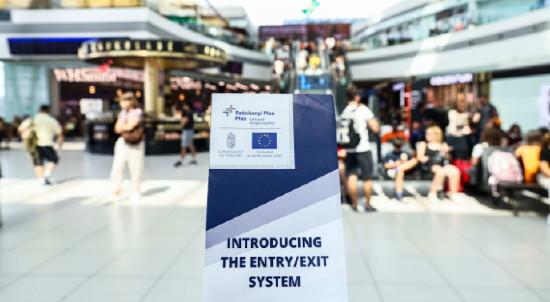
What is actually going to court — and what is not
Conclusion first: the litigation is a contract performance dispute, not an operational shutdown notice.
- In scope: the three companies' repeated failures to meet delivery deadlines, the warnings and penalties EU-Lisa issued in response, and the financial damage the agency says the slippage caused.
- Out of scope: the running system. EU-Lisa says the case "does not affect the operation of the Entry/Exit System (EES), which is now fully in use across Europe", and the European Commission underlined that the suit concerns "delivery delays during the development phase of the EES system" and is "unrelated to the actual operation of the EES system".
- Still open: who owes what. With no hearing scheduled, the case can be read as leverage as much as as judgement.
The corporate side is staying off the record: Leonardo and Atos declined to comment on the legal proceedings, and IBM did not respond to a request for comment. EU-Lisa likewise refuses to comment on the ongoing litigation, and has said the suit does not disturb how the system runs at the border.
How a 2019 contract became a 2025 lawsuit
Read chronologically, the file looks like a standard failure pattern for multi-year public IT programmes: the price moved first, the schedule moved second, the relationship moved last, and only then did lawyers move. Correspondence seen in the record shows the argument over missed deadlines and penalties has now been running for several years.
| Date | What the record shows | Signal for anyone signing a big IT deal |
|---|---|---|
| 2019 | EU-Lisa awarded the central EES build-and-run contract as a six-year deal to a consortium that included IBM Belgium, Atos Belgium and Leonardo, according to the agency's public ex-post contract notice. | Long fixed-cycle contracts are usually rewritten by reality before they end. |
| Pre-2021 | The system was originally due to go live in 2022. | A public target date becomes a liability once it slips twice. |
| 2021 | The total contract value was raised from €142 million to €212 million. | Scope re-pricing is an early warning, not a footnote. |
| October 2021 | Atos Belgium and IBM Belgium challenged penalties imposed by EU-Lisa, questioning "the principle and basis of the penalties and their calculation", and attributed the delay to "external factors" including the pandemic. | Penalty clauses need an agreed calculation method, or they become litigation. |
| Months later, in February 2022 | The three companies objected to EU-Lisa's newly set delivery deadlines and criticised the agency's "overall governance approach". | When both sides dispute governance, schedule talks stop working. |
| March 2022 | An IBM representative agreed that EU-Lisa could withhold part of the payments until the damages question was settled. | Cash withholding is often the first remedy that actually bites. |
| 2022 annual report | The agency reported it had "encountered difficulties with the contracting consortium responsible for implementing the EES system" and was assessing the "additional costs" of the delays, which also held back work on other information technology systems. | One late programme rarely stays inside one programme. |
| A year later | The agency said the slippage "increased the budget required for the implementation of the EES system", including rising hardware and software maintenance costs. | Delay converts into maintenance debt. |
| 2023 | By reallocating money from other projects, EU-Lisa nearly doubled the EES budget to €40 million. | Borrowing from sibling projects transfers risk, it does not remove it. |
| Last year | The original contract expired and a new business consortium took over EES implementation work; IBM, Atos and Leonardo continued to handle the job until this August. | Supplier handover is a multi-year event, not a switch. |
| This summer | Promotion of the system caused widespread disruption at airports across Europe. | Rollout risk is paid for by end users first. |
| December 2025 | The lawsuit was filed in Estonia; disclosed in the report published this July. | Remedies escalate in steps; litigation is the last step. |
Two versions of the same five years
Neither account is invented, and that is the point: the same timeline supports two different stories about responsibility.
| Question | EU-Lisa's position | The consortium's position |
|---|---|---|
| Why the delay? | Repeated late delivery of contracted milestones. | "External factors", among them the pandemic. |
| Are penalties valid? | Warnings and fines were issued under the contract. | Challenged both "the principle and basis of the penalties and their calculation". |
| Are deadlines realistic? | New delivery dates were set in early 2022. | "It is not wise to ignore reality, nor does it help the realisation of the plan. On the contrary, working to unrealistic plans will only frustrate all stakeholders." |
| Who governs badly? | The contractor failed to perform. | The agency's "overall governance approach" is criticised. |
| Who pays? | Budget had to be reallocated, nearly doubling EES spending to €40 million in 2023. | Payments may be withheld only until damages are resolved, as agreed in March 2022. |
Four remedies compared: what each one buys and what it costs
For readers who buy or sell technology services, the useful part of this dispute is the escalation ladder itself.
| Lever | What it delivers | What it costs | When it fits |
|---|---|---|---|
| Late-delivery penalties | Fast, contractual, no court time. | Triggers disputes over basis and calculation, as in October 2021. | Milestones and evidence are unambiguous. |
| Withholding payment | Immediate cash pressure; the March 2022 letter shows suppliers will accept it. | Freezes co-operation and can stall delivery further. | Damages are plausible but unquantified. |
| Replacing the supplier at contract expiry | Preserves continuity; here a new consortium took over last year while the incumbents remained until this August. | Slow, knowledge-intensive, risky at handover. | The programme cannot be paused. |
| Litigation | Fixes liability and deters future behaviour. | Years of cost and no remedy until judgement; this case still has no hearing date. | Contractual remedies are exhausted and money at stake is large. |
What the delays looked like on the airport floor
The rules are simple; the queue math was not. Under the new Entry/Exit System, travellers arriving from outside the Schengen area must give fingerprints and have a facial photograph taken at first entry, so that authorities can identify people who overstay their visa or are sought by law enforcement. The Schengen free-travel area spans 29 European countries, most of them EU members.
The system was scheduled to launch in 2022 but only came fully into use this year. Rollout was dogged by software and hardware faults, including fingerprint scanners that malfunction when fingers are sweaty, producing queues of several hours at airports across Europe. Some EU countries are still buying the scanning equipment today. Two dates from public EU guidance sharpen the contrast with the design promise: the phased start took place on 12 October 2025, with full coverage of land, sea and air borders required by 10 April 2026. Days after that full implementation, air-industry bodies reported average queues of two to three hours at airports in 15 countries, according to reporting by TIME in August 2026 — a gap between modelled seconds per traveller and observed hours per terminal that any reader can use as a sanity check on vendor claims.
Does EES still fit your trip? A quick trade-off check
- Short leisure or business trip into the Schengen area: the system adds time at the border, but registration is free and, per GOV.UK entry guidance, children aged 11 or younger are not fingerprinted, so the friction is predictable rather than prohibitive.
- Tight connections and peak-season travel: treat the border as the riskiest leg, not the flight; this summer's disruption came from processing capacity, not from airline schedules.
- Repeated travellers: after first registration, later crossings are faster, since biometric data is kept for three years under the EU's published guidance.
- Anyone expecting a pre-authorisation step next: the companion ETIAS scheme has lost its published start date, with the EU's official portal currently showing no proposed commencement date, per the immigration-law briefing by Fragomen.
The security thread the lawsuit does not settle
Separate from delivery, the project has faced cybersecurity allegations. Reporting last year said Atos used its Moscow office to procure software for this sensitive border management system. EU-Lisa's response was that no security vulnerability or security incident had been found. The European Anti-Fraud Office (OLAF) considered the allegations to have "sufficient grounds" for further investigation, and said that if Russian involvement in the project were confirmed, it would amount to a breach of contract. Yet an internal report shows that OLAF, while judging EU-Lisa's initial assessment "not adequate", ultimately handed the case back to the agency. For readers comparing incidents across Europe's critical systems, the pattern is familiar: procurement chains are audited long after deployment, as our review of the French plasma-freezer intrusion illustrates.
Cost pressure is not a border-only story
EES is one example of a wider arithmetic problem: infrastructure budgets drift upward while delivery dates drift later. The same logic appears in energy, where the EU's own infrastructure monitoring work points to consumer grid fees rising sharply over the next decades, as our breakdown of the ACER report explains. Read together, the two stories support one judgement: in public mega-projects, the first thing to be renegotiated is the schedule, and the second is the price.
Common misconceptions
- "The lawsuit suspends the border system." No — EU-Lisa says it "does not affect the operation of the Entry/Exit System (EES), which is now fully in use across Europe".
- "IBM is being sued for airport queues." The European Commission frames the case as "delivery delays during the development phase of the EES system", "unrelated to the actual operation of the EES system".
- "The same three companies still run the project." The original contract expired last year and a new consortium took over, though IBM, Atos and Leonardo remained responsible until this August.
- "EES is a visa or an entry permit." It is a registration record for short stays; it does not replace a passport check.
- "Only one side is documented." The correspondence shows arguments on both sides, including the February 2022 criticism of the agency's "overall governance approach".
FAQ
Why was the case filed in Estonia?
Because that is where EU-Lisa is based: the agency confirmed in December 2025 it had sued in its home country, and Harju County Court has accepted the civil case without scheduling a hearing.
Is this about a fixed price or about damages?
The documented record covers both: a contract value raised from €142 million to €212 million in 2021, later budget reallocations to €40 million in 2023, and a March 2022 letter in which an IBM representative accepted withheld payments pending resolution of damages.
Do travellers pay for EES registration?
According to published entry guidance, EES registration carries no fee, and fingerprints are not taken from children aged 11 or younger.
Does the case prove that big public IT projects fail?
Not by itself. It shows a predictable escalation path — penalties, withheld payments, supplier replacement, then litigation — which is why it is useful as a contract-design reference rather than as a headline about failure.
Action checklist
- Travellers entering the Schengen area this season: budget extra time at first entry, and use official EU pre-registration channels only — the "Travel to Europe" app can be used up to 72 hours before arrival but does not yet cover every destination.
- Carriers and corporate travel teams: plan for peak-day processing capacity, not average processing time; the discrepancy between the two is what produced this summer's queues.
- Public-sector buyers: write the penalty calculation method into the contract before signature, and define what evidence counts as a missed milestone.
- Suppliers and integrators: log the causes of slippage contemporaneously; "external factors" arguments are only credible when the paperwork exists from the month in which they happened.
- Both sides: treat supplier handover as a scheduled programme phase — here it spanned from contract expiry last year to the incumbents' departure this August.
- All readers: separate the operational question ("is the system working?") from the contractual one ("who pays for the delay?") — this case turns entirely on keeping those two apart.
Written by James Hartley for ItInsightsWorld (IT Insights), General desk. For corrections or editorial questions, contact contact@itinsights.com.
Sources
- EU-Lisa public ex-post contract notice, listing the EES consortium led by IBM Belgium — eulisa.europa.eu
- GOV.UK, Spain entry requirements (EES registration free; children 11 or younger not fingerprinted) — https://www.gov.uk/foreign-travel-advice/spain/entry-requirements
- Brussels Airport, EES registration guidance (self-service kiosks, under-12 fingerprint exemption) — http://www.brusselsairport.be/en/passengers/your-travel-planner/ees
- TIME, "What's happening with the EU's Entry Exit Scheme?" (ACI Europe queue figures after full implementation) — https://time.com/article/2026-08-12/eu-europe-travel-entry-exit-system-ees-passport-biometric/
- Euronews, EES rollout timeline and Travel to Europe app pre-registration window — euronews.com
- Fragomen, ETIAS launch delayed and no confirmed commencement date — https://www.fragomen.com/insights/european-union-european-travel-information-and-authorisation-system-etias-launch-delayed.html