
Cold Chain Under Attack: The EFS Plasma Freezer Hack Compared With Europe’s Supermarket Outages
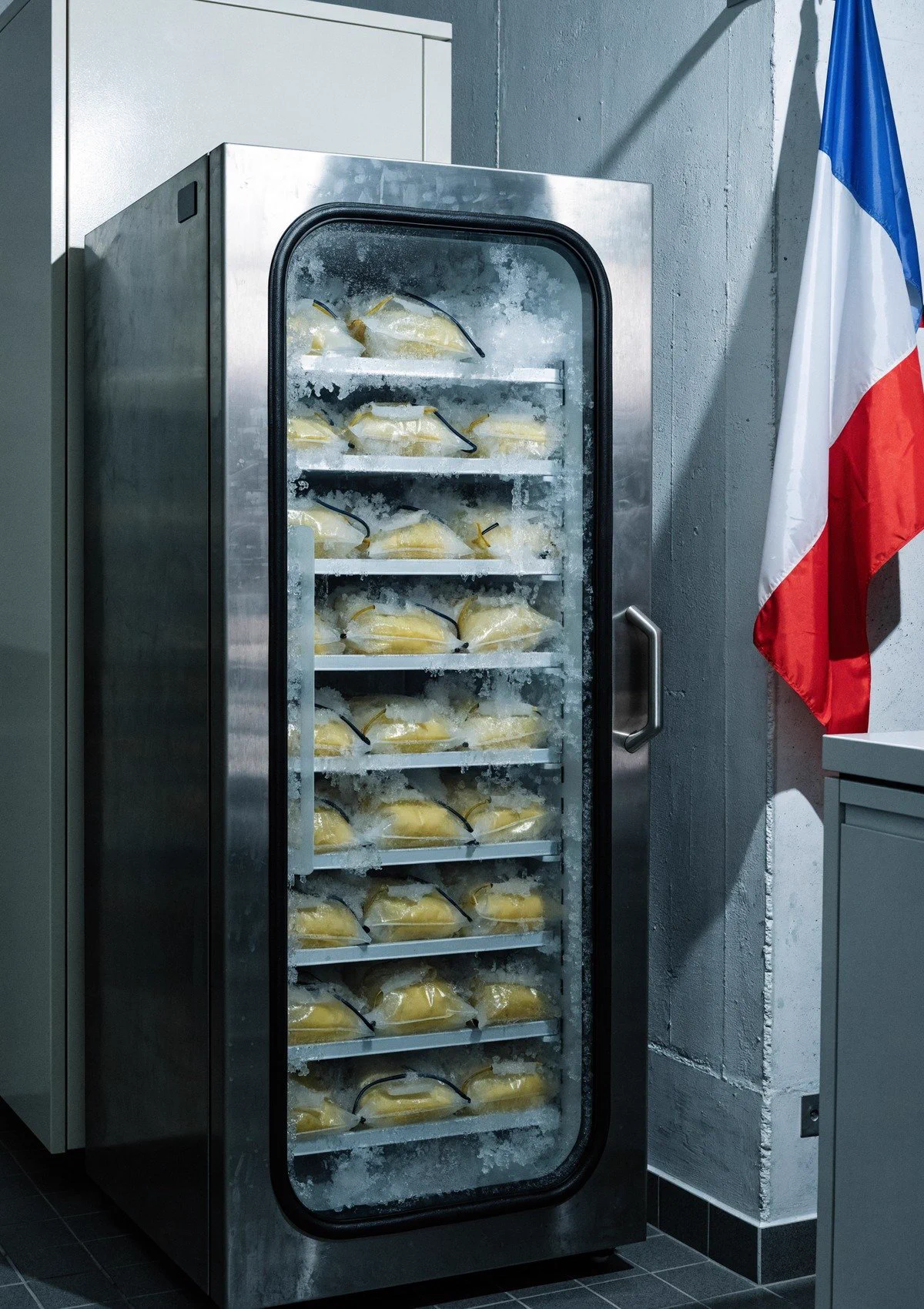
Between the night of November 1 and November 2, local time, attackers reached cold rooms run by the French blood agency EFS through its refrigeration contractor CoolWorld and pushed a setpoint from -30°C to 110°C. Alarms fired, staff moved the plasma, and EFS reported no product loss and no health impact. The useful lesson is not the drama; it is how a blood bank and a supermarket cabinet differ in risk, and which controls actually pay for themselves.
For general readers, this incident is the clearest sign yet that the cold-chain wave that hit food retail has moved up the value chain into healthcare. For operators of any temperature-controlled room — pharmacy, restaurant, laboratory, hospital — it is a checklist that now has a live reference case attached.
What exactly happened at the French blood agency EFS?
The short answer: an intrusion into a maintenance supplier became a physical-world attempt to heat storage that must stay frozen.
The refrigeration supplier CoolWorld, which services storage equipment used by the French blood agency EFS, was hit by a cyberattack, and the impact spread to plasma cold rooms at multiple sites across France. Attackers used a remote path to modify temperature and defrost thresholds in the monitoring and control systems, raising the target temperature of some cold rooms from -30°C to 110°C. The event unfolded between the night of November 1 and November 2, local time.
Monitoring and alarm systems spotted the anomaly quickly. Staff then took emergency measures, relocating the plasma or otherwise securing what was stored, so the contents were not destroyed by heat. EFS said afterwards that no health impact was found and no blood products were lost. The French cybersecurity agency, French police and French health authorities have all opened investigations, and as of the reporting of this article no hacker group had claimed responsibility and the motive remained unknown.
Why the stakes were high is worth spelling out for readers outside the sector. The cold rooms hold plasma used for transfusion as well as plasma destined for fractionation into medicines, and EFS itself handles collection, preparation and distribution of blood within France. The European Blood Alliance describes EFS as a public body created in January 2000 and the sole civilian blood transfusion organisation in the country, supplying some 1,900 healthcare facilities. Blood-bank storage guidance also puts deep freezers at -30°C or colder for frozen plasma and other frozen components, so the original setpoint in this attack was not an arbitrary number — it was the margin between a usable product and a discarded one.
Did the freezers really reach 110°C?
No — and this distinction matters more than the headline. The 110°C figure is a requested value inside the control system, not a measurement of what the room or the plasma became. As The Register put it in its analysis of the incident, reports that attackers changed cold-room settings from -30°C to 110°C do not establish that the equipment or its contents reached that temperature. Authorities have not published how many units were touched, how far the temperature actually climbed, or for how long.
Four misconceptions this story keeps generating
- “A 110°C setting means the plasma was cooked.” A setpoint is an instruction to a controller. Compressors, insulation and physical limits slow the rise — which is precisely why the on-duty crew had time to act.
- “EFS got hacked.” The intrusion path described in the reporting runs through the service supplier that maintains the equipment, not through the hospital network.
- “No loss, no damage.” Frozen plasma is a one-way ticket: thaw once and clotting factors degrade, so product must be moved or quarantined, not simply cooled back down. Blood-bank storage references exist for exactly this reason.
- “An alarm system solves it.” Alarms tell you something is wrong; they do not block the command that made it wrong. Prevention has to sit in access control and parameter limits.
How does this compare with the supermarket refrigeration attacks?
Conclusion first: the retail wave and the blood-bank incident share the same technique, but they differ sharply in detection time, irreversibility and who absorbs the cost. Supermarket cabinets in France and other European countries were attacked repeatedly before the EFS incident. Attackers switched refrigeration units into defrost mode remotely, taking temperatures from a steady -18°C up to 50°C, and stock that thawed had to be destroyed under food-safety rules. Industry reporting ties those campaigns to internet-exposed refrigeration controllers from vendors such as Danfoss and Copeland/Dixell, with hundreds of French stores affected in early October 2026 and dozens more shops in at least seven European countries hit over the same November 1–2 window as the EFS attack.
| Dimension | Blood bank cold chain (EFS) | Supermarket cabinets (France and other European countries) |
|---|---|---|
| Value attacked | Donor samples for transfusion safety testing and frozen plasma for patients and for medicine manufacturing | Fresh produce, meat, dairy and frozen goods on sale |
| Setpoint move | From -30°C to 110°C, plus altered defrost thresholds | From -18°C to 50°C via continuous defrost |
| Discovery | Monitoring and alarm system triggered a night-time response | Frequently discovered hours later, when staff opened the store |
| Outcome | Plasma relocated or protected; no loss or health impact reported | Widespread spoilage, product destroyed, some stores trading short |
| Reversibility | Low: thawed plasma cannot be refrozen for transfusion | Low: thawed food must be discarded, not discounted or donated |
| Who pays | Public health system and patients; scarce product | Retailer margin, supplier warranty, ultimately shelf prices |
| Dominant weakness | Supplier remote access into monitoring and control systems | Legacy controllers that were never patched or segmented |
Read across the table and the trade-off becomes obvious. Retail losses are measured in money and restocked within a week. A blood-bank loss is measured in patients who cannot get a transfusion, and it cannot be bought back from a wholesaler. That asymmetry is why the medical incident ranks higher in severity even though it caused, on the official account, zero loss.
Why was a service supplier the way in?
Because remote maintenance is cheaper than a technician van. Large operators face statutory temperature-monitoring duties, and letting a contractor adjust and read cabinets from a control platform beats walking store to store. The same convenience is what lets an attacker who owns the contractor’s credentials reach every downstream site in one action.
The patching history removes any excuse of novelty. On May 20, 2025 the U.S. cybersecurity agency CISA published advisory ICSA-25-140-03 on the Danfoss AK-SM 8xxA series, describing an unauthorised-access vulnerability caused by date-and-time-based password generation that can lead to authentication bypass; vendor notice DSA-2025-03-01 shipped the fix in release R4.2, with R4.3.1 addressing a second flaw. Claroty’s Team82 research team returned to the same platform in a study titled “Freeze the Controller, Defrost the Food”, documenting a “code-of-the-day” backdoor-style password and the slow uptake of the updates. In other words: the flaw was known, a fix existed, and fleets of controllers stayed reachable anyway.
The French cybersecurity agency responded with advice operators have heard before: connect refrigeration equipment only over a secure, encrypted VPN or another protected link, install firmware updates, and change passwords. The wider point, made in guidance from CISA and echoed by analysts following the supermarket cases, is sharper: remove remote access where it is unnecessary, and where it is necessary route it through a centrally managed gateway with phishing-resistant multi-factor authentication. One caveat should be carried honestly: neither the French cybersecurity agency nor the equipment vendors have publicly said which specific vulnerability was used in the attacks on shops within France or at the blood agency.
Which countermeasure is worth the money? A trade-off comparison
There is no single right answer, only answers matched to budget, staff skills and how unforgiving your inventory is.
| Control | What it blocks | Cost and effort | Blind spot | Best fit |
|---|---|---|---|---|
| Encrypted VPN or protected link for equipment access | Credential theft on the public internet, eavesdropping | Low cost, moderate configuration work | Useless once contractor credentials are stolen | Any site with a remote-managed controller |
| Firmware updates and default-password changes | Known vulnerabilities such as the 2025 controller flaws | Near-zero cash, real scheduling hassle | Devices past end-of-support never get patched | Retail and multi-site facilities estates |
| Network segmentation for building systems | Lateral movement from office IT to controls | Higher cost, needs an integrator | Vendor backdoors that dial out by design | Hospitals, labs, blood storage |
| Hard parameter limits (max defrost duration, locked setpoint range) | The command itself, even if it is authorised | Low cost, one-off engineering change | Can be disabled by privileged accounts | Any operation handling irreversible goods |
| Independent temperature alarm plus rate-of-rise alarm | Silent failures and slow drift | Low cost, ongoing attention needed | Detects, never prevents | All, as the minimum line of defence |
| Contract terms: breach notification, credential rotation, access logs | Supply-chain exposure you cannot see | Negotiation time, no hardware | Only as strong as your audits | Everyone using a maintenance supplier |
The order most operators should follow is cheap-first: parameter limits and a second, independent alarm on day one; VPN, MFA and credential rotation with the supplier within a month; segmentation and equipment replacement planned over the budget cycle, starting with the oldest controllers still in service.
What should you do next if you run cold storage?
A short, doable list rather than a strategy paper.
- Inventory every temperature controller that can be reached remotely, including ones your contractor administers. If nobody can produce that list, assume the exposure exists.
- Verify firmware versions against vendor advisories; treat 2025-era controller flaws as the test case for whether your patch process works.
- Close remote access you do not need, and move the rest behind a managed gateway with phishing-resistant MFA.
- Lock setpoints and defrost windows so a single command cannot push a room from -30°C toward a boiling value.
- Run two alarms: the controller’s own, plus a standalone sensor with a rate-of-rise trigger and a named person on call at night.
- Write the transfer drill down. In the EFS case, staff who could move or protect the plasma turned an intrusion into a non-event; rehearse the same routine for a 2 a.m. failure.
- Add supplier clauses: notification within hours of an incident, shared access logs, annual credential rotation.
- Report suspicious temperature incidents to the national cybersecurity authority early — investigation is slower when every party waits for proof.
FAQ: cold-chain cyberattacks, answered
Can hackers really boil blood plasma?
They can issue the instruction; heat transfer decides the rest. In the EFS incident the requested value was 110°C against a normal target of -30°C, but no product was destroyed because the anomaly was detected and the plasma was moved.
Is donated blood in France still safe after this?
Nothing in the reporting suggests otherwise. EFS states that no health impact was identified and no blood products were lost, and the agency’s testing and distribution operations within France continue. The attack is a reminder of fragility, not evidence of a supply failure.
Why would anyone attack a freezer instead of a bank?
Because control platforms are poorly defended and cheap to enter, and physical consequences are immediate. Retail attacks also generate disruption with no ransom note, which makes motive hard to read — French investigators still had none publicly attached to this case.
Does this affect me if I only run a small shop with display fridges?
Yes, if those fridges sit on a shared contractor platform. Ask who can change your defrost schedule from outside your premises, and whether that account uses a unique password.
What is the single most cost-effective fix?
A parameter limit plus an independent alarm. Both are inexpensive, and between them they remove the worst case and shrink the response window.
Where this account comes from
- The Register, analysis of the EFS incident and the setpoint-versus-actual-temperature distinction (November 4, 2026).
- CISA ICSA-25-140-03, Danfoss AK-SM 8xxA Series advisory, published May 20, 2025; Danfoss security notice DSA-2025-03-01.
- Claroty Team82, “Freeze the Controller, Defrost the Food”, on Danfoss refrigeration controller vulnerabilities.
- European Blood Alliance, country profile of the French Blood Establishment (EFS).
- Reporting on refrigeration attacks against supermarkets in France and other European countries, including AP and Reuters-sourced accounts of the defrost-mode campaigns.
Takeaway for readers without a technical brief: the attack surface is no longer the computer in the back office, it is the equipment that keeps things cold. Check what you can change remotely, then check who else can.