
DREAMSCAPE Cyber-G Pro: ItInsightsWorld's Step-by-Step Guide to Enya Music's Jeonghan and Joshua Limited Guitar
By Nina Roberts
Short answer: Enya Music's DREAMSCAPE Cyber-G Pro is a US$699 limited set built to be played rather than shelved, and the worldwide run stops at 2,366 sets. Preorders run November 10 to December 10, Enya says the edition will not be reissued, and the artist presence sits inside normal use — recorded voice prompts, an app skin, engraved names and a numbered back plate.
Why does a guitar drop need a buyer's checklist at all?
Because fan merchandise usually fails the same way: a logo gets applied to standard hardware, the box is opened once, and the object ends up behind glass. This set is worth checking precisely because it tries to avoid that ending — and the only real test is whether the attempt survives your own habits.
Picture the buyer's dilemma rather than the fan's. You hold a few dozen slots in a regional stock plan, an audience that already owns an entry-level smart guitar, and a supplier saying the run is capped and final. Do you take the allocation because the names move units, or pass because a guitar with 2,366 sets stamped across its back plate is still a guitar nobody in your market has played yet?
Category numbers explain why brands keep making this bet. MIDiA Research charts music merchandise heading toward US$16 billion by 2030, while Dataintelo sizes artist merchandising at US$6.6 billion in 2025 and growing at about 6.5% a year. Guitars move slower: Technavio expects the global guitar market to add roughly US$1.96 billion between 2026 and 2030, a 6.6% annual pace. Merchandise grows faster than instruments — which is why a guitar brand borrows a fanbase, and why buyers should question the reverse claim. The pattern is familiar from artist campaigns we have compared before, including Calvin Klein's Holiday 2026 campaign with Jung Kook, where the product still had to work without the face attached.
What is actually in the box for US$699?
Conclusion first: you are paying for a working instrument plus collector packaging, and the hardware list is what decides whether the price holds.
The Cyber-G Pro pairs a silicone fretboard with LED-guided chords, a built-in looper and a removable keyboard module. The gift box adds a microphone, stand, gig bag and strap, along with collector items such as a certificate, a photo-set holder and a necklace. The product page lists the set at US$699, with preorders running November 10 through December 10, and it describes a preorder rather than an immediately available retail purchase; delivery timing varies by destination.
The customization continues after power-on. Jeonghan and Joshua recorded voice prompts in English, Japanese, Korean and Chinese, among them greetings and hidden audio moments, and according to Enya the recordings surface across operating steps and playing milestones. A dedicated DREAMSCAPE app skin carries the same identity onto a phone, so the partnership shows up during use rather than only in advertising. Recorded prompts are brand audio in miniature — closer to the discipline in Starbucks Holiday Blend's seasonal audio playbook than to a guitar spec sheet, and worth judging the same way: does it still work on the tenth listen?
Is it a numbered instrument or just packaging?
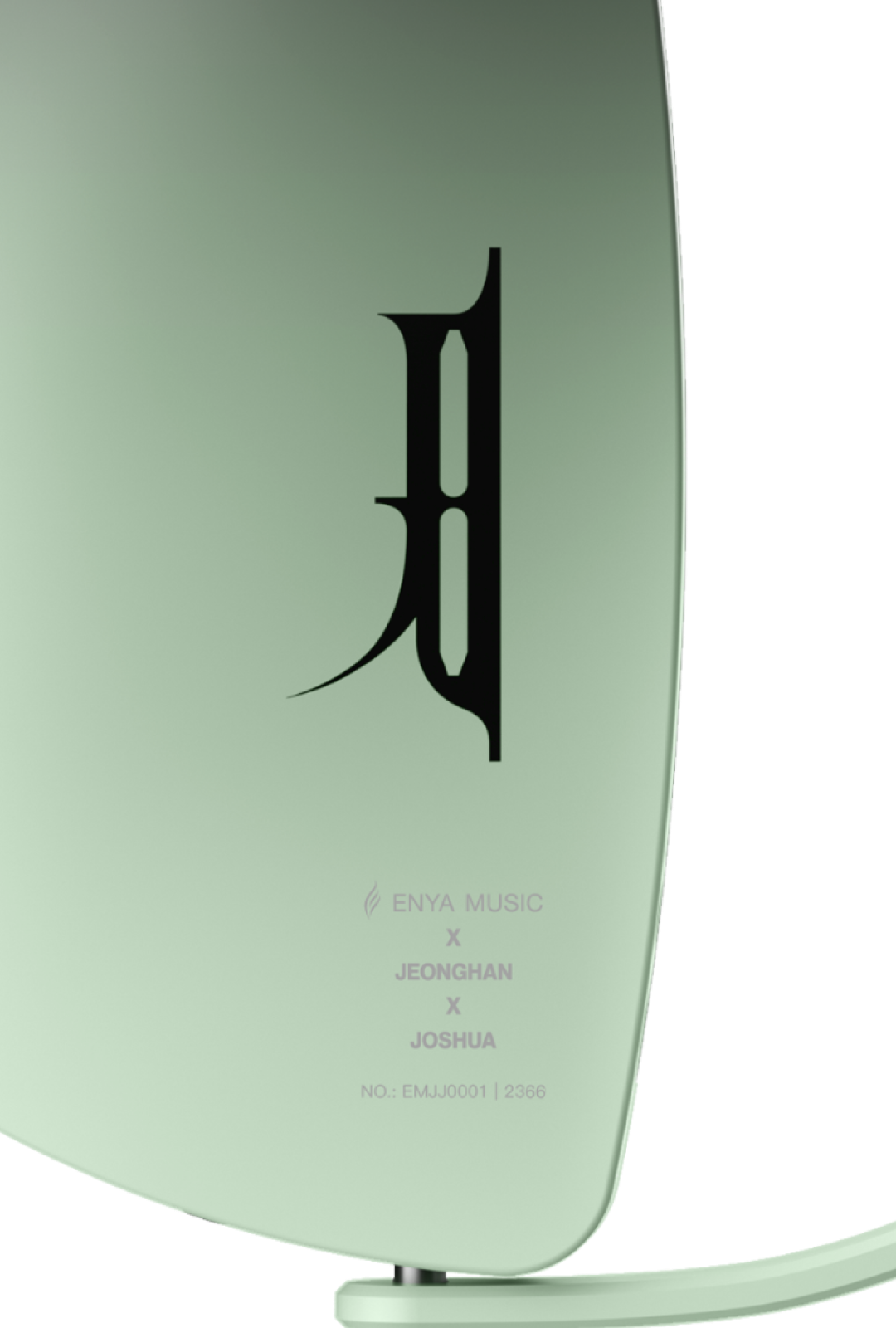
Both, and the distinction matters. Jeonghan and Joshua perform together as JxJ, a unit of SEVENTEEN, whose first mini album DREAMSCAPE arrived October 19. The guitar gives that release a physical extension: a gradient finish Enya describes as an interpretation of the album's palette and its play of light, with the artists' names and the collaboration emblem set beside an individual collector number on the back.
That number is a serial, not a valuation. It makes the 2,366 sets visible on each instrument, which is useful for provenance and useless as a price guarantee.
Adjacent campaigns run the same play with less utility: Skechers brings SEVENTEEN's drawings into its Moves with You campaign, with DK, Seungkwan and Dino adding personal drawings to Skechers apparel and footwear as the brand deepens its K-pop ambassador strategy, ContentGrip reported. Drawings sell a shoe; a fretboard that lights up chords has to survive weekly use.

How does it compare with the other US$699 options?
Conclusion: the set wins on bundled extras and artist content, loses on choice, and lands near what a serious beginner setup costs anyway.
| Option | What you pay | What you get | Best for | Main risk |
|---|---|---|---|---|
| DREAMSCAPE Cyber-G Pro gift set | US$699, preorder November 10 to December 10 | Smart guitar, microphone, stand, gig bag, strap, certificate, photo-set holder, necklace, four-language voice prompts, app skin | Fans who will actually play most weeks | Fixed spec, no reissue, delivery timing varies by destination |
| Standard smart guitar from the same brand | ¥3,699 suggested retail on Enya's own store | Light-guided chords, modular keyboard with eight instrument voices, app-led lessons | Buyers who want the hardware without the collector premium | No artist content, no gift-box items, no numbered plate |
| Conventional acoustic or electric | Market-dependent | No app, no light guidance, no recorded prompts | Players past the beginner stage | Needs lessons or an amp to go anywhere |
| Signed album or photo book | A fraction of the above | Print and paper | Display-only collectors | No use value beyond the shelf |
What are the steps to buy it well?
- Name the use case before the price. Write down where the instrument will live and how often it gets picked up. If the honest answer is a display case, the LED fretboard and looper are dead weight.
- Confirm your region and delivery window before paying. The listing is a preorder, and timing shifts by destination.
- Audit the box against what you already own. Microphone, stand, gig bag and strap are included, so the "complete setup" budget is smaller than it looks.
- Check the app side. Voice prompts and the DREAMSCAPE skin live inside Enya's app, so a spare phone or tablet matters more than a spare cable.
- Choose learner mode or player mode. Light-guided chords help beginners; the looper and MIDI output matter to people who already record.
- Register the collector number and file the certificate with the order confirmation.
- Set a resale expectation before checkout, not after. A capped run is a supply statement, not a return.
Which mistakes do buyers make most often?
- Reading 2,366 sets as scarcity value. It is a supply fact; demand is unproven, and Enya has not disclosed sales or engagement results for this edition.
- Buying the collaboration as a first guitar without testing the app. Software-led instruments live or die by update cadence.
- Treating recorded voice prompts as ongoing content. Greetings and milestone clips are charming; they are not a lesson plan.
- Assuming the standard model and the collab share a price ladder. They do not: one is a ¥3,699 line item, the other a US$699 set with extras.
- Missing the December 10 cut-off and paying a reseller instead.
- Forgetting shipping, duty and plug standards for the electronics in the box.
Does the cost math work out?
Run the multiplication and the commercial logic gets clearer: 2,366 sets at US$699 gives a theoretical ceiling of roughly US$1.65 million in gross preorder value if everything sells, before regional pricing, freight and retail margin. That is a modest number for a global campaign, which suggests the edition is doing brand work as much as volume work. For one buyer, the useful comparison is not the ceiling but the alternative: US$699 buys the set, or a plain instrument plus a year of lessons, or a used guitar and a decent interface — only the first includes the microphone, stand, gig bag and strap.
The grounded figure is Enya's own. The standard Cyber G carries a ¥3,699 suggested retail price on the company's Chinese store, well below the US$699 set at recent exchange rates, so the premium buys packaging, artist recordings and a numbered edition rather than a different class of instrument. Enya's founder has framed the whole category as consolidation anyway. In a China Daily report on Huiyang's guitar industry published October 15, 2026, Hu Haiming described the goal as "one guitar as an entire band" — an argument that one instrument should absorb the roles that used to need extra gear and extra people. The DREAMSCAPE edition does not change that argument; it dresses it.
Frequently asked questions
Is the DREAMSCAPE Cyber-G Pro a real guitar or a collector's item?
It is designed as both. Silicone fretboard, LED-guided chords, a looper and a removable keyboard module make it a playable instrument; the certificate, photo-set holder and necklace are packaging on top of that.
When does the preorder close?
December 10, having opened November 10. The listing is a preorder rather than in-stock retail, and delivery timing varies by destination.
Will Enya restock it after it sells out?
Enya says the limited edition will not be reissued after it sells out. Treat that as the company's stated plan, not a legal guarantee.
Is it a sensible first guitar?
Only if the fan angle is worth real money to you. Light-guided chords lower the entry barrier, but the app dependency and the US$699 outlay make a plain instrument plus lessons the safer first purchase for most beginners.
Can I resell it later?
Nothing published guarantees resale value. A numbered run of 2,366 sets signals supply; it says nothing about what a buyer will pay in two years.
What should you do next?
If you are a fan who plays, decide before December 10, confirm your delivery window, and treat the certificate as paperwork rather than an asset. If you run a store, take a small allocation sized to your existing smart-guitar customers, not to the artist's follower count. If you simply want to learn guitar, skip the limited set, buy the standard hardware, and put the difference into lessons. Questions or corrections: contact@itinsights.com.
Reporting note: ContentGrow produced the original newsroom report behind this launch coverage; this guide reframes it around the buying decision.

Reference sources
- Enya Music official store, Cyber G product page: enyamusical.com
- MIDiA Research, "How big can music merch get?": midiaresearch.com
- Technavio, Guitar Market Analysis 2025-2029: technavio.com
- China Daily, "Huiyang's guitar industry gets smart, hits high notes," October 15, 2026: chinadaily.com.cn
- Dataintelo, Artist Merchandising Market: dataintelo.com