
ItInsightsWorld General: COP30 Deforestation Roadmap vs. Earlier Forest Pledges — What Changed, Who Objected, and the $300bn Gap
A voluntary plan, not a treaty: that is the quickest way to describe the COP30 deforestation roadmap, which Brazil's presidency published on 3 November. It lists 18 implementation approaches and puts the need at $300bn a year by 2030. 93 countries backed the idea, but the 196 parties required for consensus never signed on, so India, Russia and others stayed out.
That distance between broad endorsement and formal agreement is the useful part of the story. Read as a treaty, the roadmap is weak. Read as an operating manual for countries that already accepted the 2030 goal, it is more specific than anything that came out of the "Amazon" COP — and its finance arithmetic is the part most likely to be tested.
What is the COP30 deforestation roadmap — and why is it voluntary?
Short answer: it is a presidency-led document, not a legal instrument. It makes no new commitments and does not "seek to reopen agreed decisions". Its stated purpose is to "translate forest-related outcomes into coordinated, country-led action while respecting different national circumstances, priorities and implementation challenges".
The origin is procedural. Brazilian president Luiz Inácio Lula da Silva had pushed for a deforestation "roadmap" before the Belém summit, and used the leaders' meeting there — days ahead of COP30 — to launch two parallel processes, one on forests and one on the fossil fuel transition.
Support by the close of COP30 reached nearly 100 countries, the EU's 27 member states and the 56-member Coalition for Rainforest Nations among them. A separate count put 93 countries behind a demand to reference the roadmap in the formal negotiated outcome.
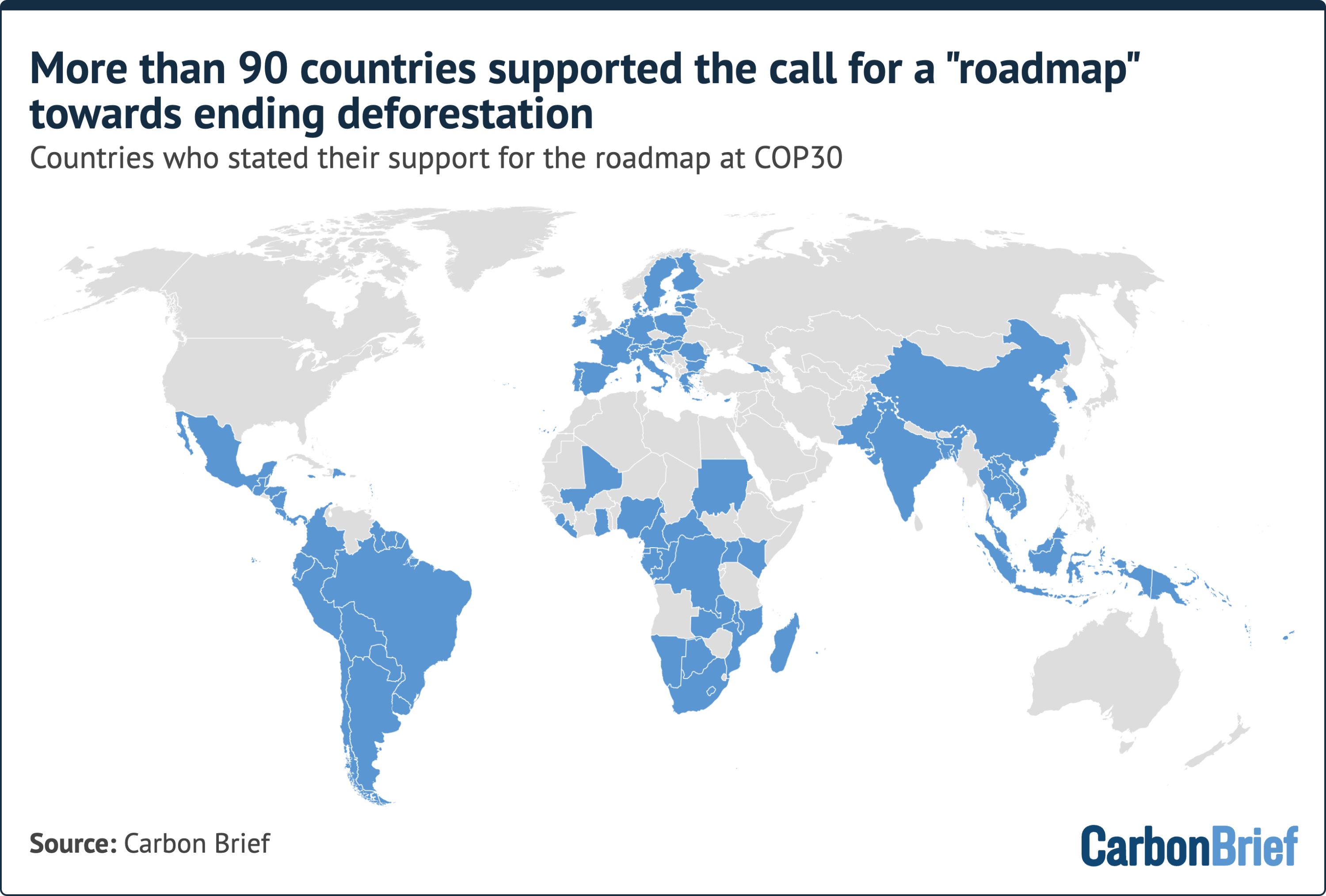
More than 90 countries backed a reference to the roadmap; formal consensus still required 196 parties.
Consensus, however, requires 196 parties, and that threshold was never met. When the summit closed, the presidency said the required consensus was lacking and that Brazil would instead build a voluntary roadmap outside the UN climate process. In the closing plenary, COP30 president André Corrêa do Lago confirmed the presidency would work on both the deforestation and fossil-fuel roadmaps outside the COP process.
Earlier pledges explain the gap between ambition and machinery. At UN Climate Week in 2014, 39 countries signed the New York Declaration on Forests and promised to end natural forest loss by 2030. At COP26 in Glasgow, more than 140 countries went further with the Glasgow Leaders' Declaration on Forests and Land Use, pledging to "commit to working collectively to halt and reverse forest loss and land degradation by 2030" — a formula that later produced disagreement over what had actually been agreed. Only at COP28 in Dubai did the goal enter a negotiated text, through the global stocktake.
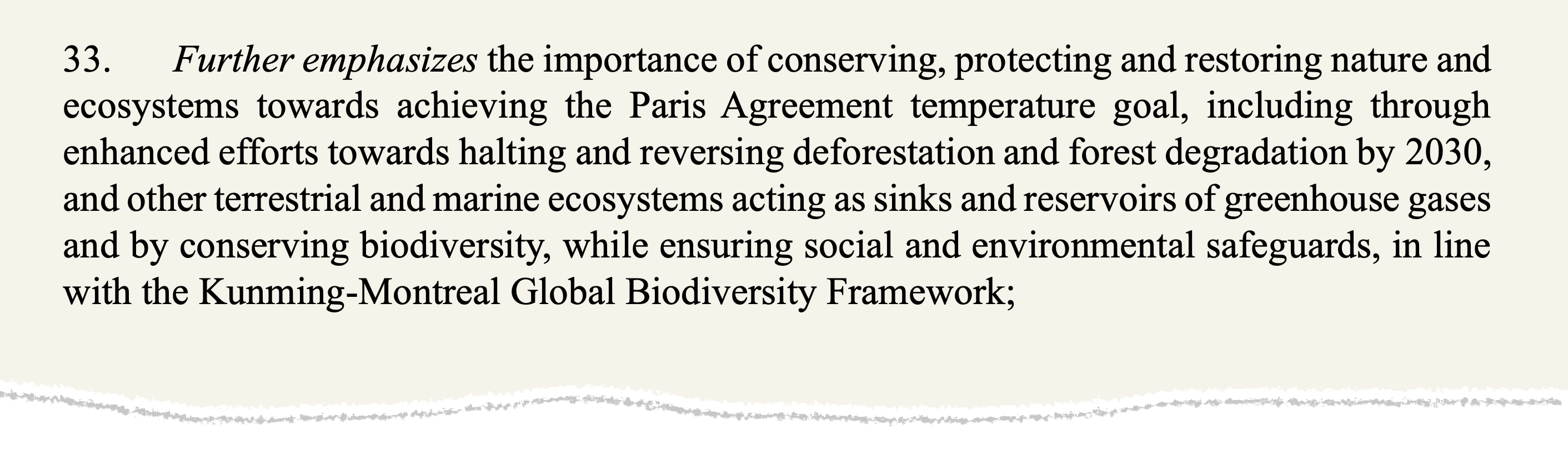
Forests in the Siang valley in Arunachal Pradesh, India.
| Instrument | When | Who signed | Status | What it added |
|---|---|---|---|---|
| New York Declaration on Forests | 2014 | 39 countries | Voluntary | First collective 2030 forest-loss target |
| Glasgow Leaders' Declaration | COP26 | more than 140 countries | Voluntary | Halt and reverse forest loss and land degradation by 2030 |
| First global stocktake | COP28, Dubai | Consensus of 196 parties | Negotiated | Goal written into agreed text |
| COP30 deforestation roadmap | 3 November | 93 countries urged inclusion; nearly 100 backed | Voluntary, outside COP agenda | 18 implementation approaches, finance framing |
The consultation record is worth reading closely. More than 200 contributions arrived, but only 18 came from governments and four from blocs — the EU, the Coalition for Rainforest Nations, the Alliance of Small Island States (AOSIS) and the Least Developed Countries (LDC) grouping. The secretariat role went to the Climate Policy Initiative.
Eighteen government submissions cannot bind the other parties, and the roadmap does not try. Its job is to organise commitments countries already made at COP28 and in the Kunming-Montreal Global Biodiversity Framework. That is also why the coordinator's answer to "who else will sign?" is essentially "nobody needs to".
What does the roadmap actually say?
It is more operating manual than master plan. Structurally, the document has three complementary parts — national action, international action and financial mechanisms — and each lists current instruments, the enabling conditions required, and "COP30 presidency proposals on the way forward".
The national section is organised around five "forest dimensions": keeping existing forests; using forests sustainably while generating value for communities; combatting degradation; combatting deforestation; and restoration, reforestation and afforestation.
From there come 18 policies, or "implementation approaches" — protected areas, recognition of Indigenous territorial rights, pest and disease management, and restrictions on permits for forest conversion among them. The text calls the list not an "exhaustive or prescriptive classification". Each entry summarises the evidence, gives country examples and sets out enabling conditions such as land governance and environmental education. A five-step process with "guiding questions" closes the national section.
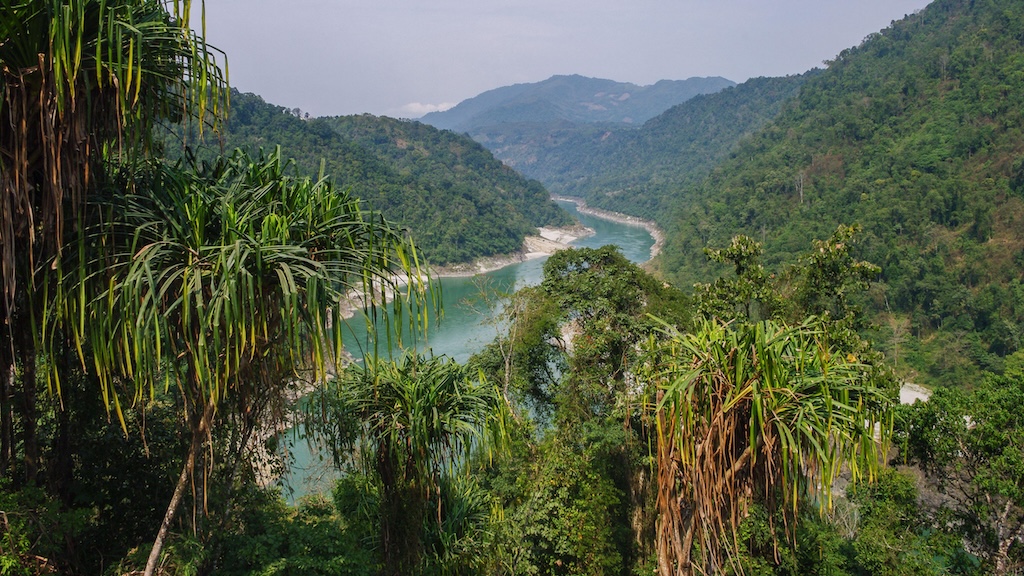
The roadmap lists 18 implementation approaches and stresses that the list is not prescriptive.
The international section argues that forests are governed in fragments: "Climate change, biodiversity, land degradation, Indigenous peoples and local communities' rights, ecosystem conservation and species protection are addressed through distinct international regimes, but their objectives and implementation intersect in important ways in relation to forests."
It points to global forest-monitoring initiatives but concedes that countries' capacity to use them "remains uneven", and calls for technical cooperation and capacity-building. On the two cross-border issues it addresses — crime and trade — it argues that trade measures rewarding compliance work better than those imposing "additional economic and administrative burdens on exporters", and proposes stronger capacity to investigate environmental crime plus trade policies that reward deforestation-free production.
At the launch in Brasilia — hosted by the UN Development Programme, less than a week before COP31 is due to begin — Corrêa do Lago pointed to Brazil's deforestation rate falling to its lowest level on record, a drop of more than 70% since 2022. "Even the optimists wouldn't believe that we were able to decrease deforestation" by that much, he said, describing the roadmap as a "living document" and a "practical pathway for climate action".
WRI's response made the same point from a different direction: the roadmap "calls for countries to set and lead their own approaches" (WRI statement, November 2026).
Civil society reaction was cautious. Kelly Stone, coordinator of the Climate Land Ambition and Rights Alliance, said: "The forest commitments in the first global stocktake and this roadmap process are important steps, but these commitments need to translate into actual urgent action on the ground." She added: "This roadmap needs to be taken forward in a process where countries are working together for rapid, ambitious action on the ground to address deforestation and degradation and protect food security. We cannot afford to wait."
How big is the finance gap — and who is expected to pay?
Finance is where the numbers get uncomfortable. The roadmap puts the need at $300bn per year by 2030; current finance reaches less than one-third of that. Almost all of the money is already public and already domestic: nearly 90% comes from domestic public finance, with forest countries devoting "substantial effort" to their own policies and budgets.
It then offers 10 proposals for action on forest finance — aligning domestic flows with forest action, benefits-sharing measures and a stronger place for forests in carbon markets. Its final line asks governments to "keep the collective dialogue going" until the second global stocktake in 2028.
That domestic share is the number to hold onto. The finance pillar is less about new international transfers than about redirecting budgets that already exist — a slower lever, and one that depends on political cycles rather than pledging conferences. Public climate finance pledges to developing countries fell more than 70% in 2026 to $11.7bn a year, as our COP31 climate finance guide sets out, which makes the roadmap's domestic emphasis easier to understand.
Donor submissions point the same way. The UK called for more "blended finance to de-risk private investment at scale" and high-integrity carbon markets; Norway spoke of the need to "repurpos[e]" harmful subsidies; Australia highlighted its controversial biodiversity credit and nature markets as a way of "restor[ing] and protect[ing] land and biodiversity and reduc[ing] emissions at the same time".
Does the latest forest data support the roadmap's premise?
Partly — and the caveat matters. Global Forest Watch data analysed by WRI shows tropical primary forest loss fell 36% from 2024 to 2025, after a record year driven by extreme fires (WRI Global Forest Review). A separate assessment puts tropical moist forest degradation at 3.5 million hectares in 2025, down 34% from the 2024 peak (Forest Declaration Assessment).
Read those two numbers carefully. A fall from a fire-driven record is not a structural decline. Russia shows why: from 2001 to 2025 it lost 65 Mha of tree cover to fires and 28 Mha to other drivers, according to Global Nature Watch (country dashboard) — and fire losses are exactly the category that swings year to year.
That is why the roadmap's insistence on monitoring and early fire detection is not bureaucratic filler. If a meaningful share of measured forest loss is fire and degradation rather than conversion, then permits, protected areas and trade rules only address part of the curve.
Why did India and Russia stay out?
India's resistance has both a history and a procedure. New Delhi has long been wary of top-down mitigation and land-use commitments, and it refused to sign the original Glasgow pledge at COP26 because "trade" was being tied to forests and climate action. In Belém it used its seat in the Like Minded Developing Countries bloc to oppose writing voluntary roadmaps, which sat outside the COP agenda, into the formal COP30 outcome.
The public line afterwards was warmer. Environment, forests and climate minister Bhupender Yadav told the Times of India that India "welcomes" the forest roadmap and "endorses" Brazil's Tropical Forest Forever Facility fund.
Russia moved first, and in writing, as early as April last year. It reaffirmed the Glasgow declaration and the first global stocktake, then rejected the format: it "does not support the development of a universal roadmap", because "…such initiatives are not mandated under the agreed international climate architecture and go beyond adopted decisions under the UNFCCC and the Paris Agreement." Trade was a second objection.
The country holds the world's largest boreal forests, and they are burning more intensely. In its submission it "underscored" that there is no "universally agreed, legally binding definition" of forest degradation, while adding that wildfires are a "key driver" of it.
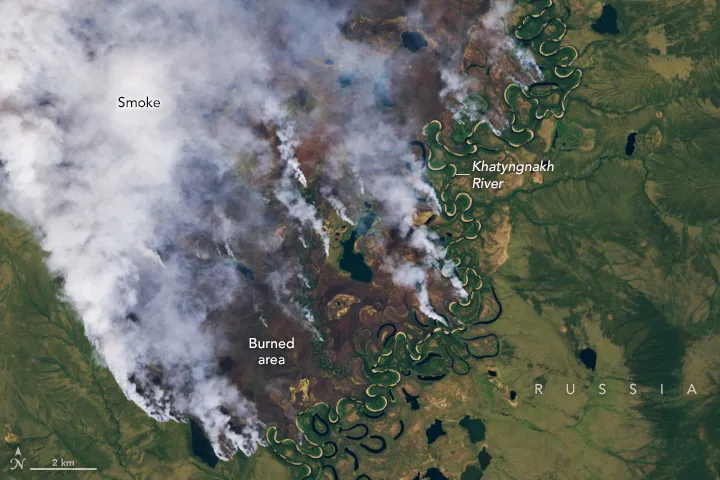
Wildfires in Yakutia, Russia, in July 2024.
Other countries were wary of new non-negotiated mitigation commitments crowding out items such as adaptation finance. Speaking to Carbon Brief at the recently concluded Yerevan COP17 nature talks, roadmap coordinator Marco Túlio Scarpelli Cabral argued that more sign-ups are beside the point: "All countries have already taken this [deforestation] commitment, both in the Kunming-Montreal [Global Biodiversity Framework] with some converging targets, but also in the global stocktake…" and "We have all accepted [it]. So we don't need any country to subscribe to the roadmap."
The first global stocktake, adopted at COP28 in Dubai, does emphasise "halting and reversing deforestation and forest degradation" in its mitigation section. That is the roadmap's foundation: it draws on agreed text instead of creating new obligations.
Corrêa do Lago framed this as a speed problem, not a legitimacy problem. At a press conference attended by Carbon Brief on 3 November, he said the presidency took the Dubai agreement as given and then looked for "instruments and ways to go ahead and take next steps", adding: "The climate change agenda is advancing faster than the negotiations [themselves], so we restructured the agenda."
| Country or bloc | Position | Stated concern |
|---|---|---|
| EU (27 member states) | Backed the roadmap | — |
| Coalition for Rainforest Nations (56 members) | Backed; submitted input | "a clear financial assessment of the total funding required to halt forest loss" |
| India | Stayed out; later "welcomes" | "trade" linkage; top-down land-use commitments |
| Russia | Objected | No UNFCCC mandate; no agreed definition of degradation |
| AOSIS and LDC | Submitted input | Monitoring, mangroves, predictable finance |
What barriers do countries actually report?
The short answer: the barriers are national, not universal. The presidency's February 2026 call for submissions asked what blocks implementation and what support is needed, and the replies ranged from political strife to wildfires and reliance on firewood during an energy crisis.
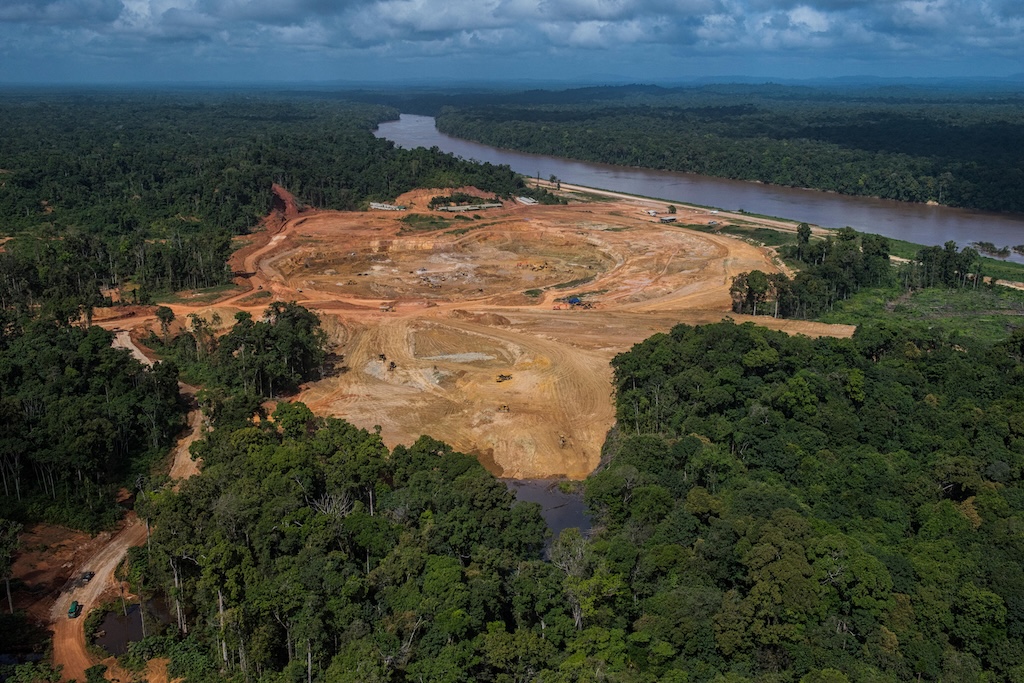
Submissions described overlapping barriers rather than one global bottleneck.
Guyana and Suriname made the same point in different words: standing forests are undervalued next to "pressures from extractive industries" such as mining and agriculture, so keeping them "forests intact" loses out. The EU, Switzerland and Mexico pointed to agricultural expansion as a driver of forest and pasture loss. Norway and Mexico noted that illegal logging can pay better than conservation. Canada and Russia both flagged an "inconsistent definition" of forest degradation.
Finance access was a recurring complaint. Suriname and Azerbaijan, both heavily forested, asked for "predictable" and "affordable" access to climate finance, and the Coalition for Rainforest Nations called for "a clear financial assessment of the total funding required to halt forest loss". Donors leaned the other way: the UK pushed blended finance and carbon markets, Norway pointed to subsidy reform, and Australia cited nature markets.
On measurement, AOSIS, Armenia and Azerbaijan all asked for technical help, satellite monitoring of restoration included. Canada, Indonesia, Russia, Azerbaijan and Australia cited intensifying wildfires and asked for early detection systems and support for monitoring fires in remote areas. AOSIS wants coastal mangroves and inland terrestrial forests written into the definition of forests, pointing out that climate-driven impacts are already degrading mangroves.
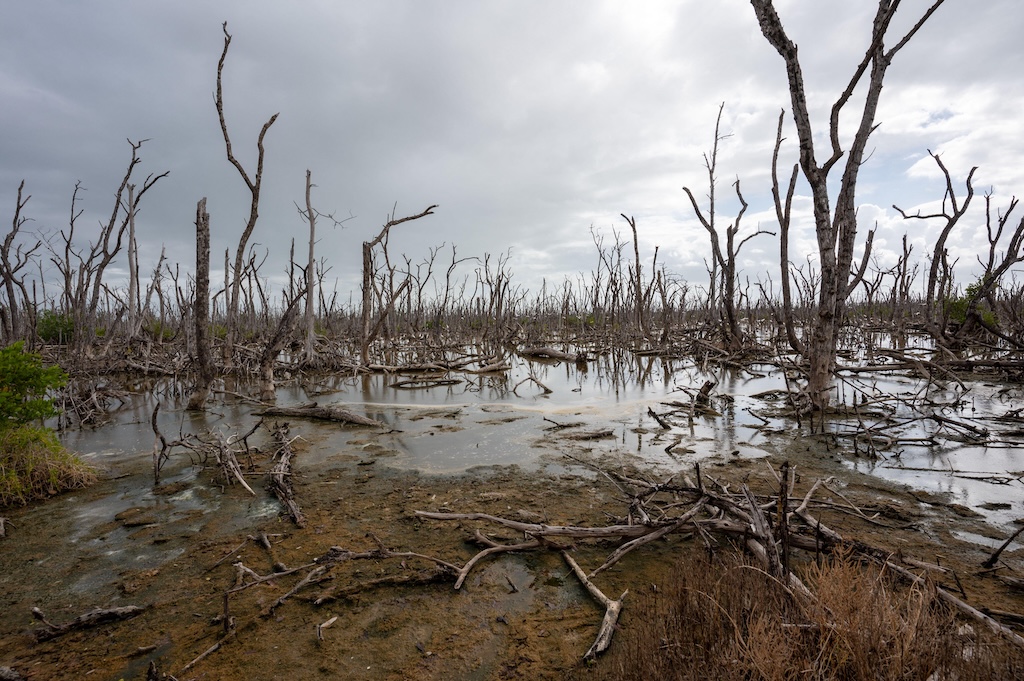
Small island states want mangroves counted within the forest definition.
Some barriers are simply geographic. For Mauritius, the constraint is a "limited availability" of land. For Sudan, it is energy: 70% of the population depends on firewood, in the middle of a conflict.
What do readers commonly get wrong about this roadmap?
- It is not a treaty. It creates no new commitments and does not "seek to reopen agreed decisions"; the negotiated hook is the COP28 global stocktake language.
- Staying out is not the same as opposing forest protection. India "welcomes" the roadmap; its objection was to process and to the trade linkage.
- It is not mainly a donor document. Nearly 90% of current forest finance is domestic public finance, so most of the work is budget redirection.
- It does not replace the UNFCCC. Sitting outside the negotiated agenda is exactly why Russia says it "does not support the development of a universal roadmap".
- It is not a single global plan. The 18 approaches are options, not an "exhaustive or prescriptive classification".
FAQ: COP30 deforestation roadmap
Is the COP30 deforestation roadmap legally binding?
No. It is a voluntary presidency document outside the COP's formal agenda. It draws on agreed text such as the COP28 global stocktake but adds no obligations.
How much finance does it say is needed?
$300bn per year by 2030. Current finance reaches less than one-third of that, and nearly 90% of it is domestic public finance.
Why did India and Russia not sign?
Both objected to voluntary roadmaps being pushed outside the COP agenda. India also objected to linking "trade" to forests; Russia argued the initiative goes beyond adopted decisions under the UNFCCC and the Paris Agreement.
Does it apply to every country equally?
No. It offers 18 implementation approaches as options and leaves selection to national circumstances, which is why the secretariat says no country needs to subscribe.
What is the next checkpoint?
The second global stocktake in 2028. COP31 is the nearer public test, and the roadmap asks countries to "keep the collective dialogue going" until then.
Action checklist: what to watch next
- Check whether the 18 approaches appear in national forest strategies, not just in communiqués.
- Track the domestic-to-international finance split; any move away from 90% domestic would be the real signal.
- Watch whether trade measures reward compliance rather than add "additional economic and administrative burdens on exporters".
- At COP31 in Antalya, judge progress by monitoring and fire-detection funding, not by endorsement counts.
- Use the second global stocktake in 2028 as the next formal checkpoint.
Sources and further reading
- COP30 Presidency roadmap publication, Climate Policy Initiative: climatepolicyinitiative.org
- UNFCCC, COP30 Presidency Roadmaps: unfccc.int
- WRI statement on the roadmap: wri.org
- WRI Global Forest Review, deforestation trends: gfr.wri.org
- Forest Declaration Assessment: forestdeclaration.org
- Global Nature Watch, Russia dashboard: globalnaturewatch.org
By Jack Watson, ItInsightsWorld. Feedback: contact@itinsights.com