
ItInsightsWorld Guide: Can the ObeEnd Wristband Really Curb Appetite? Price, Evidence and a Buyer's Checklist
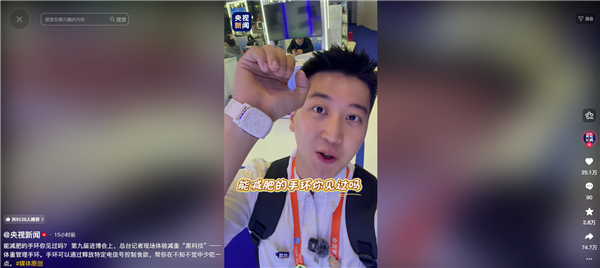
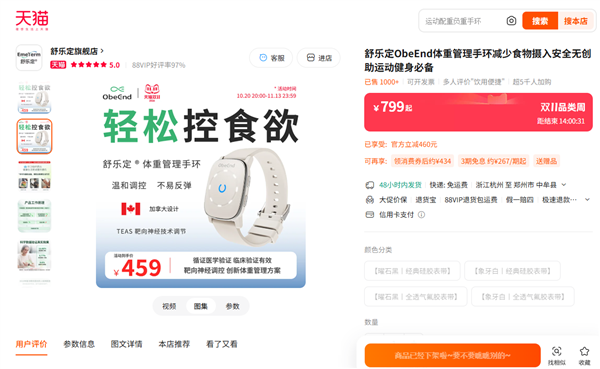
Short answer: the ObeEnd wristband sold under the Shuleding label by Yuefan Medical is an appetite aid, not a fat burner. Electrodes worn on the inner wrist deliver a precise electrical signal to the median nerve, which the company says travels to the brain's feeding centre to strengthen the feeling of fullness. A CCTV reporter who wore one for nearly 30 minutes — close to half an hour — described a continuous pulse-like stimulation, and Yuefan Medical itself states that the final result still depends on the user's own will and determination to lose weight. The Shuleding flagship store showed a list price starting at 799 yuan with a checkout price of 459 yuan, and the product page now shows the item as removed. Treat it as a support tool, not a solution.
What exactly is the Shuleding ObeEnd wristband?
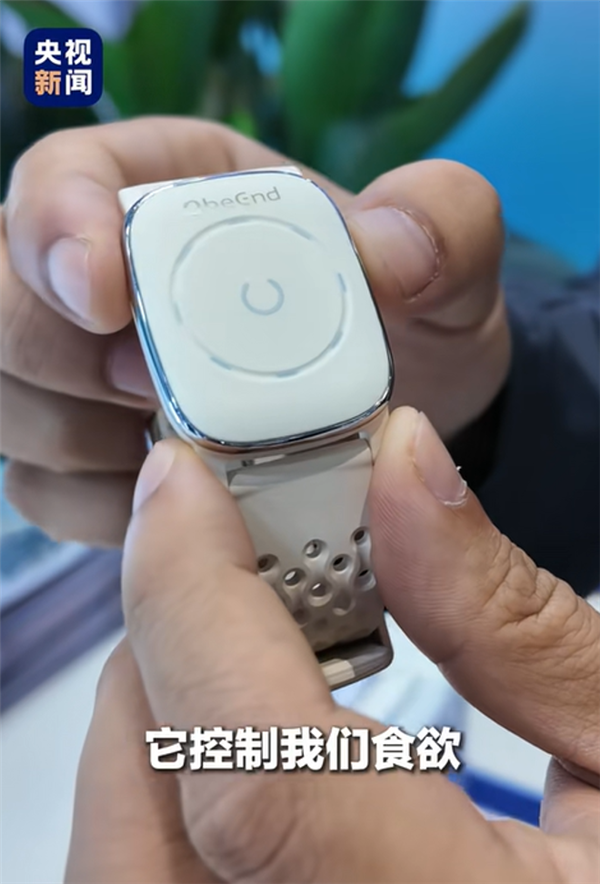
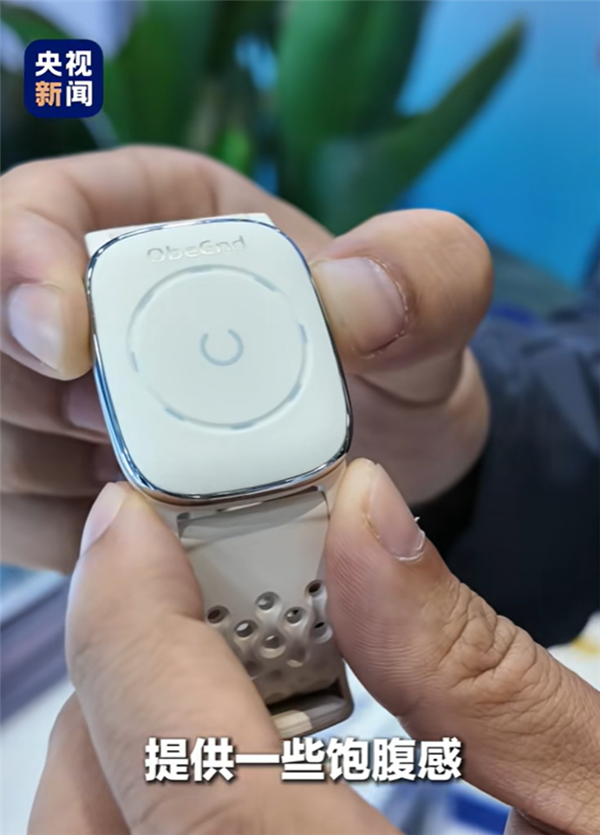
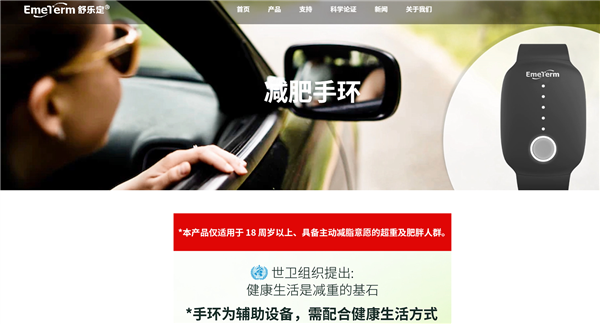
It is a consumer wearable that borrows a technique from clinical neuro-stimulation and points it at dinner. Yuefan Medical presents the product as a weight-management wristband: the electrodes sit on the inner wrist, stimulate the median nerve, relay signals toward the brain's feeding centre and thereby enhance satiety, so the wearer eats a little less without consciously fighting the urge.
The commercial trail is now well over a year long. The device was first unveiled as a headline launch at the sixth China International Consumer Products Expo in April 2026, and it drew fresh crowds at the ninth China International Import Expo in Shanghai, officially held 5 to 10 November 2026 at the National Exhibition and Convention Center. The exhibitor page on the import expo's own site describes ObeEnd as an adjunct device for obesity — and "adjunct" is the most honest single word in the entire pitch, because it concedes that something else has to be doing the main work.
What the product is not, on the manufacturer's own framing: a substitute for a disciplined diet or regular exercise. Its real-world fat-loss effect still needs more clinical data before it can be described as proven.
How does the claimed mechanism work, and where does it thin out?
Conclusion first: the signal path is physiologically plausible, but the claim that it reliably moves kilograms is not yet settled.
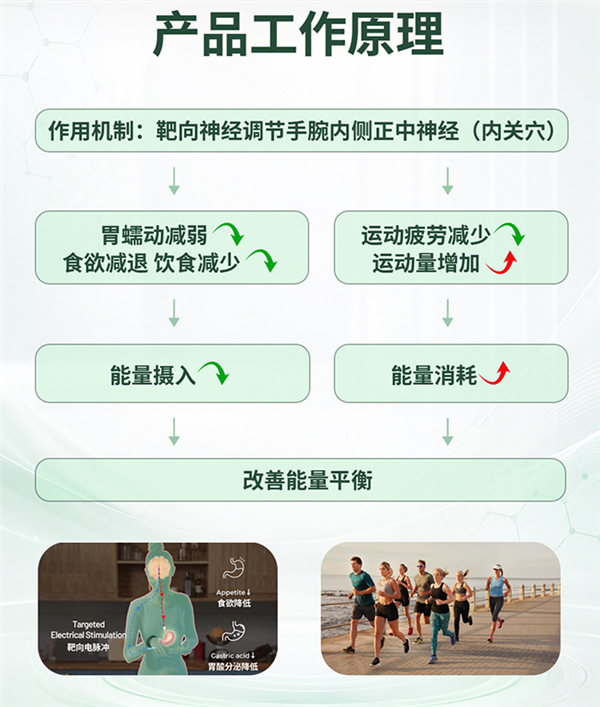
On the Shuleding website, the product is described as using targeted neuromodulation. The chain runs in three steps:
- Electrical pulses are applied to the Neiguan acupoint on the inner wrist.
- That stimulation is said to modulate the vagus-nerve-mediated gut-brain axis.
- Appetite-related hormones — hunger signals and the satiety hormone PYY — are then affected, which helps control appetite.
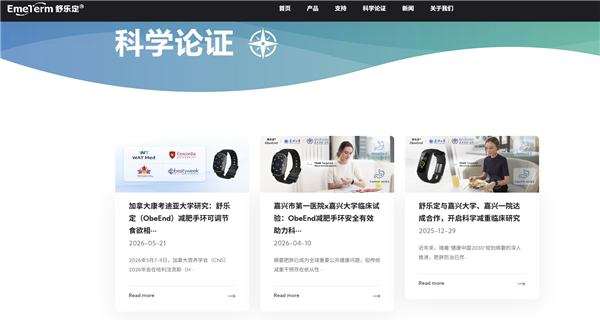
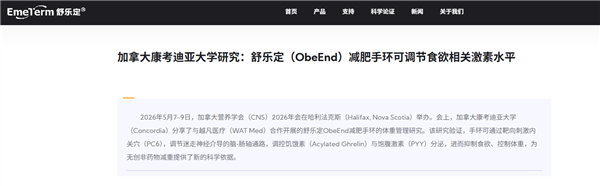
Independent academic work gives the story its strongest support, and its clearest limits. Researchers at Concordia University in Montreal have studied wrist-point stimulation and appetite; a 2024 conference abstract in Applied Physiology, Nutrition, and Metabolism (volume 49), led by Rachel Abramczuk with senior author Sylvia Santosa, reported that food intake fell by roughly 11.62 percent in wearers who were not consciously dieting. Coverage of the Canadian Nutrition Society meeting held in Halifax from 7 to 9 May 2026 describes a crossover study of 20 healthy adults with obesity (aged 18 to 60, BMI 30 to 50) in which post-meal acylated ghrelin and PYY differed between active and sham wear at p=0.063 and p=0.062 — directional, but short of the conventional threshold for statistical significance, and acknowledged by the presenting team as a small sample without a large randomised trial behind it.
Read plainly: hormone trends are suggestive, an intake reduction has been observed in an experimental meal setting, and neither finding yet proves sustained weight loss in everyday life.
What can a half-hour demonstration prove? Mostly sensation
The honest answer is: very little about weight, and a great deal about how the device feels.
The CCTV reporter wore the wristband for nearly 30 minutes at the show and reported a clear pulse-like stimulus continuing on the wrist throughout. That is a tolerability data point — it tells you the sensation is noticeable enough to be remembered and mild enough to sit through a news interview. It says nothing about what happens in the third week of use, when novelty has faded and the evening snack is still on the table.
Yuefan Medical's own position is consistent with that caution: the company's responsible official said the final effect still depends on the user's own will and determination to lose weight, and that the wristband is only an auxiliary tool.
Where trial numbers exist, they are modest. In reporting published at the end of October 2025, Yuefan Medical's Xu Haojie described a domestic study run with Jiaxing University and Jiaxing First Hospital: randomised, double-blind, placebo parallel-controlled, in adults aged 18 to 60 with BMI at or above 28, over four weeks, tracking weight and BMI. The reported figures were a drop in BMI from a baseline of 32.76 to 32.16 at exit, and body weight falling from 94.19 kg to 92.86 kg, with the wearable arm lower than placebo at exit. Four caveats matter more than the numbers: a four-week window, a small exploratory sample, funding and design tied to the manufacturer, and long-term follow-up beyond one year that has not been completed.
Why the market cares anyway: the World Health Organization states that in 2024 about one in seven people worldwide — roughly 1.1 billion — were living with obesity, and that adult obesity has more than doubled since 1990. China, meanwhile, launched a three-year national weight-management campaign in June 2024 under an implementation plan issued by the National Health Commission together with fifteen other departments. Low-effort, non-drug aids are trending because prevalence and policy have both put body weight into everyday conversation.
What do the price and the removed listing actually tell you?
Conclusion: the price tag documents a deep discount; the missing page documents that this is not yet a settled retail product.
On the Shuleding flagship store, the band was listed at a price starting at 799 yuan, with the effective purchase price at 459 yuan — a cut of roughly 43 percent. The same page now indicates that the product has been taken down.
Treat the cause as open. Plausible explanations include a promotion cycle ending, a production batch selling out, a listing being rebuilt around revised claim wording, or channel housekeeping ahead of a wider rollout; neither the store nor Yuefan Medical has published a reason. Two errors are equally common: reading "delisted" as "banned", and reading 459 yuan as a permanent floor price. The defensible position is that availability is currently unsettled and the discount may have been launch-period pricing.
One more piece of pricing literacy applies here and to almost every gadget launch: the headline number and the number you actually pay are different products. Compare the discount depth, not the sticker, before deciding anything looks like a bargain.
Six checks before you buy — or before you decide to wait
- Fix the category first. Ask whether the unit is sold as a registered medical device or as a general wellness product. Coverage around the launch has cited electrical-safety and export certifications such as CE and FCC rather than a Chinese medical-device registration; treat any clearance claim you see online as unverified until a certificate number can be checked against the regulator's public database at nmpa.gov.cn.
- Read the manual's own boundary line. Product documentation quoted in Chinese coverage puts it in one sentence: the band may reduce gastric acid secretion and stomach contraction, but it is not a drug that treats any health condition. If the marketing you read goes further than the manual, trust the manual.
- Screen for contraindications before asking about results. Transcutaneous electrical stimulation is generally off-limits or cautioned for people with pacemakers or other implantable electronic devices, users of implantable medical devices, people with epilepsy, pregnant users for abdominal or lumbosacral exposure, and anyone with broken skin or metal sensitivity at the contact point. Clinicians quoted in Chinese media coverage in November 2025 went further, warning against relying on micro-current wearables in situations such as high-speed driving or elevated work.
- Choose an endpoint you can measure. Not "feels full". Use four-week average body weight, waist circumference, and a two-day-per-week record of portion size. If none of the three move in four to six weeks, the device is not doing useful work for you.
- Benchmark it against the free levers. The reported four-week change of about 1.33 kg is in the same range as what trimming evening snacks and one serving of refined staple usually achieves — at no cost and with better evidence. Buy the band to support a plan you already run, not to replace one.
- Keep the paper trail. Screenshot the listing page, the stated price and the delivery condition; refund disputes turn on evidence, as our guide to Double 11 cardboard damage claims shows.
How does it stack up against three other options?
| Option | What it acts on | Evidence strength | Cost and oversight | Best suited to |
|---|---|---|---|---|
| Pulse wristband such as ObeEnd | Appetite signal — whether you want to eat | Small studies, short windows, hormone trends near but not past significance; the manufacturer calls it auxiliary | 459 yuan at the last listed checkout price, against a list price of 799 yuan; consumer-channel oversight | People who already manage portions and want an extra reminder |
| Fitness tracker | Recording, not intervention | Well established for tracking, not for causing weight loss | Wide price range; consumer product | Anyone who needs data before behaviour change |
| Prescription weight-loss medication | Appetite and metabolism pharmacologically | Large trial programmes, clinician-guided use | Requires a prescription, monitoring and ongoing cost; known side effects | Clinically assessed obesity, under medical supervision |
| Diet and exercise changes | Energy balance directly | Extensive; the baseline every device is measured against | Free, no oversight needed | Everyone, including wristband wearers |
Five misconceptions worth dropping
- "It burns fat." It does not. Fat is mobilised by a sustained energy deficit; the band addresses whether you feel like eating.
- "A short trial showed it works." A wear of nearly 30 minutes shows you can feel the pulses, which is the least interesting fact about the product.
- "Drug-free means risk-free." Non-drug is not the same as non-interventional; electrical stimulation carries its own exclusion list.
- "The listing was removed, so it must be a scam." Removal has many causes; the useful response is to ask which one, and to look for the certificate number.
- "I can stop dieting once I wear it." Yuefan Medical's own statement that results depend on the user's will is the direct answer to this one.
FAQ: the questions buyers keep searching
Does ObeEnd reduce appetite if I change nothing else?
No evidence supports that reading. The reported intake reduction of about 11.62 percent came from a controlled experimental setting, and the manufacturer describes the band as an auxiliary tool whose result depends on the user's determination.
Is the Shuleding wristband a medical device?
Verify rather than assume. Its positioning across expo materials and product documentation is adjunctive and drug-free, and public coverage cites electrical and export certifications; confirmation should come from a regulator's searchable database, not from a marketing page.
Who should not use it?
Anyone with an implanted electronic or metal medical device, people with epilepsy, pregnant users, anyone with wrist skin damage or metal allergy, and anyone advised by their own physician to avoid electrical stimulation.
Why is the 459 yuan listing gone?
Unconfirmed. The store page only shows that the product has been taken down; promotion cycles, stock, revised claim wording and channel restructuring are all ordinary explanations.
How long before I should judge whether it helps me?
Four weeks is the shortest fair test, matching the observation window of the domestic study. Compare average weight, waist circumference and portion records against the weeks before you started wearing it.
Bottom line: three moves to make now
First, do not decide on a product whose listing state is unsettled; watch for the official store to restore it and for a certificate number to be published. Second, if you match the group in the reported trials — adults with BMI at or above 28 who already run a portion or meal-timing plan — a short, self-measured four-week trial is a reasonable experiment at a 459 yuan level of spend, provided none of the contraindications apply. Third, if your goal is a few kilograms and your evenings are unmanaged, fix the staple portions and late-night eating first; that costs nothing and needs no nerve stimulation. The genuinely interesting shift in this story is not a magic band: it is that consumer weight technology is moving from counting your steps toward dampening the urge to eat, and buyers should expect the evidence for a new category to lag the marketing by a year or two.
Sources and further reading
- World Health Organization, obesity and overweight fact sheet (2024 prevalence figures) — https://www.who.int/news-room/fact-sheets/detail/obesity-and-overweight
- National Health Commission of China, implementation plan for the national weight-management campaign, June 2024 — https://www.nhc.gov.cn/ylyjs/gzdt/202406/41c64b9fd9774352af22f5274c1e831d.shtml
- China International Import Expo official site, ninth edition dates and exhibitor materials — https://www.ciie.org/
- ObeEnd and WAT Medical release citing the Concordia University appetite study, Applied Physiology, Nutrition, and Metabolism, 2024, volume 49 — http://cnmobile.prnasia.com/releases/global/obeend-pioneering-drug-free-weight-management-wristband-446723.shtml
- Chinese coverage of the Canadian Nutrition Society 2026 presentation and its stated study limitations — https://m.39.net/zl/a_w3wm5x0.html
- Chinese media interview reporting the Jiaxing University and Jiaxing First Hospital trial figures, October 2025 — https://news.qq.com/rain/a/20251031A01F7000