
ItInsightsWorld General: Dario Amodei's 5 to 10 Years AI Cure Claim, Turned Into a Reader Checklist
Dario Amodei, Anthropic's chief executive, says major diseases could become historical memories in less than 10 years if AI is applied carefully. For general readers, the practical answer is less heroic: AI may shorten discovery, but disease cures still require lab, clinical, regulatory, and delivery evidence. Judge the claim by bottlenecks, not by the calendar.
What exactly was claimed on November 11?
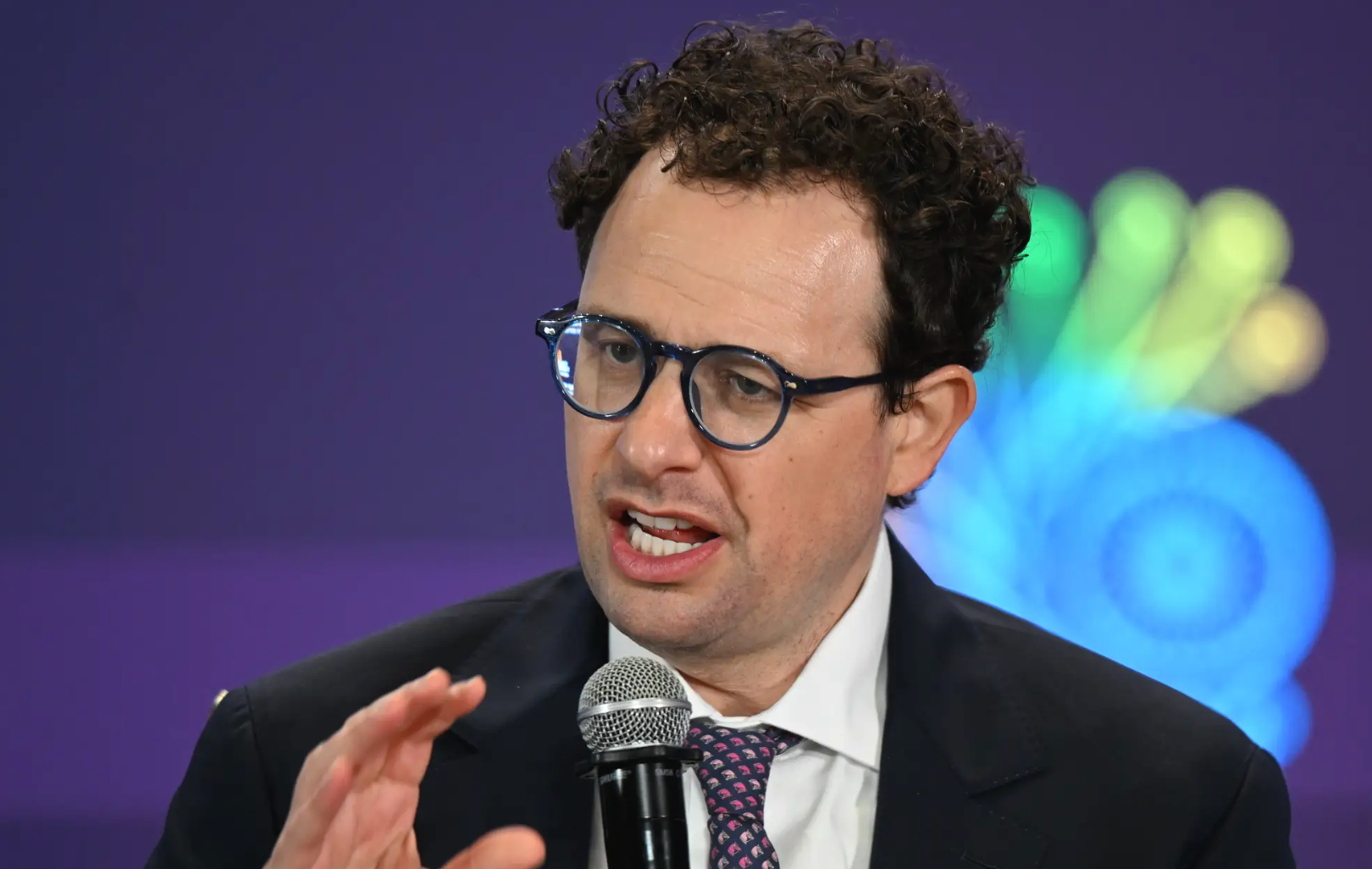
On November 11, Anthropic chief executive Dario Amodei said in an IPO roadshow video that cancer, Alzheimer's disease, heart disease and mental illness could become past in less than 10 years. He argued that, if AI is applied well, society could enter a miracle era in which problems that have burdened civilization for thousands of years are finally solved.
The wording sits on a longer line of statements. In an interview with CBS in the United States, Amodei used the phrase compressed 21st century. In that version of the argument, AI working with top scientists might make medicine move 10x faster, compressing progress that could otherwise take the full 21st century into 5 to 10 years. He also said AI could help find treatments for most cancers, prevent Alzheimer's disease, and even double human lifespan. In this September, Amodei returned to the same point in a personal essay, saying he believed AI could cure most major diseases in 5 to 10 years.
He is not the only industry figure making that connection. Arm chief executive Rene Haas has also said AI could help human beings conquer cancer within the lifetime of the current generation.
Why the promise is both plausible and fragile?
Plausible because modern AI can search literature faster, propose hypotheses, model proteins, and design experiment sets. Fragile because medicine is not only a prediction task. A cure must pass laboratory validation, animal testing, staged human trials, manufacturing, adverse-event monitoring, and reimbursement. A 2022 study indexed in PMC estimated the clinical development time of a typical innovative drug at 9.1 years. If AI can compress preclinical work, regulatory and clinical bottlenecks still determine when a therapy reaches patients.
That gives general readers a useful test. A "5 to 10 years" forecast is not a software release date; it is an argument that many steps must shorten at once. A drug claim becomes strong only when it moves from model output to biology, then to controlled human evidence, then to production and care delivery. A useful analogy is machine-checked proof: formal checking can raise confidence, but independent review and deployment boundaries still matter.
What may compress, and what may not?
| Step | How AI may help | Why it can still fail |
|---|---|---|
| Target discovery | Read papers, rank molecules, suggest mechanisms. | A plausible target may not work in living systems. |
| Preclinical testing | Shorten candidate selection and simulation. | Animals and cell models do not always predict humans. |
| Clinical trials | Improve protocol drafting and monitoring. | Recruitment, endpoints, safety, and statistics take calendar time. |
| Regulation | Help organize evidence and documentation. | Agencies require controlled data, inspection, and accountability. |
| Healthcare delivery | Support screening, triage, and follow-up. | Clinics need staff, access, trust, payment, and local adaptation. |
Five practical steps for general readers
- Translate the verb: "assist," "find," "prevent," "cure," and "replace doctors" are not the same claim.
- Locate the bottleneck: if the statement says AI found a treatment, ask whether the bottleneck is biology, trial recruitment, safety proof, manufacturing, or access.
- Ask for the evidence level: computational prediction, animal study, early human data, late-stage trial, approved use.
- Check who paid for the study and who can repeat it.
- Separate announcement date from patient date: a result can matter before it changes clinical practice.
Common pitfalls that make medical AI claims look stronger than they are
- Confusing Anthropic's model capability with a validated medicine. A model can be intelligent without being a therapy.
- Treating "major disease" as one problem. Cancer is many diseases; mental illness crosses brain, behavior, and social care.
- Using the phrase miracle era as proof. It is a rhetorical frame, not clinical evidence.
- Reading a single CEO forecast as a consensus from regulators, clinicians, or biologists.
FAQ: questions general readers are likely to ask
Is "cure most major diseases in 5 to 10 years" the same as one AI doctor?
No. The claim describes research acceleration. A doctor still makes diagnosis, prescribes treatment, and takes responsibility under local law and clinical standards.
Can AI make clinical trials unnecessary?
Not for approved therapies. The U.S. Food and Drug Administration describes clinical research as a staged sequence from small early trials to large late-stage trials. AI may improve trial design, but safety and efficacy still need controlled evidence.
Should patients change treatment now?
No. A general reader should treat this as an information signal, not a medical order. The correct action is to ask a clinician whether a named trial, guideline, or approved product exists.
What would count as stronger evidence?
Independent replication, preregistered trial results, regulatory review, and clear access pathways. Those items move a claim from prediction to public health.
Final reusable checklist
- Does the statement name a therapy, a stage, and a population?
- Is there a study, not only a video or a slide?
- Has a third party reviewed the result?
- Does the timeline include regulatory and delivery steps?
- Can a patient actually receive the intervention today?
Reference sources
- CBS News transcript: Dario Amodei on AI risks and compressed 21st century
- Dario Amodei: We Must Pace the Frontier
- U.S. FDA: Clinical research step
- PMC study: Clinical development times for innovative drugs