
Six Claude Questions Before Anthropic's IPO, Answered for Business Teams | ItInsightsWorld General
Short answer: treat Claude Sheets as a drafting surface, not a system of record. Anthropic's own product lead calls the function at this stage "quite basic", and the vendor's help center lists it in beta with a ceiling of 100,000 cells per sheet. Anything that has to survive an audit — formula-heavy models, consolidated forecasts, version-controlled reporting — still belongs in the spreadsheet software you already license, with a plugin attached.
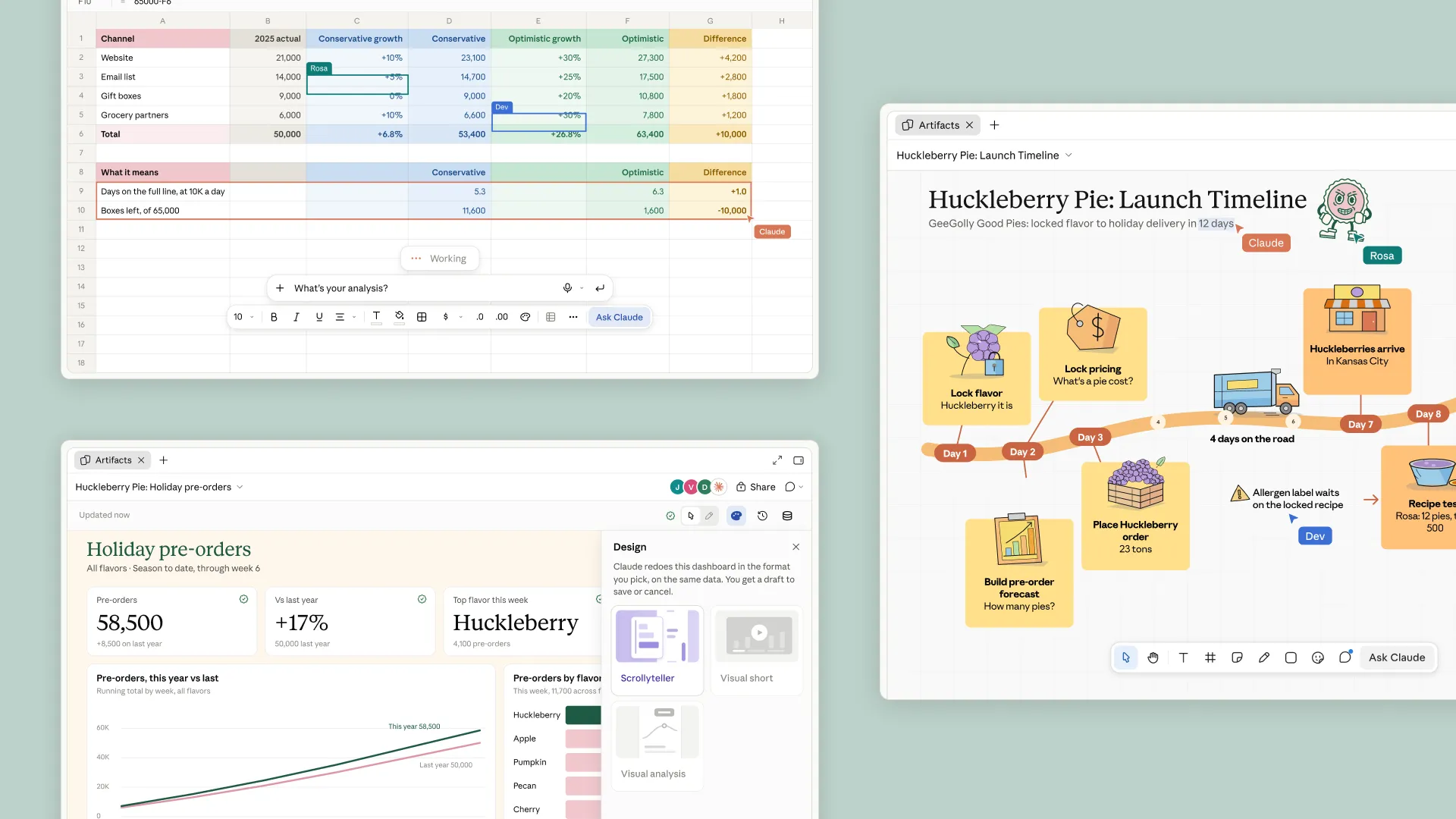
The scene worth sitting with is not the opening bell. It is a Tuesday. On November 10 the company shipped four workplace tools in one move — Claude Meetings, Claude Whiteboards, Claude Sheets, Claude Data — while the same filing week carried revenue figures that private vendors rarely publish. Since the beginning of this year, demand for Claude's tools ran hottest among software engineers, who used them to write and debug code; the commercial push now points at everyone else in the building. Six questions follow, each with the short answer first and the evidence under it.
What did Anthropic actually put on the table on Tuesday?
Growth is the headline. The product boundary is the usable information.
Documents submitted Tuesday show annualized revenue of $81 billion as of October 31, up $10 billion from the end of September. The company is seeking a fully diluted valuation of about $1.4 trillion in its IPO. As of 12:43 p.m. New York time, Microsoft shares were down 3%.
Two details in the same paperwork matter more to a buyer than the valuation does. The registration statement, Form S-1, went public on the SEC's EDGAR system on October 26, 2026 under the registrant name "Anthropic, PBC" — a public benefit corporation rather than an ordinary Delaware company. And an S-1 is not a press release: it carries audited financials, a risk-factor section and disclosure of customer concentration, all of which keep being updated once the company is listed. Procurement teams get something they never had from this vendor, which is a recurring obligation to be specific.
Is Claude Sheets ready to run a finance model?
No. Read the vendor's own documentation before you read the demo.
Anthropic product lead Nicholas Lin describes the current Claude Sheets capability as "quite basic" and says it is not aimed at higher-order work such as financial modeling. In those cases, he argues, Anthropic's plugins for existing spreadsheet software are where the company does its better work. Lin's fuller statement is the boundary line for this whole story: "I think Microsoft and Google products still have their place at particular times and in particular scenarios, especially for more advanced enterprise use cases. But we also want to show new ways of working inside Claude."
The documentation matches that framing. The help center entry for Claude Sheets lists the feature in beta, covering common spreadsheet work, generating tabs, formulas, formatting and drop-downs from a prompt, and outlining each edit so a human can track what changed. It also states a size limit at launch: 100,000 cells per sheet. That is roughly a 316 by 316 grid — a consolidated model with scenario tabs can run past it before a single formula has been checked. That arithmetic is ours, not the vendor's; the limit itself is quoted from the product documentation.
Anthropic keeps investing on the incumbent side of the fence as well. Claude for Excel shipped in beta as a research preview on October 27, 2025, running as a sidebar inside Microsoft Excel, and the same pattern was extended to Google Docs, Sheets and Slides in a public beta in October 2026. A company planning to replace those surfaces does not spend two years building add-ins for them.
Three checks before a workbook moves anywhere:
- Does the number have to be auditable, or only plausible?
- Does the sheet sit inside the published beta ceiling of 100,000 cells?
- Who owns version history and revert, if a model changes a formula quietly?
Who gains when Adobe, Atlassian and HubSpot sit inside Claude?
For now, the vendor that holds the data gains distribution. The buyer gains fewer window switches, not fewer invoices.
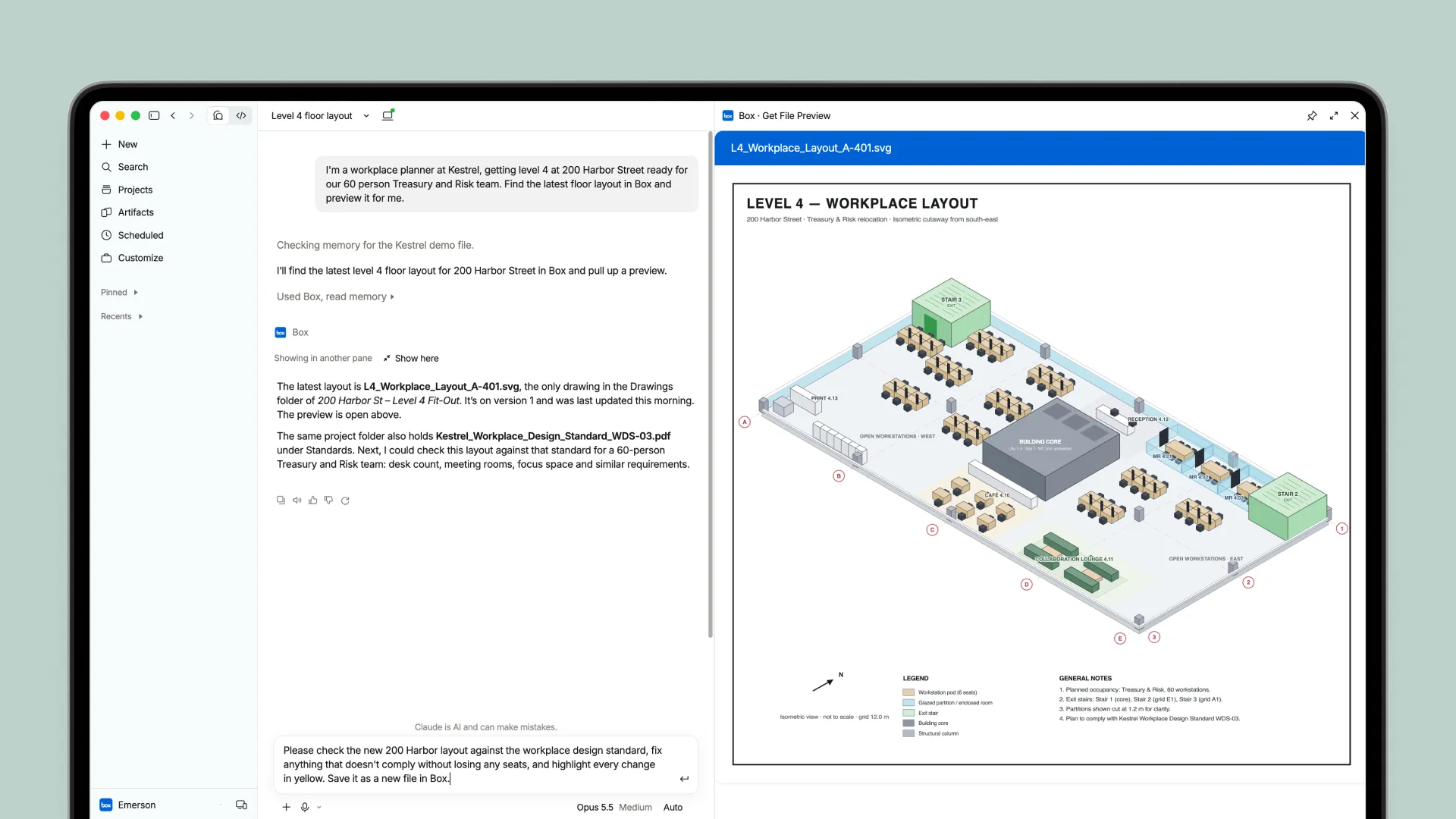
Anthropic announced it will let Adobe, Atlassian and HubSpot and other companies embed a version of their existing applications inside Claude, alongside the interactive connectors that shipped on Tuesday. HubSpot publishes a setup guide for its own Claude connector, which is a useful signal: the plumbing is documented rather than theoretical.
Anthropic is simultaneously a partner and a competitor to these firms. Since the beginning of this year, that double role has repeatedly raised a worry across business software, namely that AI one day makes traditional enterprise software products obsolete. The embedding deal is one answer to that worry — the incumbent keeps the record and the workflow, the model vendor keeps the prompt, and neither side gives up the other's revenue line easily.
| Placement of the work | Record of truth | What it is good at today | Where it is thin |
|---|---|---|---|
| Plugin inside Excel or Google Sheets | The incumbent spreadsheet file | Reading a whole workbook, explaining formulas, editing in place | Requires the desktop app, admin consent and existing licenses |
| Vendor app embedded in Claude (Adobe, Atlassian, HubSpot) | The vendor's own system | Working on CRM, ticket or creative data without leaving the conversation | Seat accounting, support ownership and audit scope are still unresolved |
| Native Claude Sheets | Claude | Drafting a new sheet from a prompt, cleaning and restructuring ranges | Beta, 100,000 cells per sheet, per the help center |
Does a public Anthropic change the buying decision?
Diligence gets easier. Concentration risk gets sharper. Both of those are reasons to act earlier rather than wait for a ticker.
Menlo Ventures' 2026 State of Enterprise AI report, published November 3, 2026, estimates that Anthropic's share of enterprise large-model API spending rose from 40% to 55% over the past year, while OpenAI moved from 27% to 31% and Google fell from 21% to 9%. If that estimate holds, one vendor now routes a majority of enterprise API spend, which is precisely the condition under which contract terms outrank product demos.
Four clauses are worth asking for before signature: a multi-vendor substitution right, written notice before any model deprecation, a cap on mid-term price changes, and export of prompts, evaluations and tuned artifacts at exit. What remains unconfirmed, stated plainly: the final valuation, the amount raised and the listing date are not settled. ItInsightsWorld has followed the valuation range separately, in our piece on Anthropic's IPO valuation slipping below the most optimistic expectations.
Four misconceptions that cost money
- "Native must be better." The company itself labels the native sheet basic and points advanced modeling at plugins. Take the vendor at its word.
- "A partner list is a moat." Adobe, Atlassian and HubSpot each keep selling their own paid surface. An embedded version is a channel, not a merger.
- "A share price print is a verdict." Microsoft being down 3% at 12:43 p.m. New York time is one quote at one minute, not a forecast for the quarter.
- "Public filing means public certainty." A prospectus is a draft that changes. Read the risk factors, then read the growth curve.
FAQ: the short versions
Can Claude Sheets replace an Excel or Google Sheets workbook today?
For drafting, cleanup and one-off analysis, it can carry the work. For a model that feeds a forecast, a board pack or an external audit, the record still belongs in the spreadsheet you license, with Claude attached as a plugin.
Why ship a tool the product lead calls basic?
Because surface area is the objective. Meetings, Whiteboards, Sheets and Data turn Claude into a place where work starts, which is a different product claim from being the best calculator. Lin frames the same intent when he says the company wants to show new ways of working inside Claude.
Is a listed Anthropic safer to sign with?
More disclosure, more scrutiny, and more pressure from public-market quarters. None of that removes single-vendor risk, so buy protection in the contract instead of in the sentiment.
Should we wait for the IPO before deciding?
No. Wait for one billing cycle of real usage data instead: which tasks a human re-does, which cells a model cannot hold, and which connector your admins will actually approve.
A checklist before work moves into Claude
Use this list as written. It is the same one we apply to any tool that promises to hold the record of truth.
- Classify each workbook: audited model, working draft, or throwaway. Only the second category is a candidate for a beta surface.
- Measure against the published limits — 100,000 cells per sheet in the current beta — before migrating anything.
- Pick one lane per job: plugin inside the incumbent spreadsheet for calculation, connector inside Claude for the vendor's own data.
- Confirm admin consent, data-retention settings and whether prompts leave your tenant.
- Log every re-do. If a human corrects more than one output in three, the workflow is not ready to move.
- Get the four contract clauses listed above in writing before renewal season, not after.
- Re-read the vendor's own product boundary each quarter; Anthropic's has already moved twice in a year.
Sources and further reading
- SEC EDGAR, Form S-1 registration statement filed by Anthropic, PBC: https://www.sec.gov/Archives/edgar/data/2130357/000162828026067168/anthropicpbc-sx1.htm
- Claude Help Center, "Get started with Claude Sheets" (beta scope and 100,000-cell limit): https://support.claude.com/en/articles/18324300-get-started-with-claude-sheets
- Anthropic newsroom, "Advancing Claude for Financial Services" (Claude for Excel beta, research preview): https://www.anthropic.com/news/advancing-claude-for-financial-services
- Menlo Ventures, "2026: The State of Enterprise AI", November 3, 2026 (enterprise API share estimates): https://menlovc.com/perspective/2026-the-state-of-enterprise-ai/
- HubSpot Knowledge Base, HubSpot connector for Claude setup guide: https://knowledge.hubspot.com/integrations/set-up-and-use-the-hubspot-connector-for-claude