
ItInsightsWorld Startups Signal: Optivolt Raises $32M for Embedded Solar Electronics
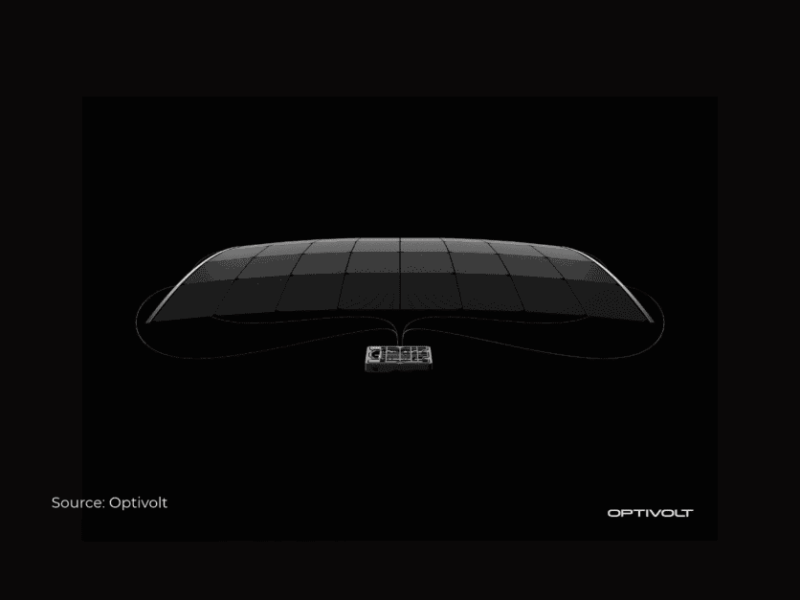
A financing note can become a startup decision point when it is attached to a specific engineering bet. San Francisco-based Optivolt has secured $32 million to move power electronics inside solar modules, using its Power Balancer approach instead of leaving all mismatch management outside the panel. For an ItInsightsWorld Startups reader, the question is not simply whether money arrived; it is whether the product, architecture, and validation signals are strong enough to make the next stage of manufacturing and deployment credible.
The same shift would catch the attention of an eeNews Europe reader as well: photovoltaic design often treats cells as the primary improvement target, while power conversion and monitoring happen in external devices. Optivolt places active electronics in the module itself, so efficiency, system architecture, and installation cost become linked parts of one product decision.
Why Embedded Electronics Matter to a Startup Thesis
Conventional photovoltaic modules are not simple one-cell devices. They group cells into circuits. When one cell is weakened by shade or contamination, it can hold down the output of other cells in the same group. Bypass diodes protect the circuit, yet they can take whole sections out of power generation. That is the mismatch problem Optivolt is trying to solve.
Power Balancer is described as an active redistribution layer inside the panel. Rather than accepting a passive bypass response, the electronics move energy among cell groups as conditions change. The company says the design replaces conventional bypass diodes and adds monitoring plus rapid shutdown capability. In some system configurations, this can remove the need for separate module-level optimizers, microinverters, and rapid-shutdown devices.
For a startup, embedded hardware is a harder path than adding a small external device. The hardware must survive heat, time, and field conditions for decades. The article notes that engineers with satellite power system experience were brought in for thermal management and long-term reliability, and Optivolt reports 99.4% conversion efficiency under typical operating conditions.
Table: How the Architecture Changes What Buyers Must Check
| Point of comparison | Conventional module path | Optivolt Power Balancer path |
|---|---|---|
| Where protection happens | Bypass diodes protect circuits, but may remove sections from generation. | Active electronics redistribute energy among cell groups. |
| Where extra functions live | Monitoring, rapid shutdown, and optimization may be separate devices. | Monitoring and rapid shutdown are built into the panel electronics. |
| Startup risk surface | Device can be added or swapped independently. | Electronics must remain efficient and durable inside a module for decades. |
| Market signal | System designers focus on panel and external hardware separately. | Panel-integrated electronics may affect efficiency, architecture, and installation cost. |
Sixfold Output Is the Headline, but Boundary Conditions Are the Startup Lesson
Optivolt reports that panels equipped with its technology generated up to six times more power than panels using external optimizers in internal tests conducted under defined shading scenarios. The word Sixfold captures the result, while the test boundary explains what it means: the gain is tied to defined shading scenarios, not presented as typical output improvement in every condition.
That distinction matters for early-stage diligence. A startup can be validated by a dramatic result under a controlled mismatch condition; investors and installers then need to know how narrowly the result applies. The article frames the result as showing how managing electrical mismatches closer to their source can affect output.
“Solar became cheap enough to compete. I founded Optivolt to make it intelligent enough to power the world,” said Rohit Kalyanpur, founder and CEO of Optivolt.
Why $32M Is a Test of Manufacturing, Not Only Physics
The round was led by VXI Capital, with participation from RA Capital, Valo Ventures, and Atlas Innovate. Total funding now stands at $42 million. More than 20,000 panels incorporating the Power Balancer have already shipped, which gives the company a starting point beyond a single prototype.
Optivolt plans to use the new investment to expand manufacturing and serve applications from residential rooftops to utility-scale installations. It is also targeting large solar projects intended to supply electricity to AI data centers, where demand for reliable power continues to shape infrastructure investment.
Team, Patents, and Certifications as Early Risk Markers
The company has spent nine years developing the technology. It holds 19 issued patents, with another 27 applications pending. The company also obtained UL certifications covering integrated electronics, enclosure, rapid shutdown, and module safety.
Those facts shape the startup risk map in a particular way. A nine-year development path, patent breadth, and certification coverage suggest the bottleneck is not merely idea formation. The remaining questions are production scale, system-level reliability, channel adoption, and whether panel-integrated electronics can become a normal photovoltaic architecture.
Investor and founder backgrounds add to the signal: the article notes participation from former Enphase CEO Paul Nahi and former SunPower CEO Tom Werner, positioning Optivolt as a company presenting integrated panel electronics as a possible next step in photovoltaic technology.
Common Misconceptions for Startups Readers
- A $32M round should not be read as proof that shading losses disappear everywhere; the reported result is tied to defined shading scenarios.
- Power Balancer should not be reduced to a better bypass diode story; the article describes active redistribution, monitoring, rapid shutdown, and possible elimination of separate devices in some configurations.
- Sixfold output does not mean every installation will see up to six times more power; the boundary condition is internal tests under defined shading.
- Embedded electronics do not make reliability automatic; long-term thermal and durability management is central to keeping 99.4% conversion efficiency meaningful over decades.
- More than 20,000 panels does not replace manufacturing scale-up; funding is explicitly planned to expand manufacturing across rooftops and utility-scale contexts.
Action Checklist Before Deciding to Watch, Join, or Fund This Direction
- Map the mismatch mechanism: identify how shade, dirt, or uneven degradation affect grouped cells and where bypass diodes take sections out of generation.
- Check the efficiency claim at the system level: look for 99.4% conversion efficiency as a typical-condition metric, not as a universal field guarantee.
- Inspect the certification layer: UL coverage should be evaluated together with enclosure, rapid shutdown, and module safety requirements.
- Assess manufacturing readiness separately from shipping count: More than 20,000 panels shipped is a signal, but expanding manufacturing is still the stated use of capital.
- Connect capital to market entry: residential rooftops, utility-scale installations, and AI data center power supply are the listed application areas.
- Read founder and investor history as a distribution clue: Enphase and SunPower experience points to module-level electronics and PV channel knowledge.
FAQ
What did Optivolt raise, and what is it funding?
Optivolt secured $32 million, with the round led by VXI Capital and total funding now at $42 million. The plan is to expand manufacturing and serve applications from residential rooftops to utility-scale installations.
What is the Power Balancer?
It is Optivolt’s panel-integrated active power electronics described as replacing conventional bypass diodes, redistributing energy among cell groups, and adding monitoring plus rapid shutdown functions.
Why could that reduce external hardware?
Because the electronics can move power management into the module, some system configurations can remove the need for separate module-level optimizers, microinverters, and rapid-shutdown devices.
What performance result is reported?
In internal tests under defined shading scenarios, panels with the technology generated up to six times more power than panels using external optimizers. The article also reports 99.4% conversion efficiency under typical operating conditions.
What is still uncertain?
Scale-up, long-term thermal and reliability behavior, channel adoption, and the extent to which panel-integrated electronics become standard across residential, utility-scale, and AI data center-linked projects are the open questions.
Editorial Takeaway
For ItInsightsWorld Startups, the Optivolt story is less about a solar headline than about a hardtech validation sequence: a defined physics problem, a nine-year product path, patents, certifications, shipping evidence, and a capital plan tied to manufacturing. The central argument remains that improving solar cells is only part of the equation, and recovering more electricity from cells that already generate power may matter just as much.