
Quantum Startup Business Models Compared: What Investors Fund Before Revenue Arrives
Short answer: quantum capital in 2026 chases defensible bottlenecks, not just impressive physics. For founders, the screen is whether a team can name a customer problem, ship something sellable now, and still move toward a harder long-term machine. Ahead of World Quantum Festival 2026 in Cannes, France, investors interviewed by EE Times described three distinct business models inside quantum, each with its own proof burden, cash risk and exit logic. This ItInsightsWorld Startups comparison turns their framework into a decision table for early teams, internal innovation leads and seed investors.
What do quantum investors actually check before they fund a startup?
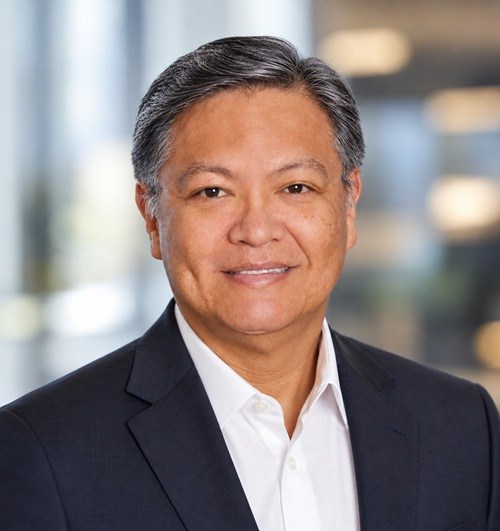
They check sequence, not only capability. Nardo Manaloto, managing partner of Qubits Ventures, told EE Times that he recently pressed the founder of an unnamed photonic quantum startup whose end product would take a decade. The useful answer was not “we are building a computer.” It was a staged ladder: a photon detector first, then a chip, then the machine itself.
Each step must have a buyer. Each step must also push the core technology forward. In his words to EE Times, “The roadmap also extends to the business side,” which is another way of saying that a quantum company is not funded on a promise of scale; it is funded on evidence that its work can meet real demand while it gets there.
Owen Lozman, managing partner of 55 North, a Copenhagen-based quantum fund, applies the same filter from the other side. He is less interested in isolated invention than in whether the invention arrives when the customer needs it. As he put it to EE Times, “Generally in deep tech, we’re not looking for, ‘Does the invention work?’ but, ‘Does it solve a problem at the time at which it’s going to be needed by the customer?’”
That timing question explains why the 55 North portfolio example mentioned in the interview is not a flashy full-stack computer, but Monarch Quantum: optical modules that can be manufactured consistently, at the moment quantum builders begin to professionalize supply chains. The point was validated afterward: on March 31, 2026, Monarch Quantum announced an oversubscribed $55 million growth round, bringing its total capital and contracts above $100 million and confirming the pull for reliable control hardware. The round was led by Serendipity Capital, with 55 North among the participants.
How do the three quantum startup models differ?
Lozman’s taxonomy splits the field into three categories. That framing is useful because the same investor conversation should not be run identically across them.
| Startup model | What the founder must prove | Primary investor checks | Biggest cash risk | Best-fit founding team |
|---|---|---|---|---|
| Component and enabling hardware | Reproducible, manufacturable supply for many architectures | Revenue growth, production cost, profitability, breadth of customers | Low if design wins convert; higher if tied to one customer platform | Photonics, cryogenics, electronics, manufacturing, systems engineering |
| Quantum computer developer | A path from single-qubit demonstrations to useful, scalable systems | Technical differentiation, scaling route, whether to build fabs or rely on semiconductor infrastructure | Very high capex burn and long feedback loops | Physics plus deep systems, fab, packaging and firmware leadership |
| Software and applications | Customer willingness to pay now and again when hardware matures | Problem fit, design-partner depth, product readiness, timing | Spending too early before hardware arrives | Domain experts, algorithms, and a commercially credible platform lead |
The comparison matters because startup teams often choose a model that flatters their technical skill rather than their commercial exposure. A world-class photonics engineer may be far more fundable as a component supplier than as a full-stack machine builder, where the company may have to absorb infrastructure, manufacturing and multi-year credibility costs.
Is revenue required before a quantum company becomes valuable?
Not always. Revenue is a signal, but it is rarely the only exit trigger. “In a lot of deep tech, the revenue is rarely the exit trigger,” Lozman said, “Technology is often the exit trigger.”
That is a subtle but important shift for founders. In many SaaS businesses, revenue is the scoreboard. In quantum, a company can become valuable by owning a capability that a larger systems developer lacks, by holding defensible intellectual property, by embedding itself in a bottleneck, or by forming partnerships that compress a future system’s path. Manaloto likewise values defensible IP, specialized engineering capacity, strategic partnerships and bottleneck-solving technology, even before substantial revenue exists.
The caveat is that “technology as exit trigger” can distort public-market comparisons. It can also distort private-round pricing if founders assume that narrative alone will carry them. Recent public-market examples show how far valuation can outrun current demand: IonQ reported full-year 2024 revenue of $43.1 million and a net loss of $331.6 million. A strong technical story can still attract capital, but it does not automatically produce a healthy company.
What is the most underrated failure mode for quantum startups?
Survivability. The founders in this space are not only building technology; they are racing against the clock on capital. Lozman is blunt about it: “If you’re a year or two early and you’re burning too much cash, it’s very, very difficult to sustain your company,” and “Survivability will be a key kind of KPI for a lot of the assets in this space.”
That framing is especially relevant in an investment cycle where money is still abundant. According to the QED-C State of the Global Quantum Industry 2026 report, private venture capital in quantum reached $4.9 billion in 2025, a 192% increase over 2024. Abundant funding increases startup formation, but it does not shorten technical learning curves or soften demand-side conservatism. A startup that survives one round may still fail because it cannot bridge two or three more.
The most common traps we see are:
- Building the end machine first, and the revenue step second. If every milestone is five years out, the company has no way to prove commercial relevance while financing the science.
- Mistaking a physics headline for product evidence. A press release citing ultra-high fidelity can be misleading if the number refers to one isolated operation, not a scalable, reproducible system. There is no universally accepted quantum due-diligence playbook, so investors and founders alike over-rely on proxies.
- Selling to an architecture that disappears. Component suppliers that serve only one qubit type carry concentrated platform risk. Lozman’s own preference is for technologies that can serve multiple architectures and several potential customers.
- Growing software demand before the hardware is ready. Applications companies must know the customer problem deeply, but premature expansion can drain cash before enough machines exist to deliver value.
Why does healthcare look like the best early wedge for quantum sensing?
Because it shortens the distance between measurement, decision and budget. Manaloto’s interest in healthcare comes from his time working with Kaiser Permanente’s innovation group and technology fund, where he encountered the practical difficulty of detecting disease earlier and extracting useful biological information.
His portfolio logic is therefore not “wait for fault-tolerant quantum computers.” It is “find sensing instruments that can deliver useful data sooner.” Qubits Ventures has invested in Probius Bio, a Stanford spinout developing quantum electrochemical spectroscopy, described in the interview as a system that captures molecular vibrational signatures from biological samples and converts them into biochemical datasets that could support biomarker discovery, drug development and biological research. Manaloto is also evaluating an unnamed company using diamond-based quantum sensing to study free radical activity and oxidative stress inside living cells.
Yet he is not treating the data itself as the product. His core question is, “What do I do with that data? How do I translate it? How can pharma use it?” That is the difference between a measurement and a company. Research teams need interpretability; clinicians need decision evidence; healthcare organizations need workflow integration and compliance before they become repeat customers.
The market numbers also reveal the tension. Quantum sensing is still a comparatively small early market: QED-C’s 2026 quantum sensing forecast estimates the segment at about $470 million in 2025 and expects roughly $1.1 billion by 2028. That is enough to build focused companies, but not large enough for every entrant to succeed.
How do founders capture value when the buyer and the beneficiary differ?
They tie price to an outcome the paying organization actually recognizes. Lozman identified the structural problem clearly: “It’s hard making money out of a sensor,” he said. “It’s hard to get people to recover the value if the buyer and the beneficiary are not close in the value chain.”
That sentence should be read carefully by every deep-tech founder. The organization purchasing a device may not be the one gaining the economic upside. If the beneficiary sits downstream, the instrument supplier may solve a valuable problem and still struggle to monetize it. The fix is rarely a better spec sheet. The fix is a business model that connects product price to a measurable result inside the customer’s own P&L, quality system, compliance process or development budget.
There is also a positive corollary. Qualification cycles in healthcare and electronics are slow because customers protect working processes. Lozman’s view is that this creates a moat after success: “Once you’re in, it’s very hard to get displaced,” which turns long validation into long-term pricing power. For a startup, that means early traction can look terrible on paper and still become a strong position later.
Which quantum startup model should a founder choose?
Use this practical decision guide:
- Choose the component or enabling-hardware route if your team has manufacturing-grade engineering, you can serve more than one architecture, and you can name a bottleneck that will get worse as the industry scales.
- Choose the full-stack machine route only if you have capital, differentiated architecture and a credible plan for scaling, packaging and error correction. This is the highest upside and the highest fragility.
- Choose software or applications only if you already have design partners, a clear paying use case, and the patience to align growth with hardware availability.
- Choose sensing instruments if the device can produce a decision-grade output now, even if the final scientific vision is larger than today’s market.
The strongest founders I would back in 2026 are not the ones with the biggest machine claim. They are the ones with a defensible intermediate product, a bottleneck the customer will feel soon, and a route to value before the final system exists.
Where should founders and early-stage investors pressure-test their assumptions next?
The obvious setting is the World Quantum Cannes Festival, November 17–18. It is not just a conference; it is a dense test environment where technology providers, funders and prospective customers can be asked directly what they would pay for. For founders, that is cheaper than building the wrong intermediate product. For investors, it is one of the best places to learn how customers phrase their own pain before it is packaged into a pitch deck.
If you want a narrower conclusion: the next valuable quantum company may not be the one that builds the whole machine first. It may be the one that becomes indispensable to whoever does.
Prepared by the ItInsightsWorld Startups desk, IT Insights. Contact: contact@itinsights.com.
FAQ: What startup readers ask next
Do quantum startups need revenue to raise?
Not always. Revenue strengthens the story, but investors may fund defensible technology, partnerships, bottleneck ownership and intermediate products even before strong sales appear.
Which quantum startup category is easiest to fund?
Generally the component and enabling-hardware category, because it can show customer breadth, reproducible supply and earlier commercial relevance than a full-stack machine or premature applications play.
Why is healthcare interesting for quantum sensing?
Because it can convert unfamiliar measurements into research, drug development and eventually clinical decision value sooner than general-purpose quantum computing. The catch is that translation, integration and compliance remain major adoption barriers.
What is the biggest mistake first-time quantum founders make?
Overbuilding the future system while underproving the present market. They confuse scientific excitement with company value and burn capital before the customer need is real enough to pay for.
Sources referenced
- QED-C, State of the Global Quantum Industry 2026 report — https://quantumconsortium.org/global-quantum-computing-market-to-double/
- QED-C, 2026 Market Forecast: Quantum Sensing — https://quantumconsortium.org/publication/2026-market-forecast-quantum-sensing/
- Monarch Quantum growth-round announcement, March 31, 2026 — https://monarchquantum.com/2026-03-31/monarch-quantum-surpasses-100m-in-capital-and-contracts-with-55m-growth-round-to-scale-quantum-photonics-infrastructure/
- Novo Holdings on the 55 North first close of its DKK 2.2 billion / €300 million fund — https://novoholdings.com/news/novo-holdings-acts-as-cornerstone-investor-in-55-north-the-world-s-largest-dedicated-quantum-fund
- IonQ fourth-quarter and full-year 2024 financial results — https://investors.ionq.com/news/news-details/2025/IonQ-Announces-Fourth-Quarter-and-Full-Year-2024-Financial-Results/
- World Quantum Cannes Festival official site — https://www.worldquantumcannesfestival.com/
- Post-Quantum due-diligence field guide on the absence of an established quantum investor playbook — https://postquantum.com/quantum-commercialization/quantum-due-diligence/