
ItInsightsWorld Startups: Embryo Editing's Shutdown Wave and Continuing Funding Signal
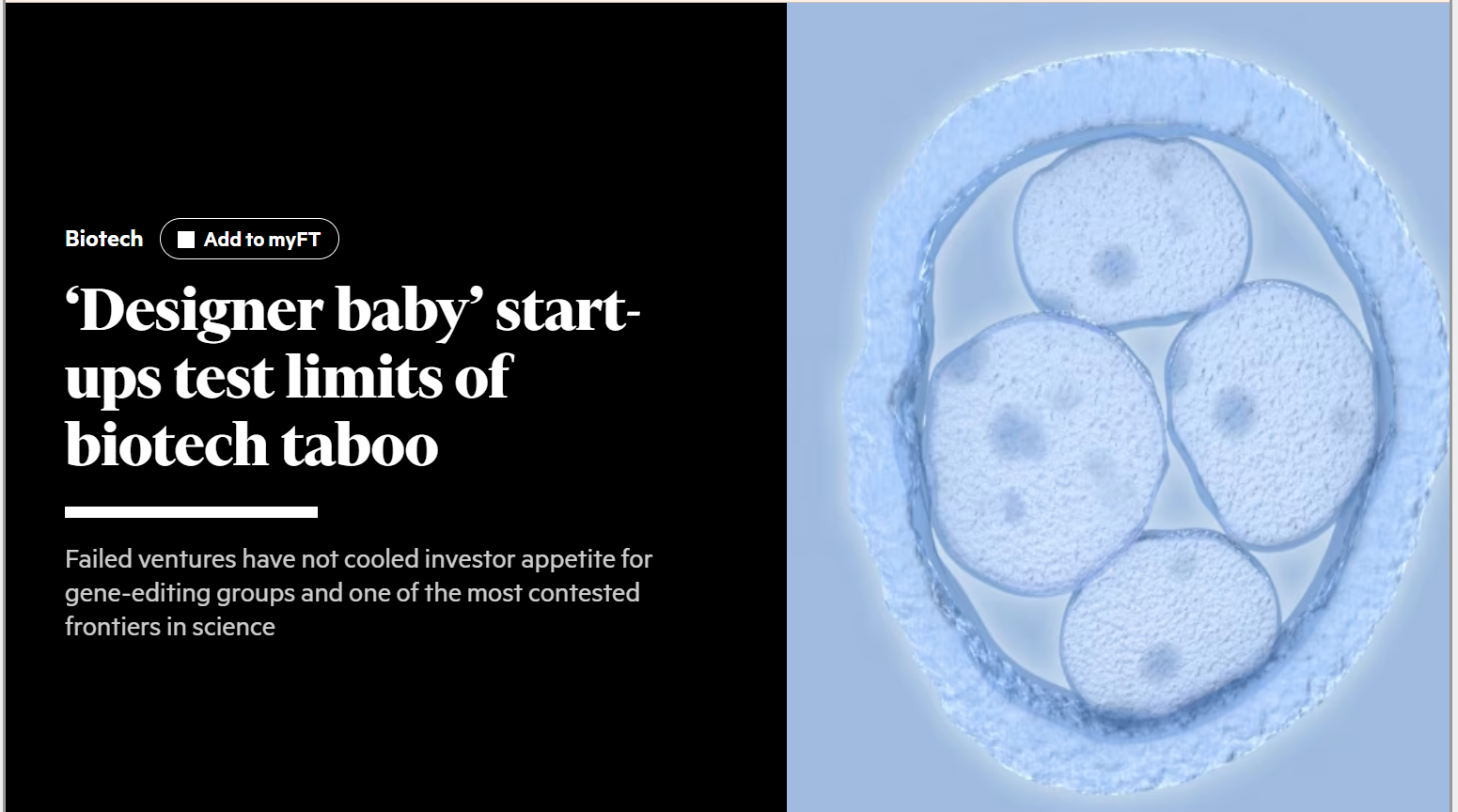
A startup can fail operationally while the market signal behind it stays positive. Within the past year, two United States companies in human embryo editing, Bootstrap Bio and Manhattan Genomics, stopped operating. Bootstrap Bio shut down after it could not continue fundraising; Manhattan Genomics dissolved after a founder dispute. Neither company disclosed a scientific breakthrough. Yet investors have not exited the controversial field, and screening products are giving reproductive-genomics startups a clearer near-term revenue surface.
That mismatch matters for early-stage teams, product leads and venture investors: the question is not only whether germline editing is safe or acceptable, but where capital is willing to sit while legal, ethical and scientific proof remain unsettled.
Case evidence: what the shutdowns reveal
Bootstrap Bio founder Chase Denecke attributed the closure to capital shortage, saying, "We raised some money... we just couldn't raise more." Denecke also said the company's shutdown was unrelated to the arrest of Qichen Yuan, who had been its chief scientific officer before becoming a part-time consultant. Reports also disclosed that Qichen Yuan was arrested in August 2025 and charged with attempted sex trafficking of children; the following month he was indicted. Yuan pleaded not guilty. Denecke said that when the arrest and indictment occurred, Yuan was no longer chief scientific officer but had become a part-time consultant, and that he learned of the accusation only after the company closed in late 2025. "Obviously, if I had known at the time, he would not have been employed by us," Denecke said. Denecke added that Bootstrap Bio's closure was unrelated to the arrest.
Manhattan Genomics offers a governance lesson. Its co-founder Cathy Tie said the company had a dispute with another co-founder and chief scientific officer, Eriona Hysolli, over where the company's operations would be located. After Manhattan Genomics dissolved, all capital was returned to investors. This March, months later, after Manhattan ceased operations, Manhattan Genomics co-founder and serial biotech entrepreneur Cathy Tie founded one new embryo-editing company, Origin Genomics.
Capital and commercialization paths
Despite shutdowns, money remains in the sector. Preventive, a San Francisco embryo-editing startup, raised nearly $30 million from investors last year. Investors included OpenAI chief executive Sam Altman and his husband, as well as Coinbase chief executive Brian Armstrong. Nucleus Genomics is backed by Peter Thiel's Founders Fund and is funding further academic research on germline gene editing; its long-term ambition is commercialization. Germline gene editing refers to changing DNA in egg cells, sperm cells or embryos.
These companies are exploring ways to change human embryo DNA; the initially stated goal is preventing inherited disease, while some supporters imagine using the technology to influence traits such as intelligence. That expansion helps explain scientific and ethical controversy: critics worry commercialization could create a path from treating disease to designing selected traits.
Data citations to watch
| Signal | What the data shows | Startup takeaway |
|---|---|---|
| Funding still present | Preventive raised nearly $30 million last year in San Francisco. | Closed rounds are not proof of clinical readiness. |
| Cost thesis | Somatic gene therapy may cost $2 million or more; embryo-editing startups say cost could be about $5,000 per embryo. | The economic pitch depends on future safety, delivery and regulatory clearance. |
| Screening demand | Nucleus Genomics says it analyzes more than 30 diseases and traits, including eye color, IQ and baldness, and provides testing for more than 2,000 inherited diseases for prospective parents. | Screening can create revenue before editing is permitted. |
| Distribution | Nucleus's screening service costs $9,999 and is available at more than 165 clinics worldwide. | Clinical networks may become the route into editing. |
| Governance pause | Three gene and cell therapy organizations proposed a 10-year pause on heritable human genome editing last year. | Industry self-governance pressure can shape fundraising. |
Scientific skepticism and ethical friction
Some scientists doubt the stated mission of preventing genetic disease. Fyodor Urnov, a genetics professor at the University of California, Berkeley, said the true goal is often, "They just want to create enhanced babies."
Robin Lovell-Badge, a developmental biologist at the Francis Crick Institute, said somatic gene therapy has value but carries risk and is difficult to deliver to the relevant body part. "It is not surprising that people want to try to find alternative ways to address genetic problems," he said. He added that embryo gene editing could be promising if proven safe and effective, and that serious academic research is under way. But he said most startups in the field lack scientific credibility and efforts to enhance traits such as intelligence are "very unreliable".
Advocates say germline editing may eventually be cheaper and more effective than current gene therapy. Somatic gene therapy targets non-germline cells and affects only the treated patient, with costs that could reach $2 million or more; embryo-editing startups have floated a possible cost of about $5,000 per embryo.
Regulatory, ethical and financing constraints
The nearest constraint is legal: many jurisdictions around the world prohibit germline gene editing for reproductive purposes. Denecke said early customers could be prospective parents traveling to countries with looser in-vitro fertilization regulation. Fundraising is hard because few venture investors understand the technology or its path to commercialization, he added. He said progress needs "enough wealthy people to reach a critical mass" and that "In this field, this is harder than in most fields."
Other investors remain cautious. Hysolli said regulatory uncertainty may suppress investment. Will Harborne, a general partner at LongGame Ventures, said ethical concerns have made his firm reluctant recently to invest in embryonic gene editing.
Still, money is finding a route because the broader market exists: screening embryos now, and possibly editing them later. Preventive says it will first confirm whether embryo editing to treat disease can be done safely before commercializing the technology. In a statement, it said, "We will not compromise safety standards to speed up the timetable."
Market bridge: screening before editing
Embryo-screening companies are expanding the commercial territory around reproductive genetics. Nucleus Genomics promises to help prospective parents "have the best baby" by analyzing more than 30 diseases and traits in embryos, including eye color, IQ and baldness. The company also offers testing for more than 2,000 inherited diseases in prospective parents.

Nucleus Genomics advertisement
Nucleus is funding further human germline gene-editing research at Columbia University and wants ultimately to provide gene-editing services to customers. Its existing screening business may therefore create a market path that embryo-editing startups do not yet have. Nucleus charges $9,999 for screening, and the service is available at more than 165 clinics worldwide.
Even critics doubt these ventures will vanish. Urnov said, "It pains me to say... they cannot be stopped." He added: "How much will this affect gene-medicine therapies? I hope the impact will be minimal."
Common misconceptions
- Shutdown means sector is dead. Not supported by funding records; Preventive raised nearly $30 million last year, and Origin Genomics was founded after Manhattan Genomics dissolved.
- Prevention equals enhancement. Original mission described preventing genetic disease, but critics say some supporters want traits such as intelligence, which fuels ethical disputes.
- Screening equals editing. Screening is currently sold commercially, while embryo editing faces legal prohibition in many jurisdictions.
- Low future cost proves viability. The $5,000 figure is a startup claim, not an established outcome, and safety and delivery remain uncertain.
Action advice for founders, product teams and early investors
- Treat founder and governance risk as capital risk. The Manhattan Genomics and Bootstrap Bio cases show that unresolved disputes, leadership exits and missing follow-on funding can stop startups without scientific failure.
- Map legal status before productization. For germline editing, reproductive use is prohibited in many jurisdictions, so a startup's earliest market may depend on prospective parents moving under looser IVF regulation.
- Look for adjacent monetization. Screening offers revenue, distribution and data before editing is permitted; Nucleus already sells a $9,999 service through more than 165 clinics worldwide.
- Press on scientific credibility. Robin Lovell-Badge says many startups lack it, and trait enhancement is "very unreliable"; investors should separate disease-prevention claims from enhancement claims.
- Assess ethics as a financing constraint, not only public relations. Hysolli points to regulatory uncertainty, while LongGame Ventures says ethical concerns deter investment.
FAQ
What happened to Bootstrap Bio and Manhattan Genomics?
Both were United States embryo-editing companies. Within the past year, two companies stopped operating: Bootstrap Bio because it could not continue fundraising, and Manhattan Genomics because of a founder dispute. Neither published a scientific breakthrough.
Who is still funding embryo editing?
Investors include OpenAI CEO Sam Altman and his husband, Coinbase CEO Brian Armstrong, and Peter Thiel's Founders Fund through Nucleus Genomics. Preventive raised nearly $30 million last year.
Why do scientists and investors remain skeptical?
Fyodor Urnov doubts the stated disease-prevention goals, saying, "They just want to create enhanced babies." Robin Lovell-Badge says most startups lack scientific credibility and trait enhancement is "very unreliable." Regulators in many jurisdictions also bar germline editing for reproductive purposes.
What is Nucleus Genomics doing now?
It sells embryo screening for $9,999 at more than 165 clinics worldwide, analyzes more than 30 diseases and traits including eye color, IQ and baldness, tests more than 2,000 inherited diseases in prospective parents, funds research at Columbia University, and hopes to eventually provide gene-editing services.