
Security Column: Manufacturing OT Risk and the MSP4MFG Event Horizon Group QRE License
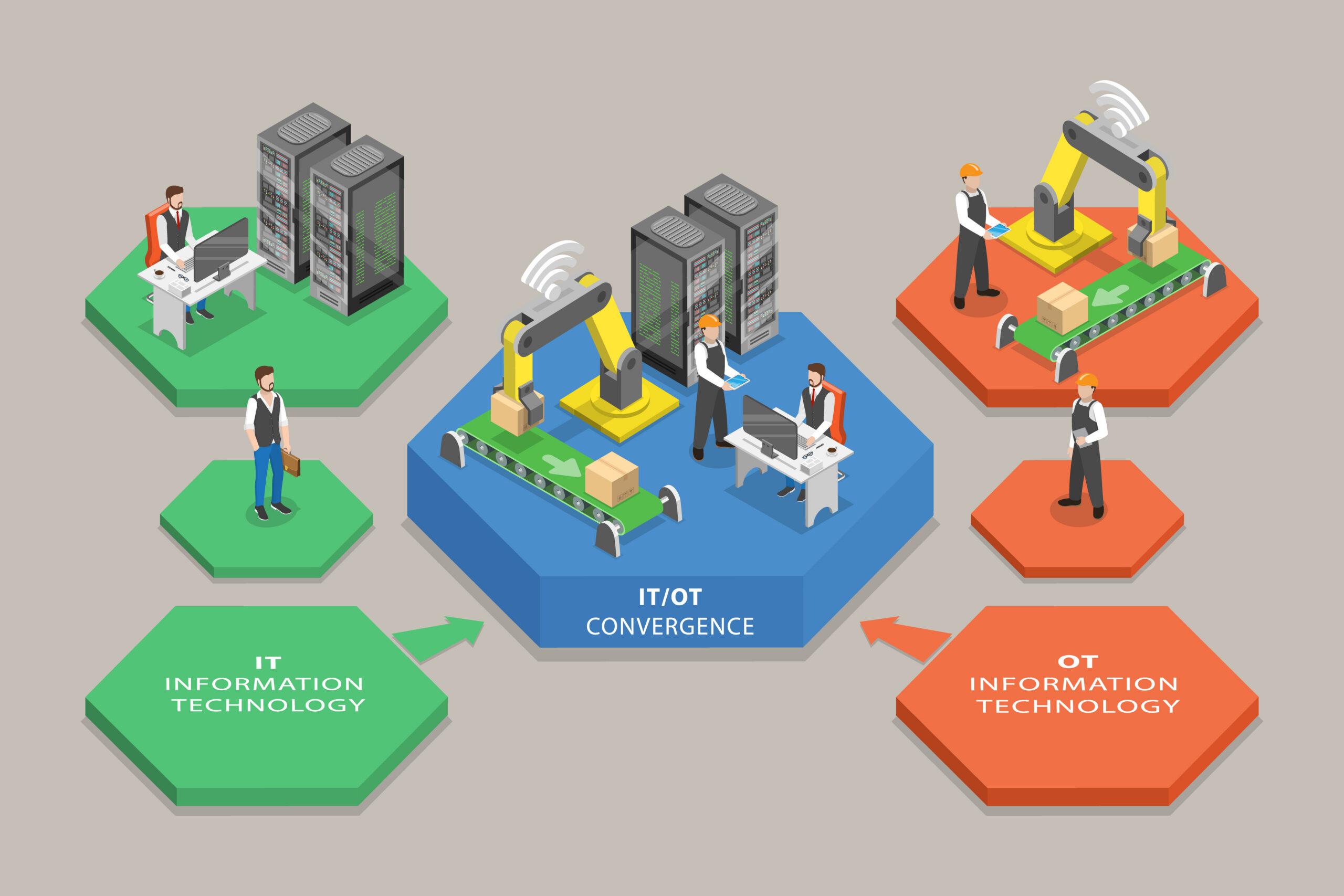
For enterprise IT administrators, OT operators and compliance owners, the practical test of any security announcement is whether it can be applied to plant-floor assets without destabilizing production. A new licensing move tied to quantum resilient encryption brings that test into sharper focus, because it targets the data and communications that keep manufacturing operations running.
Licensing signal: protecting OT data from machine to network
At the International Manufacturing Technology Show (IMTS) at McCormick Place, Event Horizon Group — the parent company of Q, WARP10 and CEW Systems Canada — and MSP4MFG LLC of Cheyenne, Wyoming announced today an exclusive worldwide license for the deployment of Quantum resilient encryption (QRE) across manufacturing. The first applications are MSP4MFG’s manufacturing security platform and the new “MSP4” secure edge device, both of which are also being announced this week at IMTS 2026 in Chicago.
From a Security column perspective, the story is not only a corporate licensing event. It is an OT risk statement. The licensing framework places QRE inside an environment where CNC machine tool communications, engineering networks, shop-floor machines and controlled technical information are routinely exposed. The announcement also targets future development for PLCs and related industrial control systems.
What QRE is intended to address
QRE was developed by CEW Systems Canada and is built on bi-symmetric encryption, described as a hybridized handshake technology designed for the quantum era. The core claim is protection of engineering data, CNC machine communications and controlled technical information from cyber threats, including future quantum-capable attacks. For a security team, that creates a need to trace three states of information: data at rest, data in motion and data at the machine.
- Login credentials are not transmitted in a challenge / counter-challenge handshake, reducing the most commonly exploited attack surface.
- Handshake data is fully salted and randomized to defeat interception, replay and pattern analysis.
- Brute-force attack is made computationally impractical, including against quantum-capable adversaries, through an exponentially nested formula with false-positive spaces exceeding manufacturable data storage limits.
- The footprint is lightweight for resource-constrained industrial edge devices, with a built-in password manager supporting complex credentials and two-factor authentication.
The framework scope named in the release is unusually broad: CMMC 2.0, NIST SP 800-171, ITAR, NERC-CIP, CIS, ISO / IEC, SOC2, OWASP, CRA, NIS2, OT360™ and DFARS. The stated purpose is to protect Controlled Unclassified Information (CUI) throughout the production environment. Built-in cybersecurity capabilities also include security operations center (SOC), security incident event management (SIEM), endpoint detection and response (EDR), vulnerability management (VM), patch management and penetration testing, all based on a hardened operating system.
Threat and market context
| Signal | Why it matters to OT security |
|---|---|
| Manufacturing is now the number-one ransomware target | It raises the priority of machine-level and network-level protection, not only endpoint hygiene. |
| Downtime commonly exceeds US$100,000 per hour | Security choices need to account for production continuity and reversible deployment planning. |
| Insurers and CMMC / NIST frameworks continue to raise the bar | Technical controls are increasingly tied to assurance evidence and risk acceptance. |
| DataM Intelligence estimates the industrial cybersecurity market at approximately US$84.5 billion in 2024, growing to US$135.9 billion by 2029 at 9.6% CAGR | Vendor selection and integration decisions are moving into a larger spend category. |
The stated gap is that generic, office-centric security providers continue to underserve mid-market plants. That is the problem MSP4MFG was formed to close, according to the announcement context. The focus on plant-floor reach is therefore the practical differentiator that security readers should test in a pilot.
Executive framing
Tom Gaasenbeek, Managing Director, MSP4MFG LLC, said, "The machine tool is where a manufacturer’s intellectual property is most exposed, and it is the one place traditional security vendors never seem to reach. Exclusive access to QRE lets us protect part programs and engineering data all the way to the spindle — without taking production offline,"
David Palachik, chief executive officer of Event Horizon Group, said, "Manufacturing is exactly the environment Quantum Resilient Encryption was built for: high-value data, legacy equipment and adversaries with growing computational power. MSP4MFG’s plant-floor reach makes them the right exclusive partner to carry QRE into this important sector,"
Company context
Headquartered in Cheyenne, Wyoming, MSP4MFG LLC is presented as a plant-floor managed services provider focused on securing operations. Three specialized partners are described as united under MSP4MFG: Excellerant for production intelligence and machine monitoring, Nexas for machine connectivity and OT integration, and OBETEC for cybersecurity and compliance. The combined offering is positioned as integrated IT, OT and cybersecurity services built for manufacturers rather than adapted from office IT.
Event Horizon Group is described as the developer of Bi-Symmetric Quantum Resilient Encryption and the parent company of Q, WARP10 and CEW Systems Canada. For readers, that corporate structure matters because it separates the cryptographic technology owner from the manufacturing delivery and operations model.
Security checklist for evaluating the announcement
- Map which assets carry part programs, drawings, models and controlled technical information.
- Identify legacy and modern CNC equipment, including the interfaces that may connect through edge devices.
- Confirm whether protection is being evaluated at rest, in motion and at the machine.
- Check whether credential exchange reduces exposure of transmitted login credentials.
- Review whether handshake data is salted and randomized for interception, replay and pattern-analysis resistance.
- Assess brute-force resistance in the context of resource-constrained industrial edge devices.
- Verify whether complex credential management, password-manager functions and two-factor authentication fit the production workflow.
- Align the review against governance obligations: CMMC 2.0, NIST SP 800-171, ITAR, NERC-CIP, CIS, ISO / IEC, SOC2, OWASP, CRA, NIS2, OT360™ and DFARS.
- Inspect how SOC, SIEM, EDR, VM, patch management and penetration testing would interlock on the hardened operating system.
- Use a bounded CNC pilot before expanding into future PLC and industrial control system development areas.
Common misconceptions
- A quantum-era claim does not mean the threat is only hypothetical; the announcement frames QRE for current and future quantum-capable adversaries.
- A secure edge device is not a complete OT security program; the MSP4MFG context includes platform, operations, monitoring and testing capabilities.
- Manufacturing security is not ordinary corporate security applied to a shop floor; CNC communications and controlled technical information create different exposure patterns.
- Compliance framework mentions are not evidence of certification; they indicate intended governance alignment that still needs audit-ready implementation.
FAQ
What is the core licensing development?
MSP4MFG secured an exclusive worldwide license to apply QRE across manufacturing, with the technology developed in the Event Horizon Group ecosystem and announced at IMTS 2026.
Which operational assets are emphasized?
The release emphasizes CNC machine tool environments used worldwide in aerospace, automotive, defense supply chains, job shops and fabrication, along with engineering networks and shop-floor machine data flows.
What data types are named as at risk?
Engineering data, CNC machine communications, part programs, drawings, models and controlled technical information are specifically named.
What market pressure is cited?
Manufacturing is described as the top ransomware target, with downtime commonly exceeding US$100,000 per hour, while insurers and CMMC / NIST frameworks raise expectations. The article also cites DataM Intelligence figures: US$84.5 billion in 2024, US$135.9 billion by 2029 and 9.6% CAGR.
Action recommendations
- Treat CNC machine tools as protected data endpoints rather than peripheral operational devices.
- Ask where QRE, if deployed through MSP4MFG’s platform, would attach to existing CUI workflows, SOC monitoring, SIEM correlation, EDR telemetry, VM scanning, patching and penetration-test findings.
- Use Excellerant, Nexas and OBETEC roles as partner-map checkpoints when evaluating the delivery model: production intelligence and machine monitoring, machine connectivity and OT integration, and cybersecurity and compliance respectively.
- Document the movement of part programs, drawings, models and controlled technical information between engineering networks and shop-floor machines before defining scope.
- Follow the future development path toward PLCs and related industrial control systems as a roadmap review item, not a present-day control claim.
The licensing story gives manufacturing security teams a concrete OT protection pattern: protect machine-connected information, preserve production continuity and test governance alignment through a disciplined pilot. The strongest editorial value here is the translation of a licensing event into deployment questions, not a simple vendor announcement.