
ItInsightsWorld Security Review: Calif iPhone 18 Pro Jailbreak Tests Apple Lockdown Mode After iOS 27.2
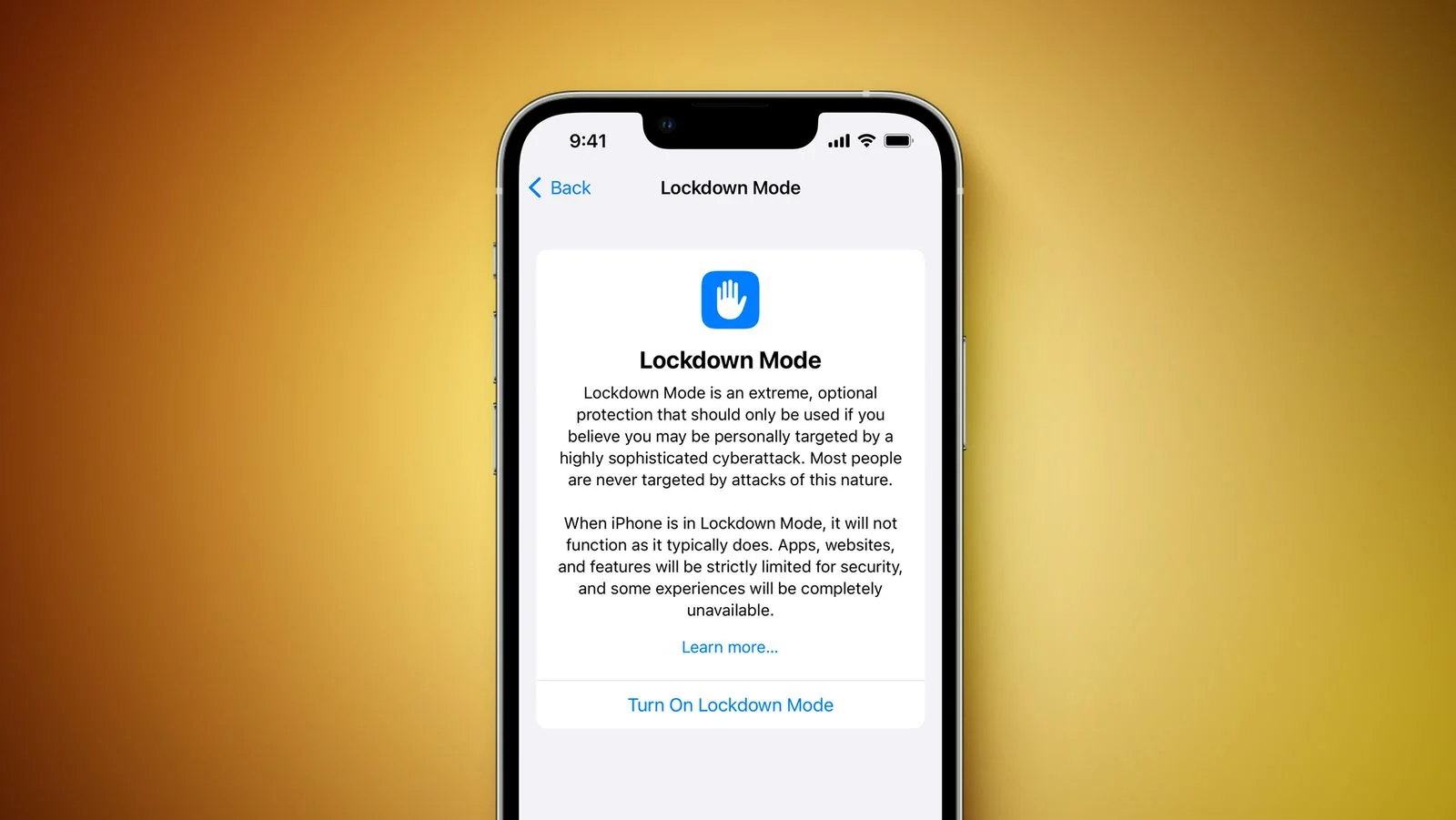
For enterprise mobile teams, the more useful reading of this report is not whether an iPhone can be modified for customization, but whether a hardened security posture can survive normal update operations. Apple describes Lockdown Mode as an optional, extreme protection for people who may be personally targeted by extremely rare and highly sophisticated cyber attacks, according to Apple's Lockdown Mode support page (support.apple.com/en-us/105120). Calif's iPhone 18 Pro demonstration, followed by an iOS 27.2 update, therefore becomes a comparison exercise among mobile hardening settings, patch-management assumptions, and security-research disclosure practices.
Comparison Snapshot: Jailbreak Test, Lockdown Mode, and Enterprise Risk
The following comparison separates what the demonstration states from how security teams should interpret it. It also draws on public reporting from GBHackers about reboot-persistent jailbreak states and MacRumors coverage of the earlier iPhone Duo release-day jailbreak (macrumors.com/2026-10-23/iphone-duo-jailbreak/).
| Comparison dimension | Ordinary jailbreak framing | Calif Lockdown Mode update test | Security decision meaning |
|---|---|---|---|
| Primary audience | Device customization or hobbyist use | Advanced mobile security research | Enterprises should read this as risk evidence, not user enablement guidance |
| Target platform | General iOS attack surface | iPhone 18 Pro with Lockdown Mode enabled | Lockdown Mode is targeted protection, not a default policy for every device |
| Update behavior | Users often expect an update to reset risky state | Video shows jailbreak status still present after iOS 27.2 installation | Update workflow and compromise response must be separated in risk plans |
| Reboot behavior | Tethered flows may need repeat action after restart | Prior Calif work reportedly included reboot-persistent states | Reboot persistence raises the severity of possible privilege retention |
| Tool availability | Some jailbreaks lead to public tools | No public tool or full exploit details were released | Immediate mass exploitation risk is not proven |
What the iOS 27.2 Update Test Actually Shows
Not long ago, Calif completed a jailbreak on the iPhone Duo on the first day of sale. Weeks ago, the team also displayed jailbreak work involving iPhone Duo and iPhone 18 Pro, including states that could persist after a restart. In the newer demonstration, researchers reached an iPhone 18 Pro while Lockdown Mode was enabled, then installed iOS 27.2. The persistence of the jailbreak state after the update is the key finding because it tests the system beyond a single exploit event. The team did not say whether the same approach can be used directly on devices already running iOS 27.2.
From an operations perspective, that distinction matters. Patching is often treated as a cleanup action, but a persistence test asks whether elevated access can survive a planned update. Public reporting from GBHackers (gbhackers.com/ios-27-0-1-untethered-jailbreak/) describes an untethered jailbreak as one that remains effective after a reboot, while other methods may require re-triggering the vulnerability. The master demonstration should not be read as proof that every iOS update is ineffective, but it does show why teams need a post-update validation mindset.
How Lockdown Mode Narrows the Attack Surface
Apple calls Lockdown Mode an extreme protection feature aimed at users who may be targeted by sophisticated commercial spyware. Its design is to reduce several common paths for attack. The list below combines the demonstration's observed restrictions with Apple's published guidance.
- Blocks most message attachment types before they can become a delivery channel.
- Limits parts of web technologies that can execute risky content.
- Intercepts FaceTime calls from strangers.
- Disables some Apple service invitation features.
- Removes location information from photos.
- Changes safer wireless connectivity defaults, including turning off 2G and 3G cellular support, according to Apple Support.
That documented narrowing explains why the reported attack path is significant. Publicly available video suggests a malicious PDF was sent through AirDrop and then activated after the target accepted the file. Because technical details were not disclosed, security teams should not infer the underlying vulnerability class or whether the method would work in every environment.
Research Disclosure vs Public Jailbreak Availability
Earlier this year, Apple told media outlets that it had not found successful commercial spyware attacks against iPhones with Lockdown Mode enabled. Calif, in turn, said it was following responsible disclosure principles and does not intend to publish a jailbreak tool for ordinary users. This makes the result more useful as a security signal than as a consumer customization offer.
A comparison with typical jailbreak coverage is therefore useful: ordinary jailbreak news often centers on tool availability, while this case centers on whether a targeted protection state can be bypassed and then retained. Yahoo Tech reporting (tech.yahoo.com/cybersecurity/articles/hackers-jailbreak-iphone-18-pro-193604534.html) on public conference coverage emphasized that no downloadable tool or bug details were made available, matching the disclosure position stated by the research team.
Common Misconceptions: Jailbreaking, Lockdown Mode, and iOS 27.2
- Misconception: Lockdown Mode is a general malware shield for all users. Reality: Apple frames it as extreme protection for a very small number of personally targeted users, so it should be paired with risk profiling rather than blanket deployment.
- Misconception: The jailbreak demonstration means iOS is broadly insecure. Reality: The demonstration shows a research path against a hardened state, not evidence of widespread exploitation.
- Misconception: Installing iOS 27.2 will always revoke a jailbreak. Reality: The demonstration states that the jailbreak status was still present after the update, while the direct applicability to already-updated iOS 27.2 devices was not disclosed.
- Misconception: The research team has released an attack tool. Reality: No public tool or complete exploit details were provided.
- Misconception: Every jailbreak survives a reboot. Reality: Reboot persistence is a separate characteristic; public reporting from GBHackers describes untethered states as reboot-persistent.
Action Checklist for IT Managers, Developers, and Risk Owners
- Map devices that can update to iOS 27.2 and separate routine patching from suspected-compromise remediation.
- Identify which users qualify for Lockdown Mode instead of applying it as a universal default, because Apple describes it as optional extreme protection.
- Review AirDrop, message-attachment, and file-opening policies for high-risk devices, especially those used near conferences, public venues, or targeted individuals.
- Require managed app distribution through corporate channels and disable nonessential sideloading or customization workflows.
- Add post-update validation checks for security-critical devices, rather than assuming a version change equals a clean state.
- Follow Apple security documentation and responsible-disclosure advisories before changing policies based on conference demonstrations.
- Prepare incident response steps: isolate suspected devices, preserve logs and forensic state, rotate credentials used on the device, and use approved recovery or reimage procedures.
Scenario Guidance: Who Should Adjust Policies First
| Scenario | Risk posture | Recommended stance |
|---|---|---|
| High-value individual likely targeted by spyware | Lockdown Mode reduces many surfaces but may not make the device unreachable to advanced research | Keep Lockdown Mode enabled, combine with device separation, stricter file handling, and faster advisory review |
| Enterprise with regulated mobile data | Update persistence raises the question of whether patching restores integrity | Introduce forensic-grade recovery paths and do not rely only on version checks as remediation proof |
| Average consumer | No public tool means little immediate practical change | Keep automatic updates, install apps from official stores, and avoid unknown AirDrop or attachment flows |
FAQ: What Security Teams Should Ask Before Reacting
Does Lockdown Mode prevent jailbreaking completely?
The demonstration says researchers first jailbroken an iPhone 18 Pro with Lockdown Mode enabled, then updated it to iOS 27.2. That shows Lockdown Mode should be treated as a mitigation layer, not an absolute guarantee against every advanced research path.
Should organizations postpone iOS 27.2 deployment?
The demonstration does not prove iOS 27.2 is unsafe. The better decision is to treat updates as normal risk reduction while recognizing that, in a compromised device scenario, update state alone may not confirm full revocation. A balanced policy keeps patch cadence and adds validation for high-risk devices.
Is AirDrop the main risk to manage now?
AirDrop appears in the reported attack path, but it is not proven to be the only relevant channel or the underlying vulnerability. For security teams, AirDrop is a practical policy control point: restrict untrusted transfers, review file acceptance workflows, and train high-risk users.
Can ordinary users reproduce the jailbreak?
No. The research team follows responsible disclosure and does not plan to release a direct jailbreak tool for normal users.
Final Assessment: A Persistence Lesson, Not a Jailbreak Product
The security takeaway is comparative. Lockdown Mode remains an extreme protection option that reduces many targeted attack paths, including FaceTime calls from strangers, many message attachments, risky web technologies, certain Apple service invitations, photo location exposure, and older cellular connectivity. At the same time, the demonstration of an iPhone 18 Pro with Lockdown Mode enabled, followed by iOS 27.2, is more concerning for its persistence signal than for consumer customization.
Weeks ago, Calif had already shown jailbreak states on iPhone Duo and iPhone 18 Pro research devices that could persist after a restart. Earlier this year, Apple stated it had not found successful commercial spyware attacks against iPhones with Lockdown Mode enabled. Together, these facts suggest a realistic security decision: do not wait for a public exploit tool to act. Instead, prioritize high-risk users, update governance, file-transfer controls, and post-incident verification before treating a phone as trustworthy again.