
Microsoft Integrates DirectX Dump Files Into GPU Crash Diagnosis for Windows Graphics Troubleshooting
Windows graphics workloads can fail in ways that look obvious to users but remain hard for developers: an application may close without warning, an image may freeze, or the display may respond abnormally. Microsoft is now linking GPU crash diagnosis with DirectX dump-file handling so that debugging data can be gathered more effectively when games and graphics software encounter such failures.
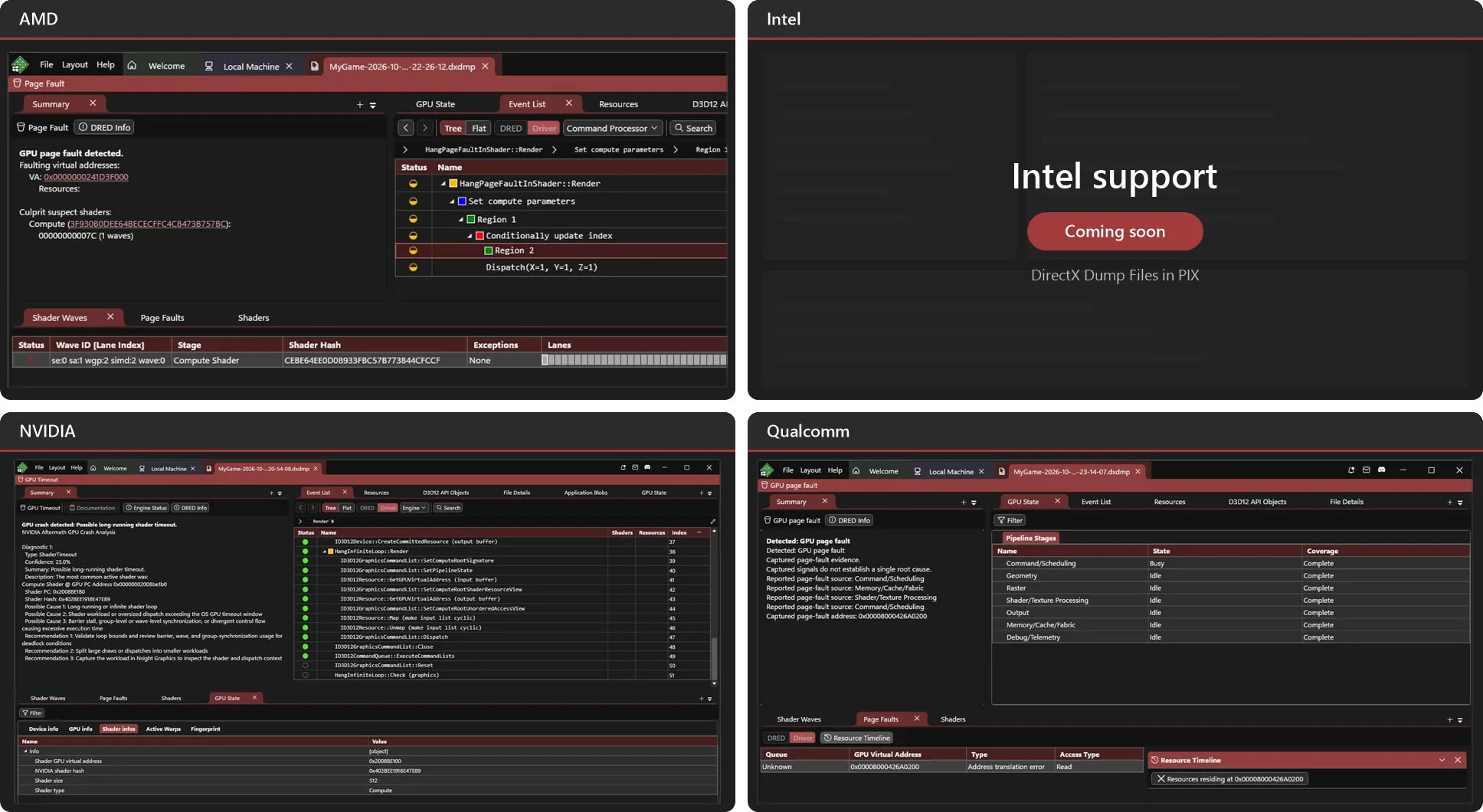
DirectX remains a core low-level technology for games and graphics applications on Windows. By connecting GPU crash diagnosis with dump files, Microsoft aims to make fault information collection more consistent, giving developers relevant data that can be used to examine unusual behavior in the graphics execution process.
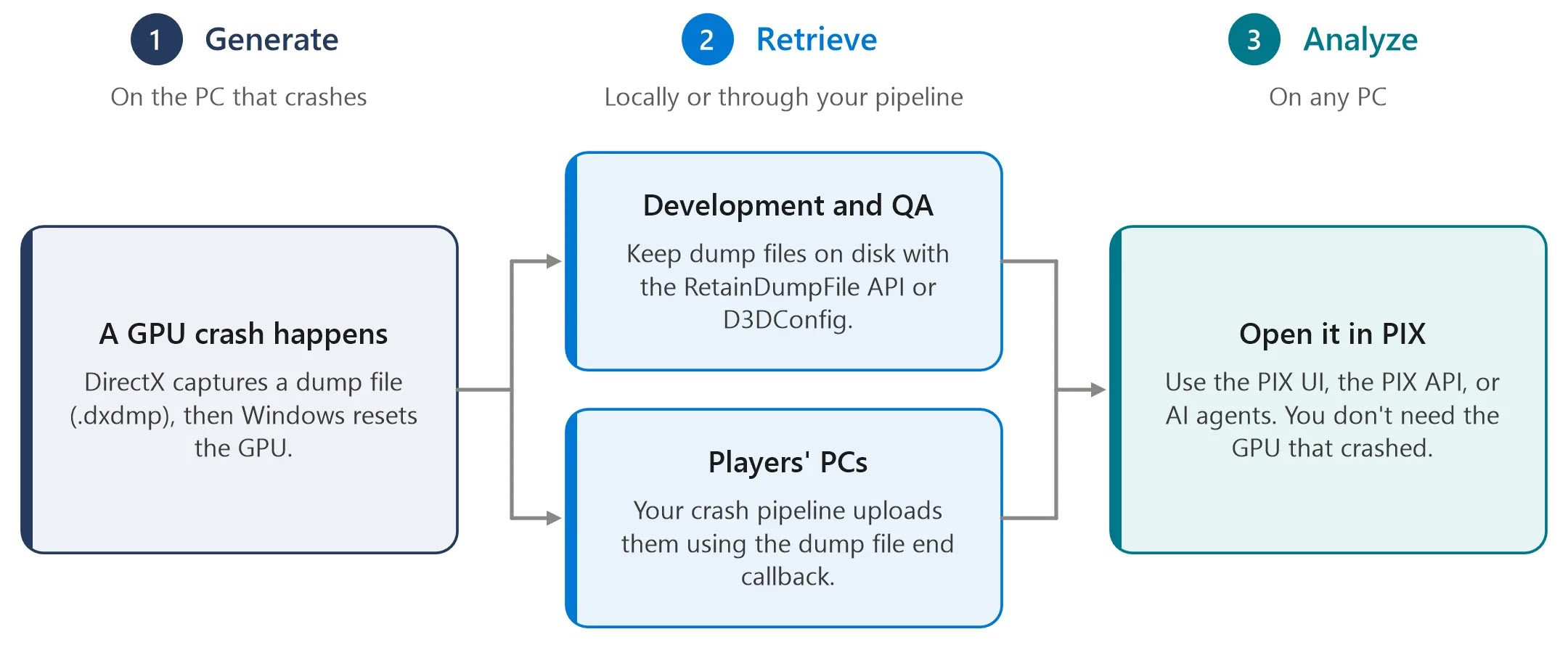
What a crash dump can retain
Dump files usually record part of a program’s running state at the moment of failure, including thread information, memory content and related execution context. For GPU crashes, such on-scene information can be especially valuable, because the cause may involve command queues, resource access, shader execution, or interaction between a graphics driver and an application.
When enough fault-site details are missing, developers may be left with user feedback, sparse logs and constrained reproduction conditions. A unified dump mechanism can reduce that uncertainty by helping development teams analyze the runtime environment represented in the collected crash data.
Where it helps game development
Modern games depend on complex rendering flows and widely use low-level graphics interfaces such as DirectX 12. As rendering technology, hardware configurations and driver versions multiply, certain failures may appear only on a specific graphics card, a specific driver or a specific running condition, which can make full internal reproduction difficult.
With more complete GPU fault dump support, developers can pursue targeted investigation and judge whether an abnormality is related to application graphics code, a graphics driver or GPU execution state, potentially shortening fault isolation time.
What it does not promise
A GPU dump file is not an automatic remedy for every graphics issue. The data still needs analysis through development tools and specialist review, and its usefulness depends on whether the dump is complete, whether the fault is captured effectively, and whether the related software and driver provide sufficient information.
For ordinary Windows users, this change should not be read as a frame-rate improvement or a guarantee that GPU crashes will stop. Its value lies in strengthening lower-level diagnostic capability, giving developers more practical ways to investigate graphics faults. As Windows graphics technology evolves, better collection and analysis of GPU crash information may help games and graphics software become more stable and reduce some failures that are difficult to reproduce.