
STOP Is Not Consent: An ItInsightsWorld Take on Text Spam
Even though I moved away from Texas a few years ago, I am still receiving political and marketing texts. In the past month, I have received dozens of them, often multiple per day.
A few examples arrived while I was preparing this piece.
The senders are not limited to one side: many seem to be from Republicans, but I have also seen Democrats, independents, PACs, supposedly unbiased pollsters, obviously biased pollsters, and even those odd false flag texts that circulated. I do not remember signing up for any of them, and I would not have intended to, yet my number is clearly on some list.
This is annoying because Messages is my highest-signal channel. Most notifications there come from family and friends, plus the occasional 2FA code, so the little red bubble carries more meaning than it does elsewhere — which is exactly why political candidates, marketers, and scammers try so hard to appear there.
It is not just elections; the pattern has become worse over time. This year, I started receiving a lot of these messages, sometimes as many as one a day:
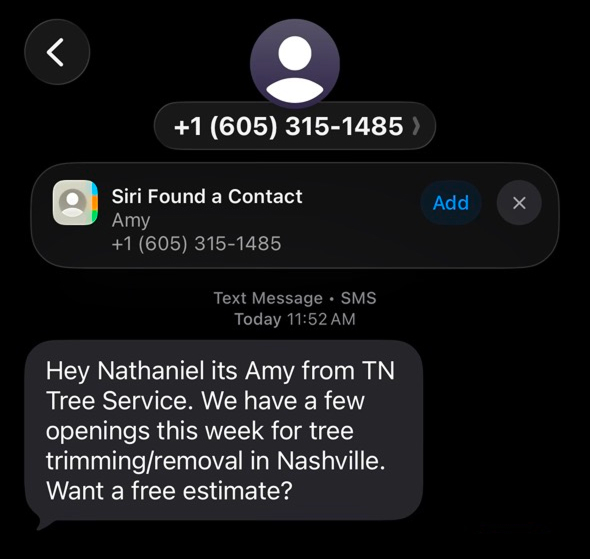
They may look personal and handwritten, but they expose themselves as part of a larger campaign if you reply STOP. Should that be legal, by the way?
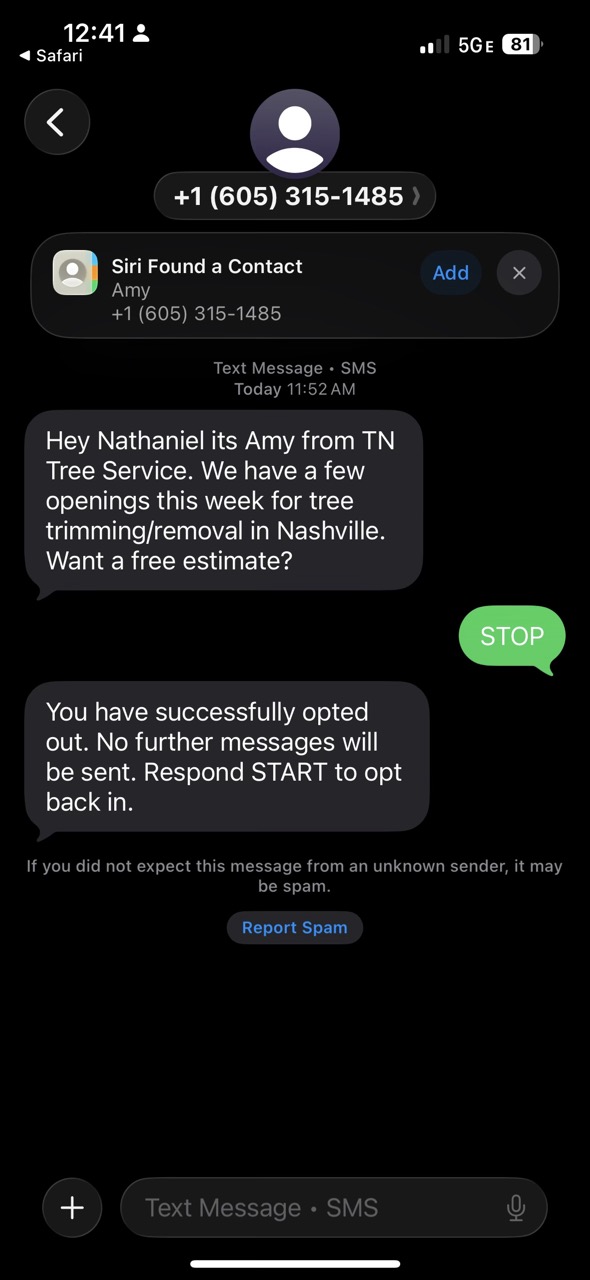
Why I Do Not Treat STOP as the Default Answer
The obvious fix seems to be replying STOP to each one and waiting for the volume to drop.
I have not adopted that approach. Apart from the experiment above, I choose Delete and Report Spam for every one of these texts, even when it does not seem to accomplish anything.
Apple has added a Spam folder to Messages, and a few things have landed there. Yet, even though I have been reporting this influx for months, if not longer, the newly arriving messages are not being filtered into Spam.
The Framing I Want to Reject
After thinking about it, the resistance is not just convenience. Replying STOP feels like accepting a worldview: “Okay, you’re allowed to send me whatever you want, and then I have to send back STOP for you to knock it off.” I do not want to grant mass-texting campaigns that default right, and I do not think the burden should fall on every recipient to opt out of each campaign individually.
A Possible Improvement for Apple Platforms
If someone reading this works on iOS at Apple, please help. This feels like a good use case for Apple Intelligence, similar to the AI adblock experiment I ran a while back. If I mark something as spam, perhaps iOS could offer, “Filter messages like this to Spam?” and add the unwanted message to a list of examples. The next time a message arrives from an unknown number, the model could compare it against those spam examples and route similar texts to Spam. That is just a rough suggestion; better anti-spam ideas may exist.
When Built-in Controls Conflict
Recently, I found a “Delete and Stop” option that sends STOP automatically. Still, “Delete and Stop” and “Delete and Report Spam” appear to be mutually exclusive. One might assume reporting spam would also send STOP, but the messages I continue to receive from Don Huffines despite reporting each one suggest otherwise.
A Problem That Goes Beyond One Inbox
At best, things may calm down after the election, but I do not want to wait for that. Someone has to act. Email seemed like a solved case, yet that no longer feels true: these days marketing email still arrives despite opt-out attempts at each purchase site. Voice spam is also relentless: I receive multiple spam calls a day while registered on the Do Not Call registry. The pattern suggests that anyone seeking money or votes will find an opening. My remaining hope is that Slack does not become one of them.