
LANDMARK Orchard vs Wheelock Place: ItInsightsWorld General Review of Hongkong Land's S$1.1 Billion Orchard Road Rebrand
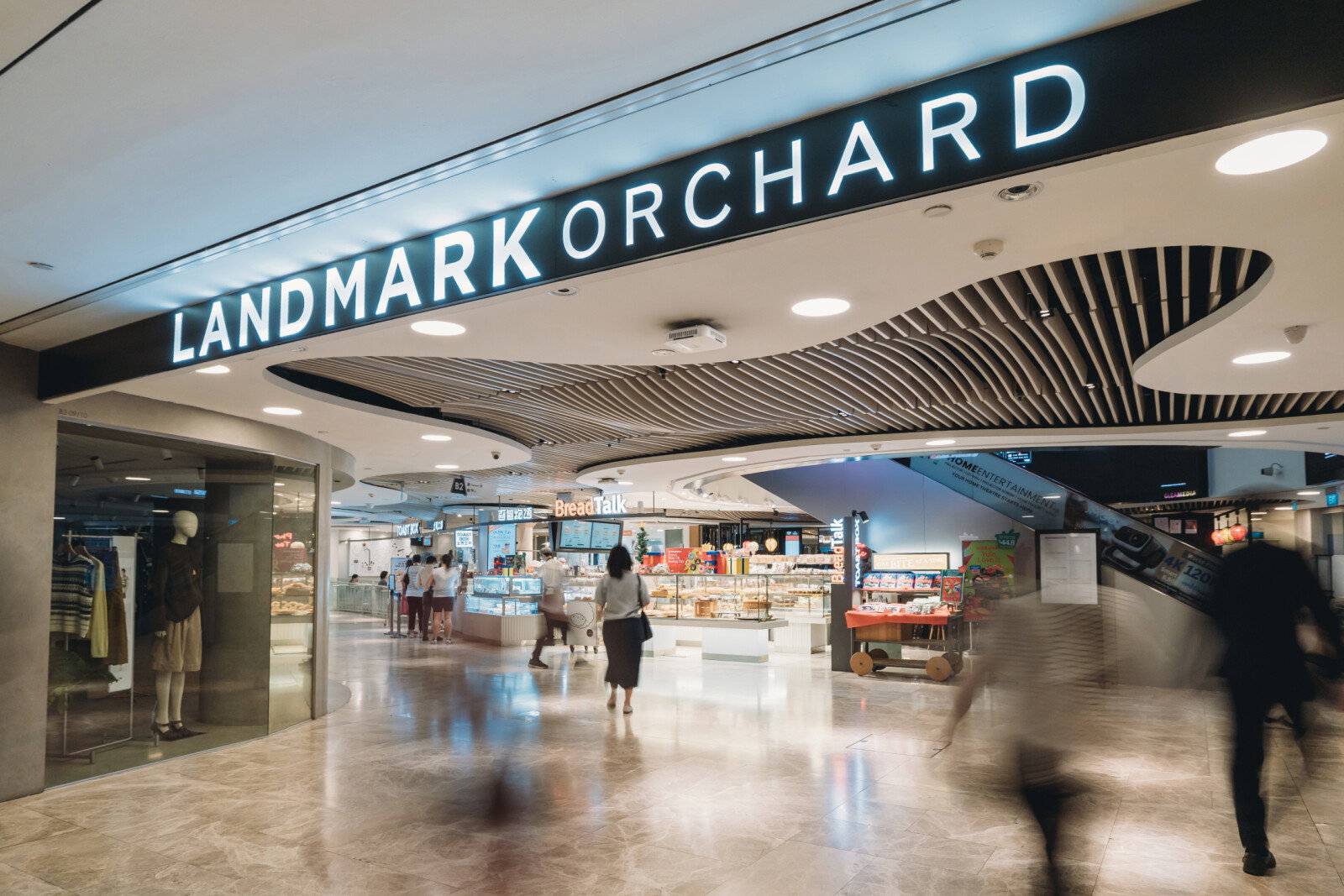
Wheelock Place is now LANDMARK Orchard, and the only question that matters on Orchard Road is what changes behind the new sign. Hongkong Land paid roughly S$1.1 billion through the Singapore Central Private Real Estate Fund (SCPREF), switched the name on 12 November, and is preparing to run the asset with the same long-term playbook that rebuilt LANDMARK in Central. Read it as a repositioning signal, not a ribbon-cutting.
What actually changed on 12 November
The name and the ownership changed; the building did not. Wheelock Place has become LANDMARK Orchard, which makes this the first time Hongkong Land has taken the LANDMARK name outside Hong Kong. The switch took effect on 12 November, following the property's purchase in August 2026 by the Singapore Central Private Real Estate Fund (SCPREF) — the fund's debut deal since it was established in February this year.
The asset itself is unchanged: office and retail space, directly connected to Orchard MRT station, sitting on Orchard Road for more than 30 years, still serving the same tenants and visitors. What changes is who controls the rent strategy and the upgrade budget.
Why pay S$1.1 billion for a 30-year-old building
Because on Orchard Road the scarce resource is not floor area, it is the address. Hongkong Land agreed to pay approximately S$1.1 billion (about US$0.9 billion) for the property at 501 Orchard Road, in line with a recent independent valuation, according to the group's own July 2026 announcement. The seller was an entity of Hong Kong-listed Wharf Real Estate Investment Company, as reported by Business Times.
That price only makes sense if prime Orchard Road retail is treated as a steady, slow-growth asset rather than a distressed one. The data supports that read, but only just. Urban Redevelopment Authority (URA) statistics put Orchard Road retail vacancy at 7.2% in Q2 2026, up from 7.1% in the previous quarter, and Savills noted prime mall rents edging up 0.3% quarter-on-quarter. This is a landlord's market with a visible ceiling, not a recovery story.
LAndMARK Orchard vs Wheelock Place: side by side
| Dimension | Wheelock Place (before) | LANDMARK Orchard (from 12 November) |
|---|---|---|
| Owner | An entity of Wharf Real Estate Investment Company | Hongkong Land, via SCPREF |
| Name | Wheelock Place | LANDMARK Orchard |
| Consideration | Not publicly disclosed by the previous owner | Approximately S$1.1 billion (c. US$0.9 billion), per Hongkong Land |
| Physical layout | Office plus retail, direct Orchard MRT station link | Unchanged |
| Upgrade programme | No group-wide programme | Long-term investment approach promised; scope and budget not yet disclosed |
| Brand system | Standalone identity | Part of LANDMARK, tagged "Experience is central" |
How the Hong Kong playbook transfers — and where it does not
Hongkong Land is not guessing. In Hong Kong, LANDMARK sits at the heart of the group's Central portfolio and is currently undergoing a major transformation under its more than US$1 billion "Tomorrow's CENTRAL" programme. That scheme, announced in 2024, is built around 10 multistorey Maison destinations, more than 200 retail boutiques and around 100 dining outlets. Even with about 40% of LANDMARK's lettable retail space still under renovation in mid-2026, tenant sales at the Hong Kong portfolio rose roughly 16% year on year, according to DBS research, against an 11.3% rise in Hong Kong retail sales.
Hongkong Land said it intends to enhance LANDMARK Orchard by applying its long-term investment approach and property management expertise to the Singapore development. The transferable parts are leasing discipline, tenant mix and service standards. The non-transferable part is the catchment: Orchard Road competes with newer, better-connected malls, and a rebranded facade does not add train lines or footfall. New entrants keep arriving — Sociolla's first two Singapore stores at Funan and Bugis Junction brought more than 130 beauty brands into the same shopping belt — so the pressure on an ageing asset is upward on cost, not on demand.
What the rebrand is really buying
A brand name is a promise, not a business plan. The value in this deal comes from three quieter things: a prime freehold-style address, control of the tenant mix, and the option to spend capital later without asking anyone else. The rebrand itself is the cheapest part of the transaction, which is why the group's company-wide identity refresh last year — developed with branding agency DNCO around the tagline "Experience is central" — mattered more than the signage.
That refresh was a modernisation of a group founded in 1889, an attempt to turn a century-old legacy into a curator of premium city-centre destinations across Asia. It is the same logic visible in other 2026 brand-team rewrites, such as the Maybelline "Maybe." rewrite, where a singular subject became a collective one. Names get attention; lease covenants and capital works get results.
Common misconceptions
- A new name is not a new mall. No structural works have been announced, and the building keeps its existing layout and MRT connection.
- The rebrand is not a rent guarantee. Tenants should expect normal rent reviews, and possibly fitting-out contributions if refurbishment follows.
- First LANDMARK outside Hong Kong is not the same as first Hongkong Land presence in Singapore. The group already invests and manages in the city; what is new is the brand.
- SCPREF is a fund, not the group's own chequebook. Returns, not corporate prestige, will drive decisions on capital spending.
FAQ: what tenants, shoppers and rival landlords will ask
Will the name change raise my rent?
Not by itself. Rent moves with the lease cycle, the tenant mix and any refurbishment, not with a logo. Watch the letter of offer at your next renewal, not the signboard.
Will the mall close for renovation?
Nothing has been announced. The Hong Kong precedent suggests phased works rather than a full closure, because about 40% of LANDMARK's retail space was renovated in stages while the mall stayed open.
Does the rebrand change my existing lease?
No. A change of owner or name does not rewrite signed tenancy terms. What can change is the managing agent and the service standards applied to the building.
Why Orchard Road and not somewhere cheaper?
Because the address is the product. A S$1.1 billion cheque for a 30-year-old building only works if the location stays prime, which is precisely what the vacancy and rent data test every quarter.
What to watch next
- The first capital-works announcement. A budget and timeline for LANDMARK Orchard's upgrade is the real signal; until then the rebrand is mostly messaging.
- Tenant-mix changes on the lower floors. New flagships and dining operators indicate how aggressively the landlord is repositioning.
- Orchard Road vacancy and prime rents. URA quarterly statistics and agency comment will show whether the belt absorbs another premium repositioning.
- SCPREF's next deal. If the fund buys again, the Wheelock Place acquisition was a template; if it does not, it was a one-off trophy.
Sources
- Hongkong Land press release on SCPREF's acquisition of Wheelock Place (July 2026): https://webfile.hkland.com/assets/press-release/2026/en/hll_20260730.pdf
- Business Times, Singapore retail rents and URA vacancy data, Q2 2026: https://www.businesstimes.com.sg/property/singapore-retail-rents-rise-0-6-q2-vacancy-rate-creeps-ura
- DBS research on Hongkong Land, LANDMARK performance and Central office vacancy (July 2026): https://www.dbs.com.sg/private-banking/aics/templatedata/article/recentdevelopment/data/en/DBSV/072026/HKL_SP_07292026.xml
- Business Times on the renaming and the S$1.1 billion acquisition: https://www.businesstimes.com.sg/property/wheelock-place-renamed-landmark-orchard-after-s1-1-billion-acquisition-hongkong-land
By Jack Ross, IT Insights — contact@itinsights.com