
ItInsightsWorld Guide: How Surf Towns Can Plan for Wave Loss, Sea Walls and an Uneven Climate Future
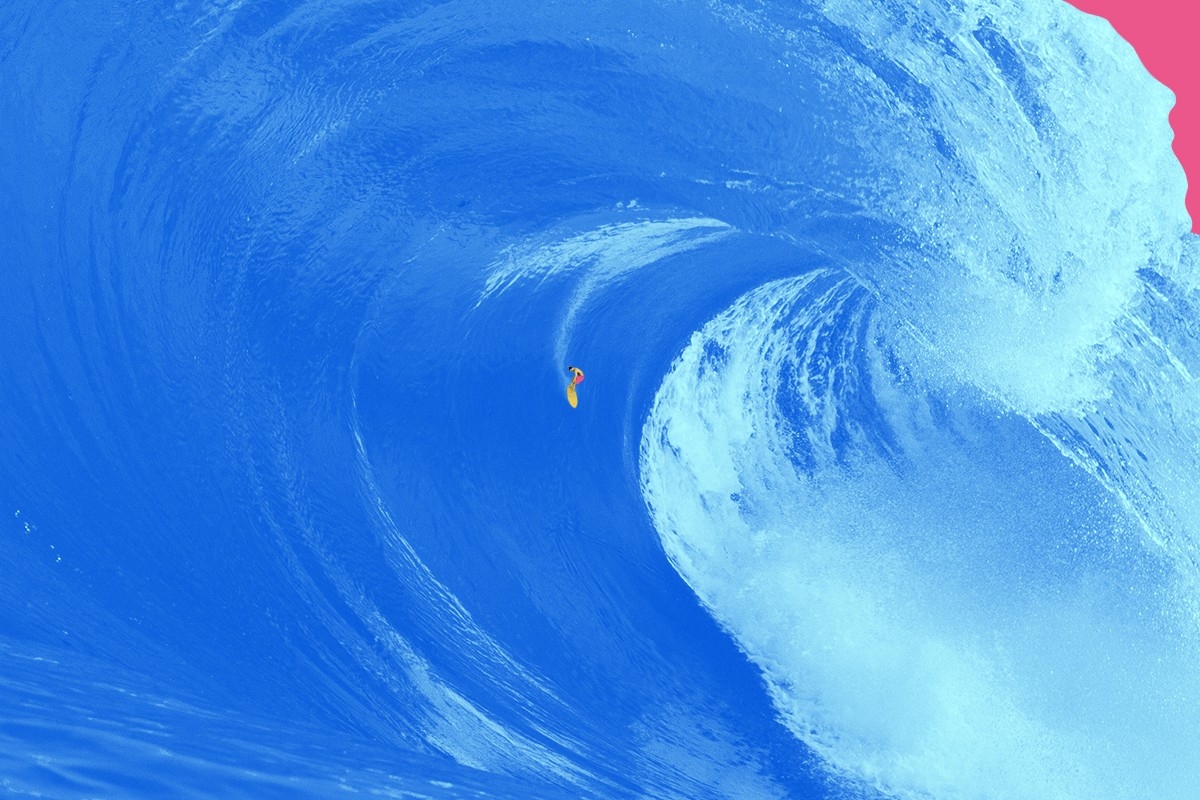
This guide answers how climate adaptation affects ordinary surfing: rising seas and shoreline structures can drown breaks, reduce water quality, and shift access from everyday recreation to elite big-wave chasing. The practical takeaway is to plan around wave loss now: map breaks, limit hard armor, protect reefs and dunes, and include surf value in coastal decisions before 2100 pressures lock in.
What wave scarcity means for everyday surfers
Cliff Kapono still sometimes rides the sea the way his Indigenous Hawaiian ancestors did 1,000 years ago, using a traditional wooden board. As a professional surfer and molecular biologist, he worries that descendants may not inherit the same access because surfable waves are becoming scarcer.
Surfing works when wind energy travels across the ocean and underwater features such as reefs, shallow seabeds or jetties trip that energy upward. Whether a wave can be ridden depends on break geography and tide. A 2017 analysis of 105 California surf spots found that 34% are at risk of “drowning” by 2100, meaning the wave will break too close to shore or not at all. Just 5% are expected to improve, the study found.
Part of the danger comes from erosion, which changes coastline shapes. Rising seas also push high tide higher and make low tide unrecognizable. Warmer water can stress coral reefs, while algal blooms can degrade water quality until surfing becomes untenable.
Stefanie Sekich, who leads the coast and climate initiative at the Surfrider Foundation, warned that “millions of people … will have their surf breaks drowned before their eyes.” Sekich herself watched a treasured, unnamed pocket break near San Diego disappear as erosion swallowed it.
Recent work adds a local budgeting lens: a Santa Cruz, California report estimated surfing contributes about $200 million in annual economic value and said a single foot of sea level rise could diminish surfable waves by nearly 40%, according to ABC7 News and Save the Waves Coalition. The figure should not be read as a global prediction, but it shows why a wave can be a municipal asset.
“A balance and a natural flow that has existed over millennia is being disrupted as a result of human interaction,” Kapono said. “And change is difficult for people. It requires either time or money, patience or adaptation.”
What communities stand to lose when surfing declines
Nik Strong-Cvetich, who leads the non-profit Save the Waves Coalition, argues that surf breaks have unappreciated economic power. In the last 70 years, surfing’s spread transformed it from a spiritual and social practice in small island communities into a global sport. Towns such as his own Santa Cruz, California, often do not factor ridable waves into decisions about sea walls, breakwaters and other shoreline structures, even though those waves draw tourists and transplants.
This “armoring” of the coast—using cement structures meant to block waves and stop shoreline loss—can harm intertidal ecosystems and even speed up beach erosion. CSIRO has similarly noted that seawalls and groynes can dramatically reduce the quality of surfing waves. The California Coastal Commission has become choosier about where armoring is allowed; in recent cases, it has required owners of new coastal properties to waive their rights to future sea walls to protect vulnerable developments.
Still, Strong-Cvetich said, a cement-forward approach to adaptation is among climate change’s biggest threats to surfing, to the ecosystems linked to the sport, and to the economies that depend on it. Save the Waves argues for nature-based solutions to sea level rise, such as dune restoration, and for legally protecting surf breaks. Surfrider shares this push, while also backing calls for government funding to relocate some vulnerable coastal neighborhoods.
Those choices are expensive and contested. A California Legislative Analyst report found that sea level rise is projected to submerge $10 billion worth of property by 2050. Several California towns have considered and rejected “managed retreat” proposals, which homeowners fear may threaten beachfront property values. The practical implication is that “protect the wave” and “protect the home” need to be evaluated together, not as slogans.
Why the next 100-footer may not rescue ordinary surfing
For certain elite surfers, bigger swells may help. The swells that launch waves sky-high at breaks like Nazaré come largely from storm activity thousands of miles offshore. One knock-on effect of climate change is stronger hurricanes and surface winds, which make those swells carry even more energy. This has already begun: global wave power has increased 0.4% per year since 1948, according to a 2019 study.
Combined with sea level rise, that energy has the potential to fuel monster waves watched by surfers such as Garrett McNamara and Kai Lenny. Kurt Korte, vice president of forecasting for Surfline, said the question of where new 100-footers might appear lingers while his team monitors ocean conditions.
“When you see a storm system that does something a little bit atypical, or you see a shift in the general pattern from one winter to the next, you get … thinking about what that may mean,” Korte said. He expects climate change to make the next Nazaré especially likely at higher latitudes: think Alaska, Western Canada, or Greenland.
That would be a boon for extreme surfers who increasingly get the spotlight in documentaries such as the glossy HBO documentary series 100 Foot Wave—and for fans who devour footage of their work. But Li Erikson, a research geographer at the U.S. Geological Survey, notes that her own team’s models paint a more nebulous picture of the big-wave future. While some places are projected to see taller waves, including at higher latitudes, others are expected to see waves shrink.
The broader pattern mirrors climate winners and losers beyond the lineup: the area around the Great Lakes may seem promising; warming Siberia may let some farmers grow new crops; yet climate change has already caused the number of people suffering from hunger in some of the world’s most vulnerable countries to more than double since 2017. Treating “bigger waves” as a foregone conclusion simplifies a messy risk picture.
Korte’s caution is useful: “There’s a finite number of people that are really impacted by the big wave stuff,” he said, while millions of people depend on smaller coastal breaks. In other words, a handful of spectacular 100-footers do not offset the loss of everyday wave access.
A practical guide for coastal readers and local decision-makers
The same logic applies beyond California. Matador Network has reported that construction rocks, seawalls and altered sand flow near Bali’s Uluwatu could affect how a famous wave breaks, showing that a coastline project can change surf access even when the stated goal is flood or erosion control. The lesson is not that development is always bad, but that wave function should be tested before concrete is poured.
Checklist: six moves before coastal work starts
- Map each break’s tide window, reef depth, erosion history, and access point.
- Score wave loss risk in permit files, not only flood and property loss.
- Prefer dune restoration, setback rules and living shorelines before seawalls.
- Require wave-impact analysis for groynes, breakwaters, harbor arms and rock revetments.
- Build legal recognition for important breaks so councils cannot treat them as invisible amenities.
- Fund relocation options before a neighborhood becomes uninsurable, not after.
Common pitfalls that make wave loss worse
- Assuming a sea wall only affects the parcel behind it; erosion often moves downcoast.
- Counting wave revenue only through surfing lessons, not lodging, food, transport, and second-home demand.
- Equating all “bigger swell” headlines with better surf for locals.
- Waiting until water quality, reef bleaching or parking conflicts become political slogans.
Comparison table: what each adaptation approach buys
| Approach | Protects | Wave risk | Best fit |
|---|---|---|---|
| Hard armoring | Selected homes or businesses near the shore | Can block sediment flow and flatten surf quality | Emergency protection only, with waiver limits |
| Nature-based adaptation | Dunes, reefs, intertidal habitat, some wave form | Lower, but slower to show benefits | High-value beach towns with space for restoration |
| Managed retreat | Public safety and long-term coastal access | Can preserve dynamic beaches if planned | Areas where repeated losses and sea wall costs converge |
Action advice: what readers should do next
Residents and casual surfers can ask local councils three questions before a shoreline permit is approved: Will it preserve low- and medium-tide access? Does it shift erosion downcoast? How much economic value is assigned to the break? If the answers are “we do not know,” the project should include a wave-impact review, a habitat study and a public comment period.
FAQ: wave scarcity, sea walls and climate adaptation
Does sea level rise always create better waves?
No. Some high-energy locations may receive stronger swell, but ordinary breaks can be drowned, flattened or made unusable by tide, erosion, reef damage and water quality. The 2017 California study projected losses for many breaks, not universal improvement.
Why do surf advocates oppose seawalls?
Because armoring can speed up beach erosion and disturb sand movement, changing wave shape. CSIRO and Save the Waves both argue that hard structures and altered sediment flows can reduce wave quality, sometimes harming ecosystems and local economies.
Can protecting surf breaks also protect communities?
Yes, when adaptation plans combine nature-based defenses, setback rules, relocation funding and wave-loss analysis. Strong-Cvetich and Sekich both suggest the issue is not recreation versus safety, but how to measure the full value of the coastline.
Who benefits most from climate-driven big waves?
Elite surfers and spectators, not casual locals. Korte notes the limited number directly affected by big-wave outcomes, while millions depend on everyday breaks. This asymmetry is the core governance problem.
Adaptation is not a slogan; it is an inventory of what remains usable. When resources still exist, communities should protect the everyday coastline that makes surfing social, cultural and economically viable.