
ItInsightsWorld General Briefing: Engagement Among United States Employees Slides as AI and Remote Work Fuel Fresh Workplace Friction
A new survey suggests that the bond between workers and their organizations has been loosening, and that professional fatigue is becoming harder to ignore. Rather than a single cause, the report points to a mix of factors that now shape how employees in the United States experience work: economic uncertainty, expanding AI use, and changing expectations around remote arrangements.
Falling Commitment Across American Workplaces
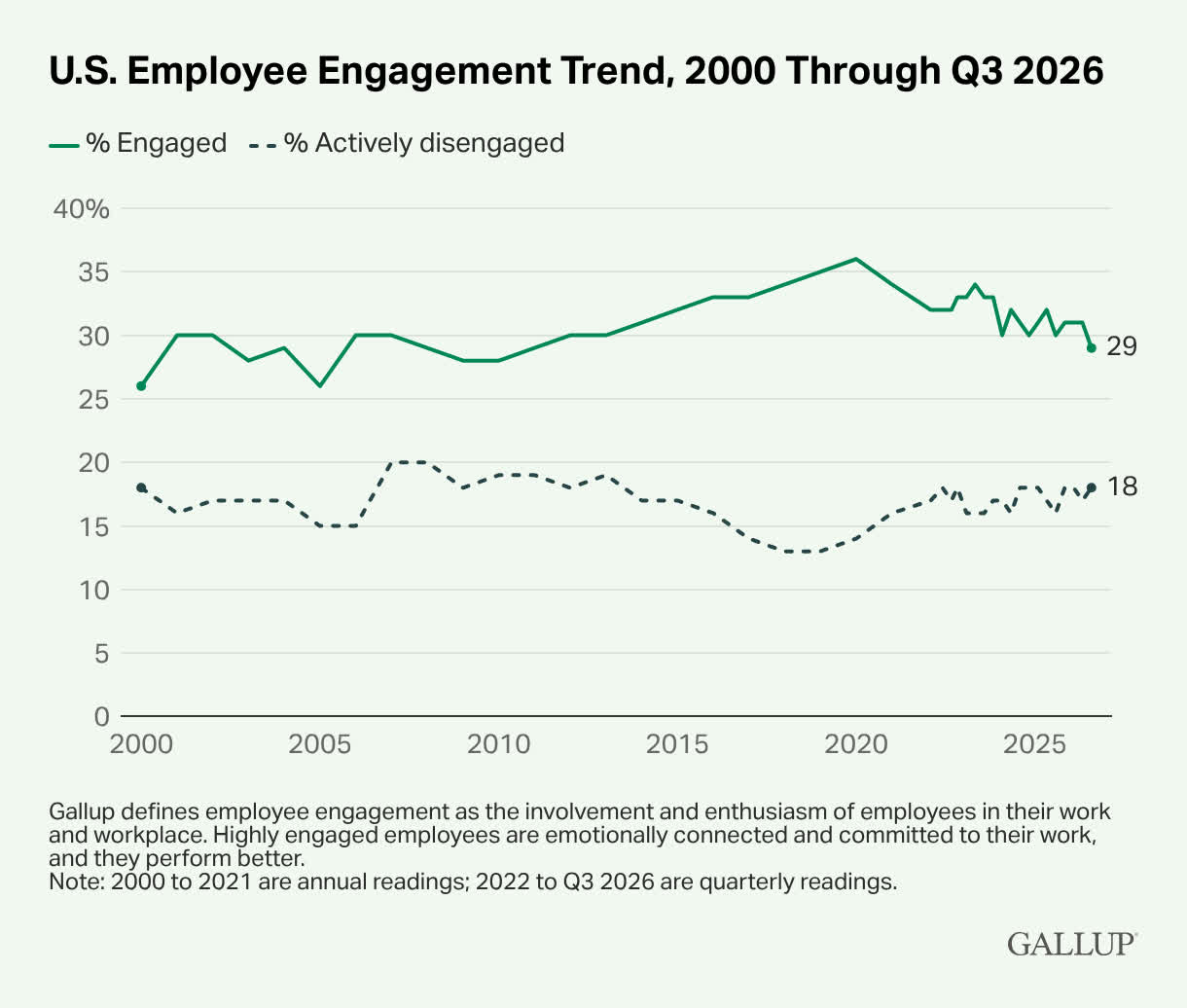
According to the findings, fewer than one-third of employees in the United States say they remain actively engaged in their roles. The survey also finds a rise in people who classify themselves as actively disengaged, or who report limited interest in their work. This pattern suggests an emotional withdrawal from the workplace, not just a temporary dip in output.
AI Raises Anxiety Alongside Efficiency
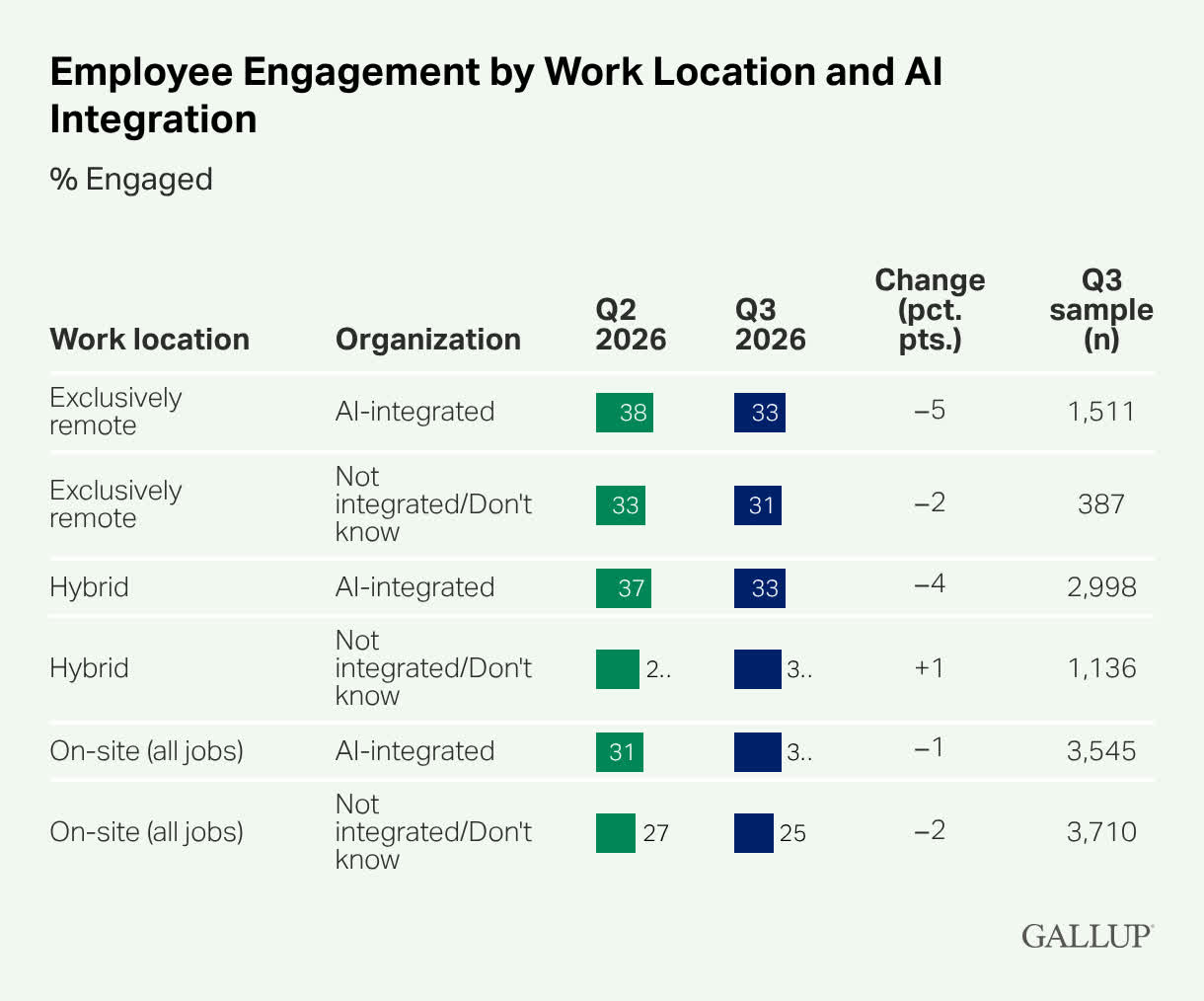
The report identifies AI as a major influence on workplace mood. As more industries adopt AI tools, some workers worry that automation may redesign existing roles and undermine long-term employability. Employees who approach AI with concern are more likely to feel insecure and less likely to be committed than colleagues who mainly associate it with productivity gains.
Flexible Work Still Welcomed, Mandates Spark Discontent
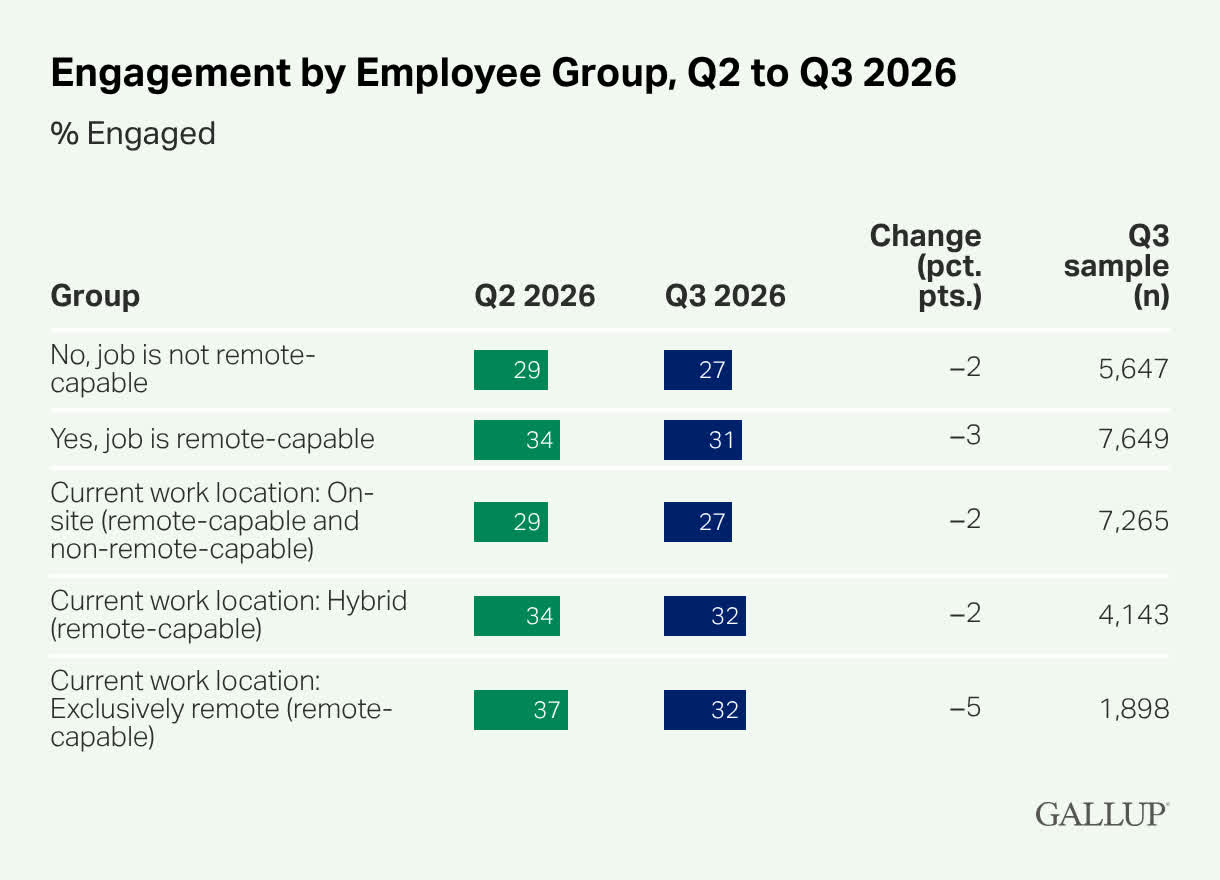
Remote and flexible work remain attractive to many employees because they can improve life balance. At the same time, policies that push workers back to offices have produced resentment in parts of the workforce. The research indicates that autonomy and flexibility tend to support higher satisfaction, while enforced changes in work patterns can make negative feelings more likely.
Trust Gaps, Recognition and Growth Paths
Management and staff relations are another pressure point. The survey suggests that many employees do not believe their employers give sufficient attention to well-being. Monitoring, frequent reviews and mounting workload can weaken belonging. Commitment is also more likely to decline when workers see no advancement opportunities or feel their contributions are undervalued.
Younger and Seasoned Employees React Differently
Generational differences stand out in the data. Younger employees are described as more demanding regarding career development, flexible working and company culture, and as more sensitive to environmental changes. More seasoned workers tend to place greater weight on stability and on concerns that AI may prompt job restructuring.
Employers Face a Balancing Test
The overall picture described by analysts is a workplace in the United States at a critical crossroads between technology adoption and work-model redesign. Firms want the productivity benefits of AI, but they also need to address weakening motivation and retention risk. Keeping employees involved and strengthening organizational identity is now presented as a core leadership challenge.
The conclusions show that employee passion is no longer determined only by salary. The report highlights job security, management approach, corporate culture, remote work policy, AI application and compensation as connected drivers of engagement. Their combined influence may continue to steer the labor market in the United States.